Table of Content
What is Hotel Wayfinding With Digital Signage?
How can hotels help guests navigate their properties while reducing constant front-desk interruptions? Hotel wayfinding with digital signage solves this by replacing static paper signs with dynamic screens and interactive kiosks, allowing you to update directions, event schedules, and property maps from anywhere in minutes. Whether a guest is looking for the spa, a wedding ballroom, or the fastest path to their room, this simple setup acts as a digital concierge that keeps information accurate and easy to read.
How does digital signage transform hotel navigation?
Digital signage changes hotel navigation by showing live, up-to-date directions that printed signs simply cannot match. Guests no longer need to unfold paper maps or flag down staff to ask where to go. Instead, they can reference bright screens that display step-by-step directions, 3D maps, and timely messages tailored to the time of day or specific events.
This technology combines automation with practical guest support. If a meeting room changes at the last minute or a restaurant opens for a special lunch service, you can publish the update immediately. This helps keep your screens running with accurate information, providing a smoother experience for your guests and fewer headaches for your staff.
Why choose digital over traditional wayfinding solutions?
Choosing between digital and traditional wayfinding usually comes down to speed, guest comfort, and how much staff time is required to make updates. Traditional signs are useful but rigid. A printed conference schedule that changes mid-day, or a static map that doesn’t show a newly opened amenity, often leads to guest confusion and long lines at the reception desk.
Digital wayfinding is flexible and easier to maintain. With a cloud-based digital signage software, your team can update one screen or a thousands of displays in minutes, ensuring messaging stays consistent across the entire property. It also creates a polished, modern aesthetic that supports your brand identity without requiring complex technical setups.
Key Benefits of Digital Signage for Hotel Wayfinding
Transitioning to digital wayfinding brings practical benefits that impact both the guest experience and your daily operations. These improvements go beyond basic navigation, helping your property run more efficiently.
Enhances guest experience and satisfaction
Guest experience is the core of hospitality, and clear, fast directions play a huge role in that. Interactive kiosks and screens let guests find what they need on their own-from the nearest restroom to the correct ballroom-without waiting in line. Giving guests this self-service option can reduce travel stress and often leads to more positive reviews.
Reduces staff workload and operational costs
When guests can orient themselves easily, front desk teams and concierges spend less time answering repetitive questions and more time handling high-value guest services. You can also significantly reduce printing costs and the manual labor involved in swapping out paper signs, which is especially valuable for large venues hosting frequent events.
Increases accessibility and ADA compliance
Digital wayfinding is designed to support a wider range of guest needs. Multi-language options help international visitors understand directions effortlessly. By utilizing clear route lines, readable icons, and adjustable contrast, properties can better support accessibility goals and ensure the hotel is easier to navigate for everyone.
Supports branding and personalization
Screens give you a highly visible canvas to reinforce your brand. By utilizing customizable design tools, hotels can keep colors, fonts, and logos consistent across every display. You can also tailor the experience to specific guest segments-for instance, showing family-friendly local attractions in the morning, and transitioning to fine-dining promotions in the evening.
Improves real-time information delivery
Hotels operate in real time, and your signage should too. Staff can instantly share event schedules, restaurant specials, weather forecasts, or urgent safety messages. Connecting screens to live data feeds gives guests practical information exactly when they need it, helping them plan their day with confidence.
Core Types of Wayfinding Digital Signage in Hotels
A well-planned signage network uses different types of screens in different areas, creating a connected path from the moment guests arrive until they check out.
Interactive lobby kiosks
Interactive lobby kiosks are often the first point of contact. Placed in high-traffic areas, these touchscreens allow guests to explore hotel amenities at their own pace. Using capabilities like Interactive Scenarios (Scenes), you can build touch-friendly experiences with buttons and widgets that provide maps, spa details, or local weather-all without needing custom code.
Digital directional signs and maps
These signs replace static hallway plaques. Positioned at elevator banks, intersections, and key decision points, they use flexible Screen Layouts to display clear arrows, "You are here" markers, and dynamic event data on the same screen. This ensures guests always know which way to turn.
Conference and meeting room boards
For hotels hosting events, digital boards outside meeting rooms are essential. Using Smart Scheduling, these displays can automatically update to show the current session, upcoming breaks, and the next day's agenda. This keeps attendees moving smoothly and reduces the panic of last-minute room changes.
Event and reader boards
Usually located in lobbies or pre-function areas, these larger displays share property-wide updates. They act as a central hub for daily event lists, announcements, and dining promotions, giving guests a quick overview of what is happening across the resort.
Concierge digital boards
Digital concierge boards offer local and on-site information in a self-service format. Guests can find details about nearby attractions or transit options. By adding QR codes to the screen, visitors can simply scan to take directions or restaurant menus directly to their phones.
Exterior and parking guidance displays
Wayfinding starts before guests even walk through the doors. Exterior displays and parking guidance signs help drivers transition smoothly from the street to the parking garage, and finally to the lobby. Clear text and smart placement keep arrivals organized and stress-free.
Essential Features of Hotel Wayfinding Digital Signage
A reliable digital wayfinding setup depends on features that make the system easy for guests to use and simple for your team to manage. Here is what to look for when planning your network.
Touchscreen and interactive capabilities
Touchscreens turn passive readers into active users. Allowing guests to tap, swipe, and search for specific amenities makes the navigation process faster and feels more tailored to their specific needs.
Multi-language support
Because hotels cater to a global audience, the ability to display content in multiple languages is highly beneficial. This reduces communication friction and helps international guests feel instantly at home.
Integration with property management and event systems
Advanced systems connect directly to your hotel’s existing software. Using Integrations (API, Zapier, Embed), your digital signage can automatically pull live data from your event booking tools or property management system. This hands-off approach ensures room assignments and schedules are always accurate without manual data entry.
Cloud-based content management
A central CMS is the backbone of efficient signage. Look CMS is a cloud-based digital signage platform that lets your staff create, schedule, and publish content to one or many screens from a single web dashboard. This makes remote updates simple, whether you are managing a single boutique property or a global hotel chain.
Custom branding and dynamic content
Your signage should look like an extension of your property. Using ready-made templates or built-in design editors, teams without heavy design experience can easily deploy branded, professional-looking visuals that feature daily specials, digital art, or welcome messages.
Mobile integration and QR code wayfinding
Connecting digital screens to mobile devices is highly practical. By generating QR codes within your CMS, you can let guests scan a screen to view a map, download an event schedule, or pull up the room service menu directly on their smartphones.
How to Implement Digital Signage Wayfinding in Hotels
Rolling out a new wayfinding system requires thoughtful planning. It is about understanding your physical space and giving guests the right information exactly when they need it.
Assessing property needs and guest flow patterns
Start by observing how guests naturally move through your hotel. Identify where people tend to stop, look confused, or ask for directions. Focus on key decision points like lobby exits, elevator lobbies, and long corridors to ensure you place screens where they are most helpful.

Choosing display locations for maximum visibility
Place screens at eye level in well-lit areas. Avoid spots with heavy glare from windows, and ensure the displays fit naturally into the hotel’s architecture without creating physical obstructions for foot traffic.
Selecting hardware and setup options
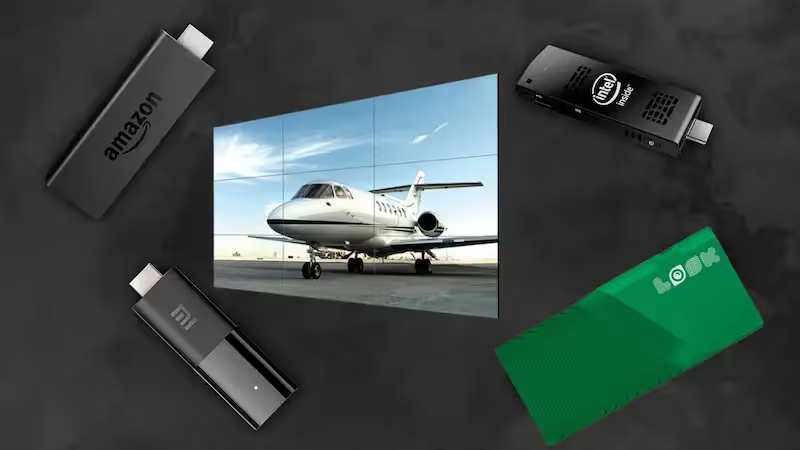
Hardware flexibility is important. You can often use existing smart TVs by installing a free software player app, or opt for dedicated commercial hardware. For reliable, plug-and-play performance, the Look HDMI Player connects easily to any display and handles heavy media playback smoothly.
Content creation and visual design recommendations
Keep your content clean and scannable. Use large, legible fonts, high-contrast colors, and obvious directional arrows. Avoid cluttering the screen with too much text; the goal is to provide a quick answer so the guest can keep moving.
Integrating digital signage with existing hotel systems
If your hotel hosts conferences, connecting your signage to your event scheduling software is a must. Setting up these data integrations ensures your screens update in the background, saving your staff hours of manual typing every week.
Training staff for smooth operation
A system is only as good as the team running it. Choose a platform that is approachable for non-technical users. Train your front desk and marketing teams on how to access the dashboard, utilize templates, and publish quick updates.
Best practices for ongoing updates and support
Signage isn't a "set and forget" project. Plan a regular schedule to refresh promotional content and audit event data. Partnering with a software provider that offers strong tech support and system monitoring will help keep your screens running smoothly year-round.
Common Challenges and Solutions in Hotel Wayfinding With Digital Signage
Like any technology, digital wayfinding can present operational challenges. Planning for these ahead of time ensures a stable, reliable experience.
Ensuring signage reliability and uptime
A blank or buffering screen is frustrating for guests and staff alike. To prevent this, Look Digital Signage relies on Offline Playback. This feature caches your playlists locally on the media player, ensuring your screens keep playing their scheduled content even if the hotel’s internet connection temporarily drops.
Addressing diverse guest needs and accessibility
Navigating a large hotel can be overwhelming for guests with varying physical abilities or language barriers. Keep designs simple, use universally recognized icons, and ensure interactive kiosks are placed at accessible heights.
Managing multiple properties and displays centrally
Managing content across a large resort or multiple franchise locations can become chaotic. A scalable cloud CMS allows a corporate team to control brand messaging globally, while giving local hotel managers the permission to update specific screens with localized daily specials.
Scaling solutions for resorts and large venues
Massive properties require robust infrastructure. The software you choose must be capable of smoothly managing complex networks. Cloud-based platforms are designed to scale smoothly, allowing you to seamlessly grow from a single lobby display to a network of hundreds of screens across a sprawling resort.
Balancing customization with operational efficiency
While custom designs look great, they can slow down daily updates if they require a graphic designer every time a meeting room changes. By relying on pre-built templates and layout builders, staff can quickly update text and images while keeping the overall design perfectly on-brand.
Choosing the Right Digital Wayfinding Solution for Your Hotel
Selecting the right digital signage software is a major operational decision. You need a platform that is powerful enough to handle complex schedules but simple enough for your daily staff to actually use.
Evaluating vendors and support services
Look past flashy sales demos and focus on usability and reliability. Look Digital Signage is an ideal fit for hospitality teams that want to publish and manage content on any screen in minutes, without complicated setups. Look for providers that offer intuitive dashboards, robust hardware compatibility, and responsive customer support.
Key questions to ask before investing
Before moving forward, ask these practical questions:
- Can the platform integrate seamlessly with our event management software?
- Does the system offer offline playback to survive internet outages?
- Can we manage multiple properties from one single account?
- Is the software easy enough for non-technical staff to learn quickly?
- Can we use our existing screens, or do we need to buy proprietary hardware?
Clear answers will help you choose a long-term partner rather than just a software vendor.
Cost factors and return on investment
Evaluate the total cost of ownership, including hardware, software subscriptions, and setup time. Over time, digital wayfinding often proves its ROI by eliminating print costs, reducing staff interruptions, and actively promoting on-site revenue drivers like restaurants, spas, and room upgrades.
Future Trends in Hotel Wayfinding With Digital Signage
Guest expectations are always evolving, and digital signage technology continues to adapt to offer more intuitive, frictionless experiences.
Artificial intelligence and personalization
AI is beginning to shape how content is created and displayed. Tools are emerging that help teams generate messaging faster, while intelligent kiosks may soon offer localized recommendations based on real-time data like weather, time of day, and general guest traffic patterns.
Voice assistance and touchless navigation
While touchscreens remain the standard, touchless and voice-activated interfaces are gaining traction. This allows guests to ask for directions naturally and receive visual guidance without physically interacting with the hardware, providing a highly modern and hygienic option.
Integration with guest mobile devices and apps
The connection between public screens and personal devices will only deepen. Expect to see more seamless hand-offs, where a guest reviews a map on a lobby screen, scans a code, and instantly receives step-by-step walking directions directly on their smartphone.
Sustainability and energy-efficient displays
As the hospitality industry prioritizes green initiatives, energy-efficient hardware, and smart software schedules that automatically dim or power down screens during off-peak hours will become a standard operational requirement.
Frequently Asked Questions About Digital Signage Hotel Wayfinding
When hotels begin exploring digital wayfinding, a few practical questions naturally arise. Here is what most operations teams want to know.
How secure is guest and event data in digital signage systems?
Data security is a top priority. Professional cloud-based signage platforms utilize secure web protocols and robust permissions. This ensures that only authorized staff members can access the dashboard or make changes to the event data displayed on your screens.
What are the maintenance requirements?
Modern digital signage is built to be a low-maintenance, reliable tool. By utilizing remote device management, your team can check the health of any screen, push software updates, and troubleshoot minor issues directly from their web browser, significantly reducing the need for on-site IT visits.
Can digital signage integrate with local attractions and guest recommendations?
Yes. Digital signage is an excellent tool for acting as an automated concierge. You can easily incorporate live weather feeds, flight information, and transit schedules, alongside custom playlists highlighting nearby restaurants and entertainment options to help guests maximize their stay.