Table of Content
Digital signage software is now affordable for businesses that could not justify it ten years ago. It's entirely possible for a single restaurant or retail location to run a full cloud-based platform on a fifty-dollar Android device, something that used to require proprietary hardware costing several hundred dollars and a service contract to match.
That drop in cost is the reason the digital signage software market is outgrowing hardware and services. Businesses that once treated digital signage as a corporate-scale investment are now buying it the way they buy any other subscription tool.
This article covers the current digital signage software market size, the drivers of that growth, the leading vendors, and what is changing in 2026 for anyone deciding whether to invest in this category.
Digital Signage Software Market Size: Global Trends and Numbers
What Is the Current Value of the Digital Signage Software Market?
Year-over-Year Growth Rates and Forecasts
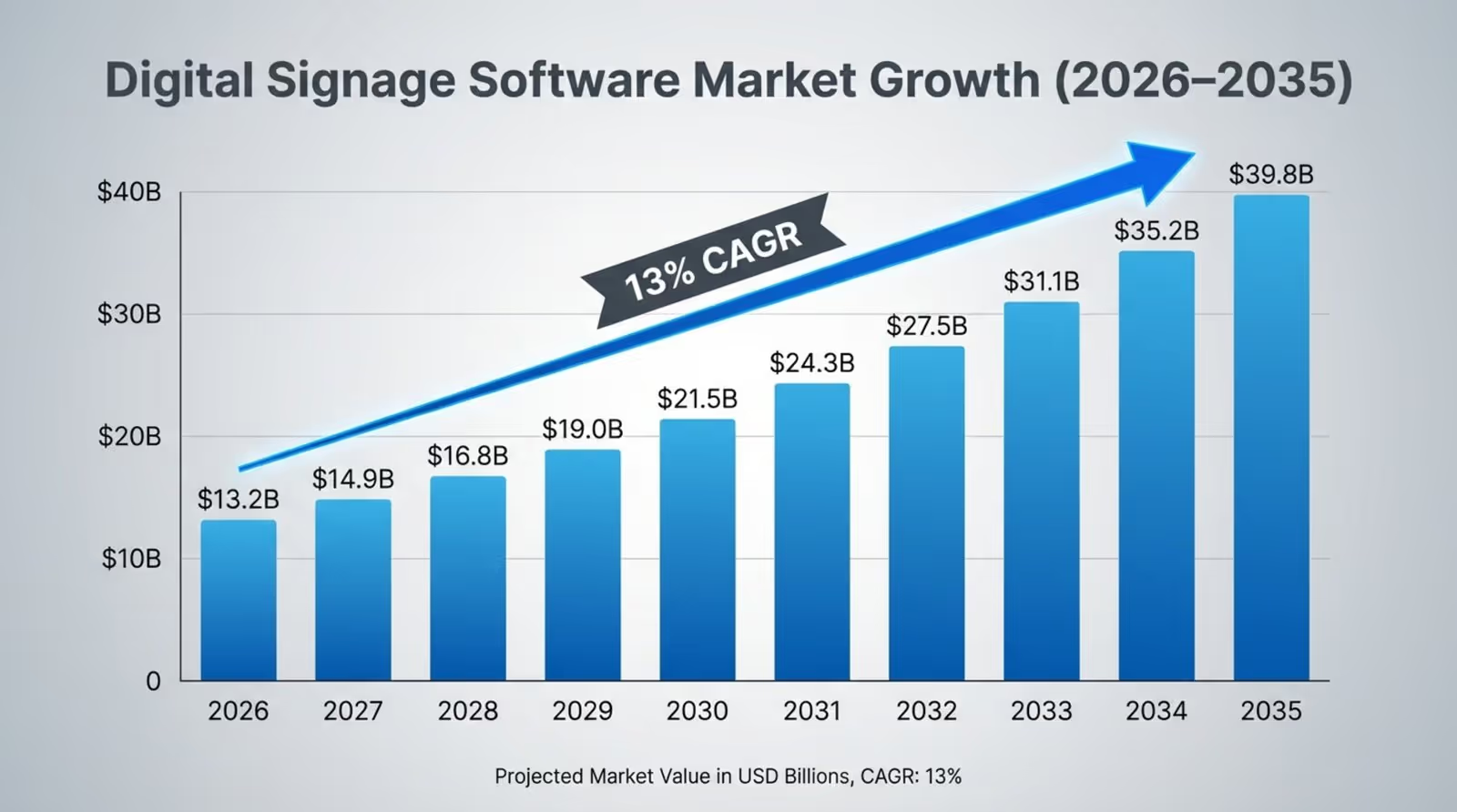
According to The Business Research Company, the digital signage software market is projected to grow at an annual rate of 12.3% through 2030, reaching $22.76 billion, up from $12.76 billion in 2025.
Several factors are driving this pace. For starters, businesses are turning away from old-school static displays for cloud networks that allow them to update content remotely across multiple locations without sending staff to individual sites.
AI tools are also cutting down the time it takes to create and adjust content, and businesses are finding it easier to keep their digital signage content updated without a dedicated team. The rise of omnichannel marketing is pushing retailers and brands to keep in-store messaging synced with their online and mobile campaigns, which requires software built for that kind of coordination.
Software vendors are also partnering directly with other technology providers to expand what their software can do by adding analytics and energy management on top of basic content playback. Buyers are also asking for more than static playlists. They want screens that can pull in a live social media feed, run video content, or support touch interaction, and that demand is pushing vendors to build out more capable solutions.
Regional Market Share Breakdown
North America accounts for about a third of global digital signage revenue, which traces back to timing as much as anything else.
Retail chains here adopted digital displays early, corporate campuses kept expanding through the years that followed, and transportation networks had already moved to cloud-based software before most other regions started looking at it seriously.
Europe is also a mature market, but growth is slower there because of regulation. GDPR and other data protection laws require vendors to build compliance into the software before selling into the region. This narrows the field somewhat, since not every platform is built for that from the start.
Asia-Pacific is currently the fastest-growing region, investing heavily in digital infrastructure and 5G, and a lot of that spending is going into transit systems and retail buildouts. Cities in the region are still growing, and that growth is bringing new demand for connected displays with it.
South America, the Middle East, and Africa are smaller markets in terms of revenue. Malls, airports, hotels, and quick-service restaurants are adopting digital signage in these regions, usually alongside outdoor advertising and smart city projects funded by local governments.

Key Factors Influencing Market Size
Speed is a big part of what's pushing the digital signage software market forward. A printed poster or a screen that needs someone on-site with a USB drive can't keep up with how fast businesses need to communicate now. A cloud-based CMS changes that math by allowing a manager to push out a new promotion or update a safety alert from one dashboard and have it live across every location within minutes, without anyone touching the screen itself.
In addition to that, professional displays and media players have become more accessible. LCD screens, LED displays, video walls, commercial tablets, smart TVs, and plug-and-play media players now give organizations more deployment options at different price points.
Software is also becoming more intelligent. AI-assisted design, automated scheduling, real-time data triggers, audience analytics, and integration with external data sources all increase the value of digital signage software.
Finally, many organizations are looking for measurable ROI. Digital signage can reduce printing costs, improve customer engagement, support impulse purchases, improve wayfinding, reduce perceived waiting time, and improve internal communication. As buyers become more outcome-focused, software platforms that offer analytics and remote monitoring become more attractive.
Market Segmentation: Types, Applications, and Deployment Models
By Deployment: Cloud-Based vs On-Premise Solutions
Most of the growth in this market is happening on the cloud side, whereby a solo business owner managing their own screens can easily update content, schedule campaigns, and check on device health from wherever they are, and a setup that starts at one screen can grow into thousands without needing much added infrastructure to get there.
This makes a huge difference for businesses with multiple locations, because modern software lets them group screens by location or tags and push content to each group without a tedious manual process for every single site.
At Look Digital Signage, we built our CMS with this in mind. It runs in the cloud, and the whole point is that a team shouldn't need a technical background to publish content, build out playlists, schedule what runs when, and keep an eye on how devices are performing.
That said, on-premise digital signage systems still have a place. For banks, hospitals, and governments, that have strict data requirements, a local infrastructure provides them with greater control over hosting and internal network configuration, but they usually require more maintenance, higher upfront investment, and dedicated IT support.
For most growing organizations, the choice comes down to flexibility. Cloud-based software is easier to scale and update while on-premise software offers more control but adds complexity.
By Application: Retail, Healthcare, Transportation, Education, Hospitality, and More
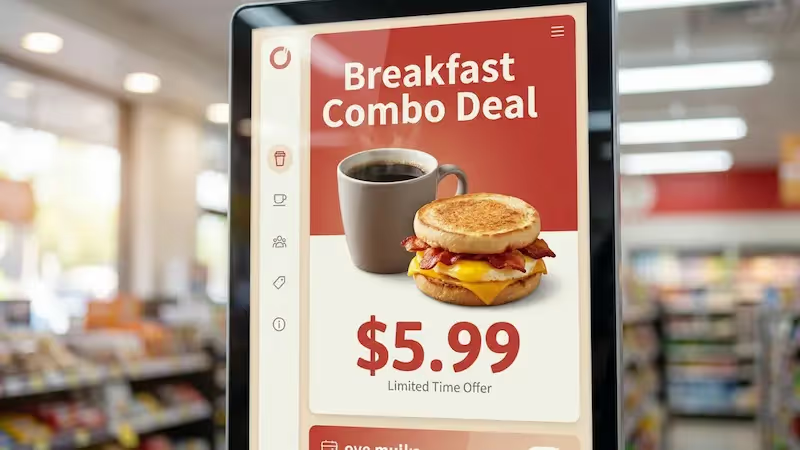
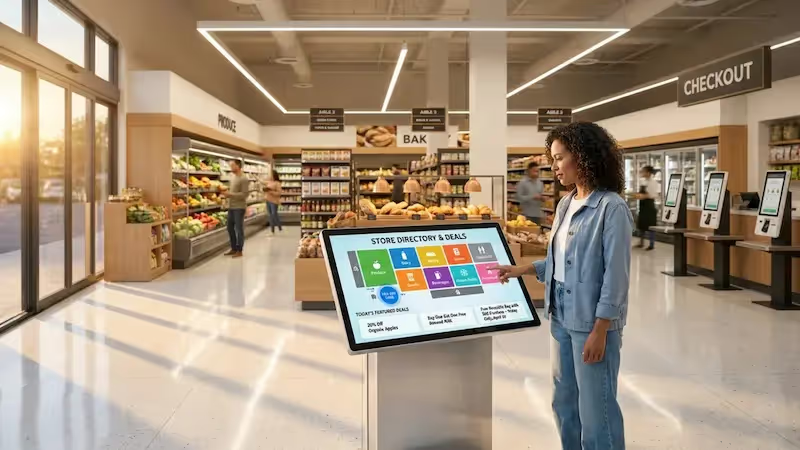
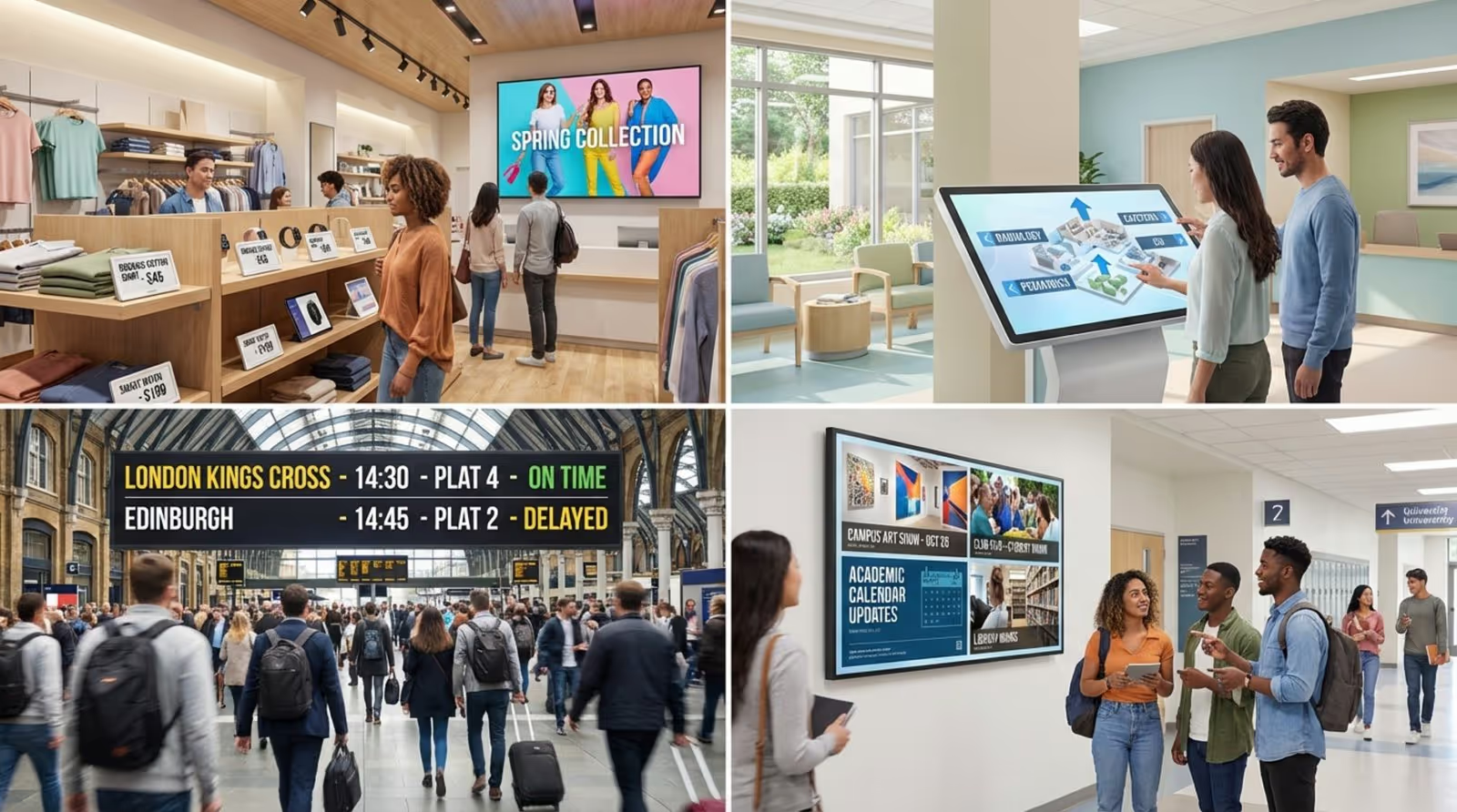
Retail is still the largest application in the digital signage software market. It used to be enough to run promotions on a screen near the register. Now stores lean on signage for product launches, pricing updates, digital shelf displays, queue management, and increasingly, selling ad space to other brands the same way a website does. At this point, it's part of the shopping experience itself, and for some chains, it's turned into its own revenue line.
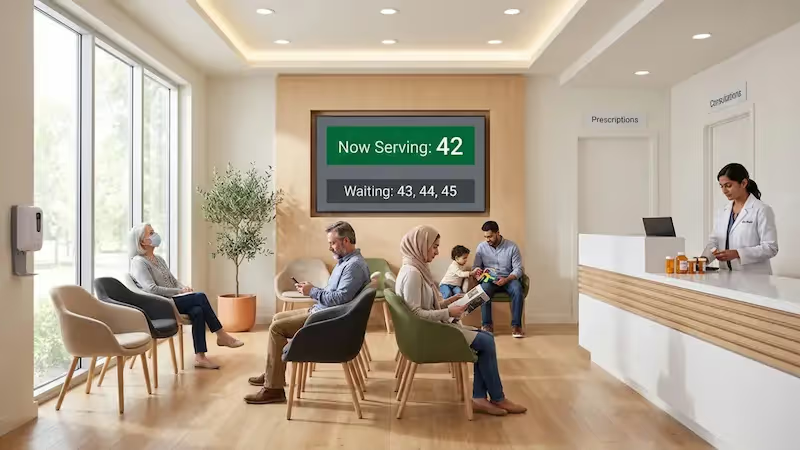
Healthcare has been slower to adopt, but it's catching up. Hospitals, clinics, pharmacies, and dental offices need touchscreens for wayfinding, queue updates, patient education, and emergency alerts, among other things. What makes a huge difference in healthcare signage is reliability in showing the right information at the right time, every time, to reduce anxiety.
Transportation pushes that same demand for reliability even further because even a single outage can become a real operational problem. Software vendors winning in the transportation sector are building for reliable uptime, remote monitoring, and integrations with flight information systems and IoT infrastructure, almost making the software more critical to operations than traditional static displays were.
Education adds a wrinkle that most other verticals don't deal with as much, which is shared ownership. Campuses use signage for emergency messaging, event promotion, cafeteria menus, and wayfinding, but different departments usually want control over their own content. A university might need one team managing campus-wide emergency alerts while individual departments handle their own event boards, which means the software has to support both centralized control and local permissions at the same time.
Hospitality is another major market for digital signage software, largely because businesses in this industry need to communicate with guests throughout their visit. Hotels use digital displays to welcome guests, share event schedules, provide directions, advertise on-site services, and display meeting room information. Resorts and casinos rely on them for many of the same reasons, especially on large properties where guests need help finding their way around.
Casinos and spas use it for event schedules and promotions. The common thread is that guests are moving through a space quickly, so the screen usually has one job: give them something useful in the few seconds they'll actually look at it.
Corporate communications has become one of the fastest-growing uses for digital signage, especially as companies bring employees back to the office. Digital displays give companies another way to share important information in places where employees naturally gather, such as reception areas, break rooms, production floors, and meeting spaces. As hybrid work becomes the norm for many companies, digital signage is helping on-site employees to stay connected with remote teams.
By Content Type: Video, Image, Data-Driven, and Interactive Content
Video content is still dominant in signage, especially if you think about the time we're spending on TikTok and Instagram; it makes sense that physical movement is more attention-grabbing. Even a 15-second video is enough for a product launch or to simply make a store or venue feel more dynamic.
Recent advances in display technology, including 4K and LED video walls, have also made high-quality video content more practical for businesses that want to make a stronger visual impact.
Images remain just as important, even if they don't attract as much attention as video. Many businesses rely on static graphics for everyday communication, including menus, event schedules, wayfinding, safety notices, promotional posters, and branded messages. They're quick to create, require less bandwidth, and are often the best choice when information needs to stay clear and easy to read.
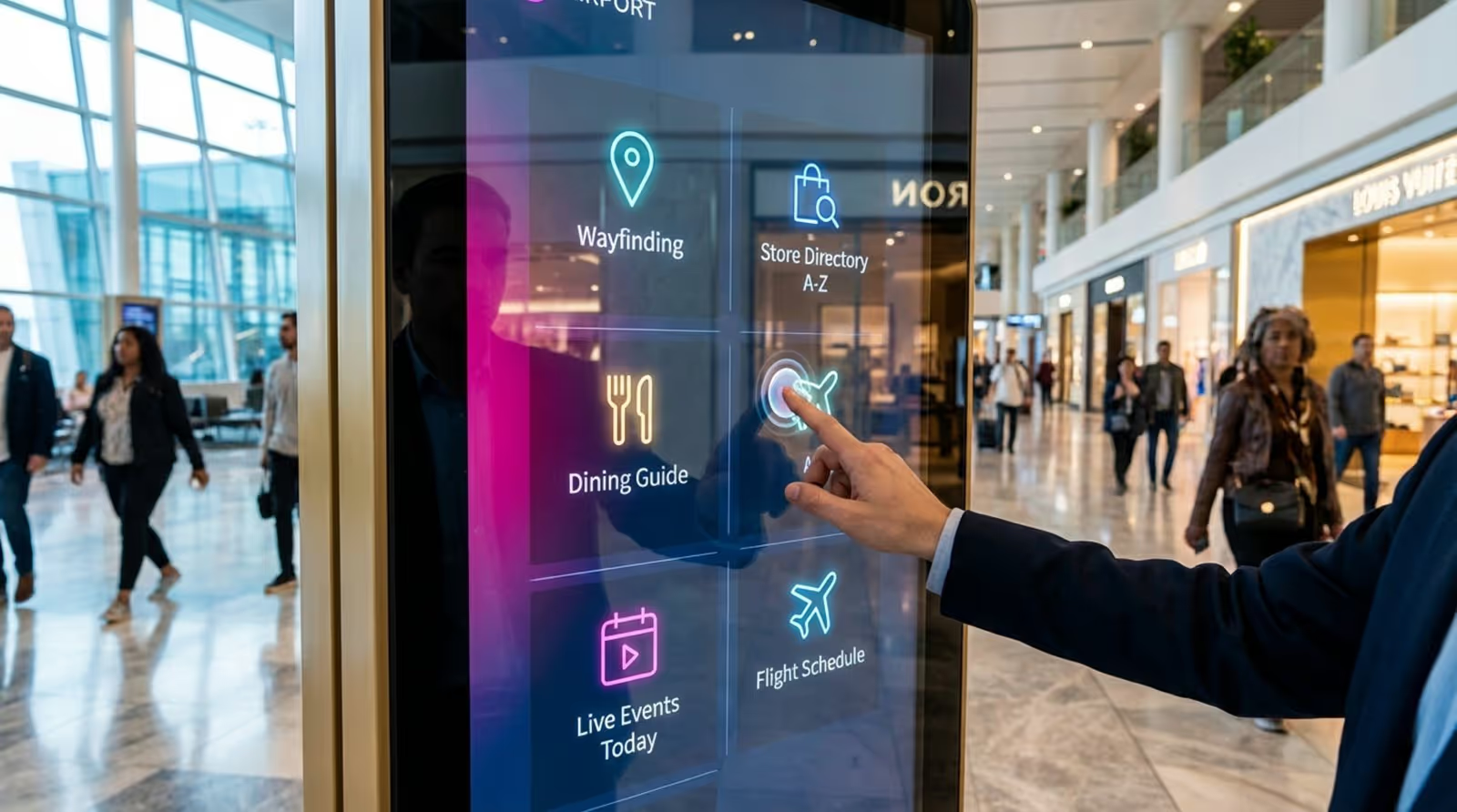
Data-driven content has also grown over the years. Instead of having your screens pull from manually designed templates all the time, software vendors have made it very easy to connect your screens with POS systems, inventory software, calendars, and even IoT devices. As a result, signage becomes a connected ecosystem where all your businesses communicate to reduce errors and provide a cohesive customer experience.
By Business Size: SMEs and Large Enterprises
Most digital signage software today runs on a monthly/annual subscription model. For as little as $6/month, you can enjoy all the benefits that a cloud-based signage solution provides. The barrier to entry has lowered significantly compared to a decade or two ago.
For SMEs, without a large budget to hire professional designers or even agencies to create and manage content, vendors are building solutions that are easy to set up, come with ready-made templates and native apps, and are compatible with the screens or media players that a business may already own, all this under a predictable pricing model. Look Digital Signage supports this segment by offering a flexible platform that works with various hardware options, including existing devices and plug-and-play players.
But it's an entirely different ball game with large enterprises. At 100+ locations, the priority is solid multi-location management, advanced user roles, Single Sign-On, brand governance, audit trails, integrations, APIs, analytics, and reliable device monitoring. For these buyers, the ability to manage complexity without slowing down local teams is a major advantage.
By Component: Software, Hardware, and Services
The broader digital signage market comprises software, hardware, and services.
Hardware still accounts for a large share of spending simply because every deployment starts with physical infrastructure. It includes displays, media players, touchscreens, kiosks, video walls, mounts, and outdoor enclosures. LCD screens are usually the default choice for most businesses because they're affordable and suitable for indoor deployments. LED displays, meanwhile, have become the standard for outdoor advertising, stadiums, shopping malls, and other spaces where there is a need for high-brightness panels.
Video walls have also been on the rise because businesses are not only using digital signage to replace printed posters, but also as a strategic move to create experiences and bring them back to brick-and-mortar stores, in an age of online shopping.
Software gives a screen network its operational value. Most displays can play content, but what happens after they're installed? Can someone update thousands of screens from one dashboard? Can the platform pull live prices from a POS system or meeting schedules from Microsoft 365? Can it tell you when a display goes offline before a customer notices? Those are the features businesses are paying for today.
Services include installation, content design, consulting, integration, support, maintenance, and managed network operations. As deployments become more complex, services remain important, especially for enterprise, retail, healthcare, hospitality, and transportation projects.
DOOH and Programmatic Digital Signage
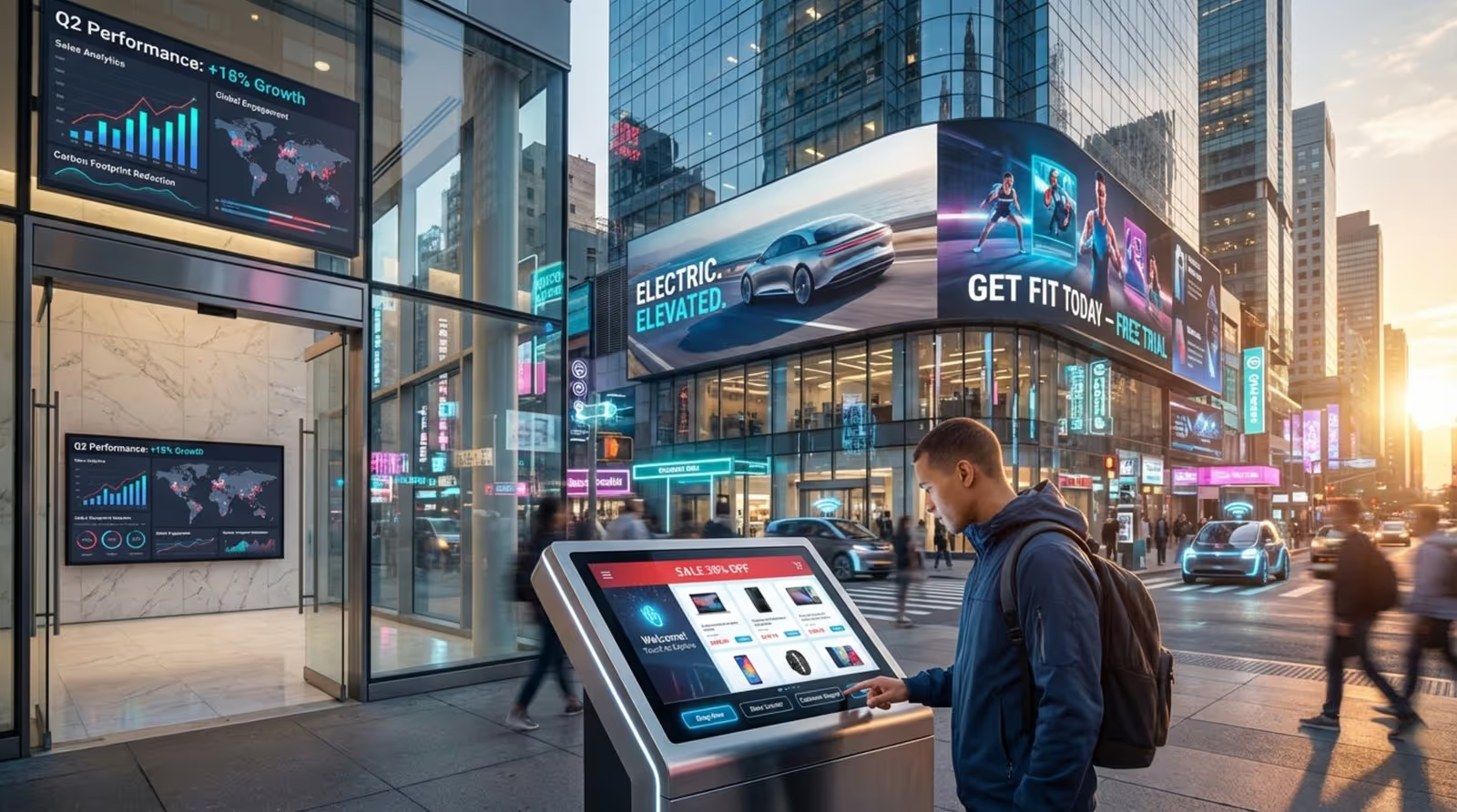
If you've seen a digital billboard change ads every few seconds or noticed different promotions on airport screens throughout the day, you've already seen digital out-of-home (DOOH) in action. The term covers advertising screens in public and semi-public places, from shopping malls and transit stations to elevators, convenience stores, and retail media networks.
The biggest shift has come from programmatic DOOH. Instead of booking the same ad on the same screens for weeks, advertisers can automatically buy screen time and target campaigns by location, time of day, weather, nearby events, or even traffic conditions. In many ways, outdoor advertising is starting to work more like online advertising.
That shift is opening up a new source of revenue for businesses that already own digital screens. A supermarket can promote its own products in the morning, then sell unused screen time to consumer brands in the afternoon. Airports, shopping centers, and convenience store chains are following a similar model, by turning digital signage into a business rather in addition to being a communication tool.
For software vendors, this creates a very different set of priorities. Advertisers want proof of play to verify that campaigns ran as agreed, detailed reporting on impressions and campaign performance, precise scheduling, content approval workflows, and integrations with ad servers, SSPs, DSPs, and retail media platforms. As DOOH spending grows, these capabilities are becoming just as important as the CMS itself.
Regional Insights: Market Opportunities and Challenges
North America: Market Dynamics and Growth Drivers
North America was one of the first regions to embrace digital signage at scale. Much of the growth today is driven by upgrading existing networks from on-premises systems to cloud platforms. They're also finding ways to extract more value through integrations with POS systems, loyalty programs, calendars, inventory software, and retail media platforms in much the same way every other business application does.
The region is also a leader in retail media. As retailers look for new revenue streams, in-store screens are becoming part of broader media networks which creates opportunities for software that can manage content, campaigns, permissions, playback data, and third-party advertising workflows.
The other shift is happening inside IT departments. Digital signage used to sit on its own network with little attention once it was installed, which is no longer realistic. As displays connect to cloud services and business systems, they're held to the same security and compliance standards as everything else. Vendors that can satisfy those IT requirements are finding it much easier to win enterprise contracts.
Europe: Regulation, Sustainability, and Smart Cities
In Europe, public policy shapes a lot of the technology buying decisions. Vendors have to build a solution with privacy, accessibility, energy use, and public procurement rules baked in. This is especially true in the transportation, government, and other publicly funded projects that expect digital signage to adhere to stricter standards beyond displaying content.
Sustainability also follows the same pattern where energy-efficient displays, automated brightness control, and power scheduling have obvious cost benefits, but they're also becoming easier to justify as European businesses respond to stricter climate policies and higher electricity prices. Digital signage vendors are finding that environmental performance can be just as persuasive as new software features.
There has also been increased demand for live passenger information, emergency alerts, and public announcements in transport and municipal systems.
Asia-Pacific: Rapid Infrastructure Growth
According to MarketsandMarkets research, the Asia-Pacific region is the fastest-growing global market for digital signage, expanding year over year by more than 8%. This growth rate places the region as the leader in international digital signage expansion.
This momentum is heavily driven by large-scale public and private investments. The rapid urbanization across India and China has led to a wave of smart-city initiatives and transit hub expansions, such as new subway networks and airports. At the same time, a booming retail and quick-service restaurant sector is moving away from basic, standalone displays in favor of networked, internet-connected screens managed from central offices.
However, there are significant technical challenges in scaling software across this region, mainly because the APAC hardware landscape is highly fragmented, and software must be versatile enough to run reliably across a wide variety of unbranded, low-cost local microchips and operating systems.
In addition to that, this region is incredibly diverse and unevenly developed. Outside of major metropolitan tech cities, internet connections drop frequently, which means that software has to be smart enough to cache content and keep running offline. The platforms must also support the dozens of different languages and alphabets for accessibility. For software companies, there is a massive opportunity in this market to execute solutions that are incredibly durable and flexible.
South America, the Middle East, and Africa
In South America, particularly within the major commercial hubs of Brazil and Argentina, the market is driven by retail. Grocery stores, malls, and retail chains are no longer looking at screens as just a way to look modern. Instead, they are using software to turn their screens into in-store advertising networks, allowing brands to buy ad space directly on the shop floor.
The major hurdle here is financial volatility. High import taxes and fluctuating local currencies make new digital screens incredibly expensive. Because of this, local businesses are highly reluctant to buy software that forces them to upgrade their equipment. The software providers winning in this market are those whose platforms are flexible enough to run smoothly on older, mixed-and-matched hardware that companies already own.
The Middle East is at a completely different scale when you're looking at massive government-backed projects like Saudi Arabia’s Vision 2030. Here, digital signage is a core part of a city's infrastructure. The mega-malls, transit systems, and entirely new smart cities are being built from scratch, with massive digital displays built right into the architectural blueprints.
Africa and some parts of South America are excellent examples of a "leapfrog" market. Because many regions never had traditional, wired internet networks, businesses are skipping that step entirely and moving straight to cloud-managed screens that connect using local cellular networks.
Key Drivers and Market Challenges
Trends Fueling Demand for Digital Signage Software
1. The Rise of Retail Media Networks
Retailers are realizing that physical aisles can be monetized just like e-commerce websites.
By linking their signage platform directly to ad-buying platforms, they can sell screen time to third-party consumer brands on the fly. Software makes this profitable by using point-of-sale data and local demographics to deliver targeted, high-value ads to shoppers at the exact moment they are making a purchasing decision.
2. Centralized Operations via Cloud Architecture
As businesses scale across multiple cities or countries, provides the capabilities they need to control thousands of screens worldwide, from a single dashboard. This ensures that the company can maintain brand consistency and reduce the need for expensive on-site technical support.
3. Data Integration and Real-Time Automation
The best digital signage software we have today comes with built-in integrations of the most common SaaS platforms that businesses are using in daily operations. It's easier than ever to connect your signage to your internal databases, intranets, and feeds, either using APIs or Zapier, as is the case with Look DS software.
If you run a fast-food spot, your menu board can easily pull from live inventory data to remove sold-out items; likewise, a transit screen can adjust arrival times based on live traffic delays.
4. Reaching the Deskless Workforce
With hybrid work making corporate communication harder, companies are increasingly putting screens in offices, warehouses, and factories. It has become one of the most effective ways to reach employees who don't spend their day checking email. Companies use the software to broadcast real-time safety metrics, company milestones, and HR reminders to keep everyone on the same page.
Expansion of Cloud-Based Solutions
Cloud-based platforms have completely changed the math in digital signage software market. Businesses no longer have to invest in servers or local infrastructure just to have a reliable signage system. With just a screen and a CMS, you can create content, publish, and go live in seconds.
This model has made software updates easier and more automatic. Vendors release new features, security improvements, apps, templates, and integrations without requiring the customers to reinstall the app.
Cloud software is also a great solution for teams spread out across locations. The admin can define access parameters for different roles, group screens into departments or tags, which makes it a piece of cake to push content to 200+ screens, personalized to their unique content needs.
AI and Data-Driven Content
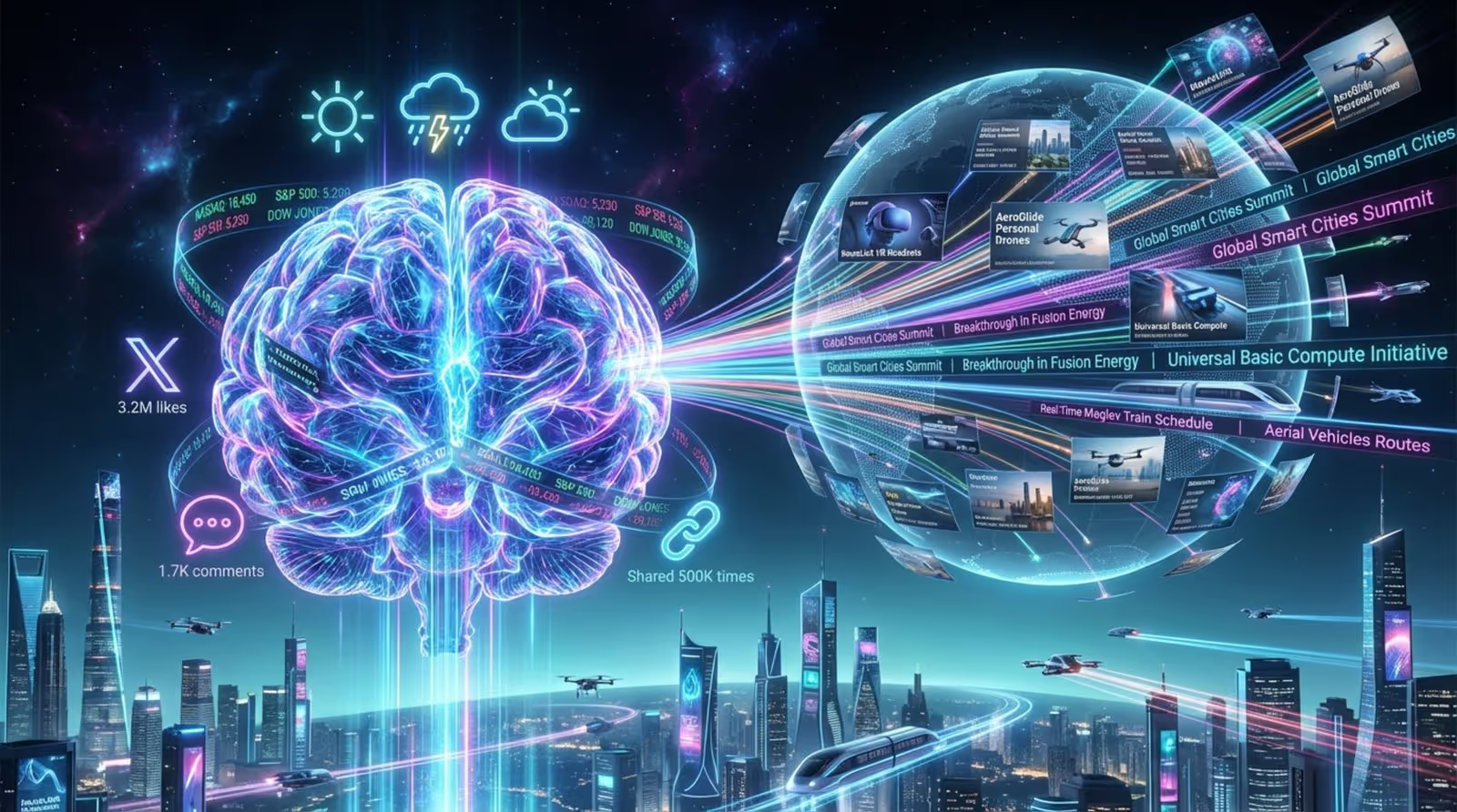
AI has to be the most significant shift in the digital signage software market in the last 5 years. Traditionally, managing a screen network required a marketing team to manually build the playlists, then schedule them to specific screens. With AI and live data integrations, screens can now adjust content based on real environmental triggers, as well as enable teams to create graphics in seconds.
For example, Look CMS has an AI Wizard that helps you create professional layouts directly inside the platform that are tailored to your industry, brand guidelines, and messaging. You don't have to switch between multiple tools just to get polished assets.
The same thing is happening with computer vision where software can now use local sensors to estimate the age or gender of the person standing right there, and then switch ads in real time, personalized for them. It also includes dwell time and attention metrics to measure how long a viewer stays engaged.
Challenges: Security, Content Quality, and ROI Measurement
As soon as you get your screens online, they are exposed to potential cyberattacks that can compromise company data security. That's why it's important to use software with a secure cloud infrastructure that offers dual-factor authentication and encrypted content delivery to keep the system and data secure.
On top of that, it's a bottleneck for small teams to keep content fresh and high-quality across hundreds of screens. The fix here is to use templates and automation tools, such as the AI layout assistants we mentioned earlier, so teams can scale up their designs without starting from scratch every time.
Proving ROI is also a major headache because it's hard to tell if a screen actually caused a purchase. That's why it's advisable to choose a platform that comes with built-in analytics tools, especially if you're selling ad space. You can also use QR codes leading to web pages you can easily track with Google Analytics, allowing you to see exactly how many people scanned a display and clicked through to buy
Major Players: Leaders in Digital Signage Software
Top Global Digital Signage Software Vendors
The digital signage software market is divided into tiers depending on the size of the business, the hardware being used, and the goal of the display network. Instead of a one-size-fits-all market, vendors have carved out specific niches ranging from simple small-business tools to massive, data-heavy enterprise platforms. We have a mix of hardware manufacturers, software specialists, DOOH platforms, and infrastructure providers.
First off, we have the hardware giants, Samsung and LG, that build their own software layers to lock in enterprise clients. Their SoC displays come baked in with the Samsung MagicINFO and LG SuperSign to offer a highly secure and hardware-integrated software solution.
Other major hardware and display manufacturers include Panasonic, Sharp/NEC, Sony, BrightSign, ViewSonic, Daktronics, and Leyard/Planar. These companies support different parts of the market, from media players and commercial displays to LED walls, outdoor billboards, and large-format installations.
On the software side, the fastest-growing segment of the market belongs to pure-play software vendors whose cloud platforms can run on almost any operating system. We have Look Digital Signage, Scala, Navori Labs, Broadsign, Poppulo/Four Winds Interactive, Mvix, ScreenCloud, Signagelive, Omnivex, Intuiface, and others.
These companies are competing on ease of use at scale, powerful content design tools, built-in analytics, native integrations with business tools, and most importantly, having vertical or industry-specific features.
Cisco also appears in the broader digital signage and enterprise communication landscape, especially where signage connects with networking, collaboration, video, and enterprise infrastructure.
The digital signage software market remains highly fragmented. Even leading vendors hold relatively small shares compared with the overall opportunity. This gives buyers many options, but also makes evaluation an absolute nightmare when you're trying to compare hundreds of vendors all promising the exact same core features. To find the right fit, you can focus entirely on how a platform handles your specific hardware, your security requirements, and the real-world conditions of your locations. Look Digital Signage offers a free 14-day trial that lets you connect your existing screens, get a feel for the interface by editing templates, scheduling your playlists, and more, with no feature restrictions.
Emerging Companies and Innovators
Independent, cloud-first providers are growing because many businesses want flexibility instead of hardware lock-in. These platforms place alot of emphais on on ease of use, fast deployment, remote management, integrations, and support for different screen types.
Look Digital Signage is positioned in this category for teams that need to manage content across screens without having to deal with complex legacy systems. Its hardware-agnostic approach is especially useful for businesses that already own screens or want the freedom to choose different devices.
Mergers, Acquisitions, and Market Dynamics
For years, the digital signage software market has been flooded with hundreds of small, niche software startups. But as the market continues to mature, massive private equity firms and hardware conglomerates are buying these smaller players to create massive, all-in-one platforms. A good example of this is Stratacache's acquisition of Scala, which combined a massive global hardware infrastructure with an already established software platform.
The driving factor behind this consolidation is that enterprise clients no longer want to source their screens from one vendor, their CMS from another, and their media players from a third.
They want a single, stable provider that can handle the entire deployment globally.
This shift completely changes the market dynamics for buyers. On one hand, it means you get more stable software, better security compliance, and deeper integrations with big platforms like corporate databases or programmatic ad networks. On the other hand, as smaller vendors get swallowed up, buyers have to watch out for vendor lock-in and shifting pricing models.
Comparison of Solution Types
Recent Developments and Industry Innovations
Technological Advancements in Software Features
Security has taken center stage, especially for transit networks and government buildings. Top-tier platforms are now building advanced security protocols directly into their cloud systems with features such as Single Sign-On (SSO), two-factor authentication, and automated security patches in order to block network intrusions and prevent screens in public spaces from being hijacked.
At the same time, we are seeing a massive push toward energy-efficient scheduling. Software can now communicate directly with smart building systems to dim or power down displays during off-peak hours to help large enterprises cut down on operational costs and meet sustainability goals.
Device management has also taken a massive leap forward. You can reboot media players, push software updates, change screen orientation, and adjust volume across thousands of miles without ever sending a technician to the physical site.
The system is set up to constantly monitor and flag overheating hardware or network drops before the display goes dark. Combined with built-in design assistants that let you edit layouts directly inside the platform, the technology has finally reached a point where a small team can easily run a huge screen network.
Playback analytics are also gaining importance. Businesses want proof that campaigns were displayed, especially in retail media, DOOH, internal communication, and regulated environments.
Changes in Deployment Models
Historically, when you needed to set up a screen network, you had to buy a heavy on-premise server, pay massive upfront software licensing fees, and rely on a dedicated internal IT team to wire and maintain the infrastructure.
Today, the market has almost entirely pivoted to a cloud-based model that allows companies to pay a predictable monthly subscription per screen. The burden of maintaining the server, software updates, and security patches is transferred to the vendor. This model makes it extremely easy for businesses to scale, which is only a matter of adding more screens to an already functional network, which makes budgeting more predictable.
That said, hybrid models are still relevant for specific industries that need a setup that provides both the convenience of remote management and the control of on-premise servers.
Hardware Innovation: LCD, LED, Video Walls, and Outdoor Displays
There has been a massive shift toward finer pixel pitches and high-brightness panels.
Traditional LCD screens are still dominating the indoor retail and menu boards due to their crisp resolution and lower costs. However, direct-view LED is rapidly taking over corporate lobbies and massive video walls. Because LED lacks the thick bezels of LCD panels, you can tile them together to create completely seamless, giant displays that look like a single piece of glass.
The biggest engineering wins are happening outdoors, where modern outdoor displays have achieved ultra-high brightness ratings, often over 3,000 nits, which makes the screens perfectly visible even in direct, blinding sunlight. They are also packed with weatherproofing and smart ventilation systems, that allow them to survive extreme weather.
As display formats become more diverse, hardware-agnostic CMS platforms become more valuable. Businesses do not want to rebuild their software stack every time they add a new type of screen.
Future Prospects: Where the Digital Signage Software Market Is Heading
What Are the Most Promising Growth Opportunities?
Retail media networks are easily the most lucrative opportunity on the horizon. Retailers are realizing that their store floors are actually valuable ad space, giving them a chance to pitch to shoppers at the exact moment they have their wallets out. Brands need software that can handle complex ad campaigns, schedule distinct screen groups, and spit out clean performance data so advertisers know their money wasn't wasted.
This ties directly into the massive transformation we're seeing in programmatic DOOH (digital out-of-home) advertising, where advertisers in malls and airports want measurable results. In response, the screens are rapidly becoming part of a single, connected network where ad space can be bought and sold automatically, just like web banners.
Beyond commercial spaces, smart city integrations are another avenue to watch. This is a major test of how adaptable software can be. Governments are putting up public displays to handle everything from daily transit schedules and interactive maps to instant emergency alerts and local community news, which require a highly reliable, secure setup for screens acting as public utilities.
Also, don't underestimate the baseline demand from hospitality and fast food (QSR). It might not sound as futuristic as a smart city, but hotels, cafes, and burger chains have an endless need for flexible software. They are constantly updating digital menus, pushing timed lunch specials, and rolling out self-service kiosks. For software companies, this sector provides the steady, predictable volume that keeps the lights on.
Healthcare, education, and corporate communications will continue to adopt signage as organizations look for better ways to communicate with people in physical spaces.
Predicted Impact of AI and Machine Learning
Right now, human teams spend hours planning schedules and deciding the right screens for each content type. Machine learning models will do away with this bottleneck by analyzing current weather, local store inventory levels, and foot traffic to instantly compile and display the most profitable content playlist.
Computer vision and audience analytics will also be pretty standard. become standard features rather than high-end add-ons.
AI models running right on the media player will allow local cameras to analyze how crowds interact with displays in real time. The software will then track precise dwell times, facial expressions, and eye movements to gauge true engagement and immediately run automated A/B tests on different layouts. If the AI notices a specific video format holds attention 30% longer, it will automatically scale that design across the rest of the network to create a self-optimizing feedback loop that maximizes ROI.
However, it's important to remember that while AI can perfect your layout placement, calculate ideal timing, and pick the best-performing video, it does not understand your audience, your brand's core message, or business goals as you do. It only works best when supporting a well-defined communication strategy.
Sustainability and Eco-Friendly Solutions
Sustainability is a major requirement for any large-scale digital signage rollout. Deploying thousands of high-brightness screens naturally draws a lot of power, and enterprise buyers are under immense pressure to cut down their carbon footprint. Because of this, software is becoming a major tool for managing energy consumption, where it connects directly with smart building systems to dim displays based on ambient room light, or power down entire screen networks automatically during off-peak hours when nobody is around.
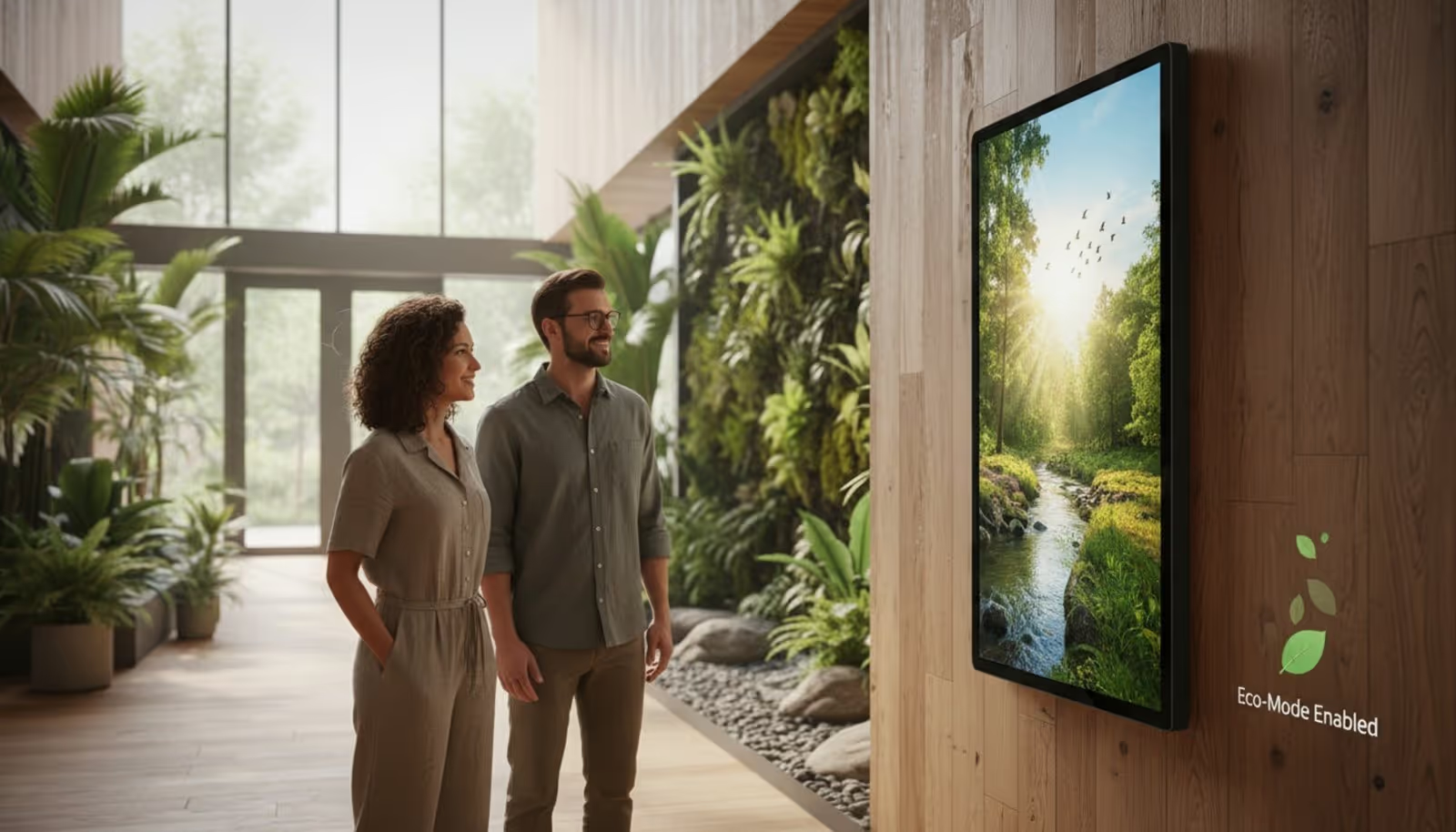
On the other side of the coin, hardware manufacturers are producing screens that run smoothly on energy-efficient System-on-Chip (SoC) displays or low-power media players.
How to Choose Digital Signage Software in a Growing Market
When evaluating digital signage software, businesses should look beyond basic content upload features. A modern CMS should support both today’s needs and future expansion.
The most important criteria include:
- Ease of use. Teams should be able to create, schedule, and update content without technical complexity.
- Remote management. Administrators should be able to control screens, monitor device status, and troubleshoot issues from anywhere.
- Hardware flexibility. A hardware-agnostic platform helps avoid vendor lock-in and makes it easier to reuse existing screens.
- Scalability. The system should support growth from one screen to multiple locations.
- Offline playback. Screens should continue showing scheduled content even when internet connectivity is interrupted.
- Security. The platform should support secure access, permissions, updates, and reliable cloud infrastructure.
- Analytics. Playback reports, uptime data, and content performance insights help prove ROI.
- Integrations. The software should connect to apps, data feeds, calendars, social media, dashboards, POS systems, and other business tools as needed.
- Content tools. Templates, design support, AI-assisted creation, and scheduling features reduce the workload for marketing and operations teams.
Look Digital Signage is built around fulfilling these needs by providing businesses with a simple way to manage digital screens while still supporting advanced use cases such as scheduling, device monitoring, AI content creation, apps, offline playback, and multi-location control.
Conclusion: A Fast-Growing Market Moving Toward Smarter Screens
The data confirms that the market for digital signage software is only going to expand, and so is the demand for it. The market is quickly moving on from prescheduled passive displays into intelligent networks that can integrate directly with business operations and provide businesses with smarter ways to increase revenue, personalize the customer experience, and track real-world results effortlessly.
The sheer number of software platforms can make it incredibly difficult to choose a vendor that meets your needs. If you're still evaluating, you need to start by considering practical operational requirements. The software must run reliably on your specific hardware, keep your data secure, integrate with your business tools, and, most importantly, remain easy to use even as you grow to 100+ screens.
You don't have to look any further than Look Digital Signage to meet these requirements. Try Look with a free 14-day trial today!
FAQ: Digital Signage Software Market
What is the digital signage software market?
The digital signage software market comprises the platforms and tools used to manage content over the internet. This includes content management systems, scheduling tools, device monitoring, analytics, apps, integrations, AI content tools, and remote screen management.
How big is the digital signage software market?
The digital signage software market is estimated at roughly $13.2 billion in 2026 and is projected to reach around $39.8 billion by 2035. Estimates vary by research firm because some include only software, while others include broader digital signage hardware and services.
What is driving growth in digital signage software?
Cloud-based CMS adoption, AI-assisted content creation, retail media networks, DOOH advertising, IoT integration, smart city projects, demand in hospitality and QSR, interactive kiosks, and the need for remote content management drive growth.
Which industries use digital signage software the most?
Major users include retail, healthcare, transportation, education, hospitality, corporate offices, restaurants, banking, entertainment, government, and advertising networks.
What is DOOH in digital signage?
DOOH means digital out-of-home. It refers to digital advertising screens in public spaces, such as billboards, transit displays, mall screens, airport screens, and retail media networks. Programmatic DOOH enables ad placements to be automated and contextually targeted.
What is the difference between cloud-based and on-premise digital signage software?
The difference comes down to where your data lives and how the infrastructure is maintained. Cloud-based software runs on the vendor's servers for a subscription fee, allowing you to manage screens globally from any web browser while updates and security are handled automatically. Conversely, on-premise software requires a one-time license to host the platform on your own physical servers, giving your internal IT team total control over security and data privacy at a higher upfront cost. Cloud-based software is usually easier to scale and maintain.
Why is hardware-agnostic digital signage software important?
Because it runs on virtually any operating system or screen brand rather than locking you into a single manufacturer's ecosystem. This flexibility prevents you from being forced into expensive hardware upgrades so that you can reuse the mixed screens and media players you already own.
How does Look Digital Signage fit into the market?
Look Digital Signage is a cloud-based, hardware-agnostic CMS that solves two of the industry's biggest headaches: ease of use and powerful enterprise capabilities, all at an affordable price point. The platform is intuitive enough that any team member can easily manage schedules and templates without needing prior training. At the same time, it delivers the strict security, remote device controls, and bulletproof offline playback that large corporations require to keep thousands of global screens running smoothly without stretching their budgets.