Table of Content
How can security-sensitive organizations keep their digital signage safe from external threats and data leaks? The answer often lies in keeping data off the public internet entirely. For banks, healthcare providers, and government agencies, local server (on-premise) digital signage provides the necessary control to prevent unauthorized access, ensure stable playback without internet dependence, and meet strict compliance standards like HIPAA or GDPR.
While cloud-based systems are excellent for businesses that need to scale quickly and manage screens from anywhere, some sectors simply cannot accept the risk of sending data across the public web. In these cases, a local server setup creates a "closed loop." Your content, schedules, and management tools stay inside your building, behind your firewall, making it significantly harder for outside attackers to interfere with what appears on your screens.
What Is Local Server Digital Signage?
Local server digital signage, often called on-premise signage, is a setup where the content management system (CMS) runs on servers inside your organization’s own infrastructure rather than on a cloud provider's remote servers. In this model, every image, video, and data feed is stored and delivered locally within your private network.

IT teams in high-security environments often prefer this approach because it keeps the "keys to the castle" in their hands. Instead of relying on a vendor for uptime and security patches, your internal team manages the full lifecycle of the data. Look Digital Signage offers a dedicated On-Premise solution designed specifically for these scenarios, allowing you to deploy the full power of the Look CMS on your own hardware while maintaining absolute control over network traffic and access rights.
Differences Between Local Server and Cloud-Based Digital Signage
The main difference is where your data lives and how your screens connect to it. Cloud-based signage stores content in external data centers. This is ideal for retail or restaurants that want to publish content to thousands of screens in minutes without managing servers. However, it relies on a consistent internet connection to receive updates.
Local server signage operates independently of the public internet. Since the content is hosted on-site, your screens keep running reliably even if the outside world goes offline. While cloud systems offer convenience, local servers offer isolation. With Look On-Premise, you get the user-friendly features of a modern CMS-like simple layout builders and smart scheduling-without the data ever leaving your secure perimeter.
Why Security Matters for Digital Signage in Certain Organizations
Digital signage is no longer just a passive TV on a wall; modern screens are active network endpoints often linked to internal databases, emergency systems, and operational dashboards. This connectivity is powerful, but it also creates potential entry points for bad actors. For a government office or a financial institution, a compromised screen is more than just an embarrassment-it can be a gateway into the wider network.
As organizations use digital signage for critical internal communication, the need to protect these endpoints grows. If a media player is left vulnerable, it could theoretically be used to move laterally across a network to access sensitive files or disrupt operations.
Types of Security Risks for Digital Signage Systems
Connected screens face many of the same threats as computers. Common risks include malware distribution, where a player is infected and spreads malicious software, and SQL injection attacks, which can occur if the signage software interacts with internal databases insecurely.
Man-in-the-Middle (MITM) attacks are another concern if data transfer isn't encrypted; an attacker could intercept the signal between the server and the player to insert fake content. There are also risks like DNS spoofing, which redirects devices to fake servers, and Distributed Denial of Service (DDoS) attacks that can flood a network and crash the system.

Real-World Examples of Digital Signage Attacks
History shows that these risks are real. While the massive 2017 Equifax breach was a web application failure, it highlighted how devastating exposed data can be. More specific to our industry, the Petya ransomware attack impacted networked displays in shipping and healthcare, locking screens and demanding payment.
There have also been instances where hackers accessed public billboards to display offensive content. These incidents cause immediate reputational damage and force organizations to spend heavily on forensic investigations and system repairs.
Business Impact of Security Breaches
A breach costs more than just time. For many businesses, content manipulation erodes trust instantly. If a bank's welcome screen displays fake news, or a hospital's wayfinding system goes dark, the confidence of customers and patients drops.
Beyond reputation, there are operational costs. If a network is infected, you may face downtime, lost advertising revenue, and expensive IT recovery efforts. In regulated industries, a breach can also lead to significant fines for failing to protect data privacy.
Industry Use Cases Requiring High Security
For some sectors, standard security isn't enough. In these environments, Look On-Premise is frequently the preferred choice because it supports custom security protocols that public cloud options cannot always accommodate.

Government and Public Sector
Government agencies handle classified information and critical internal alerts. Because they are frequent targets for cyber threats, many operate on restricted networks separated from the public internet. Local server signage allows these agencies to broadcast essential information without creating a bridge to the outside web.
Banking and Financial Institutions
Banks manage highly sensitive customer data and live financial feeds. Deploying signage on a local server ensures that no internal banking data passes through third-party cloud storage. It also helps IT teams comply with strict internal audits regarding data sovereignty.
Healthcare Environments
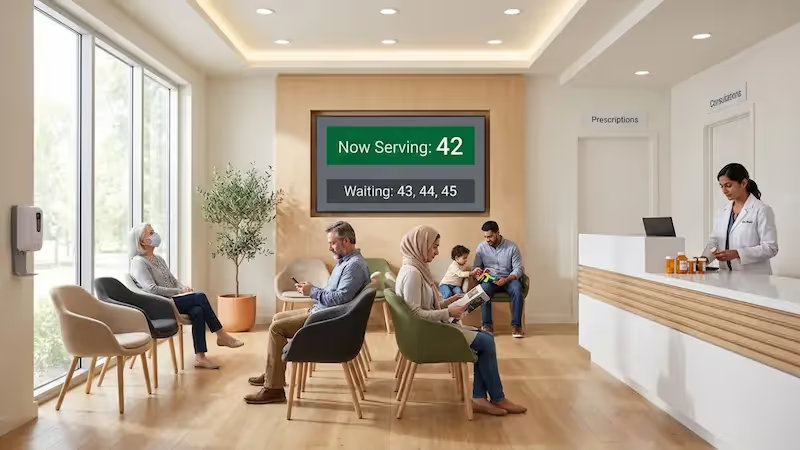
Hospitals use screens for patient tracking, room scheduling, and emergency alerts. This data is often protected by privacy laws. Using a self-hosted system helps ensure that patient information displayed on screens or processed by the system remains within the hospital's private intranet.
Defense and Critical Infrastructure
Power plants, military bases, and transport hubs often use "air-gapped" networks (networks physically isolated from the internet). Local server digital signage is the only viable option here, allowing for reliable playback of safety protocols and operational metrics without any external connectivity risks.
Meeting Compliance and Regulatory Demands
Strict regulations often dictate how data must be handled, making on-premise solutions a requirement rather than just a preference.
GDPR and Data Privacy Requirements
Under GDPR, organizations must strictly control how data is processed. If your digital signage setup involves sensors or analytics that could be linked to individuals, keeping that data on a local server ensures it doesn't cross international borders to a third-party cloud, simplifying compliance.
HIPAA Regulations for Healthcare Applications
HIPAA mandates the protection of health information. By hosting the Look CMS locally, healthcare providers can ensure that any data displayed on digital whiteboards or nursing station screens stays behind the hospital's firewall, protected by their own encryption standards.
PCI DSS for Retail and Finance
If digital signage shares a network with Point of Sale (POS) systems, it falls under the scope of PCI DSS. Local servers allow IT teams to implement the specific firewalls and network segmentation required to protect cardholder data, ensuring the signage system doesn't become a weak point for credit card theft.
Risks of Relying Solely on Cloud-Based Digital Signage
Cloud-based solutions are powerful and convenient for most businesses, but they introduce variables that high-security organizations may want to avoid.
Vulnerabilities to Remote Hacking and Data Leaks
Public cloud platforms are accessible via the internet, making them frequent targets for broad-scale attacks. While reputable providers use strong security, a single vulnerability in a cloud platform can theoretically affect multiple tenants. On-premise setups reduce this surface area significantly.
Impact of Connectivity Loss and Downtime
Cloud networks depend on the internet. If the connection drops, you lose the ability to update content instantly. While Look’s offline playback feature ensures screens keep running cached content, a local server setup ensures you retain full management capabilities even during a total internet blackout.
Limited Customization of Security Controls
Cloud vendors provide standardized security. However, highly regulated organizations often need to apply custom encryption keys, specific intrusion detection systems, or proprietary firewalls that standard cloud SaaS (Software as a Service) platforms might not support.
How Local Server Digital Signage Improves Security
Deploying Look On-Premise transforms your signage network into a private asset that your IT team controls completely.
Complete Control Over Data and Content
When you host locally, you own the environment. Your content never sits on a server you don't control. This eliminates the risk of third-party mishandling and ensures that sensitive internal communications remain strictly internal.
Reduced Exposure to Cloud Vulnerabilities
By removing the cloud component, you remove a major attack vector. If your CMS is not accessible from the public internet, it is inherently more difficult for remote attackers to find and exploit it. This "security by isolation" is a primary defense strategy for critical infrastructure.
Tighter Network Access Controls
On-premise systems allow for granular network management. IT teams can restrict access to the signage server to specific internal IP addresses or physical locations. This creates a much higher barrier to entry for anyone trying to gain unauthorized access.
Minimizing External Threats and Unauthorized Access
Local servers facilitate the use of VLANs (Virtual Local Area Networks). You can place your Look HDMI Players and smart screens on a dedicated VLAN that is completely separated from your core business data. Even if a screen is physically tampered with, the attacker cannot bridge the gap to your main servers.
Key Features of Secure Local Server Digital Signage Solutions
A robust local server solution, such as Look Digital Signage, includes built-in features designed to support enterprise-grade security.
Role-Based Access and Authentication
Secure systems use Role-Based Access Control (RBAC) to limit who can do what. For example:
- Marketing staff can only upload media and build playlists.
- Managers can approve and schedule content.
- Only IT administrators can change system configurations or security settings.
This minimizes the risk of accidental errors or malicious actions from compromised user accounts.
Encryption of Stored and Transmitted Data
Data should always be encrypted, even inside a private network. Look supports secure communication protocols to ensure that playlists and media files sent from the server to the players cannot be read if intercepted.
Integration with On-Premise Security Systems
Local server signage can integrate with local fire alarms and emergency systems via API. In the event of a fire or security breach, the system can trigger an immediate takeover of all screens to display evacuation routes or lockdown instructions, operating entirely on the local network.
Customizable Security Policies
Hosting your own server means you set the rules. You can enforce complex password policies, determine how long logs are kept for auditing, and configure the firewall settings to match your organization's exact compliance needs.
Regular Security Audits and Updates
With an on-premise solution, your team decides when to update. You can test new software versions in a sandbox environment before rolling them out to your live screens. This prevents compatibility issues and ensures that security patches are applied according to your schedule, not the vendor's.
Best Practices for Maintaining Digital Signage Security
Security is an active process. Implementing these standard practices will help keep your local server network resilient.
Network Segmentation for Signage Devices
Isolate your digital signage. By putting players on their own VLAN, you ensure that they cannot communicate with HR databases or financial servers. This containment strategy is essential: if one device is compromised, the threat is trapped within that specific network segment.

Routine Security Patching and Monitoring
Treat your media players like computers. Whether you use the Look HDMI Player or third-party hardware, ensure the operating system and firmware are updated regularly. Use the Look CMS monitoring tools to watch for device health-unexpected spikes in activity can be an early warning sign of a security issue.
Staff Training to Reduce Human Error Risks
Technology can only do so much; people are often the vulnerability. Train your team to recognize phishing attempts and enforce strong password habits. Simple steps, like changing default passwords on new devices immediately, prevent a large percentage of potential attacks.
Incident Response Planning
Have a plan for when things go wrong. Your response strategy should include:
- Procedures for disconnecting affected screens from the network.
- Steps to analyze logs and identify the breach source.
- A process for restoring clean content from backups.
- Clear communication lines for notifying stakeholders.
Frequently Asked Questions About Secure Local Server Digital Signage
Here are common questions organizations ask when considering an on-premise deployment.
Can Hackers Target Local Server Digital Signage?
Any connected system has some risk, but local servers are much harder to target than cloud systems because they aren't exposed to the public internet. A successful attack usually requires physical access to the building or a breach of the main corporate network first.
Should Digital Signage Use a Separate Network?
Yes. Placing digital signage on a separate network or VLAN is a best practice recommended by security experts. It prevents your screens from becoming a "back door" into your sensitive business data.
How Often Should Security Updates Be Applied?
You should apply security patches as soon as they are validated by your IT team, typically monthly. With Look On-Premise, you control this schedule, allowing you to update during off-hours to avoid disrupting your screens.
Is Local Server Digital Signage the Right Choice for Your Organization?
Choosing between cloud and local server signage comes down to your risk tolerance and infrastructure. Cloud systems are fantastic for ease of use and rapid scaling. However, if you operate in government, finance, healthcare, or critical infrastructure, the control offered by a local server is often non-negotiable.
Look Digital Signage supports both paths. Whether you need the flexibility of the cloud or the ironclad security of an on-premise deployment, Look provides the tools to manage your network effectively. An on-premise setup gives you offline reliability, total data sovereignty, and deep integration with your secure environment. In a world where data protection is critical, keeping your signage network inside your own walls is often the safest move you can make. Ready to bulletproof your signage system? Contact our sales team today to get a customized solution that caters to your organizations' digital signage security needs.