Table of Content
How do you control what appears on a screen without physically plugging in a USB drive every time you need an update? A Digital Signage Content Management System (CMS) is the answer. It is the software platform that acts as your command center, allowing you to create, schedule, and publish content to one screen or a network of thousands from a single dashboard. Whether you are managing menu boards, corporate announcements, or retail promotions, a CMS ensures the right message reaches the right audience at the right time.
For modern businesses, screens are more than just decoration; they are active communication channels. A digital signage CMS turns standard TVs and professional displays into dynamic tools that drive engagement and share real-time information. It replaces manual, error-prone updates with a streamlined process, helping teams save time and keep messaging consistent across every location.
What Is a Digital Signage Content Management System?
At its core, a Digital Signage CMS is the bridge between your content strategy and your physical screens. Unlike a website where users choose to visit a URL, digital signage "pushes" content to screens in specific physical locations. This software handles the unique requirements of this format, such as remotely managing device health, organizing playlists, and ensuring content fits different screen orientations.
The system is not just a storage folder for images and videos; it is a complete management toolkit. It allows you to maintain brand consistency across a global network while offering the flexibility to customize content for specific regions. for example, a retail chain can use a cloud-based digital signage platform to push a nationwide brand campaign, while local managers schedule region-specific offers on the same screens.
How Does a Digital Signage CMS Work?
The workflow of a CMS is designed to be simple and efficient. It generally follows three steps:
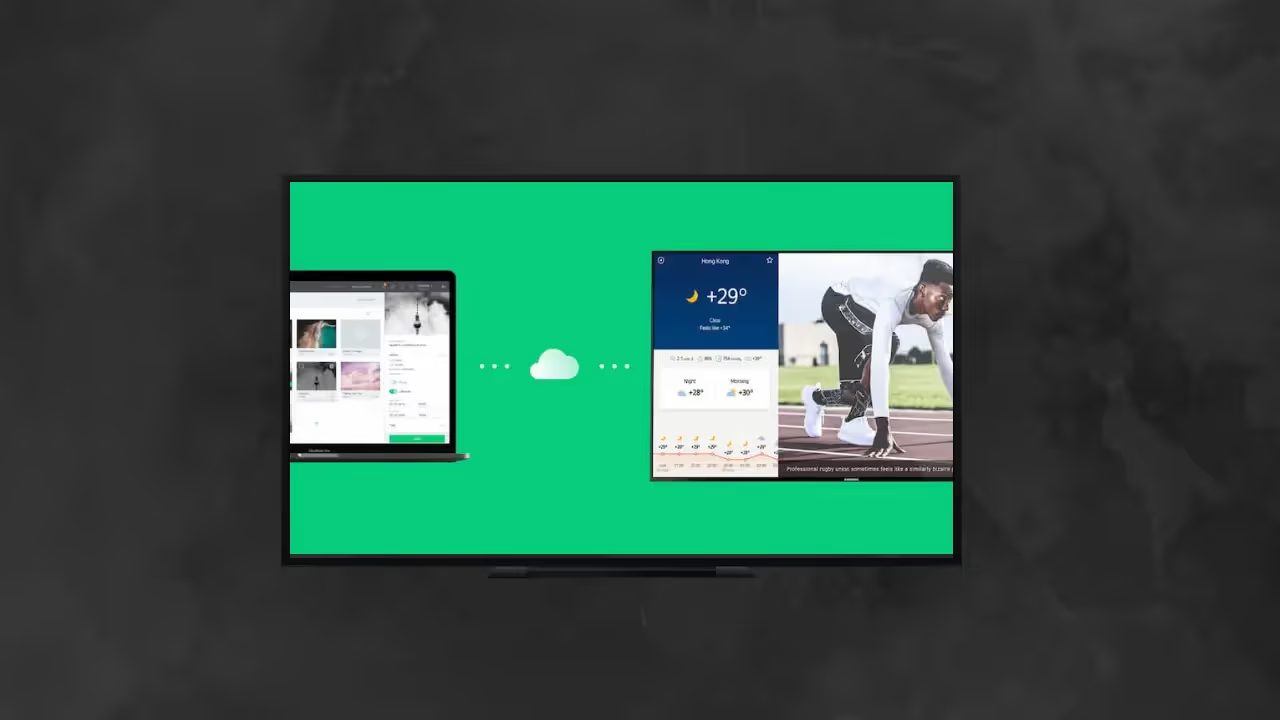
- Creation and Upload: You access a central dashboard via a web browser to upload media or create new visuals using built-in tools.
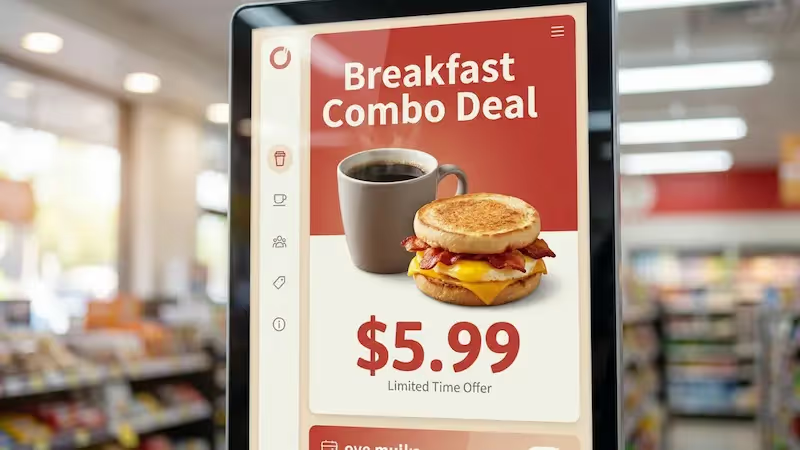
- Scheduling and Management: You organize content into a playlist and set a schedule (e.g., play "Breakfast Menu" from 7 AM to 11 AM).
- Publishing and Playback: The CMS sends the data over the internet to a media player connected to the screen.
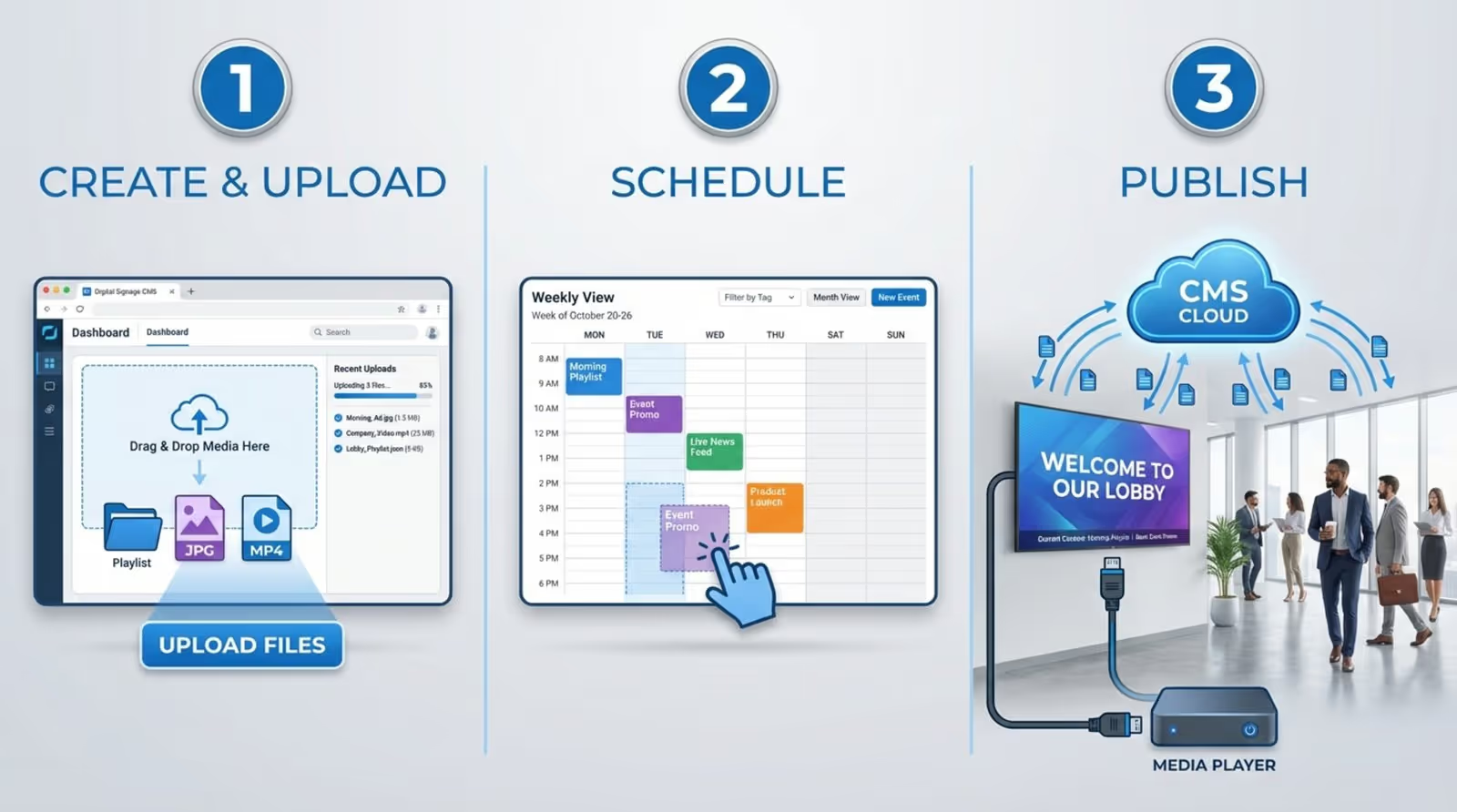
Reliability is key. Modern systems use "caching," meaning the media player downloads the content and stores it locally. If your internet connection drops, the screen keeps running the scheduled content from its internal storage, ensuring reliable playback without interruption. The system also maintains a connection to the dashboard, alerting you if a screen goes offline so you can troubleshoot remotely.
What Is the Purpose of a Digital Signage CMS?
The primary goal of a CMS is to save time and automate communication. Without software, updating screens requires physical access to the device, which is slow and unscalable. A CMS centralizes control, allowing you to update prices, announcements, or emergency alerts in minutes from anywhere.
Beyond convenience, the CMS maximizes the ROI of your hardware. By using tools like automated scheduling and data integrations, you transform passive screens into an "always-on" channel. This helps departments ranging from HR to sales deliver timely messages without wasting staff hours on manual setup.
Which Types of Digital Signage CMS Systems Exist?
Organizations typically choose between two deployment models: cloud-based and on-premise. Your choice depends on your IT infrastructure, security requirements, and how your team prefers to manage software.
While on-premise solutions have a specific place in highly regulated industries, most businesses today favor cloud-based solutions for their ease of use and ability to scale smoothly.
Cloud-Based Digital Signage CMS
Cloud-based platforms (SaaS) are hosted on the provider’s servers and accessed via the internet. This model is ideal for most businesses because it requires no complex server setup. You simply log in to the web dashboard to manage your network. This allows for true remote management, letting a marketing manager in New York update screens in London instantly.
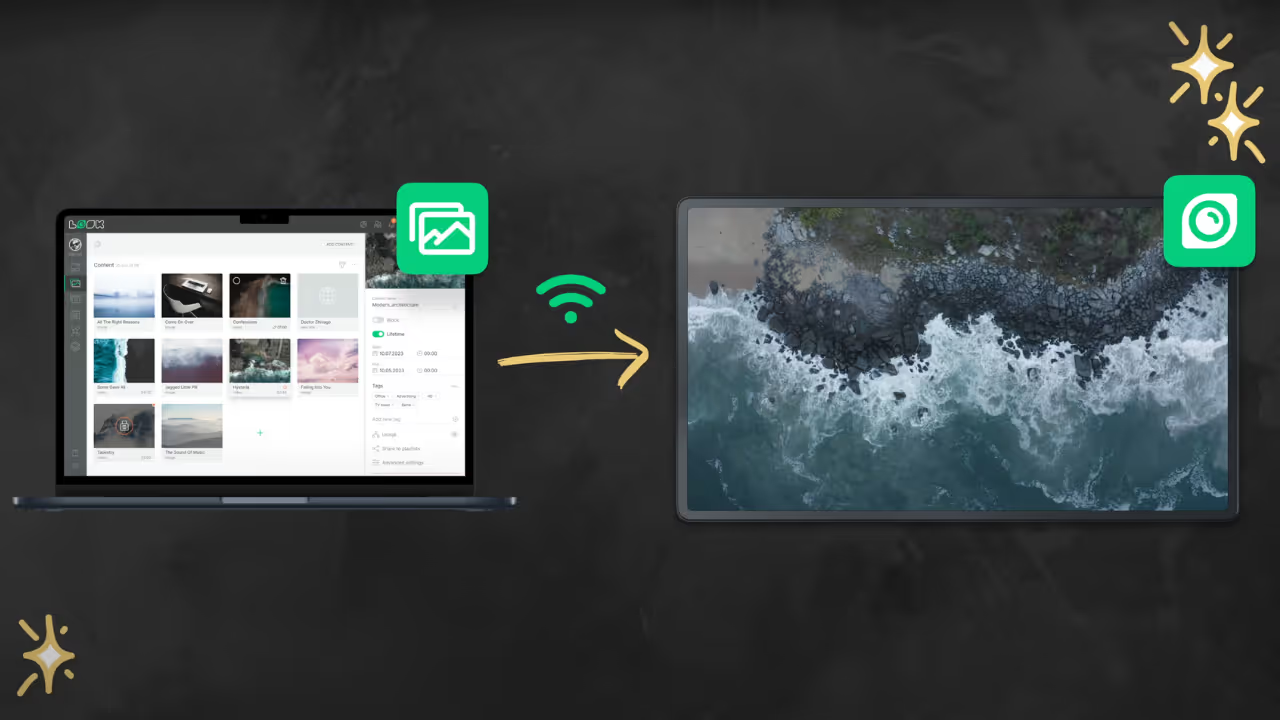
These systems often include automatic updates, meaning you always have access to the latest features and security patches without IT intervention. It is a flexible, "pay-as-you-grow" model that suits everything from a single café screen to a massive enterprise network.
On-Premise Digital Signage CMS
On-premise systems are installed on your organization's own local servers. This gives you total control over the data and the hosting environment. This approach is often required by organizations with strict data governance policies, such as banks, government agencies, or healthcare facilities that need to keep all data behind their own firewalls.
While this offers maximum security control, it requires a dedicated IT team to handle maintenance, updates, and server hardware. It is a robust solution for environments where internet access is restricted or where internal network integration is critical.
What Are the Key Features of a Digital Signage CMS?
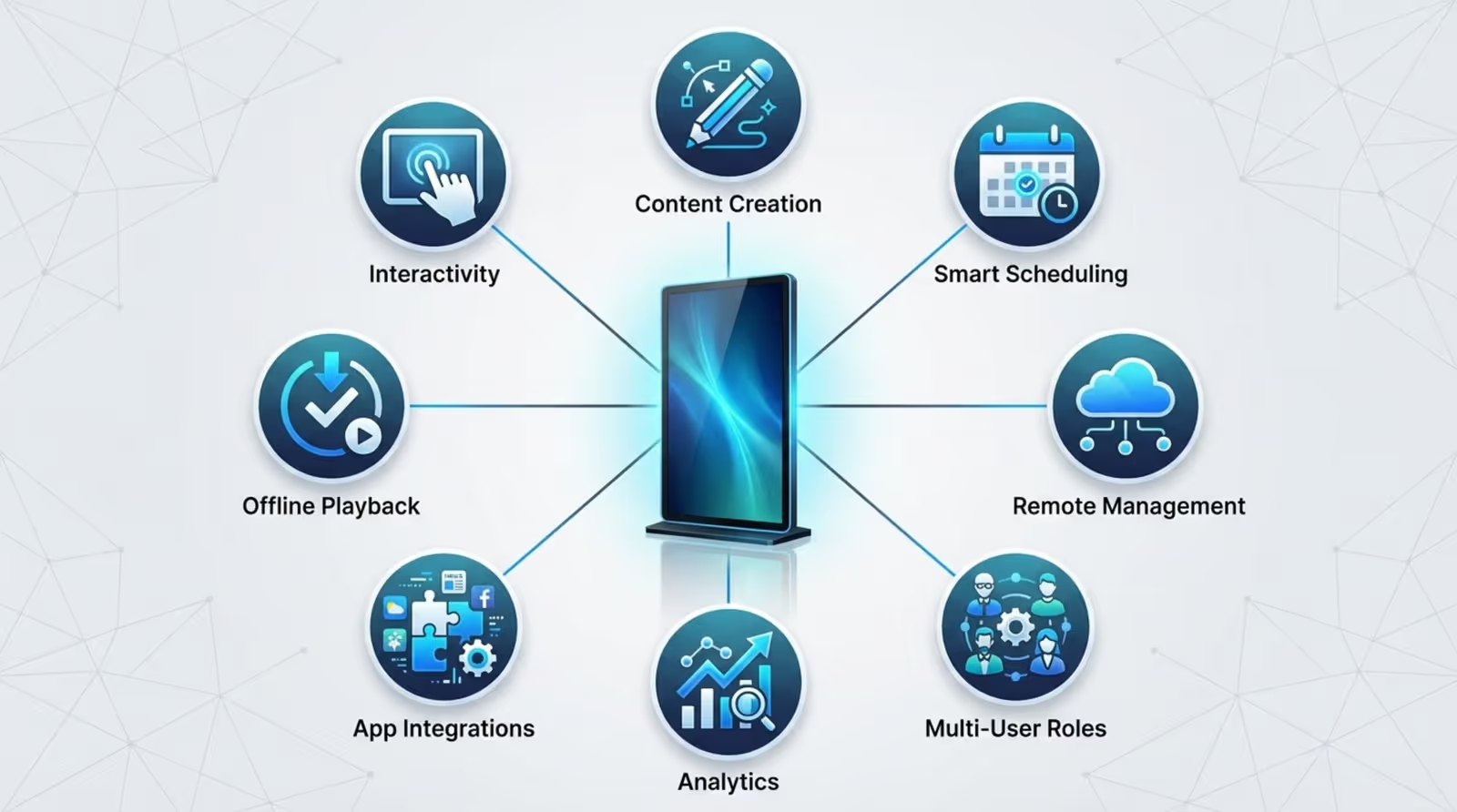
A capable digital signage CMS should balance power with simplicity. It needs to be approachable for non-technical users while offering the stability IT teams demand. When evaluating software, look for features that streamline the journey from content creation to reporting.
The following capabilities are standard in professional solutions like Look Digital Signage and help ensure your network runs efficiently.
Content Creation and Editing Tools
You shouldn't need a separate design team for every small update. A strong CMS includes built-in tools like a Content Creator that help you generate branded visuals quickly. Access to ready-made templates allows you to plug in your text and images to create professional slides in minutes.
These tools also support screen layouts, allowing you to split a single display into multiple zones. For instance, you can run a promotional video in the main zone while a ticker with news or internal announcements scrolls at the bottom.
Scheduling and Automated Playback
Effective signage relies on showing the right content at the right time. Smart Scheduling features let you plan campaigns weeks or months in advance. You can set specific start and end dates, or create recurring schedules (e.g., "Happy Hour" every Friday at 5 PM). This automation allows you to "set and forget" routine content, freeing up your team to focus on strategy.
Remote Management and Centralized Control
The ability to manage screens remotely is essential. From a single dashboard, you should be able to view the status of every player, reboot devices, and update software settings. This remote control significantly reduces site visits and maintenance costs. If a screen is down, you know immediately.
Multi-User and Permission Management
Collaborative teams need managed access. A good CMS allows you to assign roles and permissions. For example, a local store manager might only have permission to update the "Daily Specials" playlist, while the corporate marketing team retains control over brand assets and global settings. This keeps workflows efficient while protecting brand consistency.
Analytics and Reporting Capabilities
To prove ROI, you need data. Playback Analytics and "Proof-of-Play" reports track exactly what content played, on which screens, and how many times. This is vital for advertising networks that need to bill clients, but it is equally useful for internal teams to verify that important announcements were actually displayed.
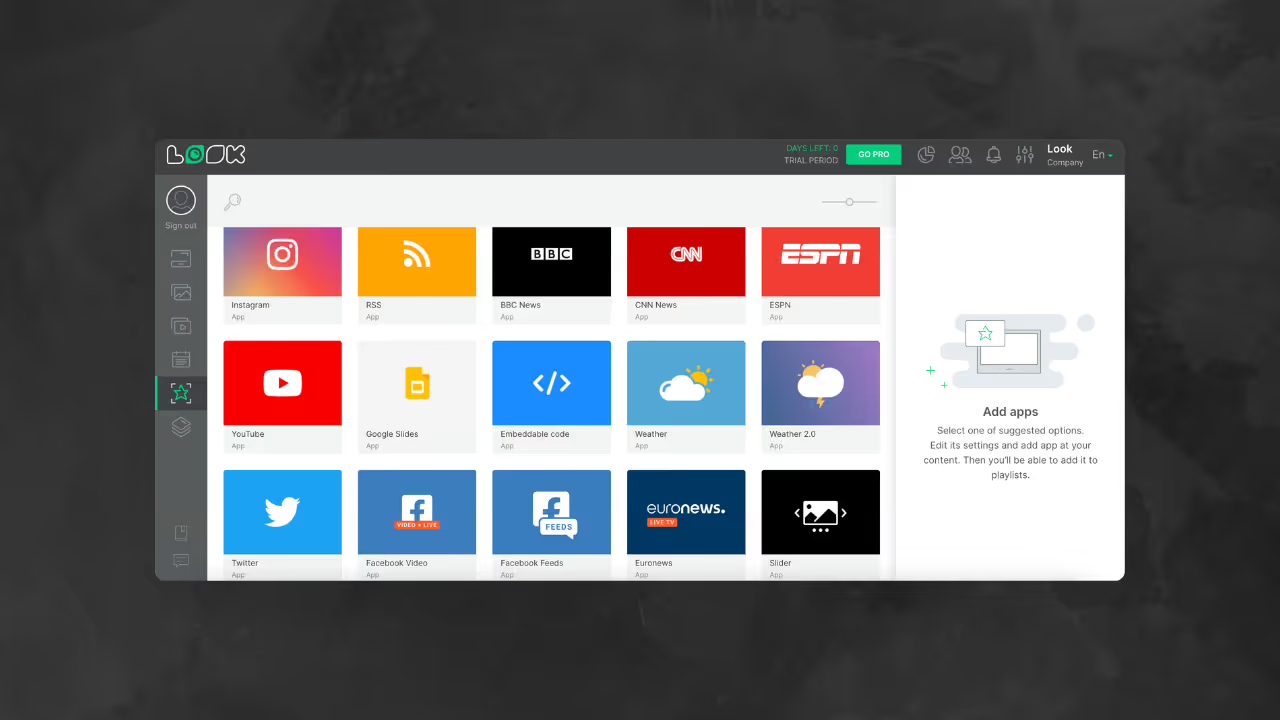
Integration with Apps and Data Feeds
Static images can become stale. A robust platform supports integrations and Look Apps to display dynamic content. This includes social media feeds, weather updates, news tickers, or internal metrics from tools like Power BI or Google Slides. These automated feeds keep screens fresh and relevant without constant manual updates.
Offline Playback Support
Internet connections can be unpredictable, but your screens shouldn't be. Offline Playback ensures that once content is downloaded to the player, it continues to run perfectly even if the network disconnects. This reliability is non-negotiable for professional environments.
Interactive Content
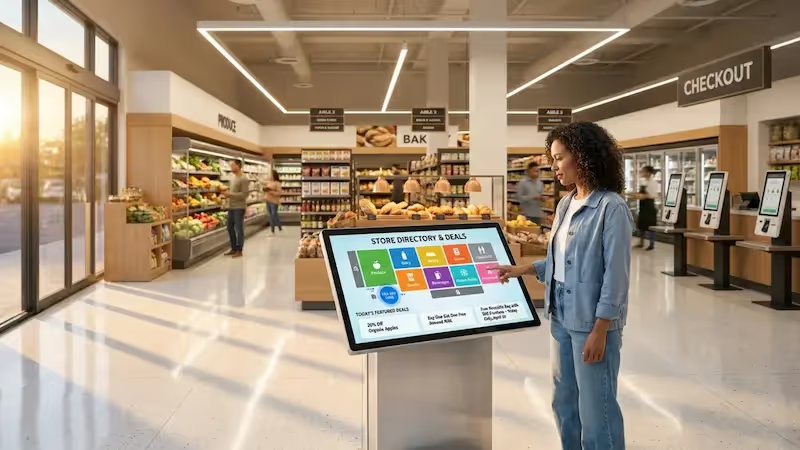
For businesses needing deeper engagement, such as kiosks or wayfinding, the CMS should support Interactive Scenarios. This allows users to touch the screen to browse catalogs, fill out forms, or navigate maps. Even without touchscreens, using QR codes within your content bridges the gap between the physical screen and the user’s mobile device.
What Are the Benefits of Using a Digital Signage CMS?
Adopting a professional CMS shifts your strategy from reactive to proactive. It creates a smoother workflow, ensures better compliance, and ultimately delivers a better experience for your audience.
Improved Content Consistency
A centralized library ensures that every location uses the correct, up-to-date assets. You avoid the risk of old logos or expired offers lingering on screens. Whether you have 5 screens or 500, the brand experience remains uniform.
Streamlined Updates and Time Savings
Speed is a competitive advantage. With a CMS, you can react to market changes instantly. If a product sells out, you can remove the ad immediately. If a new policy is released, you can publish it to all staff screens in minutes. This agility is impossible with printed signage or USB-based updates.
Enhanced Security
Professional platforms prioritize security with encryption, two-factor authentication, and secure playback environments. This prevents unauthorized access and ensures that only approved content appears on your displays.
Easier Network Scalability
Cloud-based digital signage software is designed to scale. Adding a new screen is as simple as connecting a player and pairing it with your account. You can grow from a pilot project to a full rollout without changing your software infrastructure.
Emergency Messaging
In critical situations, screens become safety tools. Administrators can trigger emergency overrides to display evacuation routes or safety alerts instantly across the entire network, overriding all scheduled content.
What Are Common Challenges in Digital Signage Content Management?
While the software simplifies management, successful deployment requires planning. Understanding common pitfalls helps you avoid them.
Managing Large Networks
As device counts grow, organization becomes difficult. A CMS that lacks grouping or tagging features can lead to confusion. You need a system that allows you to group screens by location, city, or purpose (e.g., "Lobby Screens") to manage updates efficiently.
Maintaining Content Freshness
The "set and forget" mentality can lead to stale content. Viewers stop looking at screens that never change. To combat this, use templates for quick updates and integrate automated feeds (like news or social media) to ensure there is always something new to see.
Integrating Diverse Hardware
Businesses often have a mix of screen brands and player types. A challenge arises if a CMS locks you into proprietary hardware. The ideal solution is hardware-neutral, allowing you to use existing smart TVs, Android players, or specialized devices without compatibility issues.
How to Choose the Right Digital Signage CMS for Your Organization
Selecting a CMS is a long-term investment. You need a partner that fits your technical environment and is easy enough for your team to actually use. We recommend evaluating platforms based on usability, hardware flexibility, and support.
For many businesses, Look Digital Signage is a strong fit. It is designed to be intuitive for non-technical teams while offering the reliability IT requires. Look DS allows you to manage any screen from a cloud-based dashboard, and it specifically addresses common pain points with features like:
- Look App (Free Player): Use existing hardware or Smart TVs without buying new equipment.
- Smart Scheduling: Automate your playlists to target specific times and days easily.
- Ready-made Templates: Create professional content quickly without a designer.
- Offline Playback: Keep your screens running smoothly even if the internet drops.

Evaluating User Interface
If the software is hard to use, your team won't use it. Look for a clean, logical dashboard. Tasks like uploading a video or changing a schedule should be obvious and take only a few clicks.
Assessing Hardware Compatibility
Avoid vendor lock-in. A flexible CMS should run on various operating systems (Android, Windows, Linux, Fire OS) and hardware types. This lets you choose the players that fit your budget and performance needs, rather than being forced into expensive proprietary boxes.
Reviewing Support and Scalability
Ensure the provider offers accessible customer support and detailed documentation. Additionally, check their pricing model. A transparent, per-screen subscription model allows you to start small and scale costs predictably as you add more locations.
What Are Future Trends in Digital Signage CMS?
The industry is moving toward smarter, more data-driven interactions. Future developments focus on making content more relevant without increasing manual work.
AI-Driven Automation
AI is beginning to assist with content creation and organization. Tools like the Look AI Wizard already help generate visuals, and future iterations will likely help automate scheduling based on data trends, ensuring the most effective content plays at peak times.
Personalization and IoT Integration
Screens are becoming part of the "Internet of Things" (IoT). Future CMS platforms will integrate more deeply with environmental sensors-for example, changing a menu board to show hot coffee when the local weather feed reports a drop in temperature.
Interactive and Real-Time Data
The line between digital signage and kiosk software is blurring. We expect to see more touch-enabled experiences and real-time dashboards that visualize live data from business systems, making screens a vital part of daily operations.
Frequently Asked Questions about Digital Signage Content Management Systems
Here are answers to common questions for those starting their digital signage journey.
Is a CMS Necessary for Small-Scale Digital Signage?
Yes. While USB drives work for a single screen, they are inefficient. A CMS allows you to schedule content (e.g., lunch menus at noon) and ensures the screen is actually on and playing. The time saved on manual updates usually justifies the investment, even for small networks.
Will My Digital Signage CMS Work Without Internet?
Most professional cloud-based systems, including Look DS, support offline playback. The player downloads the content locally. You only need an internet connection to publish new changes or check the status of the player.
Can Non-Technical Users Manage Content Easily?
Absolutely. Modern platforms are built for marketing and HR teams, not just IT. With drag-and-drop editors and templates, anyone comfortable with basic web tools can manage the system.
How Does a CMS Help with Content Approval?
A CMS provides structure. You can set up user roles so that content must be approved by a manager before it goes live. This prevents errors and ensures that all published material aligns with your brand standards.
In summary, a Digital Signage CMS is the engine that powers effective visual communication. By centralizing control and automating playback, it transforms screens from passive monitors into dynamic business assets. Whether you are using Look Digital Signage or exploring other options, choosing a flexible, reliable system is the first step toward building a successful network.