Table of Content
Every few years, new tech falls upon the advertising world and takes it by storm. And in most cases, at least with 3D advertising, the impact is immediate, viral, and monumental. To give an example, if you were scrolling through your feed in May 2021 and happened upon a viral video of a 20-meter zombie tiger bursting out of London's Piccadilly Lights, you witnessed Netflix's Army of the Dead campaign. An installation that stopped pedestrian traffic, generated millions of social media impressions within 72 hours, and earned coverage across major news outlets.

Those are impressive results, but in order to justify a 3X ad spend compared to standard digital billboards, you need to see how brands across industries are pulling off naked-eye 3D anamorphic campaigns and understand the technical requirements, timelines, and creative best practices that make them possible, all covered in this article.
If you're a brand marketer, media buyer, or agency ready to dive in, Look Digital Signage helps you deploy your DOOH campaigns across networks with proof-of-play tracking, multi-zone layouts that pair the main message with QR codes or CTAs, and real-time health monitoring across locations, all from a single unified dashboard.
Entertainment & Streaming
1. Netflix – Army of the Dead (Piccadilly Circus, London)
In May 2021, Netflix shut down foot traffic at London's Piccadilly Circus with Valentine, a 20-meter-tall zombie tiger that looked like it was climbing out of the curved 783.5-square-meter Piccadilly Lights screen. The tiger, created by VFX supervisor Marcus Taormina (who'd worked on Guardians of the Galaxy), was based on movements captured at Big Cat Rescue in Florida. The installation ran every 30 minutes until midnight for nearly a week, generating millions of social media impressions within the first 72 hours and earning coverage from the BBC to The New York Times.
2. HBO – House of the Dragon (Times Square, New York)
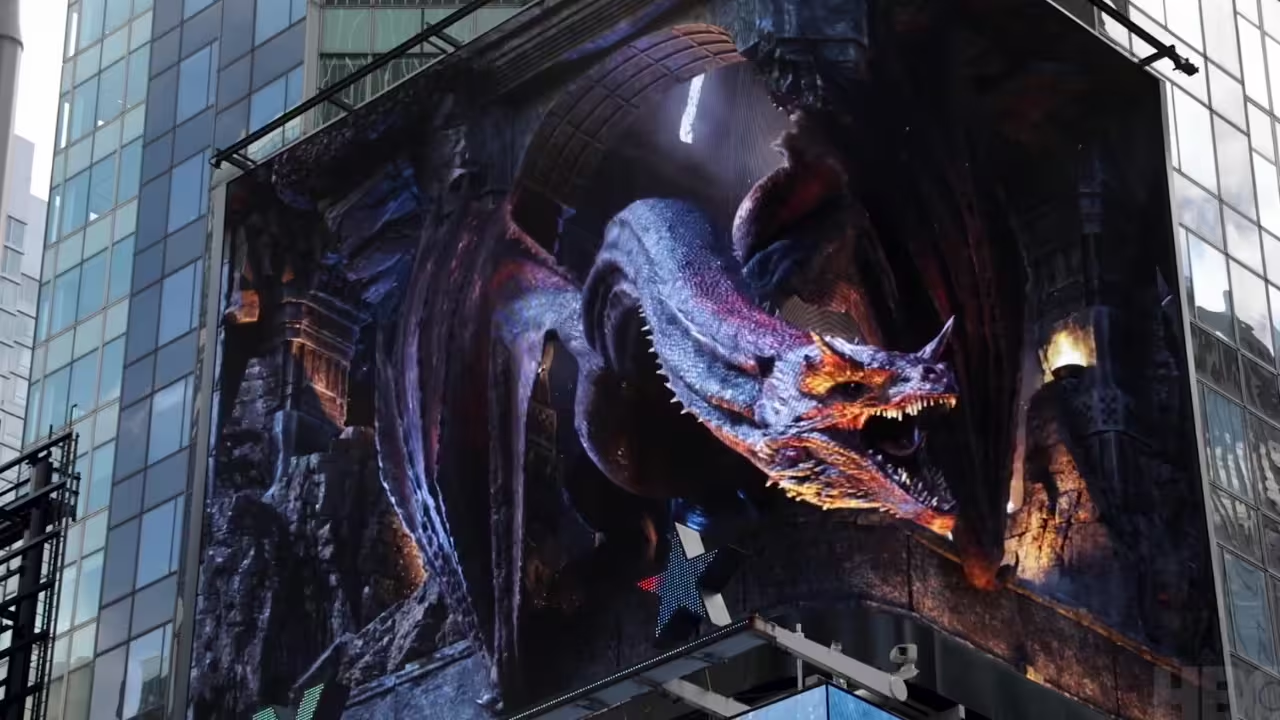
HBO installed a fire-breathing dragon on a 60-foot-wide by 30-foot-tall curved LED screen in Times Square for the August 2022 premiere. The dragon, Caraxes, appeared to peer out from the screen while spewing flames across the display. The Mill handled production, creating content specifically calibrated for the screen's curved geometry. The campaign ran for two weeks leading up to the premiere and was co-sponsored by LG to promote their 83" OLED TV.
3. Amazon Prime – The Wheel of Time (Multiple Locations)
Amazon Prime deployed custom 3D installations across Piccadilly Circus, Times Square, and Tokyo's Cross Shinjuku Vision, with lead actor Rosamund Pike at the center of each. Instead of resizing one piece of content, each location got bespoke animation designed for its specific screen configuration and viewing angle. Amplify handled production, working directly with Amazon Studios' VFX teams to maintain visual consistency with the show.
Automotive
4. BMW – XM Launch (Multiple Locations)
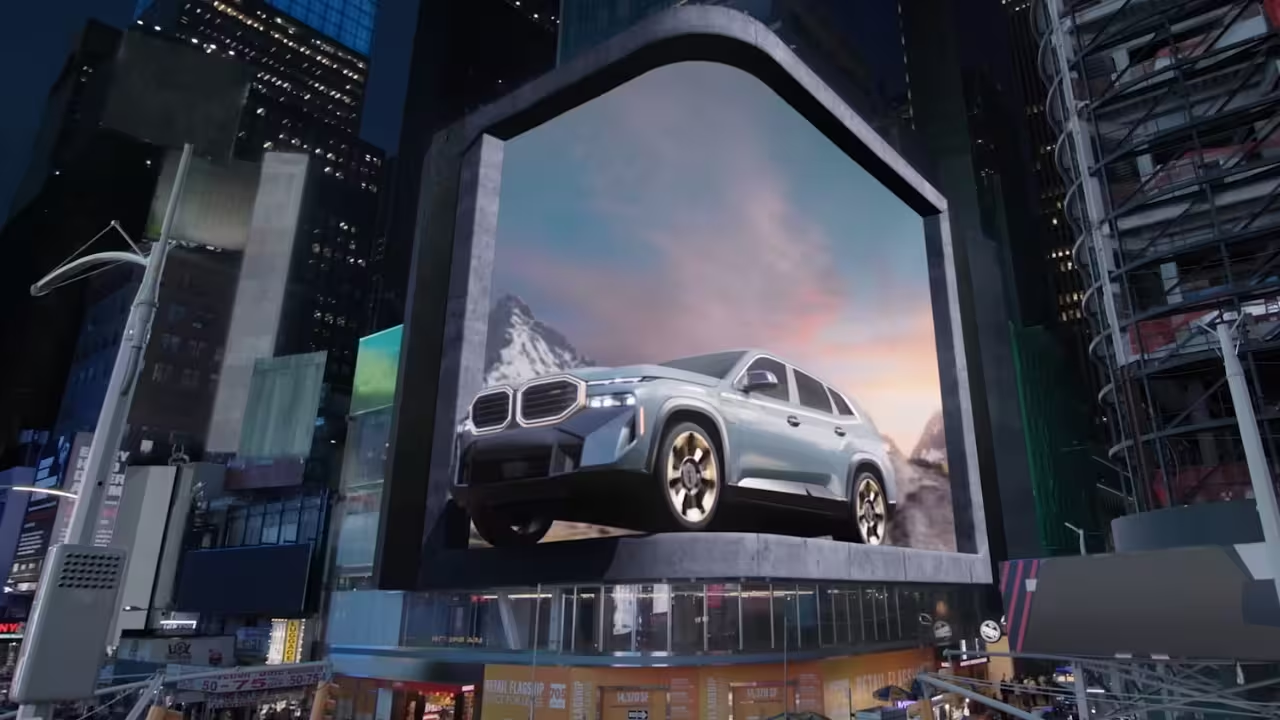
BMW promoted their XM hybrid electric SUV with installations showing the vehicle traversing mountain roads before appearing to drive off the billboard edge. The L-shaped corner screen placement was an important element because the 90-degree angle let them show the SUV on one surface and the landscape on another, to reinforce the depth effect. The campaign ran across several markets with screen sizes ranging from 50 to 80 square meters.
Technology & Gaming
5. Sony PlayStation – Spider-Man 2 (Global Campaign)
Sony's campaign for Marvel's Spider-Man 2 put 3D installations in multiple cities showing Spider-Man and Venom mid-battle. To make this work, they choreographed the action so characters used the actual screen borders as physical objects where Venom appeared to grip the edge while Spider-Man swung around the corner. The global rollout coordinated with the game's September 2023 release across all markets simultaneously.
6. Meta – Quest 2 "Wish for the Extraordinary" (Piccadilly Circus, London)
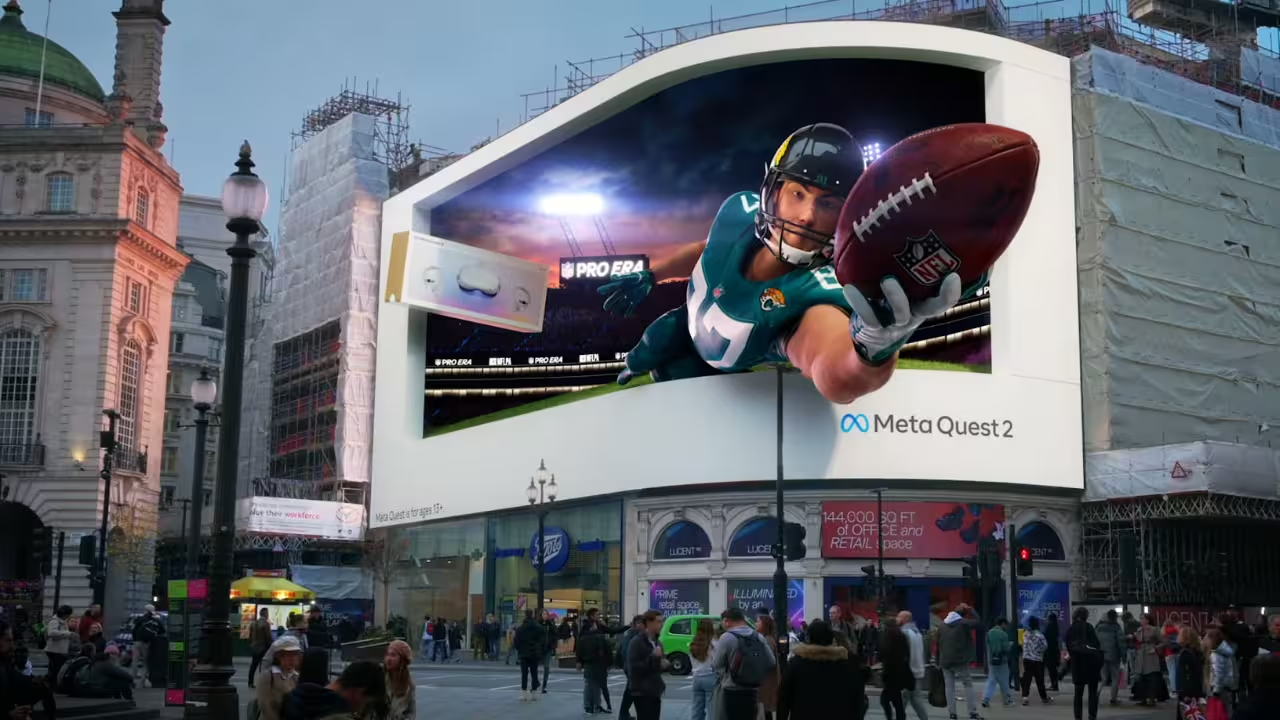
Meta took over Piccadilly Lights during the 2021 holiday season with VR-themed content showing virtual environments extending into physical space. The seasonal timing was strategic since the ad ran during peak shopping weeks leading up to Christmas. The installation used the full curved screen to show portals opening into different VR worlds.
7. Fortnite x Balenciaga (Times Square, New York)
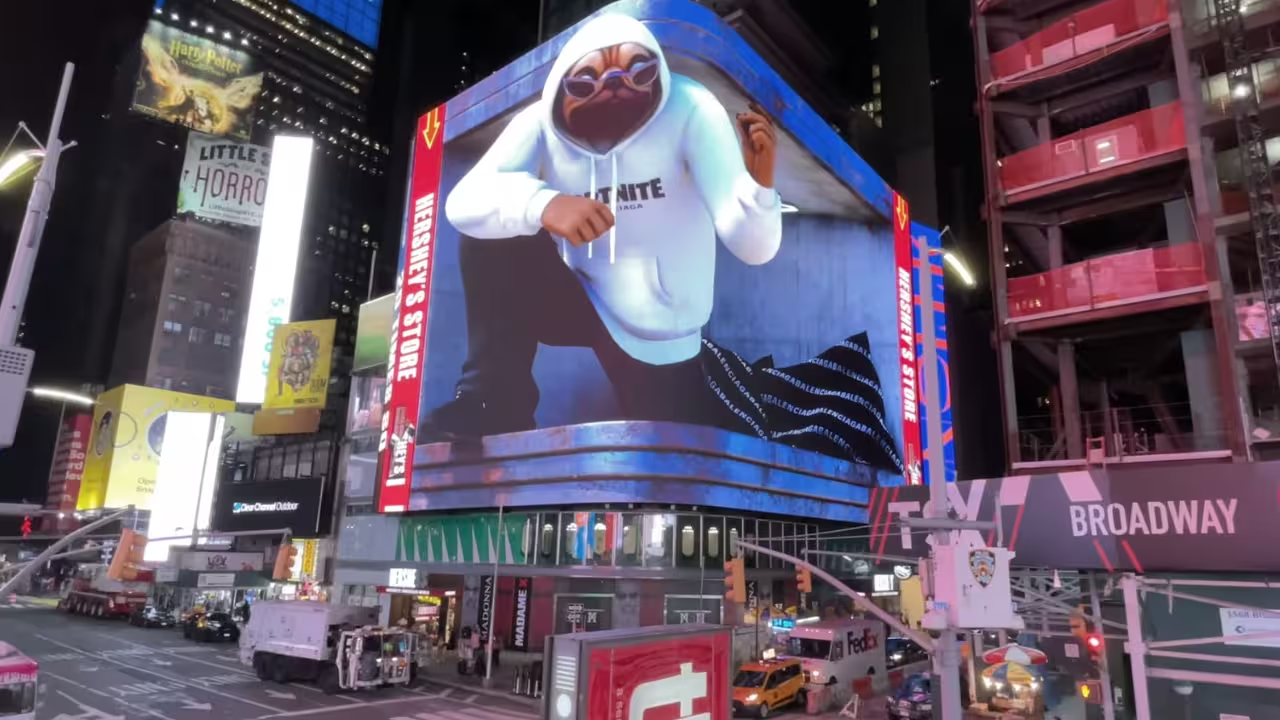
The gaming/fashion collaboration brought Fortnite character Doggo to Times Square wearing Balenciaga hoodies, pants, and sunglasses. The character appeared on a standard rectangular screen (not L-shaped), which limited the depth effect somewhat, but the novelty of the collaboration itself drove engagement. The campaign generated discussion in both gaming and fashion press, which is a rare crossover.
8. WhatsApp – Privacy Campaign (Piccadilly Lights, London)
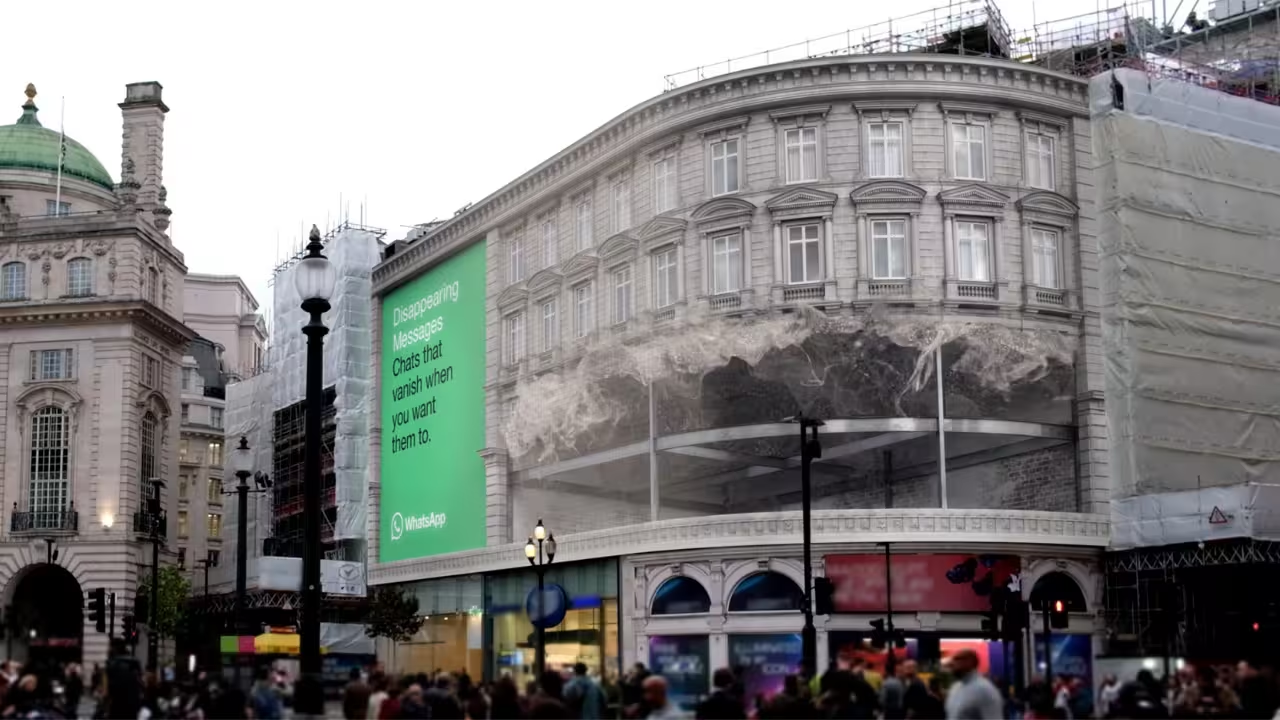
WhatsApp used the Piccadilly Lights screen to demonstrate end-to-end encryption by showing messages appearing to stay contained within locked frames on the display. The installation incorporated the surrounding architecture into the concept, where messages bounced off the "walls" of the screen rather than escaping. The campaign ran for three weeks in 2021 during heightened privacy concerns around messaging apps.
Consumer Brands
9. Coca-Cola – Robotic Billboard (Times Square, New York)
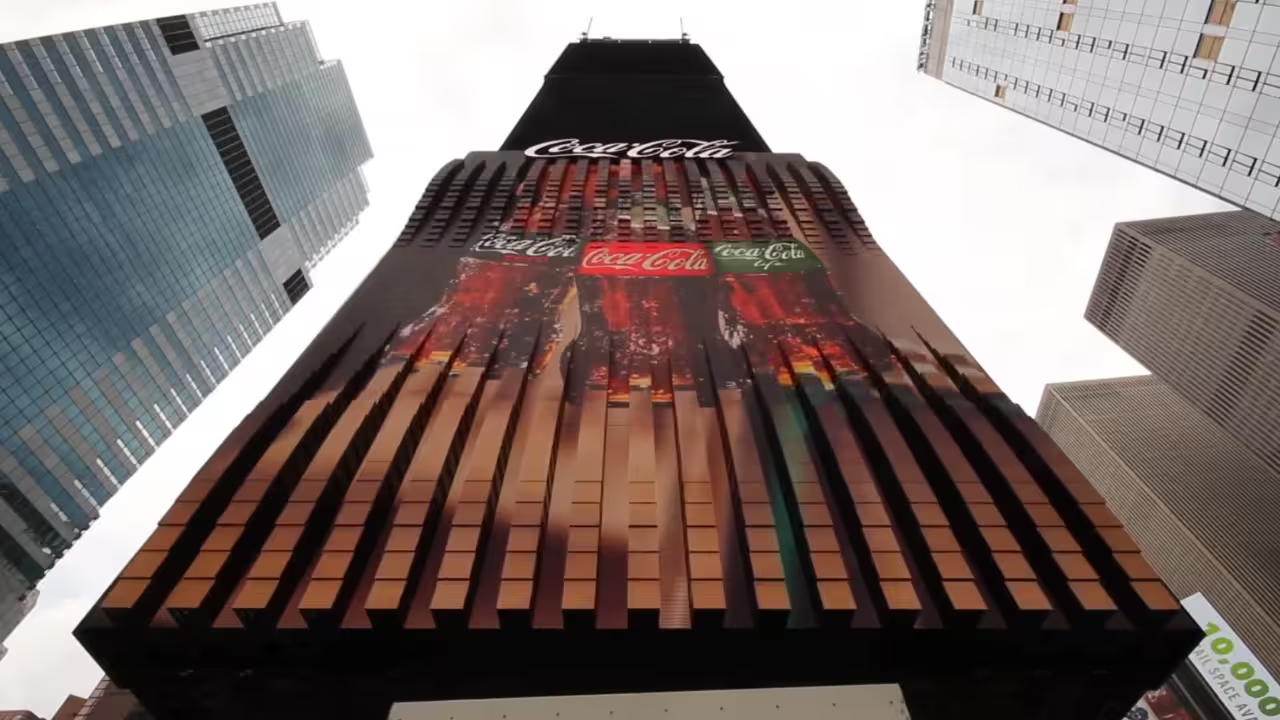
Coca-Cola's 2017 installation still holds two Guinness World Records: first 3D robotic billboard and largest 3D robotic billboard. The 68-foot-tall, 42-foot-wide screen uses 1,760 independently moving LED cubes that physically extend and retract up to several inches. Unlike pure anamorphic illusions, this combines real mechanical motion with digital content. Production took four years with a team of 35 engineers. It's a permanent installation on the 2 Times Square building.
10. Nike – Air Max Day (Shinjuku Station, Tokyo)
Nike's March 2022 campaign for Air Max's 35th anniversary used the Cross Shinjuku Vision screen, one of Tokyo's busiest transit locations with an estimated 3.6 million daily passersby. Giant Nike boxes appeared to open as oversized sneakers burst outward. The campaign ran for one week during Air Max Day celebrations and reportedly generated over 50 million combined social media video views globally.
11. Samsung – Galaxy "Tiger in the City" (Global, Including Times Square)
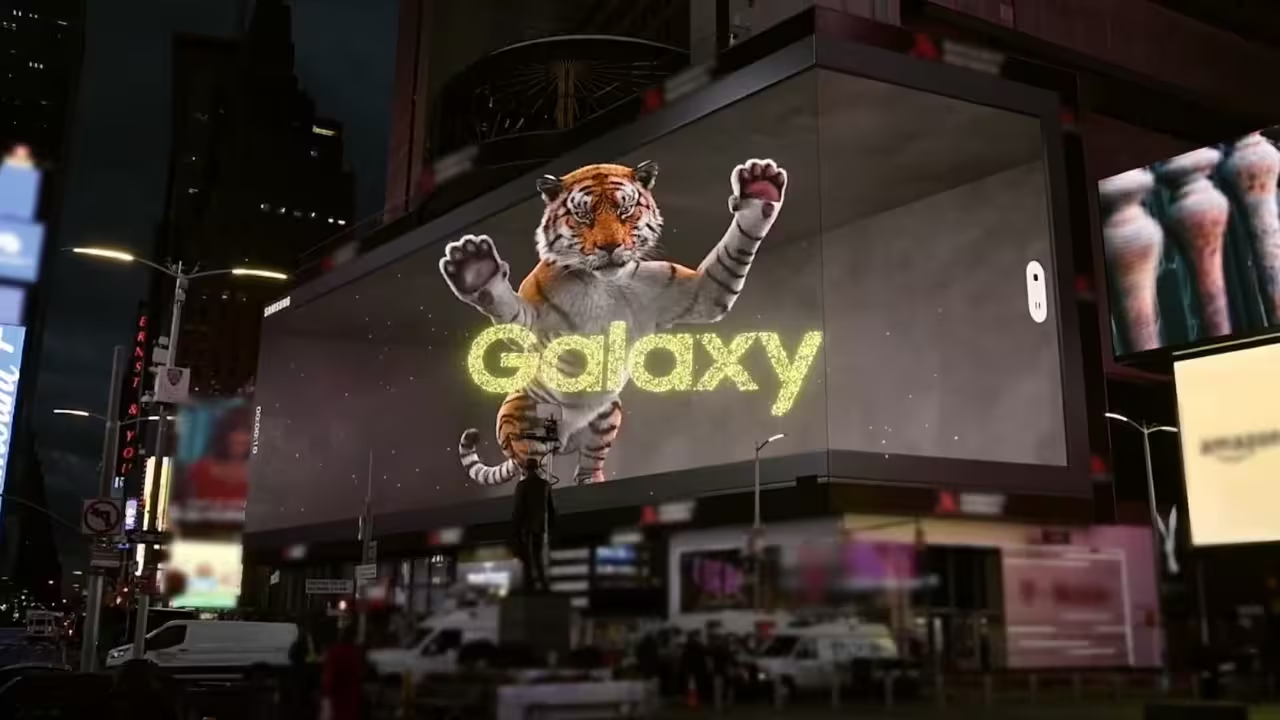
For the 2022 Lunar New Year, Samsung deployed 3D tigers across five cities. In Times Square, the tiger reached toward the Galaxy logo with its paw before appearing to leap from the screen. The campaign tied product launches to culturally relevant imagery during peak shopping season. Each installation ran for 3-4 weeks.
Public Art & Landmarks
12. The Wave – COEX K-POP Square (Seoul, South Korea)

Digital art collective d'strict created what's often called the world's largest anamorphic installation on the SMTown Coex Artium's 80-meter-wide by 23-meter-tall screen. The realistic ocean waves loop continuously and have become a tourist attraction independent of any advertising purpose. The screen sits in Seoul's Gangnam district, and the installation has run since 2020, with the wave content appearing multiple times daily between paid advertising slots.
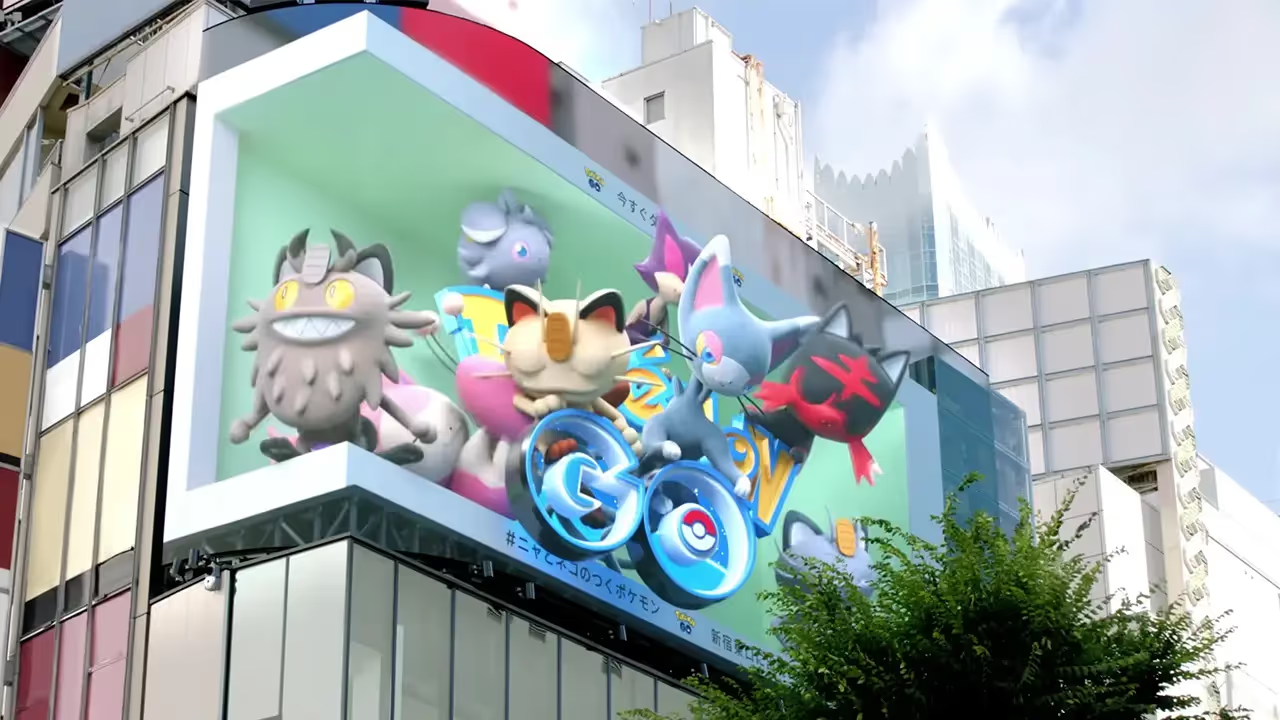
13. Tokyo Calico Cat (Shinjuku Station, Tokyo)

The famous 3D cat displayed near Shinjuku Station's east exit has become one of Tokyo's most photographed installations. The cat follows a daily schedule where it’s active and playful during peak hours and naps for about six hours starting at 1 a.m. The installation uses a curved L-shaped screen configuration. It's become such a landmark that crowd sizes are tracked by the hour, with peak viewing times from 6-9 p.m.
14. Hachi the Akita (Shibuya, Tokyo)
Named after the famous loyal dog Hachiko (whose statue sits outside Shibuya Station), this 3D Akita appears at the top of every hour performing tricks like catching frisbees. The predictable schedule creates recurring viewing opportunities where locals and tourists plan visits around the hourly shows. The screen is a standard rectangular format, roughly 15 meters wide by 10 meters tall.
Theme Parks & Attractions
15. Super Nintendo World (Downtown Los Angeles)
Universal Studios promoted their theme park opening with a 50-foot-high by 300-foot-long installation in downtown LA. The massive scale showed Mario Kart characters racing across the screen with park guests. What's interesting is that they used the extreme horizontal format (6:1 aspect ratio) to show actual racing motion rather than just objects popping out. The campaign ran for six weeks before the park's February 2023 opening, targeting the Southern California drive market.
Technical Requirements Used in 3D Billboards
3D billboards are made using high-resolution LED display panels that create the illusion of depth through carefully calibrated anamorphic content. The distance between LED pixels determines whether your 3D billboard looks photorealistic or like a pixelated mess, which is why most successful installations use P2.5 to P3.9 pixel pitch for high-definition imagery that holds up under close viewing, though highway placements can get away with P5 to P10 since viewers are farther away. Brightness needs to hit at least 5,000 nits for daylight visibility, and refresh rates should be 3,840Hz minimum to prevent flicker on camera phones (important for social sharing).
The 3D effect itself depends on precise calibration. Your content creator needs the exact viewing angle where most people will stand, then builds the anamorphic distortion around that specific perspective. The loops need to be between 10-15 seconds, which is long enough to tell a story and short enough that people don't walk away mid-sequence.
Read: What Are 3D Digital Billboards and How Do They Work?
Which Screen Configurations Matter and Why
L-shaped corner screens consistently outperform flat installations for 3D work. The 90-degree angle gives you two surfaces to work with, which makes depth illusions more convincing. These require specific screen types with movement capability, and only select locations in each city have the right dimensions. Curved screens work well, too, though they need content specifically designed for that curvature since it’s not possible to take flat content and bend it.
What is the Production Timeline for a 3D Billboard?
Expect about eight weeks' lead time for 3D billboard content, though simple concepts can move faster and complex productions take longer. That timeline includes creative concepting, 3D modeling, perspective calibration for your specific screen, rendering, and multiple review rounds. Installation and structural work adds another 2-6 weeks, depending on permits and site complexity. If you're building your own billboard from scratch, the full process, from design through installation, can run 1 to 6 months
Brands usually start conversations with content studios and screen owners 3-4 months before they need the campaign live. Last-minute rushes cost more and limit your creative options.
The ROI of 3D Campaigns is Impressive
Most 3D campaigns aren't built for direct response. They're after brand awareness and organic reach, which makes the ROI conversation harder to pin down. To measure impact, BCN Visuals partnered with MFour to compare 3D anamorphic ads against standard 2D ads for a gaming brand across New York, LA, and Vegas. Here's what they found:
- 55% of viewers said they'd likely film and share a 3D anamorphic ad
- 58% would share via apps, 50% in person
- 68% viewed the brand as "more premium"
- 66% said they were "more likely to buy the product"
- 64% preferred 3D over 2D
Creative Best Practices
Looking at the campaigns that worked, they all handle the design side pretty similarly. They focus on one hero object rather than cluttering the frame, use realistic shadows and reflections, and incorporate the screen's physical edges into the illusion (like objects appearing to grip the frame).
The best campaigns also bridge the on-screen spectacle with conversion by combining 3D OOH with AR extensions such as QR codes that launch mobile AR experiences or unlock vouchers, turning passive viewing into measurable action. Multi-zone layouts through Look Digital Signage come in handy here because they let the main message run as the centerpiece, while a secondary zone displays the QR code or offer, so viewers get clear direction on what to do next.
Ballpark Costs You Need to Budget For
Screen rental in major markets runs $15,000-$150,000 per month, depending on location and size, with Times Square hitting $30,000-$50,000 daily for premium placements. Content production adds $7,000-$75,000, depending on complexity, where simple product spins cost less and full CGI creature work costs more. If you're buying the screen outright, expect $2,500-$12,000 per square meter for a 30-100 square meter display, plus $10,000-$50,000 for structural support.
Annual maintenance runs $5,000-$20,000 to prevent pixel failures and keep software current. With Look Digital Signage's remote health monitoring, you can catch technical issues like pixel failures or connectivity problems before they take your campaign offline and waste your media spend.
How to Measure Results Beyond Social Shares
Start with proof-of-play logs to confirm your content actually ran as scheduled, then layer in QR code scans, unique URL visits, and campaign-specific hashtag tracking. Look Digital Signage's proof-of-play feature provides timestamped playback logs so you can verify your content ran exactly when and where it was supposed to, which makes a world of difference when you're spending five figures on media buys.
Mobile location data can tie DOOH exposure to website visits, app downloads, and store visits through geo-fencing. For example, Adler Inc.'s Times Square campaign generated 67,000 personal messages displayed via QR code interaction that gave them concrete engagement numbers.
The complete picture is comprised of dwell time near the screen, direct response actions (scans, clicks), foot traffic changes at nearby locations, and brand lift studies measuring awareness shifts before and after the campaign.
The Real Question: Can You Afford Not To?
3D billboards aren't cheap, and they're not right for every campaign. But when you need to break through in a saturated market, generate earned media that multiplies your paid spend, or give your brand a premium positioning boost, the format delivers way impressive results compared to standard DOOH.
If you're ready to implement, Look Digital Signage gives you the tools to deploy your DOOH campaigns at scale. Schedule content across networks, monitor proof-of-play to protect your media investment, use multi-zone layouts to pair spectacle with conversion, and track performance across locations from a single dashboard. See how Look DS works or book a demo to walk through a campaign setup.