Table of Content
Seamless video walls are display systems that join many screens together so cleanly that the lines between them almost disappear. This smooth image comes from advanced display technology, strong competition, and brands that keep pushing forward. The result is one large, continuous picture that draws people in and delivers clear messages. Rather than being just a bunch of screens, these walls turn spaces into active visual surfaces, blending physical design with modern technology to create immersive brand experiences.
The main strength of a seamless video wall is its ability to show content as one continuous image, without the distracting borders common in older multi-screen setups. This uninterrupted view is very important for places where visual accuracy matters a lot, like control rooms, premium retail displays, and entertainment venues. As we go further, we’ll look at the different types of seamless walls, the key technologies that power them, and the major brands leading this fast-moving market.
How Do Seamless Video Walls Differ from Traditional Video Walls?
Traditional video walls are made of several display panels placed side by side. The key difference from seamless walls is the bezel—the visible frame around each screen. In older setups, these bezels create a grid pattern that breaks up the image. While this can still work well for many uses, it makes it harder to create the impression of one large, unified display, especially when content stretches across multiple panels.
Seamless video walls are built to reduce or almost remove these visual breaks. This is done using technologies like ultra-narrow bezel LCD panels or direct view LED modules that have no bezel at all. The aim is to keep the image flowing without visible edges, so the joins between panels are hard to see. This is more than a visual upgrade; it greatly affects how deeply viewers feel involved and how well the message comes across, supporting a clear, continuous visual story.
Typical Applications and Use Cases
Seamless video walls are now used in many industries because of their flexibility and strong visual impact. From busy office corridors to loud sports arenas, they change the way information is shown and experiences are built. Their high brightness and clarity make them suitable for presentations, videos, live dashboards, and brand content that needs to stand out.
In retail, they work as digital canvases that pull customers in with moving ads, product videos, and immersive environments. Hotels and event venues use them to improve guest experiences by showing schedules, welcome messages, directions, and live broadcasts. In offices, they support meetings, town halls, and internal updates like KPIs and company news. They are also used in command and control rooms to track many feeds at once, in schools and universities for interactive teaching, and in stations and airports for schedules and travel alerts. Their strong visual impact leaves a lasting memory, proving their worth as tools for both communication and entertainment.
Types of Seamless Video Walls
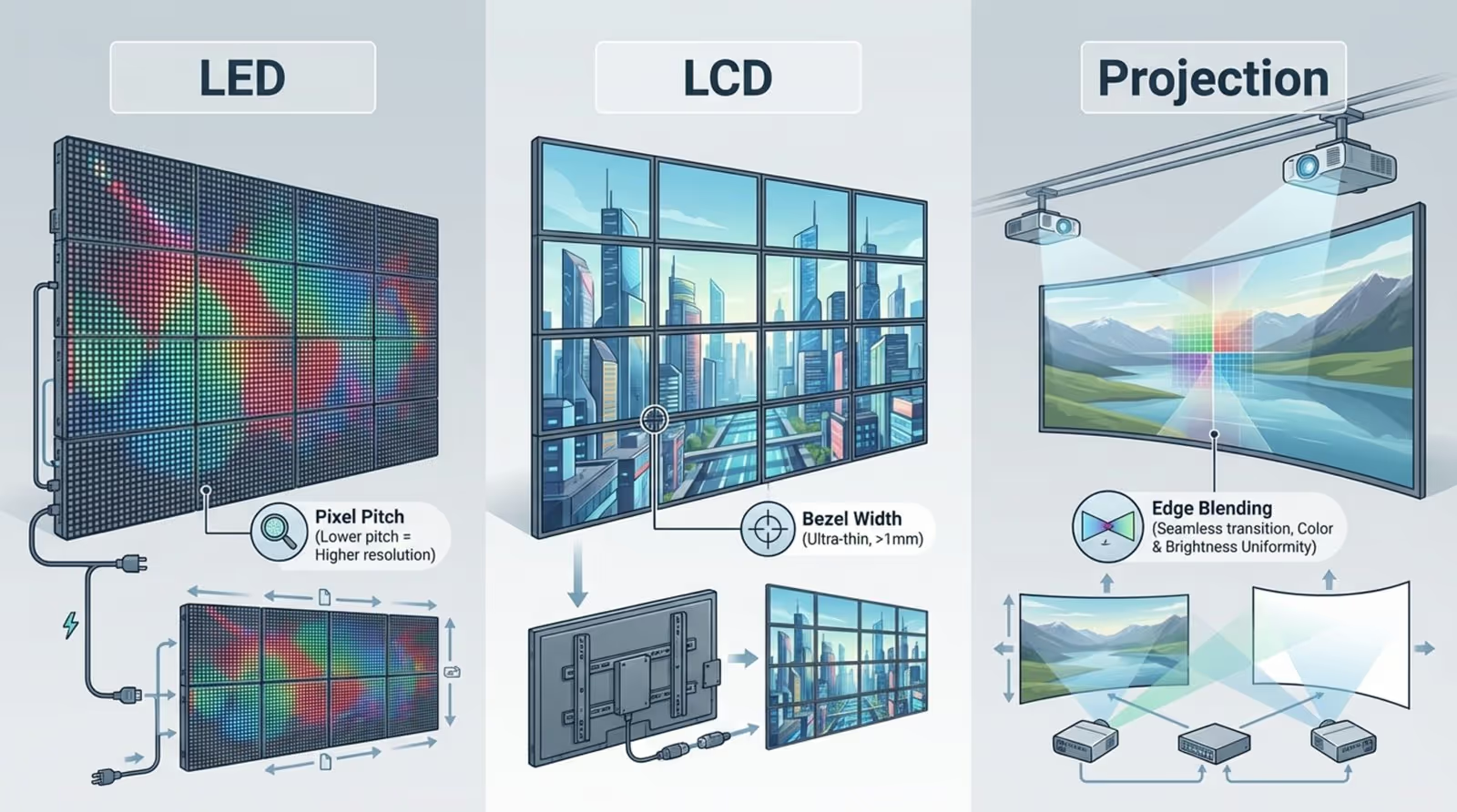
Seamless video walls come in several main types, each using different technology and offering specific strengths. Knowing these types helps you choose the right system for your needs. The most common options are LED, LCD, and projection-based walls, along with curved and custom-shaped designs for more creative layouts.
LED Video Walls
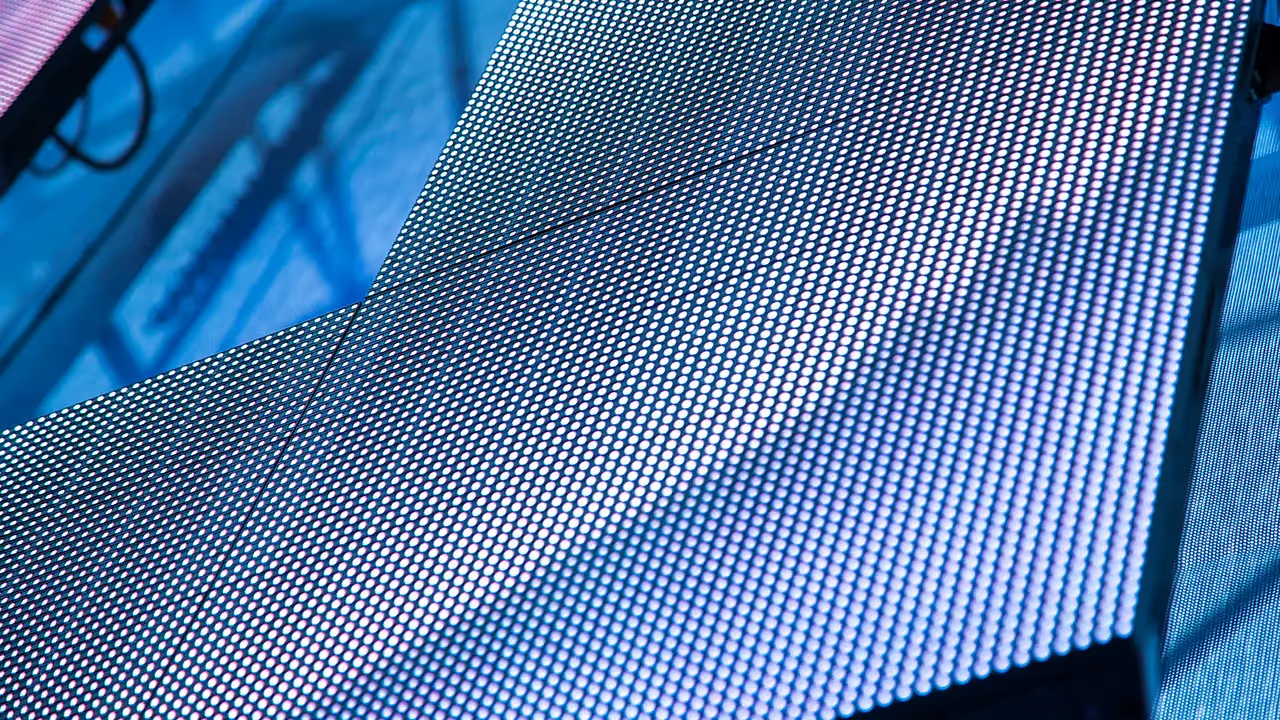
LED video walls are extremely bright and vivid displays made from many LED tiles or panels assembled into one big screen. Each panel uses light-emitting diodes (LEDs) to create bright, colorful images. Because LED modules do not have bezels in the viewing area, a correctly installed LED wall can appear completely seamless.
LED walls offer very high brightness, rich colors, and wide viewing angles, which makes them great for bright spaces or large crowds viewing from different positions. Their modular design lets you build almost any size or shape, from huge outdoor billboards and stadium boards to feature walls in corporate lobbies. Tiles can also be arranged in custom shapes, allowing creative layouts that support unique visual designs and brand identities.
LCD Video Walls
LCD video walls use Liquid Crystal Display technology. Liquid crystals sit between two layers of glass and change alignment when an electrical charge is applied, showing different colors and creating the image. Standard LCDs have visible bezels, but new “ultra-narrow bezel” models reduce these borders to just a few millimeters, giving a near-seamless look when tiled.
LCD video walls have high pixel density, making them well-suited for close viewing and detailed content such as small text, graphics, or dashboards. They are often more energy-efficient and usually cost less than LED walls for indoor use. Larger LCD panel sizes can also simplify mounting and maintenance, and their installation depth is similar to LED. These features make LCD walls popular in control rooms, meeting spaces, and indoor signage where fine detail and budget control are key.
Projection Video Walls
Projection video walls use multiple projectors to cast images onto a large surface so they form one big picture. This method allows very large and flexible display sizes, and the projection surface can be flat, curved, or even irregular. A key technique here is edge blending, where the overlapping edges of adjacent projections are carefully adjusted for brightness and color so they appear as a single, smooth image.
Projection walls work well in large rooms like auditoriums, conference halls, and immersive exhibition spaces. They are highly scalable and can fit unusual spaces and building shapes. When used with interactive technologies, they support hands-on educational content, museum installations, and collaborative environments, adding depth and realism to visual experiences.
Curved and Custom-Shaped Video Walls
Seamless video walls are no longer limited to flat rectangles. Curved and custom-shaped designs are now common, often using flexible LED or specially engineered LCD panels arranged in unique formations to create striking visual features.
Curved walls wrap around the viewer, creating a more immersive experience and drawing attention deeper into the content. They are popular in gaming setups, simulation rooms, theaters, and large experiential spaces. Custom-shaped walls can follow unusual building lines or highlight architectural details, becoming part of the structure rather than just a mounted screen. This helps turn static areas into active, interactive spaces and supports stronger brand expression.
Key Technologies Behind Seamless Video Walls
The “seamless” effect comes from a mix of display hardware, control systems, and content tools working together. These technologies handle how the image is created, how signals are transmitted, and how content is managed, all with the aim of keeping the image smooth and uniform across the entire wall.
Direct View LED Technology
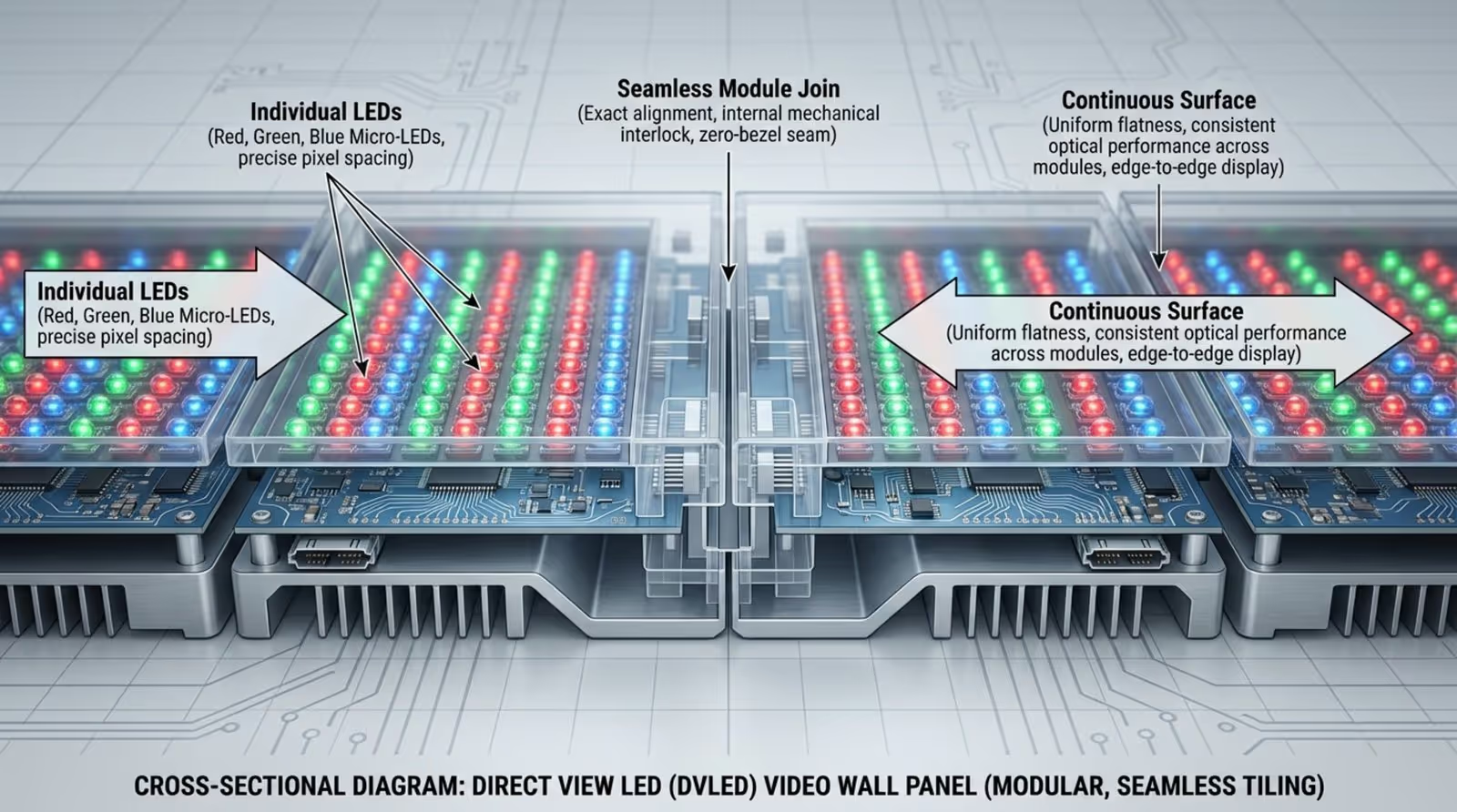
Direct View LED (DVLED) is a leading technology for truly seamless video walls. Unlike LCD screens, which use a backlight behind pixels, DVLED displays use millions of LEDs as individual pixels that emit light and color directly. These LED modules are tiled together without visible bezels, creating one continuous surface.
DVLED offers very high brightness, strong colors, and deep contrast, making it suitable for both indoor and outdoor use, even in direct sunlight. Because it is modular, you can build walls of almost any size, shape, and resolution, from fine-pitch LEDs for close viewing to larger pitches for distant viewing in stadiums. Newer GOB (Glue-On-Board) and COB (Chip-On-Board) methods improve durability by protecting LEDs from impact, moisture, and dust, which reduces maintenance and extends lifespan.
Ultra Narrow Bezel LCD Panels
Ultra Narrow Bezel (UNB) LCD panels aim to reduce the visible lines between screens. These panels have very thin frames, often only a few millimeters wide. When arranged in a wall and carefully aligned, the combined bezel is so small that most viewers barely notice it from normal viewing distances.
UNB LCDs offer high pixel density, which is important for detailed images and text. They can also be more affordable than DVLED for many indoor projects. IPS (In-Plane Switching) LCD technology further improves viewing angles and color consistency across the wall, making the overall image look uniform even when viewed from the sides.
Laser Projection and Edge Blending
Laser projection systems paired with edge blending are useful for very large, custom-shaped displays. High-brightness laser projectors cast images onto a surface, and overlapping regions between projectors are carefully adjusted so that edges merge smoothly.
Edge blending uses precise control of brightness and color in overlap areas to remove visible seams or bright bands. Laser projectors bring stable brightness, vivid colors, and long life, making them suitable for continuous use. This setup is excellent for auditoriums, immersive art, and simulation environments where large, flexible display areas are needed.
Touch Interactivity and Control Systems
Many seamless video walls now support touch and advanced control systems, turning them into interactive tools instead of just passive displays. Touch overlays added to LED or LCD walls allow users to zoom, pan, and interact with content using simple gestures. This supports collaborative work, interactive exhibits, and customer engagement in places like museums, briefing centers, and retail stores.
Behind the scenes, control systems and specialized software handle content distribution and layout. They manage what appears on each part of the wall, allow real-time adjustments, support content scheduling, and let you split the wall into multiple zones. These systems range from basic remote controls to advanced software platforms and are essential for day-to-day operation and flexibility.
AV-over-IP and Signal Processing
Signal distribution is a key part of any large video wall system. AV-over-IP (Audio Video over Internet Protocol) has become a popular approach. Instead of running dedicated AV cables carrying uncompressed signals, AVoIP encodes audio and video into IP packets and sends them over standard network infrastructure.
This method makes it easier to expand, rearrange, or relocate displays without major rewiring. It supports long-distance transmission, central control, and fast changes in layout. In many setups, each screen or module has its own decoder, letting you control content on each section of the wall independently. This enables complex layouts with different content streams appearing in different areas at the same time.
Comparing LED vs. LCD in Seamless Video Walls
Choosing between LED and LCD is one of the first big decisions when planning a seamless video wall. Both can look impressive, but they behave differently in terms of image quality, bezels, cost, and maintenance. Knowing these differences will help match the right technology to your goals and environment.
Visual Quality and Brightness Differences
LED walls, especially DVLED, are known for very high brightness and strong, vivid colors. Because each LED emits its own light, these walls handle bright rooms and outdoor settings very well. They also offer deep blacks and strong contrast, which makes images stand out and feel more dynamic.
LCD walls may not reach the same peak brightness as premium LED setups, but they still deliver high-quality images with very fine detail. Their pixel density makes them ideal for content where clarity and small text matter, particularly at close range. IPS LCD panels provide wide viewing angles, so color and contrast remain stable from different positions. However, in extremely bright spaces, LCDs can look a bit washed out compared to powerful LEDs.
Bezel Size and Seamlessness
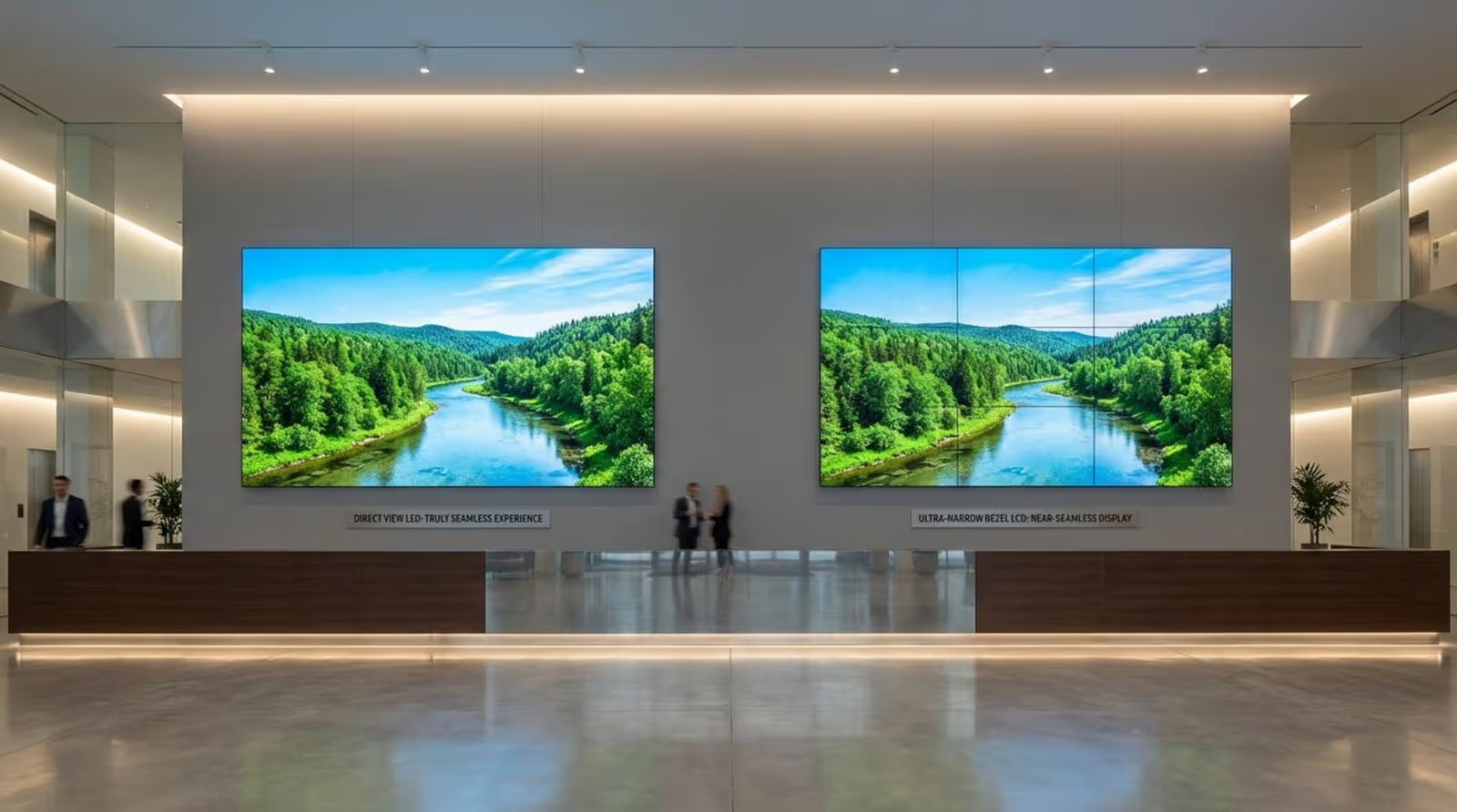
Seamlessness is where LED often has a clear edge. DVLED modules join without visible bezels in the active image area, creating the feeling of one large, unbroken screen. This makes LED ideal for installations where any visible grid lines would be unacceptable.
LCD walls, even with ultra-narrow bezels, still have thin lines where panels meet. From a distance, these may be hard to see, but up close the grid can become noticeable. For many applications, this “near seamless” look is good enough, especially given the cost benefits. For situations where you need truly unbroken images with no visible lines at all, LED remains the stronger option.
Cost Considerations and Scalability
LCD video walls usually cost less upfront than LED walls for similar sizes, especially for small to medium indoor installations. This makes LCD attractive for companies that need a strong visual impact but must watch costs carefully. At the same time, buyers should look beyond the purchase price and factor in installation, power use, and long-term maintenance.
LED video walls, particularly fine-pitch models used for close viewing, tend to have higher initial costs. However, they scale very easily: you can add or remove modules to change size or shape. All-in-One LED products simplify this further by bundling display, processing, and mounting into a single, pre-built package. LCD walls can also be expanded by adding panels, but each added panel increases the visible grid. For very large, custom, or outdoor projects, LED’s flexibility often justifies the higher starting price.
Lifespan and Maintenance Requirements
LED and LCD are both made for long use, but they age differently. LED walls generally last longer, often up to or beyond 100,000 hours, and offer excellent viewing angles. GOB and COB LEDs have extra protection that helps them resist impact, dust, and moisture. Maintenance mostly involves environment-related checks and occasional replacement of individual modules, which can usually be done from the front.
LCD panels tend to have a slightly shorter lifespan and can be affected by issues like image retention when static content is displayed for long periods. Maintenance is usually simple but may require replacing whole panels instead of small modules. Power use varies by model, but many modern fine-pitch and COB/GOB LED systems are also very energy-efficient, sometimes matching or beating LCD on power per square meter, depending on brightness and pixel pitch. Professional installation and regular cleaning help both technologies perform well over time.
Benefits and Challenges of Seamless Video Walls
Seamless video walls offer huge benefits in terms of visual impact and information delivery, but they also come with planning, installation, and management challenges. Knowing both sides helps you plan a project that looks good and works reliably over the long term.
Uninterrupted Visual Experiences
The main benefit of seamless video walls is the continuous image they provide. By removing or greatly shrinking bezels, these systems show content as one large, unified picture. This is especially important for data visualizations, wide-format videos, maps, and large images that would otherwise be broken by black lines.
This uninterrupted view makes content more engaging and easier to understand. A single panoramic scene, complex dashboard, or product showcase without visible breaks has much more impact. This helps brands stand out, improves communication, and supports more powerful storytelling.
Installation Complexity and Maintenance Planning
Achieving a truly seamless look is not simple. Every panel or module must be aligned very precisely so there are no visible steps or gaps between them. This often calls for high-quality mounting hardware and experienced installers. Traditional LED walls can be especially labor-heavy: they may require steel framing, power panels, structural work, and on-site color calibration that can take many hours.
Maintenance planning is also important. GOB and COB LEDs are tougher and easier to maintain than older generations, but all systems still need regular cleaning and airflow checks to avoid overheating. Keeping software and firmware updated helps maintain performance and security. All-in-One LED displays shorten installation to a few hours and simplify upkeep thanks to integrated electronics and factory calibration. No matter which technology you choose, it makes sense to have a clear support plan and involve professionals for both setup and ongoing service.
Integration with Digital Signage and Content Management
Seamless hardware is only part of the story; the real value appears when you connect the wall to a strong digital signage or content management system (CMS). These platforms allow you to manage what appears on the wall, when it appears, and how it is arranged.
A good CMS lets you show one large piece of content across the entire wall, or split the wall into zones with different videos, data sources, and interactive areas. This is especially useful in control rooms, where operators must see many data feeds at once, and in retail, where offers and branding need quick updates. When integrated with video conferencing, live data feeds, and touch layers, the wall becomes a central tool for collaboration and communication rather than just a static display.
Industries and Environments Using Seamless Video Walls
Many sectors now use seamless video walls as core tools for communication, branding, and engagement. As displays get better and more affordable, they are spreading into more locations and use cases.
Retail and Hospitality
Retail and hospitality businesses rely on strong visuals to attract and serve customers. In retail, seamless walls are used in shop windows and inside stores to show high-quality product videos, promotions, and seasonal campaigns that can be updated instantly. These displays set a modern tone, make the store feel more lively, and can increase sales by drawing shoppers toward featured products. Some retailers even install outdoor walls to pull people in from the street.
Hotels and resorts use video walls to upgrade lobbies and shared spaces. They show check-in information, welcome messages, schedules, and live TV or event coverage, all while reinforcing the brand. At Hilton Waikiki Beach, for example, a 146-inch Samsung Wall in the lobby bar shows scenic Hawaiian views, news, and sports, creating a strong first impression and a relaxing mood. Video walls can also promote local attractions and businesses and support interactive kiosks for check-in and wayfinding.
Corporate and Conference Spaces
In business settings, seamless video walls are more than decoration; they support communication, productivity, and brand presence. In lobbies, they show corporate messages, live data, and welcome content, helping visitors and staff feel connected to the company. Products like Samsung’s The Wall All-in-One and IAC displays are often used to create these centerpiece installations.
Inside conference rooms, operations centers, and collaboration spaces, video walls support video calls, live dashboards, and presentations. They can connect to tools like Logitech webcams, Google Meet, and Webex, creating large, clear conferencing surfaces. They also display KPIs, status boards, and announcements, giving teams a shared view of key information that aids decision-making.

Command and Control Centers
For command, control, and monitoring operations, seamless video walls are a core requirement. These environments need constant visibility into many data sources, such as CCTV feeds, sensors, maps, and alerts. A large video wall lets operators view everything together and react quickly.
MicroLED displays like Samsung’s The Wall offer high resolution and strong color performance, making schematics, maps, and camera feeds easy to read. This better visibility supports faster responses for police, utilities, emergency services, and other critical operations. In crowd management, for example, walls can highlight problem areas early by giving a wide overview of movement and density. The ability to bring many systems onto one seamless viewing surface is a key advantage.
Education and Museums
Schools, universities, and museums are turning to seamless video walls to create more engaging learning environments. In classrooms and lecture halls, these walls support multimedia lessons, interactive content, and large-format visuals that help students focus and understand complex topics.
In common areas, video walls serve as digital notice boards, sharing news, events, and safety alerts with students and staff. Museums use walls to bring exhibits to life, turning sections into immersive scenes that place visitors inside a time period or theme. Interactive walls allow visitors to explore timelines, zoom into artwork or artifacts, and access extra information on demand. Large wayfinding kiosks also help people move through big museum spaces more easily.
Transportation Hubs and Public Spaces
Airports, train stations, and transport hubs use seamless video walls to keep passengers informed and calm. They show arrivals, departures, delays, gate changes, and directional signs in one central location, which helps travelers plan and reduces confusion. In operations centers, staff use walls to monitor security cameras, traffic flows, and equipment status.
Public spaces also use video walls for branding, entertainment, and public messages. Airports might show relaxing landscapes, local highlights, or art on long corridors and waiting areas. City centers and public buildings use them to promote local events, support public campaigns, or display art and cultural content, making shared spaces more engaging.
Market Leaders in Seamless Video Walls
A handful of major manufacturers lead the seamless video wall market. They push new features, set quality standards, and offer product ranges that cover many use cases. These companies also provide software, services, and support that help customers deploy and manage complex systems.
Leading Brands and Manufacturer Offerings
Several brands stand out as key suppliers of seamless video wall solutions:
Samsung: Samsung is a global leader with a wide portfolio of professional displays. Its products are known for clear images, accurate colors, and flexibility in different environments, from airports to shops and corporate spaces. “The Wall,” based on MicroLED technology, is one of Samsung’s flagship products, offering extremely high contrast and rich color with very deep blacks. Samsung’s UHD video walls are also widely used in professional settings. Security features like Samsung Knox add extra protection for connected systems.
LG: LG focuses strongly on OLED and advanced LED technologies. LG’s OLED video walls are recognized for deep blacks, high contrast, and strong colors, as well as their slim profiles and the ability to create gently curved or flexible displays. LG’s IPS LCD panels provide wide viewing angles and consistent picture quality. The LG MAGNIT MicroLED range is LG’s premium line for large video walls.
Barco: Based in Belgium, Barco is known for high-end visualization and calibration solutions, especially in professional markets. Its UniSee LCD video wall platform offers extremely small gaps between panels and modular touch options. Barco also provides calibration systems that keep color and brightness uniform across the wall over time, which is critical in control rooms and other professional uses.
Christie: Christie, from Canada, serves a wide range of markets, from cinema and themed entertainment to corporate and education. It offers LCD video walls like the Extreme Series, which feature ultra-narrow bezels for smooth images across panels. Christie also provides control and management tools that make it easier to configure and operate complex installations.
These manufacturers continue to improve image quality, reliability, installation methods, and content tools. They focus on both visual performance and practical aspects such as maintenance, power use, and software integration.
Global Market Presence and Partnerships
These leading brands support customers worldwide through strong distribution networks and local partners. Samsung and LG, supported by large manufacturing capacity and strong brand recognition, have major presences across Asia, Europe, and the Americas. They serve both consumer and professional markets and provide broad support and training resources.
Barco has built a network across more than 90 countries, with particular strength in specialized fields like control rooms, simulation, and medical imaging. Close cooperation with system integrators and industry experts helps them meet demanding requirements. Christie uses a similar approach, forming partnerships in key regions and serving both mainstream and niche markets, from cinema chains to corporate AV. These global networks and support teams help customers deploy and maintain complex systems with confidence.
Recent Innovations and Notable Installations
Innovation in video walls is ongoing, with manufacturers working on higher contrast, better colors, easier setup, and smarter software. LED walls keep improving in terms of contrast ratio, color accuracy, and pixel pitch, enabling more detailed and lifelike images even at close viewing distances.
All-in-One LED packages are a major development, combining display modules, processing, and mounting into ready-to-install units. This reduces installation time and complexity. GOB and COB construction methods increase durability by protecting LED surfaces, making them shock-, moisture-, and dust-resistant and lowering maintenance needs. AI-powered content tools and support for 4K/8K resolutions are also becoming more common.
Real-world projects highlight these advances. At Hilton Waikiki Beach, a 146-inch Samsung Wall in the lobby bar plays scenic content alongside news and sports, supporting both atmosphere and information needs. Similar installations in corporate lobbies, theaters, and museums show how seamless walls can reshape spaces and change how people interact with digital content.
Choosing the Right Seamless Video Wall Solution
Picking the right seamless video wall is a major decision. It involves matching technology to your space, goals, and budget so that the system delivers strong visual results and remains practical to run and maintain.
Factors to Consider: Space, Purpose, and Budget
Three main factors should guide your choice: space, purpose, and budget.
Space: Start by closely checking the area where the wall will go. Measure height, width, and depth to see what size and layout are possible. Think about how far away viewers will stand or sit. Close viewing requires high pixel density (fine-pitch LED or high-resolution LCD), while distant viewing can use a larger pixel pitch. Check the lighting: bright, sunlit spaces favor LED, while darker rooms may work well with LCD. Also consider how the wall will attach to the building, how much weight the structure can handle, and how heat and airflow will be managed.
Purpose: Define what you want the wall to do. Is it for advertising, brand storytelling, data monitoring, video conferencing, training, wayfinding, or public information? Your main use case will drive choices about resolution, brightness, interactivity, and software. A control room might need many inputs and detailed graphics, while a retail store may focus on color impact and motion. Decide if you need touch or other interactive features.
Budget: Set a realistic budget that includes the entire project: hardware, mounts, cabling, installation, content creation, and ongoing maintenance and power. LCD often costs less upfront, while LED has a higher initial price but may last longer and scale better. Traditional LED installations can involve extra costs, like steel supports, power panels, and room changes. All-in-One LED units can lower these hidden costs. Also plan for ongoing power usage and potential repair or upgrade costs.
Questions to Ask Your Supplier
Once you have a clear idea of your needs, ask potential suppliers focused questions to compare solutions fairly:
“What is the actual seam gap or bezel size, and how visible will it be from our typical viewing distance?” This helps you understand how “seamless” the final wall will really look.
“Can you show examples or case studies of similar installations?” This gives insight into their experience with projects like yours.
“What is the power consumption (W/m²), and what are the likely monthly electricity costs?” This helps plan long-term operating costs.
“What does installation involve, and how long will it take? Do we need extra infrastructure or on-site calibration?” This clarifies practical impact on your space and schedule.
“Which content management system do you provide or recommend, and how easy is it to use?” Daily usability depends heavily on this.
“What are the maintenance needs, expected lifespan, and warranty terms?” Ask about spare parts, service response times, and support options.
“Can this system be expanded or upgraded later?” This is important if you expect your needs to grow.
“What technical support and training do you provide after installation?” Good support helps your team get the most from the investment.
Clear answers to these questions will help you judge both the technical fit and the reliability of the supplier.
What’s Next for Seamless Video Wall Technology?
Seamless video wall technology is still moving forward quickly. As organizations adopt more digital tools and audiences expect richer visuals, video walls will grow smarter, more flexible, and more energy-efficient.
Emerging Trends and Future Developments
Several trends are shaping the next wave of seamless video walls:
- Higher resolutions and finer pixel pitches: Manufacturing improvements are making MicroLED and other fine-pitch LEDs more accessible. 4K and 8K walls will become more common, even at relatively small sizes, making them suitable for tasks like design review, medical imaging, and high-end retail where detail is critical.
- More flexible and architectural designs: Expect thinner, lighter, curved, and even transparent displays that can be built into walls, glass, and other surfaces. Video walls will blend into buildings rather than sit on top of them, supporting more creative and integrated designs.
- Smarter, AI-driven content: AI tools will help adjust content based on time of day, audience behavior, sensor data, or external data such as weather. For example, a store might change its promotions automatically based on the number and type of visitors.
- Richer interactivity: Touch, gesture control, and contactless interaction will make walls more engaging and easier to use, especially in public and collaborative spaces.
- Greener designs: Manufacturers are working on reducing power usage, extending product life, and using more recyclable components. Energy-efficient LEDs, improved power supplies, and smarter brightness control will lower running costs and environmental impact.
These changes will push seamless video walls beyond simple display roles, turning them into central tools for communication, collaboration, storytelling, and real-time data visualization across many industries.