Table of Content
It’s a wonderful era for businesses looking for reliable outdoor signage because display manufacturers are not only packing the best waterproof monitors with raw durability, but also smart features like ambient light sensors, anti-discoloration technology, and even gryoscopic tampering alerts. This means that you’re getting a display that is genuinely readable in direct sunlight while surviving rain, dust, and temperature extremes that would destroy a standard TV in weeks.
If you’re shopping around for drive-thru displays, outdoor wayfinding kiosks, bus stop displays or outdoor event screens, this guide comprises a curated selection of waterproof TVs by Look DS Experts. You should expect 7–10 year deployments with consistent brightness, minimal maintenance, reliable connectivity, and rugged performance. By the end, you’ll know what makes a display truly waterproof, how to pick the right screen for your location and manage content efficiently using Look Digital Signage.
Note on Terminology
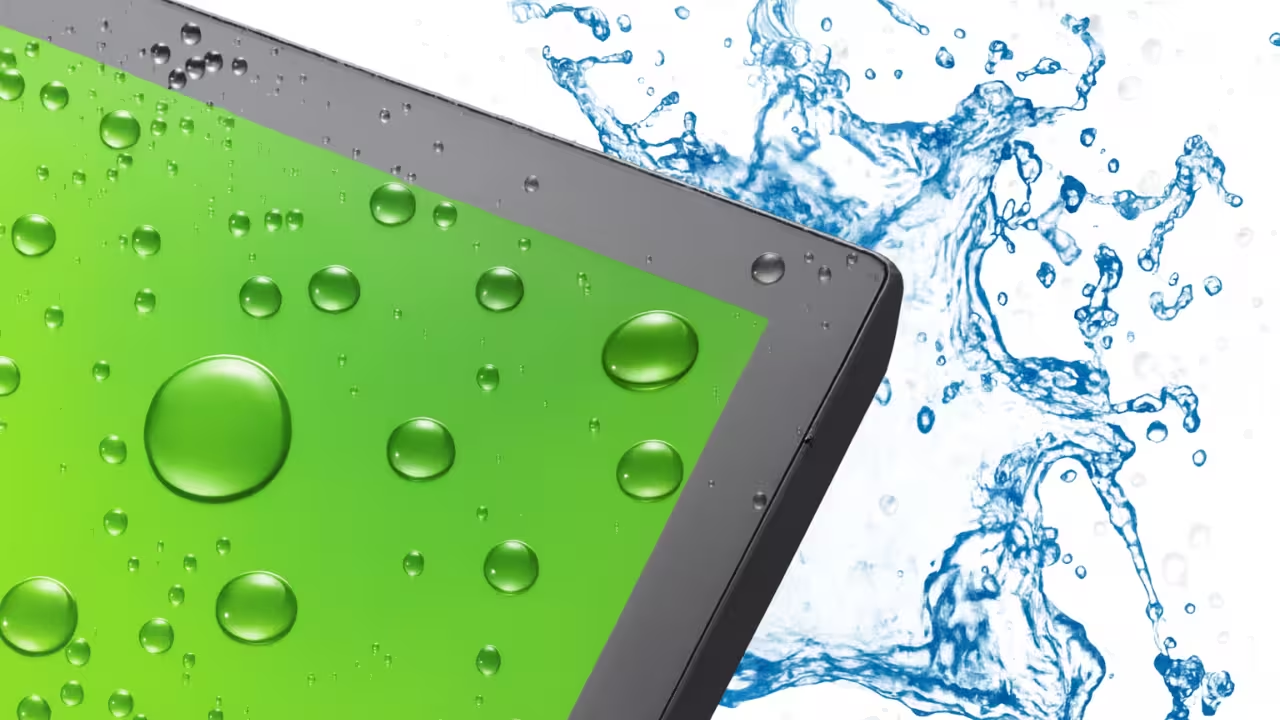
When searching for "waterproof monitors," most people actually mean displays that can withstand rain and snow without damage, while at the same time being capable of brightness and temperature tolerance to function outdoors year-round. If that’s what you’re looking for, then technically, that level of protection is considered “weatherproof” and is the ideal standard for any reliable outdoor signage. The displays in this guide meet all these requirements.
AT A GLANCE
Here is a quick run-down of the best waterproof outdoor displays based on specific use cases and requirements.
What Qualifies a Display as Waterproof?
IP56 or higher
IP ratings follow a simple two-digit system that tells you exactly what a display can handle. The first digit indicates protection against solid particles (like dust), ranging from 0 to 6. The second digit covers liquid protection (like water), ranging from 0 to 9. Higher numbers mean better protection in each category.
In digital signage, IP56 is the most common rating you’ll see on commercial outdoor displays, and it means dust-protected and can withstand powerful water jets from any direction.
IP65 steps up to complete dust-tight protection with water jet resistance.
IP66 adds protection against high-pressure water jets.
IP67/68 protects against the effects of temporary and continuous water immersion, respectively.
NEMA 4/4X vs IP Ratings
You'll also encounter NEMA ratings in North America, which follow a completely different logic than IP ratings. A higher NEMA number doesn't automatically mean better protection across the board. NEMA ratings describe complete use-case scenarios rather than just dust and water resistance like IP does.
For outdoor digital signage, you're primarily looking at NEMA 4 and NEMA 4X. NEMA 4 provides dust-tight and watertight protection that withstands hose-directed water, roughly equivalent to IP66. The "4X" designation adds corrosion resistance on top of everything NEMA 4 provides, which is the critical difference for outdoor deployments.
If you're installing near an ocean, chemical plant, or anywhere corrosive elements are present, NEMA 4X is required for long-term survival. Salt air accelerates deterioration faster than most people realize. Standard IP66 displays without corrosion-resistant materials will show rust and degradation within 2-3 years in coastal environments, while NEMA 4X-rated enclosures maintain structural integrity for the full 7-10 year deployment lifespan.
Other Important Considerations
Waterproofing keeps the rain out, but it won't help if your display is too dim to see in sunlight or shuts down when it gets hot. Here's what else you need to look at when choosing a display that'll actually work outside.
Impact Resistance
The IK rating tells you how much impact a screen can withstand.
Most outdoor displays are rated IK08, IK09, or IK10. IK08 handles about 5 joules of impact (like dropping a 1.7 kg weight from 30 cm). IK09 doubles that. IK10 withstands 20 joules. For comparison, a baseball flying at normal speed carries 30-40 joules, but the tempered glass still stops most real-world impacts you'll encounter.
The protective glass layers, such as XtremeShield, Quarter Wave Plate, and similar technologies, resist impacts while keeping the picture clear and, in some cases, making sure people wearing polarized sunglasses can still see the screen.
UV- and Corrosion-Resistant Housing
Outdoor enclosures face constant UV bombardment. Cheap housings start cracking and fading within 18-24 months, allowing moisture ingress that destroys the display. Quality outdoor monitors use UV-stabilized powder-coated steel or aluminum that maintains structural integrity for 7-10 years.
For coastal or industrial deployments, look for stainless steel hardware and NEMA 4X-rated enclosures with conformal coating on all circuit boards. Salt air and chemical exposure will corrode standard housings surprisingly fast, we're talking 2-3 years instead of 10. The upfront premium for proper corrosion protection is always cheaper than premature replacement.
Energy Efficiency and Smart Dimming
Displays running at full 4,000-nit brightness 24/7 waste enormous energy at night when 500 nits would suffice. Smart dimming cuts consumption 30-40% across daily cycles. Over 7-10 year deployments, this saves thousands per display in electricity costs.
LED backlighting in modern outdoor displays also runs significantly cooler than older CCFL technology, reducing cooling requirements and extending component lifespan.
Modular LED vs LCD for Outdoor Use
Modular LED displays offer brightness that dwarfs even the best LCD screens, we're talking 5,000-10,000+ nits. They also handle temperature extremes better and eliminate the screen yellowing that affects LCDs. However, LED modules start at $15,000-$25,000 for equivalent screen area and require specialized installation expertise.
Choose LED when: Full-sun visibility is non-negotiable, viewing distance exceeds 15-20 feet, budget allows $20,000+ for 55" equivalent area, or you need custom sizes/shapes.
Choose LCD when: Partial sun/shade locations, viewing distance under 15 feet, budget constraints favor $5,000-$12,000 range, or standard 16:9 formats work fine. For most drive-thrus, retail, and transit applications, LCD delivers better value.
How to Choose the Right Waterproof Monitor
Selecting the right outdoor display comes down to matching specifications to your specific deployment conditions. Here's a practical framework to guide your decision:
Sun Exposure:
• Full shade (covered patios, transit shelters): 1,500-2,500 nits
• Partial sun (drive-thru canopies, building overhangs): 2,500-3,500 nits
• Full sun (gas pumps, parking lots, open plazas): 4,000+ nits
Climate Conditions:
• Mild climates (32°F to 95°F): Standard outdoor displays with -20°F to 122°F range work fine
• Extreme heat or cold: Choose displays rated -31°F to 140°F (Peerless-AV Xtreme series)
• Coastal/industrial environments: NEMA 4X rating essential for corrosion resistance
Vandal Risk & Placement:
• High-traffic public areas: IK10 impact resistance mandatory
• Close proximity/interactive: Touch-capable models with optical bonding (Elo series)
• Elevated/secure locations: IK08-IK09 sufficient
• Retrofit projects: Prioritize lighter, slimmer models compatible with existing mounts (LG XE4F-M)
The Best Outdoor Displays for 2025
The models below are what's currently available, properly rated for outdoor use, and backed by manufacturers with proven track records. You'll notice the list isn't enormous, and that's because genuinely capable outdoor displays with proper IP ratings and brightness specs come from a relatively small group of manufacturers who've invested heavily in getting this right.
1. Samsung OHA-S Series (55", 75")
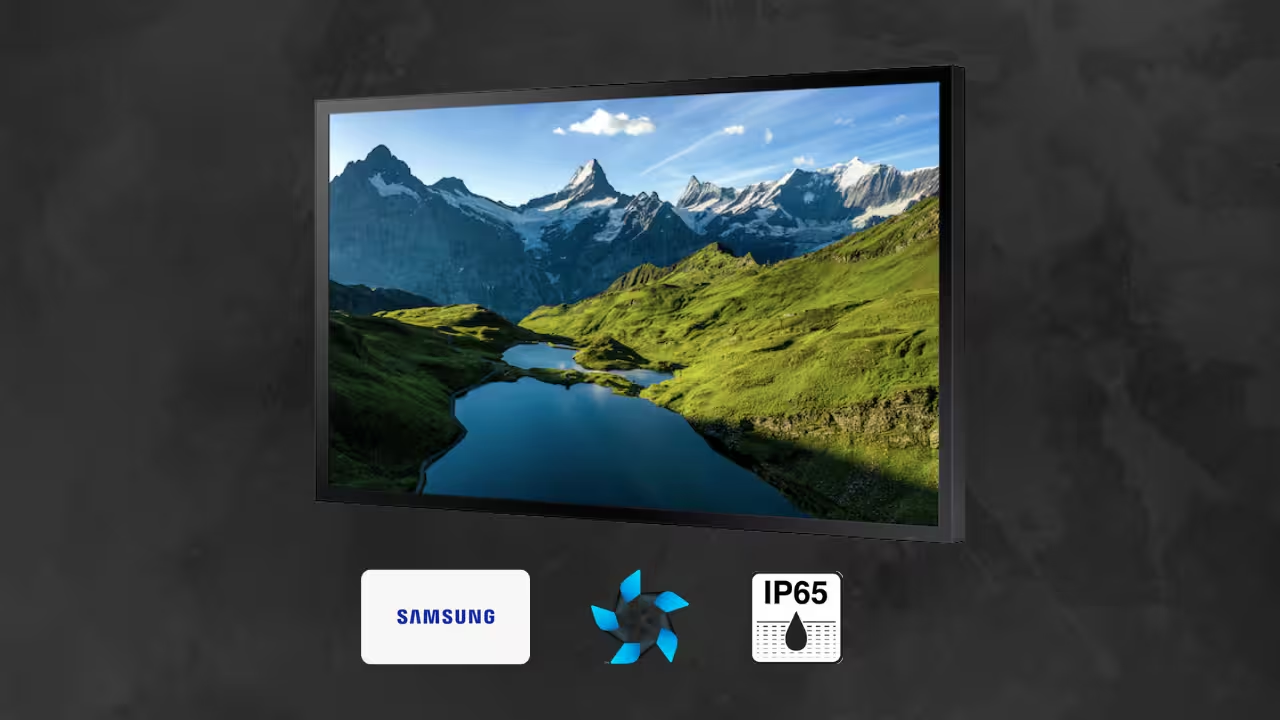
Specifications:
- Brightness: 3,500+ nits
- Protection: IP56 rating, IK10 impact resistant tempered glass
- Operating range: -30°C to 50°C (-22°F to 122°F)
- Operation time: 24/7
- Built-In OS: Tizen 5.0
- Smart features: Ambient light sensor, automatic brightness adjustment
- Installation: Bottom-mounted cooling fans prevent condensation
- Limited Warranty: 3 years standard
- Price: $5000.00 (55"), $24,790.00 (75")
Samsung's OHA-S hits that sweet spot of brightness, protection, and features that come in handy in daily operation. The Magic Protection Glass uses anti-reflection technology that works with polarized sunglasses. Four bottom-mounted fans prevent the condensation issues that plague cheaper outdoor displays.
Best for: QSR drive-thrus with menu board canopies, outdoor retail installations, transit wayfinding, where 3,500 nits provides sufficient brightness for partially shaded locations
2. LG XE3P and XE4P Series (49", 55")
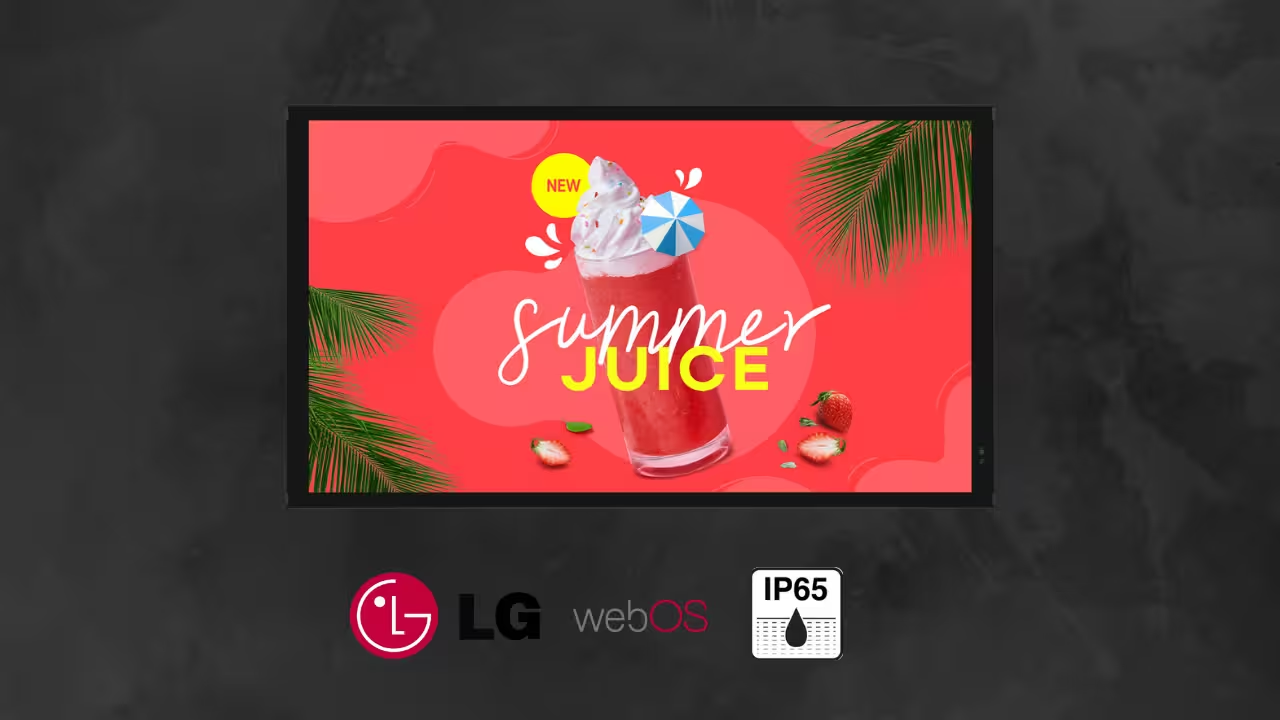
Specifications
- Brightness: XE3P at 3,500 nits, XE4P at 4,000 nits
- Protection: IP56 rating, IK10 impact resistant, UL-verified anti-discoloration
- Operating range: -30°C to 50°C with active cooling
- Smart features: Ambient light sensors for automatic brightness adjustment, cutting power consumption by 30-40%, gyroscopic sensors detecting tampering with instant administrator alerts
- Built-in OS: webOS 6.1 for integrated content management
- Durability: Conformal coating on circuit boards protects against moisture and contaminants
- Warranty: 3 years standard
- Price: XE3P $5,800.00
LG's XE series addressed the screen yellowing problem systematically enough to get UL verification for its solution. The third-party validation is huge since manufacturers don't typically pursue it unless they're confident in their technology. For displays you're planning to run for 7-10 years, this anti-discoloration technology makes a genuine difference.
Best for: Long-term installations where image quality needs to stay consistent over 7-10 years, high-sun locations where 4,000 nits becomes necessary, deployments where power consumption matters
3. LG XE4F-M Series (49", 55")
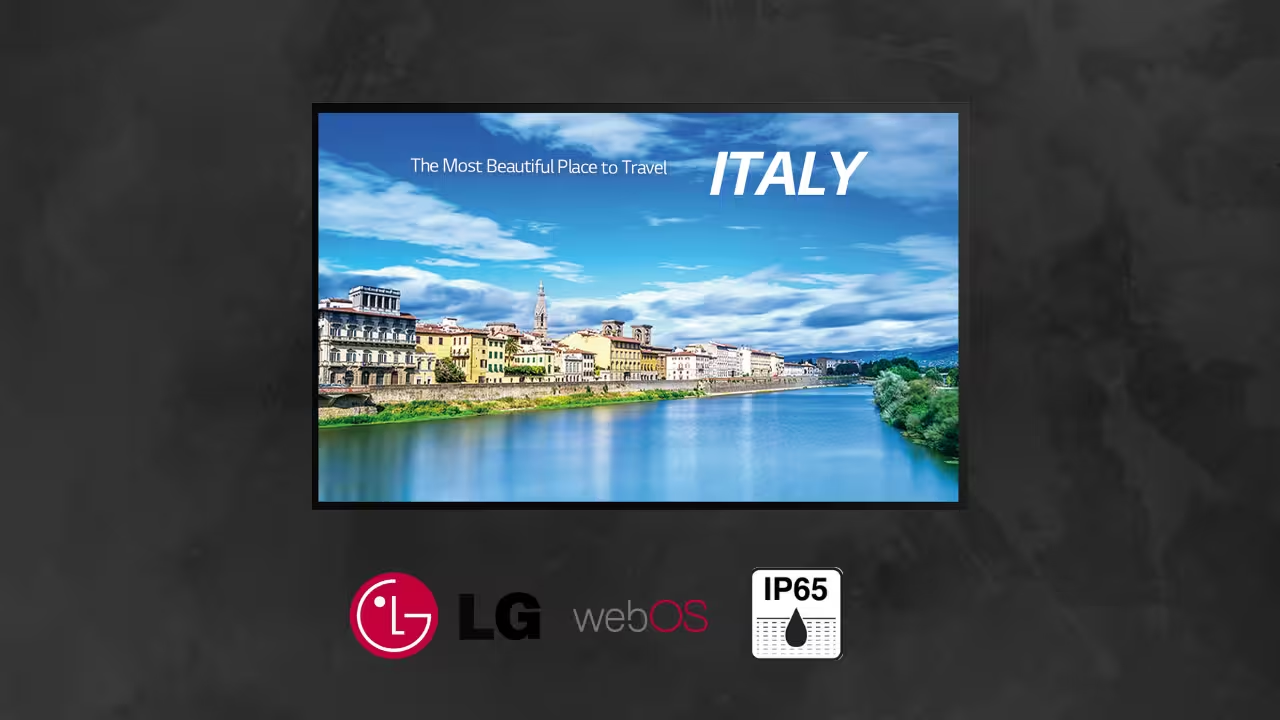
Specifications:
- Brightness: 4,000 nits (LG's highest)
- Protection: IP56 rating & IK10 impact resistance
- Operating range: -20°C to 50°C
- Smart features: Quarter Wave Plate technology maintaining visibility for polarized sunglasses, HDBaseT for single-cable video/audio/control transmission
- Built-In OS: LG WebOS
- Design: Lighter and slimmer than previous generations, optimized for existing mounting patterns
- Limited Warranty: 3 Year
- Price: $4,667.00(49")
At 4,000 nits, this is LG's brightest outdoor display, designed specifically for retrofit projects. If you're replacing older displays and already have mounting infrastructure, the XE4F-M's form factor makes the process significantly easier. The HDBaseT support is clever too, running video, audio, and controls over a single long-distance cable means fewer cables and fewer potential failure points.
Best for: Retrofit projects replacing older outdoor displays, full-sun locations like gas station pump toppers where 4,000 nits is non-negotiable, automotive applications where polarized sunglasses visibility matters
4. Peerless-AV Xtreme High Bright Series (55", 65")
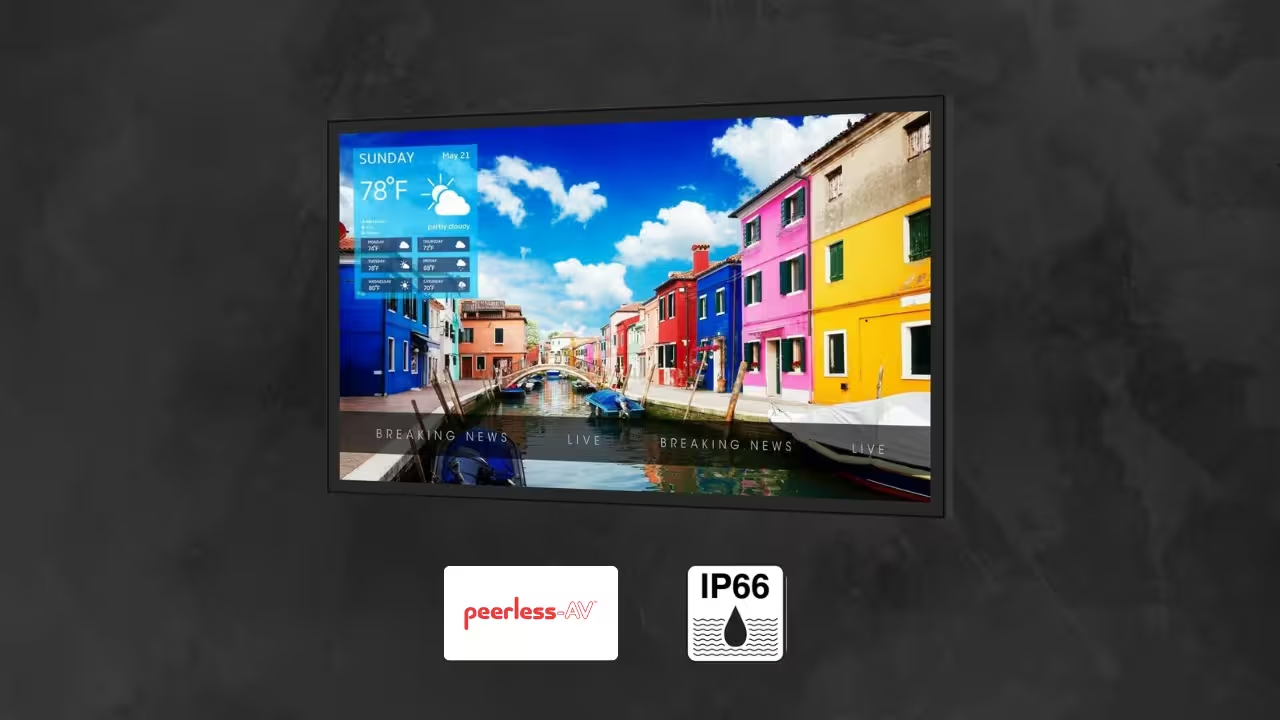
Specifications:
- Brightness: 2,500 nits
- Protection: IP66 rating, IK10 impact resistant
- Operating range: -31°F to 140°F (-35°C to 60°C), industry's widest range
- Smart features: Patented Dynamic Thermal Transfer system, optical bonding for improved contrast and reduced glare, ambient light sensor
- Built-in OS: None (requires external media player)
- Installation: Maintenance-free design with sealed enclosure
- Limited Waranty: 2 Year
- Price: $4,499.00
Two things set the Xtreme series apart: true IP66 protection (one step up from the IP56 most displays use) and an industry-leading temperature range from -31°F to 140°F that would shut down standard displays completely. The optical bonding eliminates the air gap between the panel and the protective glass to improve contrast in bright conditions and reduce internal reflections.
Best for: Extreme climate installations in northern regions with brutal winters or desert locations with scorching summers, applications where IP66 protection is genuinely necessary, and locations where optical bonding provides meaningful visibility improvement in challenging lighting
5. Elo 2799L and 1099L Outdoor Open Frame (27", 10")
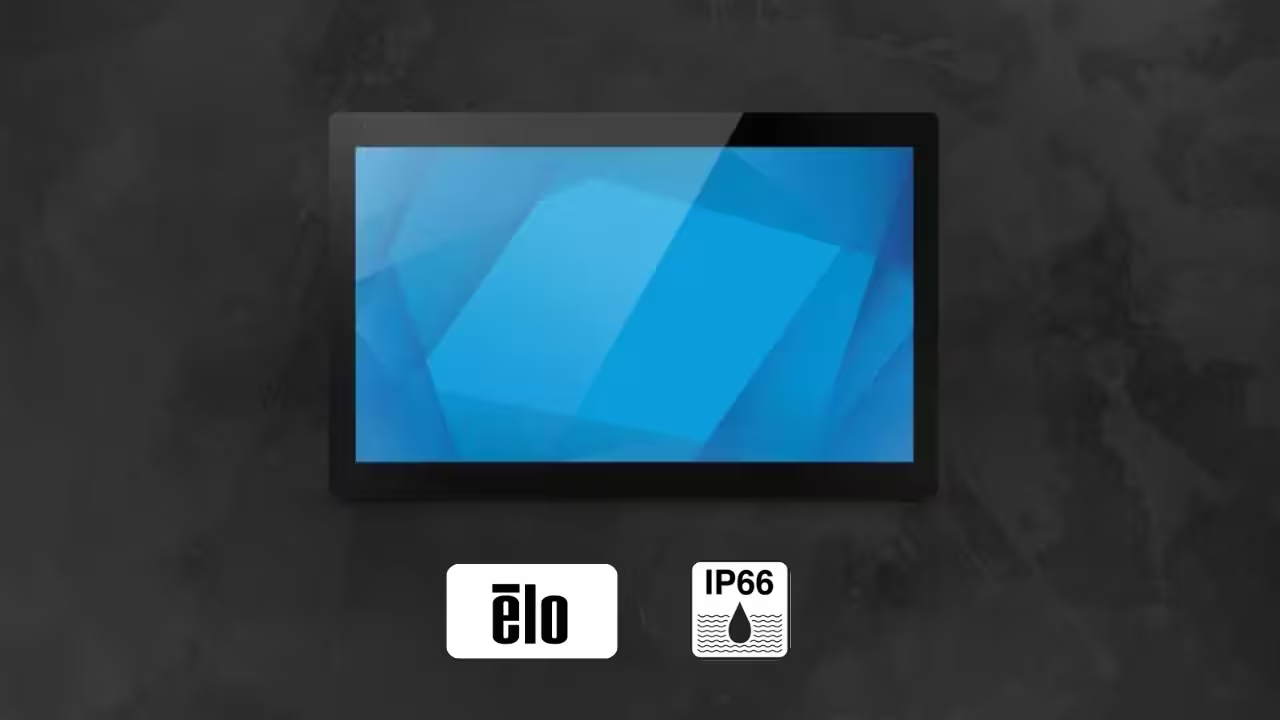
Specifications:
- Brightness: 1,500 nits (27") and 1,000 nits (10"), appropriate for close-proximity applications
- Protection: IP66/NEMA 4X when properly enclosed, IK10 (27") and IK09 (10") impact resistant
- Operating range: -20°C to 60°C
- Touch technology: PCAP 10-touch (2799L) and 5-touch (1099L), optical bonding, polarized sunglasses compatible
- Built-In OS: None
- Limited Warranty: 2 Year
- Price: $1,976.99(Elo 2799L), $1,039.99 (Elo 1099L)
Best for: Interactive outdoor kiosks requiring touch capability, payment and ticketing systems, wayfinding applications, EV charging stations, vending machines, any application where user interaction matters more than ultra-high brightness
What Causes Outdoor Displays to Fail?
Heat kills more displays than cold does – When LCD panels sit in high temperatures for long periods, they gradually turn yellow and dim over time. The fix is active cooling with fans and displays that can operate at least up to 50°C (122°F). Temperature sensors that automatically trigger thermal protection help catch problems before they cause permanent damage.
LG tackled the screen yellowing problem systematically enough to pursue UL verification for their anti-discoloration technology in the XE3P and XE4P series.
Condensation –When humidity changes throughout the day, moisture builds up inside the display. Bottom-mounted fans that push air upward solve this problem by keeping air moving and preventing water droplets from forming. It's a simple fix, but displays without it often develop condensation issues within the first year.
Cable and connector protection – Your display might be rated IP56, but if you're using standard cables and connectors, water can still get in at every connection point. You need weatherproof cable glands and sealed junction boxes to actually maintain the environmental protection. The display itself is only as waterproof as its weakest connection.
Power surge damage – Lightning and grid instability destroy more outdoor displays than most people realize. Commercial-grade surge protection rated for outdoor use is mandatory, not optional. The $200-$400 investment in proper surge protection will save you from a $6,000-$12,000 display replacement.
Firmware/software failures – Outdoor displays running 24/7 need regular firmware updates and reboots. Look DS's alert center sends immediate notifications when displays go offline or encounter playback problems, you'll know about the issue before customers start complaining. The system also lets you capture live screenshots remotely to verify what's actually playing on screens, which is invaluable when troubleshooting content issues at distant locations.
Installation Best Practices for Successful Deployment
Portrait orientation generates more internal heat than landscape due to how backlights distribute thermal load. Some manufacturers specify different operating ranges for portrait mounting, which are worth verifying before installation to maintain warranty coverage.
West-facing displays in summer climates experience prolonged, intense afternoon sun. When mounting west-facing, select displays with higher operating temperature ratings or accept potentially reduced operational lifespan as heat accelerates panel degradation.
Proper drainage design matters even with high IP ratings. Position drain holes at low points, use downward-facing cable entries where possible, and prevent water pooling around mounting points or cable penetrations. Water intrusion typically occurs at connection points rather than through the sealed display itself.
Security and tamper protection
Unsupervised outdoor deployments need physical security beyond IP ratings. Use lockable enclosures with tamper-proof fasteners (security Torx or one-way screws). Mount media players inside locked enclosures rather than externally. Consider gyroscopic tamper alerts (included in LG XE series) that notify administrators immediately when displays are moved or struck. Cable locks prevent theft of expensive HDBaseT or fiber runs.
Network connectivity resilience
Outdoor locations often have marginal network connectivity. Look DS's offline playback ensures content continues even during network outages, displays cache content locally and play scheduled playlists without constant server connection.
For critical deployments, consider LTE/5G backup connectivity. Industrial-grade outdoor networking equipment (NOT consumer gear) handles temperature extremes and provides proper surge protection. Sealed outdoor-rated network connectors prevent moisture ingress at RJ45 connections.
Maintenance schedule
Establish proactive maintenance rather than reactive repairs.
Quarterly: Clean protective glass, inspect seals and cable glands, verify fan operation, check for corrosion.
Annually: Deep clean ventilation paths, test backup connectivity, update firmware, verify mounting hardware torque.
What It Actually Costs to Get Started
Initial Capital Costs
Hardware: A 55" outdoor display rated for partial sun (3,500 nits, IP56) runs $5,000-$7,000. Full-sun displays with 4,000+ nits jump to $8,000-$12,000 for the same size. Go up to 75", and you're looking at $20,000-$30,000 depending on brightness and features.
Installation: Professional mounting and wiring typically adds 15-25% of the hardware cost. For a $6,000 display, expect $900-$1,500 in installation. Complex installations with electrical work, structural reinforcement, or difficult access points can push this higher.
Supporting infrastructure: Weatherproof cable glands, sealed junction boxes, surge protection, and proper grounding aren't optional. Budget $200-$500 for these essentials. Skip them, and you're gambling with your IP rating.
Media players and connectivity: If your display doesn't have built-in content management, add $300-$800 for a commercial media player with adequate processing power for 4K content.
Operating Costs (Annual)
Electricity: A 55" outdoor display at 3,500 nits typically draws 400-600 watts during operation. Running 12 hours daily at $0.15/kWh costs roughly $260-$390 per year. Displays with ambient light sensors that auto-adjust brightness can cut this by 30-40%, saving you about $80-$150 annually.
Content management: Cloud-based digital signage software starts $6/screen/month with Look CMS. You can also opt for the on-premise solution with higher upfront licensing but more control over your data and network infrastructure.
Look DS works across all the displays in this guide so you can manage mixed hardware fleets from one dashboard rather than juggling multiple vendor-specific platforms. Push playlist changes to all locations simultaneously from your desk, or target specific regions with location-based scheduling.
Maintenance and repairs: Set aside 5-10% of hardware cost annually. For a $6,000 display, that's $300-$600/year. This covers cleaning, fan replacements, and addressing minor issues before they become failures.
Compliance & Warranties
UL Outdoor Certification – Look for UL 48 listing, which verifies electric signs meet safety standards for outdoor use. This certification matters for insurance coverage and local permitting—some jurisdictions won't approve installations without UL listing. LG's UL-verified anti-discoloration goes beyond standard UL 48, specifically addressing long-term image quality.
Local Code Considerations – Electrical codes, wind load requirements, and ADA compliance vary by jurisdiction. It’s important to consult local authorities before installation. Some locations restrict brightness levels near residential areas (typically limiting to 2,500 nits after certain hours). Permitting typically requires structural engineering calculations for wind load, especially for larger 75" displays or high-wind coastal areas.
Warranty Reality Check – Standard 3-year warranties sound good until you read the fine print. Many exclude 'environmental damage,' which manufacturers define broadly. Document your installation practices (proper surge protection, weatherproof connectors, correct mounting) with photos and receipts. This documentation protects you if warranty disputes arise.
Maximize Outdoor Signage with Professional Content Management
Selecting the right waterproof monitor comes down to honestly assessing your deployment conditions and matching specifications accordingly. A properly specified display with correct installation and professional content management from Look DS will deliver 7-10 years of reliable outdoor performance. The upfront investment in quality hardware and infrastructure always costs less than premature replacement or ongoing service calls.
Reliable content management is the second part of the equation and Look DS has you covered with an enterprise-grade CMS designed for reliable performance for outdoor networks. Under a unified web-based dashboard, you get the centralized control to manage displays across multiple locations supported by remote management, proof of play reports and reliable uptime.
Look DS transforms individual waterproof monitors into a managed network that delivers measurable business results.
Want to see it in action? Sign up for a free 14-day trial today with no functional limitation.