Table of Content
How can brands capture attention in a world where digital ads are easily skipped or blocked? Out-of-home (OOH) advertising solves this by placing your message in the physical world-on commutes, in stores, and across city centers-where it remains unavoidable and impactful. Today, OOH is evolving rapidly through digital integration, allowing businesses to launch data-driven, highly visible campaigns that build trust and drive recognition in minutes.
OOH works because it simplifies the connection between brand and audience. Whether it is a highway billboard or a digital screen in a waiting room, OOH engages people during their daily routines without the distractions of mobile notifications. It provides a stable, physical presence that enhances brand credibility and supports long-term growth.
What is OOH advertising?
Out-of-home (OOH) advertising refers to any visual marketing media found outside of the consumer's home. This category spans from traditional roadside billboards to digital signage in elevators, retail stores, and transit hubs. Unlike personal device advertising, OOH is a shared medium that shapes public environments and reaches audiences collectively.
Because it operates in the physical world, OOH is not subject to ad blockers or "skip ad" buttons. It functions as a constant backdrop to daily life, offering broad exposure that reinforces brand messaging. This persistent visibility allows companies to communicate with diverse demographics efficiently, often achieving reach that online targeting alone cannot match.
How does OOH advertising work?
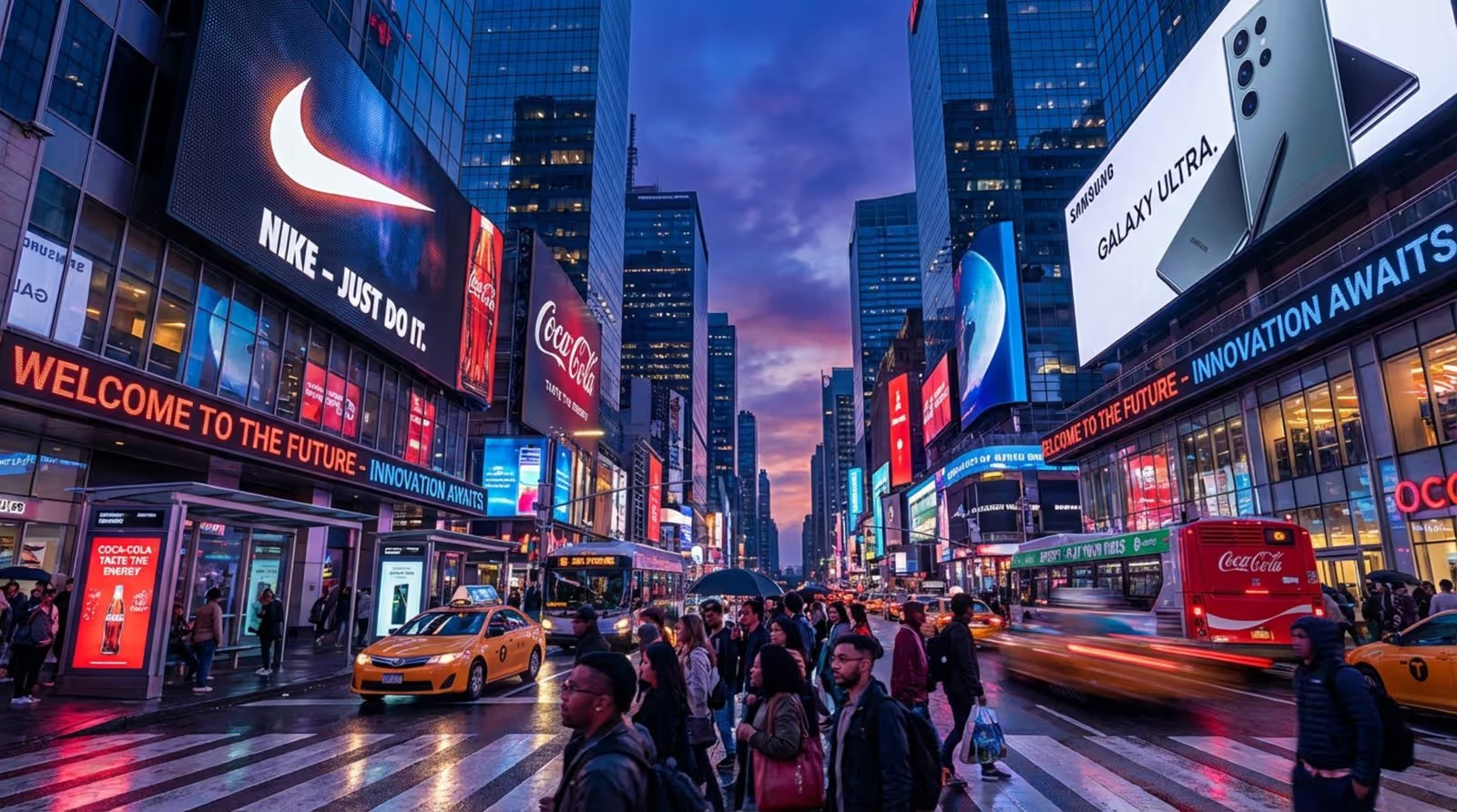
OOH generates value through "impressions"-the number of times an ad is viewed. Success begins with selecting high-traffic locations that align with your target audience. Once a site is secured, content is either physically installed (static) or uploaded remotely (digital) to display the message.
The power of OOH lies in repetition. A commuter passing the same digital signage every morning becomes familiar with the brand simply through passive observation. This consistent presence builds authority and trust, offering a tangible counterweight to the fleeting nature of online pop-ups.
Types of OOH advertising formats
OOH is versatile, offering formats for every budget and strategy. From massive exterior displays to intimate indoor screens, you can choose the medium that best fits your goals-whether that is building mass awareness or driving immediate foot traffic.
Billboards and large format displays
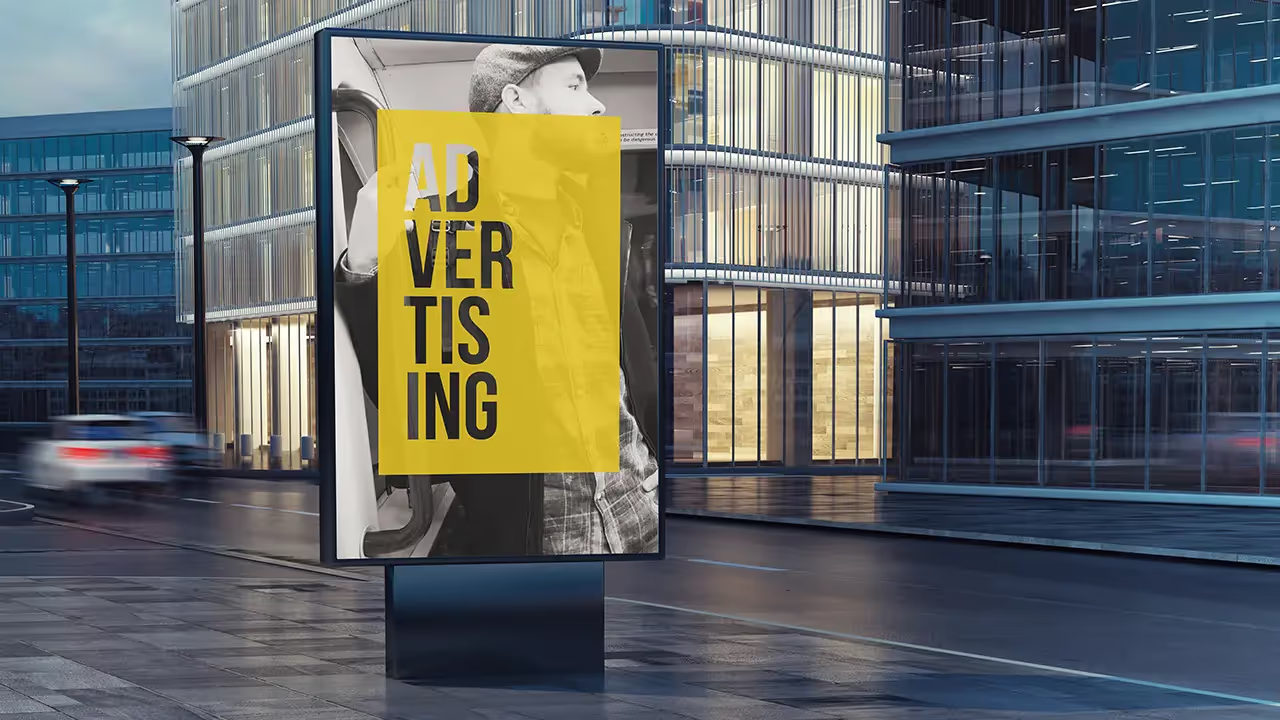
Billboards are the backbone of OOH infrastructure. Positioned along high-speed roads, they utilize bold visuals and concise text to deliver a message in seconds. A single well-placed billboard can generate thousands of daily impressions, anchoring a brand in the local landscape.
Large format options also include "spectaculars"-custom, illuminated installations in dense urban centers. These premium assets transform ads into landmarks, associating the brand with the prestige of the location itself.
Street furniture
Street furniture includes bus shelters, kiosks, and benches positioned at eye level. These formats are ideal for engaging pedestrians and commuters who have dwell time while waiting for transport. Because the viewing time is longer, these displays can support more detailed information than highway billboards.
This format is highly effective for hyper-local targeting. Retailers can activate screens in specific neighborhoods to drive traffic to nearby stores, influencing purchasing decisions moments before a transaction occurs.
Transit and transport ads
Transit advertising places content on and inside vehicles, such as buses, trains, and taxis. Mobile formats like bus wraps carry your brand throughout the city, bringing the message directly to different neighborhoods rather than waiting for audiences to come to you.
Interior transit ads benefit from captive audiences. Commuters on a 30-minute train ride have ample time to read and absorb content, making this format effective for detailed messaging aimed at professionals and students.

Place-based and venue-specific OOH
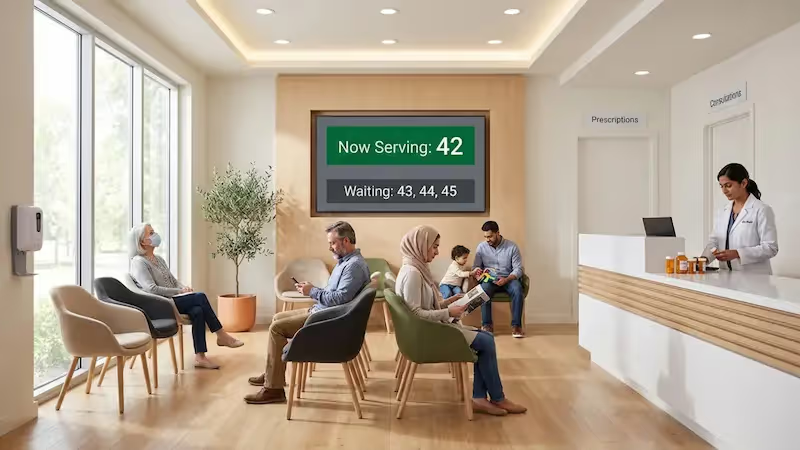
Place-based OOH targets specific environments where audiences share common interests or needs, such as gyms, offices, bars, and gas stations. A nutrition brand advertising on a gym screen is contextually relevant, increasing the likelihood of engagement.
These locations frequently utilize digital signage software to manage content. This allows for precise scheduling, ensuring ads run only when the venue is busiest or when the relevant audience is present.
Airport and mall advertising
Airports and shopping malls are high-dwell environments where consumers are often in a spending mindset. Airport OOH utilizes premium digital displays to reach business travelers and tourists, often promoting luxury goods or B2B services.
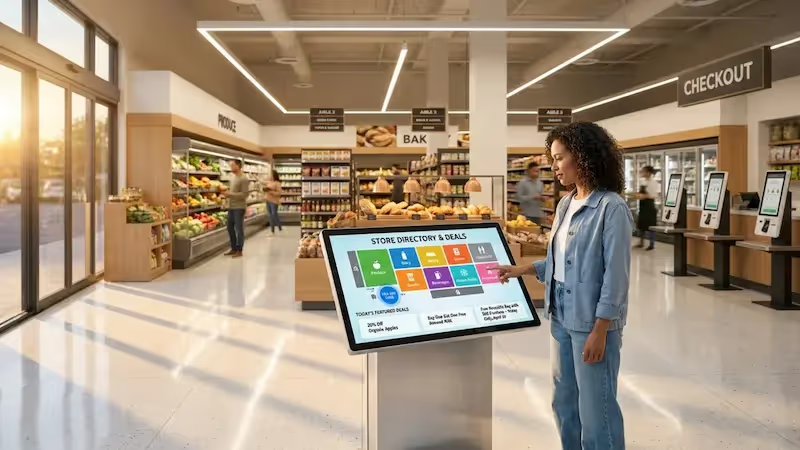
Malls offer a direct path to purchase. Digital directories and large-format screens catch shoppers at the point of decision, often directing them to specific stores or highlighting time-sensitive sales.
Digital OOH (DOOH) and its evolution
Digital Out-of-Home (DOOH) replaces static print with dynamic screens, offering speed and flexibility. With DOOH, you can update content remotely in minutes, run multiple messages in a loop, and utilize video to capture attention more effectively than static images.
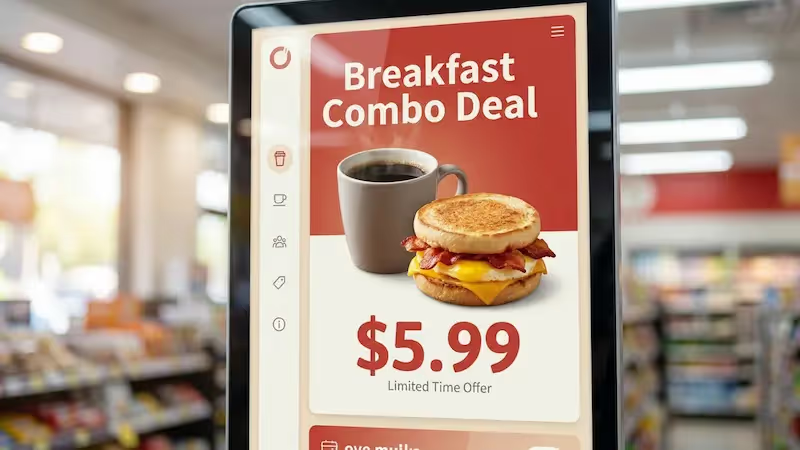
DOOH also enables data-driven content. Screens can display different creative assets based on weather conditions, time of day, or live inventory levels. For example, a restaurant can schedule coffee ads for the morning commute and lunch specials for the afternoon, maximizing relevance.
Key benefits of OOH advertising
OOH cuts through digital noise. While online channels struggle with saturation and privacy restrictions, OOH offers a reliable way to build brand equity. It combines scale with tangible presence, ensuring your message is seen in the real world.
Furthermore, OOH is non-disruptive. It enhances public spaces rather than interrupting content consumption. This leads to higher consumer acceptance and a more positive association with the advertised brand.
Delivers broad reach and high visibility
OOH broadcasts your message to the masses without algorithmic filtering. A strategic display can be viewed by thousands of people daily, regardless of their online browsing habits. This ensures your brand reaches potential customers outside your usual digital targeting parameters.
This capability is essential for market entry and product launches. OOH acts as a megaphone, establishing immediate awareness across a wide demographic spectrum.
Drives strong brand awareness and recall
The scale and permanence of OOH formats make them memorable. Studies frequently show higher recall rates for OOH compared to mobile ads, driven by the lack of competing content in the immediate physical environment.
Consistent visibility builds familiarity. When a brand appears reliably in public spaces, it signals stability and success, fostering trust among consumers who value established businesses.

Targets diverse and local audiences
OOH allows for both broad broadcasting and precise local targeting. You can select inventory by zip code or street to reach specific communities. This is vital for brick-and-mortar businesses that rely on local foot traffic.
By leveraging location data, you can position ads where your ideal customer lives or works. A B2B software company might target financial districts, while a retail brand focuses on suburban shopping centers.
Is cost-effective for various business sizes
In terms of cost per thousand impressions (CPM), OOH is often highly competitive. While upfront costs for large static boards can be significant, the sheer volume of views drives the per-impression cost down, often offering better value than crowded digital auctions.
Modern solutions make OOH accessible to SMBs. Digital signage allows businesses to start with a single screen or a small local network, scaling up as their budget allows without the heavy production costs of printing vinyl.
Boosts engagement by complementing digital campaigns
OOH serves as a primer for digital channels. Consumers are more likely to click a social ad or search for a brand after seeing it in the physical world. It validates the digital message, increasing overall campaign performance.
Integration is seamless; QR codes and short URLs on screens can bridge the gap, driving immediate mobile traffic from a physical ad placement. This creates a connected customer journey from the street to the smartphone.
Provides continuous, unavoidable exposure
OOH is "always on." There is no option to minimize the window or close the tab. This ensures your brand occupies mental real estate simply by being present in the environment.
This persistence is valuable in an era of ad avoidance. While mobile users scroll past ads in milliseconds, a digital screen in a lobby or on a street corner commands attention simply by occupying the visual field.
Enables creative and flexible storytelling
The physical scale of OOH offers a unique canvas for creativity. Digital screens allow for motion, animation, and sequential storytelling that keeps content fresh. You can rotate testimonials, product features, and brand values within a single playlist.
With remote management, storytelling becomes agile. You can adapt messaging to reflect current events or trends instantly, keeping the brand conversation relevant and lively.
Exemption from ad blockers and fraud
OOH is immune to the bot traffic and ad fraud that plague online advertising. Every impression represents a real person in a real location. There are no "hidden" ads or viewability issues caused by scrolling.
This transparency ensures that marketing budgets are spent on actual human views, providing a secure investment for brands focused on verified reach.
Comparing traditional OOH and digital OOH (DOOH)
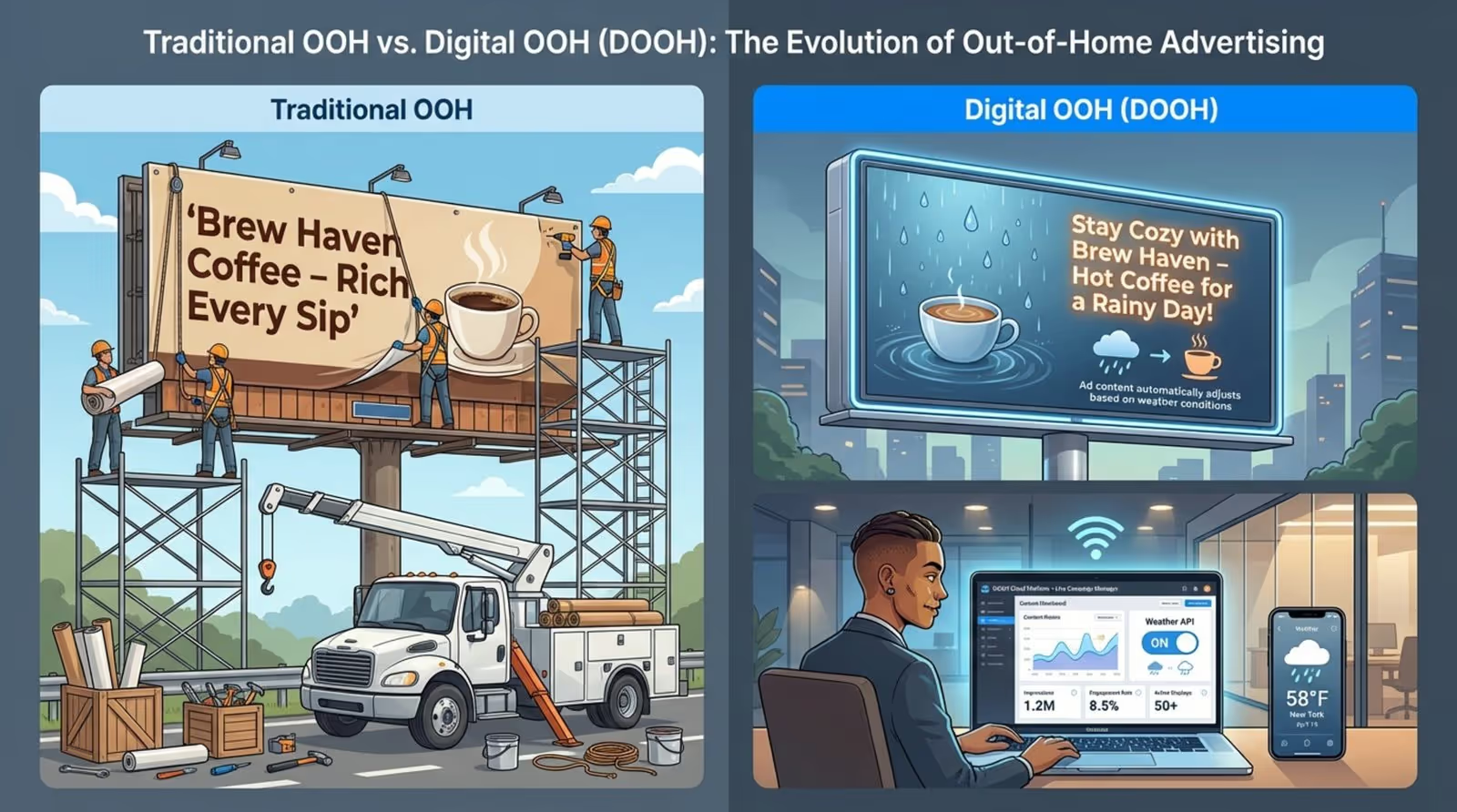
The choice between traditional and digital OOH depends on campaign objectives. Traditional formats offer exclusive ownership of a space for a set period, ideal for long-term branding. DOOH offers flexibility, allowing for dayparting, rotating content, and rapid updates.
While traditional billboards remain effective for static awareness, DOOH is rapidly becoming the standard for businesses that need to remain agile and data-informed. The ability to change a message in minutes without printing costs is a decisive advantage for modern operations.
Real-time content updates and dynamic messaging
Traditional OOH requires lead time for production and installation. DOOH eliminates this delay. With digital signage software, you can publish new content to screens instantly from anywhere.
This speed allows for dynamic campaigns. A retailer can promote umbrellas during a rainstorm or flash sales during slow hours. This responsiveness turns advertising into a service that feels timely and relevant to the viewer.
Advanced audience targeting using data
DOOH leverages data to optimize playback. Instead of a static message, digital screens can trigger content based on audience demographics or external data feeds. This ensures the right message reaches the right people at the right time.
For example, a gym can display membership offers during peak commuting hours and supplement sales during the mid-day lull, maximizing the efficiency of the ad spend.
Enhanced engagement through interactivity
Digital screens unlock interactive potential. Touchscreens and QR codes transform passive viewing into active engagement. Users can browse catalogs, sign up for newsletters, or redeem coupons directly from the screen.
This interactivity provides measurable data on engagement, bridging the gap between impression and conversion. It turns a standard ad placement into a functional customer touchpoint.
Cost considerations: traditional vs. digital
Traditional OOH often involves higher initial production costs (printing and installation) but lower media costs for long durations. DOOH shifts the cost structure; while there are no printing fees, media space is often purchased in "slots" or loops.
However, for businesses owning their own screens (like retailers or restaurants), the ongoing cost of DOOH is primarily the software subscription, making it a highly economical channel for self-promotion.
Campaign measurement and performance attribution
DOOH offers superior analytics compared to static boards. Modern platforms track playback frequency, uptime, and proof-of-play, giving advertisers concrete evidence of delivery.
By correlating playback times with sales data or mobile traffic, businesses can attribute lift directly to their OOH activity. This data-driven approach moves OOH from a brand awareness play to a measurable performance channel.
Actual market trends shaping OOH advertising
The OOH landscape is shifting toward accessibility and integration. Technology is lowering the barrier to entry, allowing businesses of all sizes to deploy professional-grade digital signage networks. The focus is now on ease of use, automation, and proving ROI.
This democratization means local businesses can now compete with major brands for attention in their physical communities, using the same sophisticated tools to manage their messaging.
Growth of programmatic DOOH and automated buying
Programmatic buying is streamlining how OOH is purchased. Advertisers can now bid on digital inventory in real-time, similar to online ad buying. This automation removes friction, allowing for flexible, short-term campaigns.
This shift favors agility. Brands can switch creatives or locations based on performance data, ensuring budgets are always directed toward the highest-performing assets.
Rise of data-driven and contextual targeting
Data is fueling smarter campaigns. Advertisers are using anonymized location data to understand movement patterns, ensuring ads appear where their target audience actually spends time, rather than just where traffic is highest.
Contextual triggers-such as weather or traffic conditions-are becoming standard. This ensures that the content displayed is always appropriate for the current environment, increasing engagement rates.
Integration with mobile and online media
OOH is increasingly viewed as part of an omnichannel strategy. Campaigns are designed to start on a street-level screen and finish on a mobile device. This hand-off is critical for driving conversions.
Retargeting strategies allow brands to serve mobile ads to users who have been exposed to their OOH placements, reinforcing the message and improving click-through rates on digital channels.
Expansion into new environments and urban spaces
Screens are appearing in new locations, from EV charging stations to co-working spaces. These new environments offer highly targeted opportunities to reach niche audiences in moments of dwell time.
As screens become ubiquitous, the need for centralized management grows. Businesses managing these networks require reliable software to keep content consistent across diverse hardware types.
Sustainability and environmentally responsible practices
The industry is prioritizing sustainability. This includes the adoption of energy-efficient LED screens and solar-powered units. Reducing the carbon footprint of digital networks is a key focus for hardware manufacturers and operators alike.
Software plays a role here as well; smart scheduling allows screens to power down during off-hours, reducing unnecessary energy consumption and extending hardware life.
Emergence of augmented reality (AR) and interactive OOH
AR is adding a layer of immersion to OOH. By scanning a screen, users can unlock 3D content or virtual experiences on their phones. This bridges the physical and digital worlds, creating memorable brand interactions.
These experiences are highly shareable, often extending the campaign's reach onto social media platforms organically.

Increasing accessibility for small and local businesses
Perhaps the most significant trend is that professional digital signage is no longer just for enterprise giants. With the right tools, small and mid-sized businesses can manage sophisticated networks with minimal technical effort.
For those looking to deploy their own network, Look Digital Signage (Look DS) offers a straightforward solution. Look DS is designed to help businesses of any size manage screens remotely without complex IT setups. Key capabilities include:
- Look CMS: A cloud-based dashboard to create, manage, and publish content to one or thousands of screens in minutes.
- Smart Scheduling: Automate your playlists to ensure the right promotions play during specific times or days, optimizing relevance.
- Playback Analytics: Access detailed reports on content performance and screen uptime to inform your strategy.
- Hardware Agnostic: Use the Look App on existing hardware or deploy the plug-and-play Look HDMI Player for a quick start.
AI and analytics powering smarter campaigns
AI tools can now assist in generating layouts and copy, reducing the design burden on marketing teams.
Analytics are also becoming more predictive. By analyzing historical data, platforms can suggest optimal scheduling times, helping businesses get the most out of every screen in their network.
What is the future of OOH advertising?
The future of OOH is connected, intelligent, and user-centric. As smart cities evolve, digital signage will serve as a communication hub, providing utility-such as wayfinding and real-time alerts-alongside advertising.
The boundary between "online" and "offline" will continue to blur. OOH will function as the physical anchor for digital experiences, offering a tactile entry point into the brand ecosystem.
Connected consumer experiences
Expect deeper integration with IoT devices. Screens will communicate with wearables and connected vehicles to deliver personalized information in privacy-safe ways. This will transform OOH from a broadcast medium into a personalized service channel.
This connectivity will allow for seamless transitions of information, where a map or offer viewed on a public screen can be instantly transferred to a personal device for later use.
The growing role of DOOH in media mix
DOOH is projected to capture a larger share of global ad spend. As measurement improves and buying becomes easier, it will be treated as a performance channel equal to web and social advertising.
Unified platforms will likely emerge, allowing marketers to manage their digital ads and physical screen networks from a single interface, streamlining operations and ensuring brand consistency.
Expected innovations and industry outlook
We will see advances in display technology, including transparent screens and holographic displays that blend into architecture. Computer vision will enhance audience measurement without compromising privacy, providing deeper insights into viewer behavior.
The outlook for OOH is robust. Its unique ability to build trust and guarantee visibility ensures it will remain a cornerstone of effective marketing strategies. For businesses ready to modernize their physical presence, tools like Look Digital Signage provide the necessary infrastructure to capitalize on these trends today.