Table of Content
Multilingual resort messaging with digital signage is a modern communication approach that uses electronic displays-such as high-definition screens, interactive kiosks, and digital totems-to share live information with guests in their own languages. With smart software and artificial intelligence, resorts can move from fixed, one-language posters to an active system where language is no longer an obstacle to comfort and luxury. This setup meets the rising demand for inclusivity in global travel, helping every visitor, no matter where they come from, feel recognized, understood, and welcomed from the moment they arrive.
Beyond simple translation, this setup turns the guest journey into a smooth, technology-driven experience. It lets resort teams send out updates, promotions, and safety messages across many screens at once. Whether it’s a family from Tokyo trying to find the kids’ club or a couple from Paris looking for a wine tasting, multilingual digital signage works like a 24/7 digital concierge that “speaks” many languages with clear messaging and a consistent brand voice.
What Is Multilingual Resort Messaging With Digital Signage?
How Does Digital Signage Enable Multilingual Communication in Resorts?
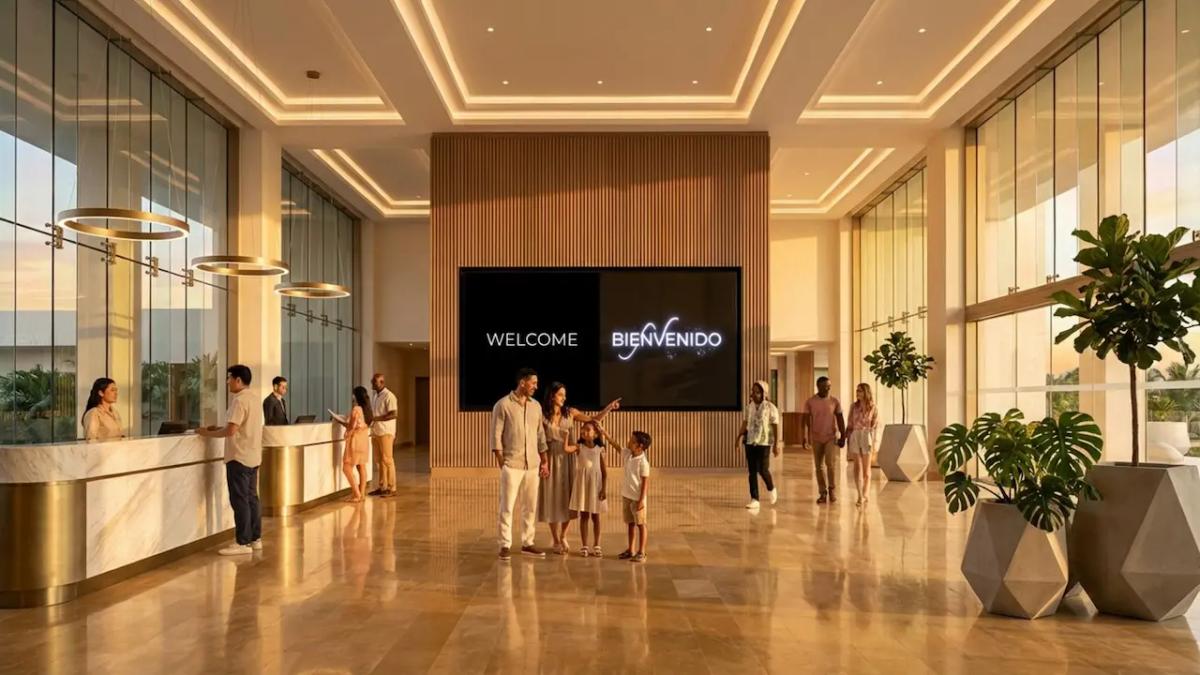
Digital signage supports multilingual communication by replacing printed signs with flexible digital screens that can show different languages in sequence or respond to guest choices. In a busy resort lobby, one screen can rotate welcome messages in English, Spanish, Mandarin, and Arabic every few seconds. This way, many groups can read the same message without filling the space with a lot of separate signs.
Interactive touch kiosks add another layer. Guests can pick their preferred language, and the whole interface-maps, activity schedules, restaurant menus-switches to that language. This level of control helps international travelers move around the resort as easily as local guests, and it reduces the load on front-desk staff who might otherwise spend a lot of time translating.
Key Technologies Behind Resort Digital Signage
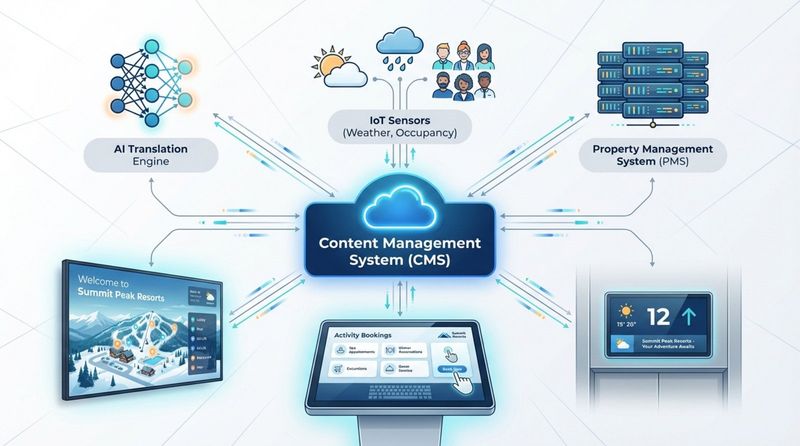
The core of modern resort signage is a mix of strong hardware and cloud-based Content Management Systems (CMS). Hardware may include commercial-grade LED displays and media players like Fire Sticks, Android boxes and dedicated hardware players. All devices connect to a central dashboard so managers can update content on many screens with a single action. AI-based platforms are now common, often detecting a guest’s preferred language by linking with Property Management Systems (PMS) or using facial recognition triggers.
IoT (Internet of Things) connections also play a big part. When signage is linked to live resort data, screens can show real-time weather, flight status, or spa occupancy. Combined with automatic translation tools, this creates an intelligent system that delivers local, timely information that changes along with each stage of the guest’s stay.
Why Multilingual Digital Signage Matters for Guest Experience
How Multilingual Messaging Increases Comfort and Confidence
After a long international trip, guests arriving at a large resort don’t want the extra stress of unclear directions or confusing service descriptions. Seeing their own language on a bright digital screen gives an immediate feeling of safety and comfort. This comfort quickly becomes confidence: guests who understand the layout and the available services are more likely to leave their rooms and explore everything from shops to rooftop bars.
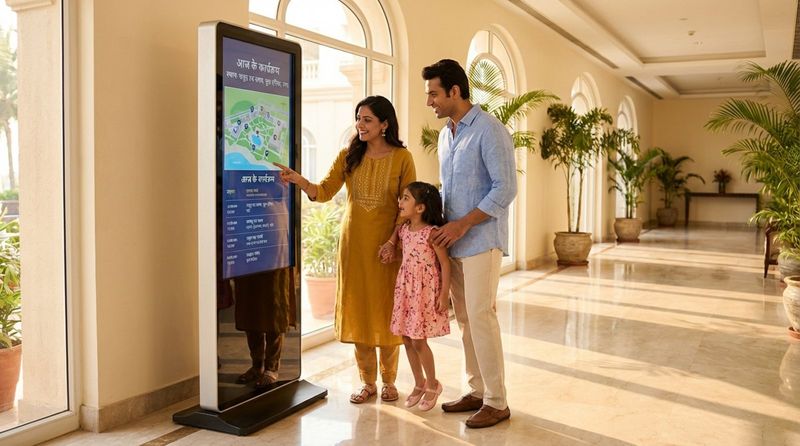
Confidence also supports a calmer vacation. Instead of struggling with a map or hesitating to walk into a restaurant because they can’t read the specials, guests feel free to try new things. This ease is a key part of real luxury, where the setting anticipates guest needs and removes friction before it turns into annoyance.
Preventing Communication Barriers for International Guests
Language barriers are more than a small annoyance; they can cause real service problems. At a resort, confusion at check-in or misunderstanding pool safety rules can affect the whole stay. Digital signage helps prevent this by giving clear visual and written guidance. For travelers who are not comfortable with English or French-only signs, these screens act like a safety net so important information does not get lost.
By clearly explaining how to log into Wi-Fi, book a tee time, or request extra towels in several languages, resorts shrink the “language gap” common in major tourist destinations. This proactive method keeps guests from feeling cut off or helpless and supports a more independent and enjoyable visit.
Reinforcing Brand Image and Cultural Inclusivity
Resorts bring together many cultures, and their signage should reflect that mix. Using multilingual digital signage shows that a brand thinks globally and respects different backgrounds. It shows care for each guest’s culture that goes beyond a standard greeting. When a resort invests in accurate translations and culturally suitable images, it supports a brand image of professionalism and strong attention to detail.
This sense of inclusion also feeds long-term loyalty. Guests are more likely to return to-and recommend-a place where they felt truly welcomed. In cities like Toronto or Vancouver, where hotels host visitors from more than 180 countries each year, being able to speak to many cultures is not just a nice marketing claim; it’s a key factor that separates one resort from another.
Benefits of Resort Messaging With Digital Signage
Accessibility and Inclusion for All Guests
Multilingual signage is a key part of modern accessibility. Beyond language, good digital signage follows ADA guidelines with high-contrast fonts, familiar icons, and thoughtful color choices to draw attention to what matters most. For guests with cognitive or visual challenges, the mix of clear symbols and text in their native language makes it easier and safer to move around the property.
Digital tools can also include QR codes that link to audio versions or simplified text. By engaging more than one sense, the resort makes its information easier to use for everyone, no matter their physical abilities or language skills. This creates a fairer experience for all guests.
Real-Time Emergency and Safety Updates
During an emergency, clear communication is a safety issue. Digital signage lets security teams share alerts, escape routes, and warnings in many languages at once across the resort. Unlike printed signs, which are fixed and often limited to one or two languages, digital screens can be changed within seconds to match the situation.
From weather warnings about incoming storms to simple notes about a temporary pool closure, live updates help keep every guest informed. This ability is key to maintaining order and making sure that safety messages reach everyone, no matter what language they speak.
Opportunity for Upselling and Revenue Generation
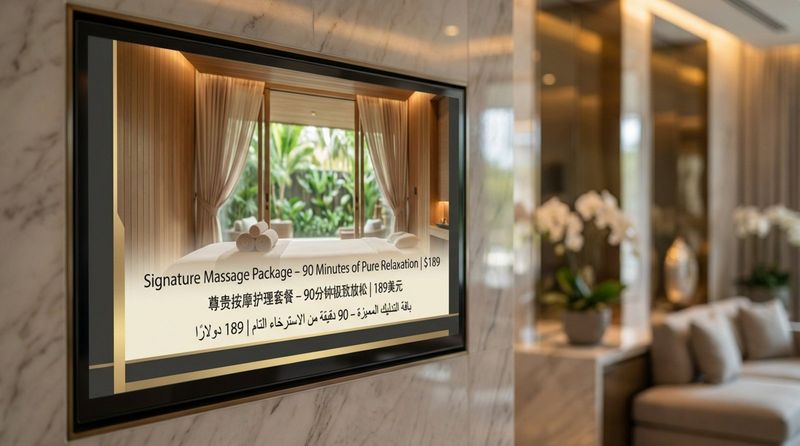
Multilingual digital signage can quietly boost sales. By advertising spa deals, happy hour offers, or tour bookings in a guest’s own language, resorts often see more impulse purchases. Studies show that guests are more likely to spend when they fully understand what is being offered and why it is worth buying.
For example, a screen in an elevator could show a beautiful image of a signature massage with descriptions in Mandarin, Spanish, and English. This targeted message uses “waiting time” effectively and encourages guests to book services they might have missed. This approach improves the guest experience and also supports higher revenue and better use of resort facilities.
Best Practices for Creating Effective Multilingual Resort Signage
Audience Analysis and Language Selection
The starting point for a good signage plan is knowing who your guests are. Resorts should look closely at their visitor data to see which languages are most common. While English is widely used in travel, a steady rise in guests from China, Latin America, or the Middle East should lead to adding Mandarin, Spanish, or Arabic in key zones.
Using real data means the resort is not guessing. By checking booking details and loyalty program records, managers can decide which languages to show in each area-for example, more European languages in a fine-dining restaurant and more Asian languages near high-end shopping areas.
Clarity, Symbol Usage, and Visual Hierarchy
Good design works across cultures. To keep screens from feeling busy or confusing, use a clear order of information. This often means large, simple sans-serif fonts and strong color contrast for easy reading. Separate language blocks with enough white space so guests can quickly see where one language ends and another begins.
Pair text with common pictograms-like the symbols for restrooms, exits, and dining-to support understanding without words. These icons draw the eye first, while the text gives extra detail. With this “symbols first” method, even guests whose language is not currently on display still have basic guidance to help them find their way.
Respecting Cultural Nuances and Idiomatic Expression
Translation is about meaning and feeling, not just word swaps. Resorts should avoid depending only on basic automatic translation tools, which can miss cultural context or create strange, stiff phrasing. Professional translators help keep messages accurate, respectful, and in line with the resort’s brand tone.
Cultural awareness also includes image and color choice. Colors and symbols can have very different meanings across cultures. A well-planned multilingual signage system pays attention to these details so that the message feels as warm and welcoming as the language itself.
Ensuring ADA Compliance and Accessibility
Digital signage has to be easy to reach and see to be truly inclusive. That means placing screens at heights that work for both standing guests and those using wheelchairs. For interactive kiosks, the design should include large touch areas and the option to move menus lower on the screen for easier access.
Physical cues also matter. While the screen is digital, braille and raised lettering on the frame or a nearby sign help guests with limited sight understand what the kiosk is for. Including these features helps the resort meet legal requirements and, more importantly, offer a better visit for everyone.
Implementation Steps for Multilingual Digital Signage in Resorts
Screen Placement and Connectivity Set Up
The impact of digital signage depends a lot on where the screens are located. Resorts should study guest movement to find high-traffic spots like lobbies, elevator areas, and entrances to popular amenities. After choosing locations, set up reliable Wi-Fi or wired connections so updates can happen in real time.
Connectivity also refers to how screens share information with each other. A central network lets teams send different messages to different zones. For instance, spa screens can show wellness content while lobby screens focus on check-in details and local tours. This approach helps each guest see the most useful content for where they are and what they’re doing.
Preparing and Translating Content in Multiple Languages
Creating content should bring together marketing, design, and translation teams. Tools like Canva or Photoshop can be used to build templates that make swapping text between languages simple. Save versions in a clear, consistent way-for example, “DinnerMenuEN.jpg” and “DinnerMenuES.jpg”-so staff can upload the right file quickly.
Keep messages short and direct. Guests often read screens in passing, so use brief headings and clear calls to action. If it’s hard to fit three languages on one screen without clutter, use rotating slides or scrolling layouts so each language has its own clear display time.
Organizing Playlists and Scheduling Language Displays
Once content is ready, organize it into playlists in the CMS. A resort could create an “English Morning Playlist” and a “Spanish Morning Playlist,” then schedule them to run at set times. You might increase Japanese content in the early morning if flights from Tokyo usually arrive then.
Scheduling tools often support “day-parting,” where content changes at specific times-for example, from breakfast menus to lunch offers. Automation reduces manual work for staff and helps content match the time of day and the current flow of guests.
Monitoring Content Performance and Making Adjustments
Digital signage also provides useful data. Many systems track how often guests interact with touchscreens and use sensors to estimate how long people look at each display. By checking these numbers, managers can see which messages work well and which ones guests tend to ignore.
If a tour promotion gets no response in French but works well in English, the team can change the French version or adjust when it appears. Ongoing fine-tuning helps the signage investment keep paying off and steadily improves the guest experience.
Common Challenges and Solutions for Multilingual Messaging
Managing Accurate Translations and Avoiding Mistranslation
One of the biggest risks in multilingual messaging is poor translation. A bad translation of a safety message or menu item can harm the resort’s image. A good approach is to use both technology and people: let AI handle quick, low-risk translations, but have professional translators review all permanent signs and important marketing pieces.
Resorts can also build a “translation library” inside their CMS. This library stores approved phrases and terms that match the brand and have been checked for accuracy. Reusing these phrases keeps wording consistent across all screens and reduces mistakes during rapid updates.
Balancing Text with Universal Symbols
Too much text-especially in multiple languages-can overload a screen. The challenge is giving enough detail without crowding the display. Using simple icons and symbols helps. Let the icon show what the message is about (for example, a fork and knife to signal dining), so the written text can stay short.
A clean layout with plenty of empty space also helps. Instead of squeezing all languages onto one static slide, use a slow, smooth change between languages. This keeps the look modern and high-end while still conveying full information.
Centralizing Updates Across Multiple Screens
As a resort expands, handling many screens can get complicated. A strong cloud-based signage platform solves this by letting one manager control all screens from a laptop or tablet, from any location.
Central control also supports property-wide alerts. If an event is canceled due to bad weather, the manager can send an update to every screen at once. This keeps information aligned everywhere and prevents mix-ups where some screens still show old details.
Real-World Applications and Case Studies
Lobby, Dining, Event, and Activity Signage in Practice
In daily use, multilingual signage changes how shared spaces feel. In the lobby, interactive totems let guests explore local attractions and make bookings in their own language, removing the need for stacks of printed brochures. In dining areas, digital menu boards can show high-quality images of dishes with descriptions that switch based on language settings.
For events and activities, screens near pools or ballrooms can show live schedules. If a yoga class moves from the beach to the gym, the update can appear right away in several languages. This quick responsiveness keeps guests in the loop and cuts down on questions directed to staff.
Showcasing Multilingual Success Stories in Resorts
The Anfi Group in Gran Canaria provides a good example. They added interactive totems to improve their guest experience. By moving to a digital, multilingual model, they were able to highlight local partners and let guests book activities directly on-screen. This led to more spontaneous activity bookings and less need for printed materials.
A luxury hotel in Vancouver reported a 21% rise in guest satisfaction scores after rolling out multilingual digital signage. They also saw a 30% drop in translation requests at the front desk, freeing staff to handle more complex guest needs. These results show that multilingual signage is more than a nice extra-it is a practical tool that supports better operations and guest service.
Future Trends in Resort Messaging With Digital Signage
Voice-Enabled and Interactive Multilingual Displays
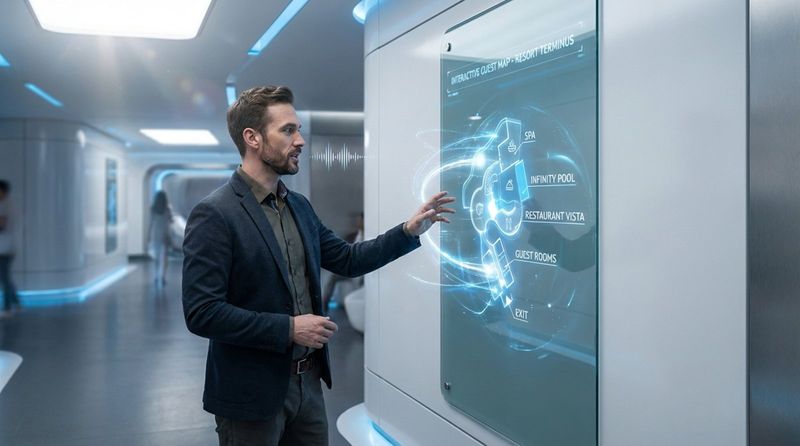
The next major step for resort signage is voice input. A guest might walk up to a screen and ask, in Italian, “Where is the nearest Italian restaurant?” and get a map and menu back in Italian. Voice-enabled signage, powered by advanced AI and high-quality microphones, can act almost like a live assistant.
This hands-free style is handy for guests carrying bags or holding children. It fits with wider moves toward contactless service and smart environments, helping the resort feel modern and forward-looking.
AI-driven Personalization for Targeted Messaging
As AI connects more deeply with resort systems, messaging will become more personal. Screens could use guest profiles-such as loyalty level or past booking history-to show offers that match individual interests. If a guest often visits the spa, a nearby screen might highlight an available treatment slot in their preferred language as they walk by.
This kind of personalization goes beyond using someone’s name. It looks at travel habits and mood and tries to match messages to what each guest is likely to want at that moment. Done well, it creates a sense of care and attention that feels both natural and thoughtful.
Final Recommendations for Resort Leaders Choosing Multilingual Digital Signage
For resort leaders planning ahead, moving to multilingual digital signage should be seen as a long-term investment in both brand strength and smooth operations. Beyond buying hardware and software, make staff training a priority. Your team should be comfortable with how the system works and how to use the data it produces to improve service. When staff support the system and use it confidently, the technology feels like part of your hospitality, not a cold replacement for human contact.
Also pay close attention to data privacy and security. As systems grow more personal and connect to guest profiles, compliance with regulations like GDPR is mandatory. Guests need to feel that their personal information is treated with the same care as their comfort and safety on-site. By combining strong AI tools with a people-focused approach to service and privacy, resorts can create an experience that feels natural to guests from any country. The aim is to help every guest feel at home-no matter how far they have traveled.