
Table of Content
How can Australian businesses find the right digital signage solution for their specific needs? The answer lies in selecting a provider that balances reliable hardware with intuitive software for seamless content management. This guide highlights key players in the Australian market, from cloud-based platforms to large-scale hardware installers.
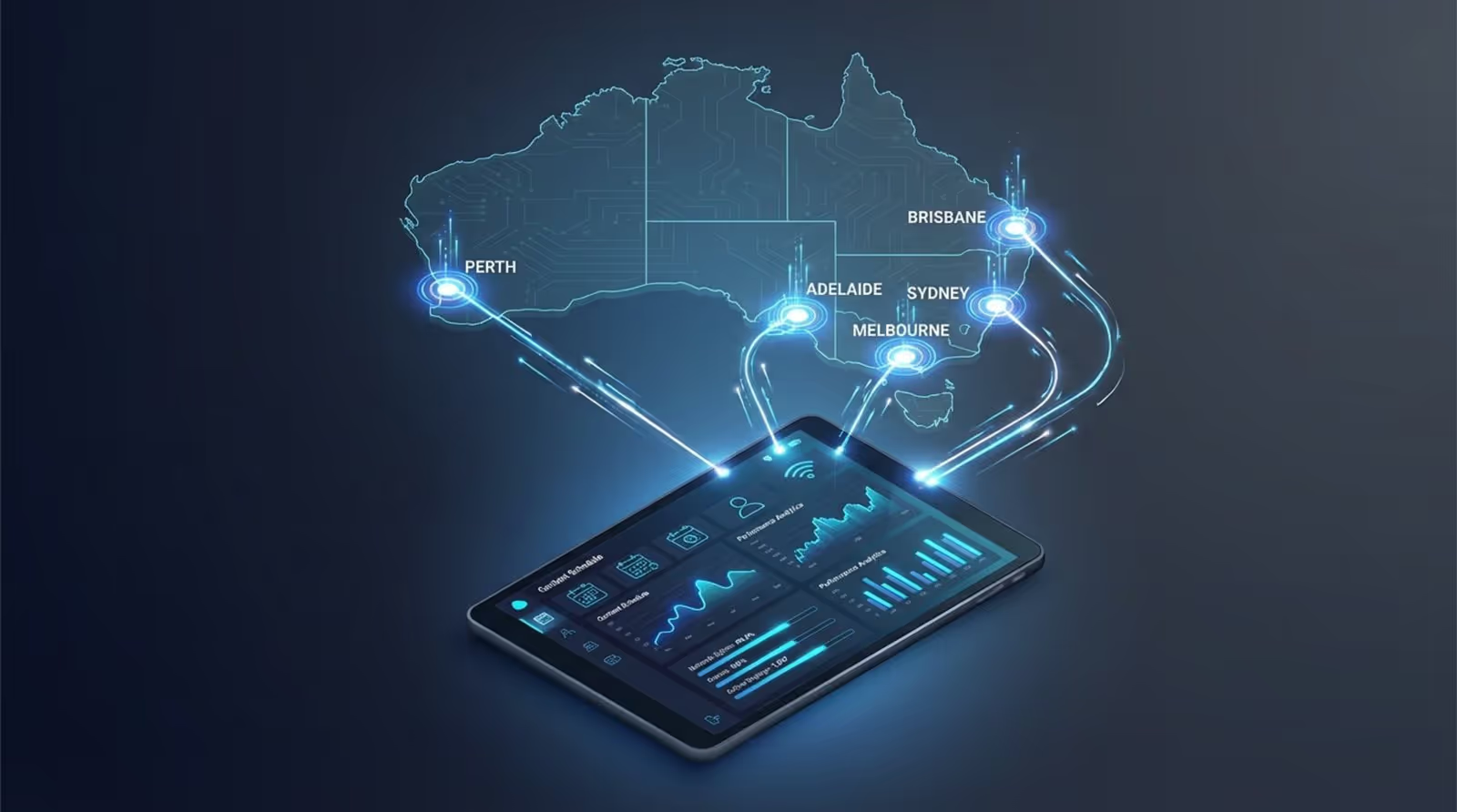
The Australian digital signage market has matured significantly, shifting from simple standalone screens to connected, intelligent networks. Leading providers now offer tools that allow teams to manage content remotely, analyze performance, and ensure reliable playback across multiple locations. Whether for a single café in Adelaide or a national retail network based in Sydney, these solutions help businesses publish content in minutes without complex setups.
Top digital signage companies in Australia: leading providers
Look Digital Signage
For businesses seeking a flexible software solution, Look Digital Signage is a strong choice for managing screens remotely. Look DS offers a cloud-based digital signage platform that allows you to create, schedule, and publish content to one or thousands of screens from a single dashboard. It is designed to be approachable for non-technical teams, featuring an intuitive layout that simplifies daily operations.
Look Digital Signage supports a wide range of hardware, including the Look Player for plug-and-play setups and a free app for compatible devices. Key capabilities include ready-made templates to speed up content creation, smart scheduling to automate when messages appear, and offline playback to ensure screens keep running even if the internet drops. It is an ideal fit for retail, hospitality, and corporate environments that need to prove ROI through data-driven playback analytics.
oOh!media
oOh!media is a dominant force in Australia’s Out of Home (OOH) advertising sector. Unlike private CMS providers, they operate a vast public network of screens across airports, shopping centres, and street furniture. Their primary focus is delivering high-impact advertising reach rather than internal screen management for businesses.
They utilise data analytics to help advertisers target specific demographics. oOh!media is well-known for using dynamic triggers, such as weather updates or live scores, to ensure advertisements remain relevant to passing traffic. Their infrastructure is suited for brands looking to buy media space rather than manage their own internal network.
Amped Digital
Amped Digital is a full-service integrator known for delivering end-to-end hardware projects. They handle the physical aspects of digital signage, including design, sourcing, and installation. This approach suits brands that require a custom visual experience, such as unique video walls or architectural displays.
Their expertise spans retail and hospitality, often involving high-end hardware like transparent LED panels. Amped Digital focuses on the physical "experience" of the display, ensuring that the installation quality matches the environment it sits in.
Aria Digital Screens
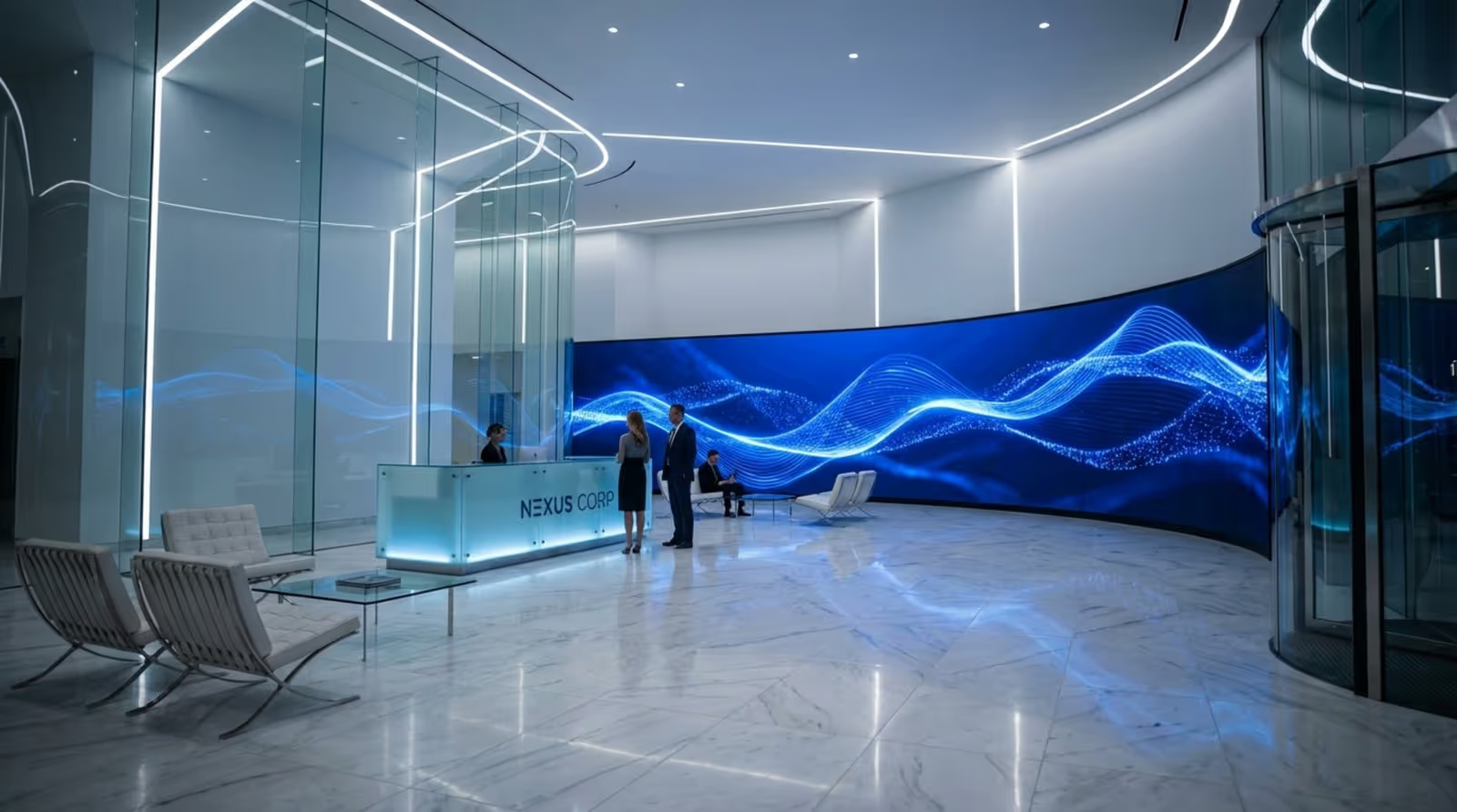
Aria Digital Screens specializes in premium LED technology, often integrating screens directly into building architecture. They focus on large-format LED walls found in flagship stores and corporate lobbies where visual impact is the priority.
Aria differentiates itself through custom hardware configurations. They frequently install curved or wrap-around displays that break away from standard rectangular formats. This allows architects to use digital signage as a central design element in modern construction projects.
Just Digital Signage
Just Digital Signage (JDS) is a hardware-centric provider serving sectors like education, healthcare, and corporate offices. They are known for supplying robust hardware options, including weatherproof outdoor screens and touch-enabled kiosks designed for high-traffic areas.
JDS typically adopts a consultative approach, helping clients select the right physical devices for their specific environment. Whether equipping a hospital with directory screens or a school with outdoor LED boards, their focus remains on hardware durability and longevity.
SureVision
SureVision focuses on high-impact LED displays, specifically for the sports and stadium market. They supply many of the large digital scoreboards and perimeter signage seen in major Australian sporting venues. Their hardware is engineered to withstand harsh outdoor conditions, including bright sunlight and heat.
Beyond stadiums, SureVision provides large-format commercial billboards. Their technical strength lies in the engineering of LED systems, ensuring precise color calibration and panel alignment for seamless viewing at large scales.
Signpac
Signpac has a long-standing presence in the education sector, providing digital noticeboards for schools and universities. Their systems are designed to keep students, staff, and parents informed with timely updates. They generally offer simple tools tailored specifically for school administrators.
While their primary focus is education, Signpac also helps organizations transition from static signage to digital displays. Their niche expertise allows them to support the specific communication needs of government bodies and educational institutions.
Products and solutions offered by Australia’s digital signage companies
Video walls and large displays
Video walls combine multiple screens to create a massive canvas for content. These setups are common in control rooms and flagship retail stores. Managing content across these complex layouts often requires software with screen layouts capabilities, allowing you to split the screen into zones or treat the entire wall as one cohesive image.
Direct View LED (dvLED) is becoming the standard for these installations due to its lack of bezels and high brightness, ensuring a seamless visual experience.
Digital menu boards
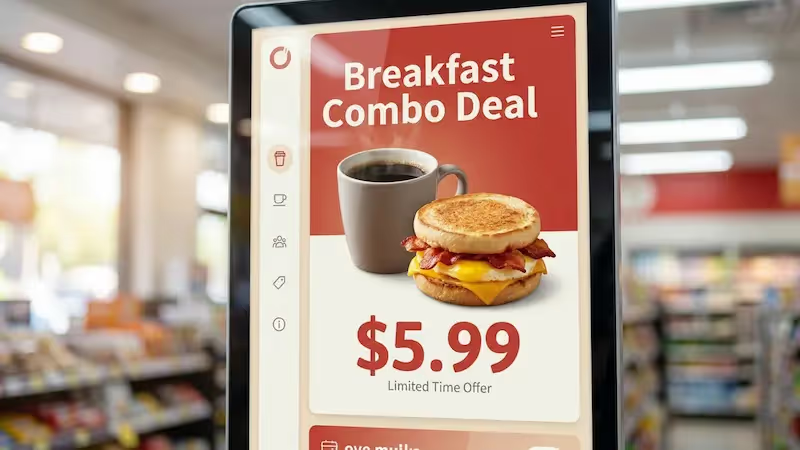
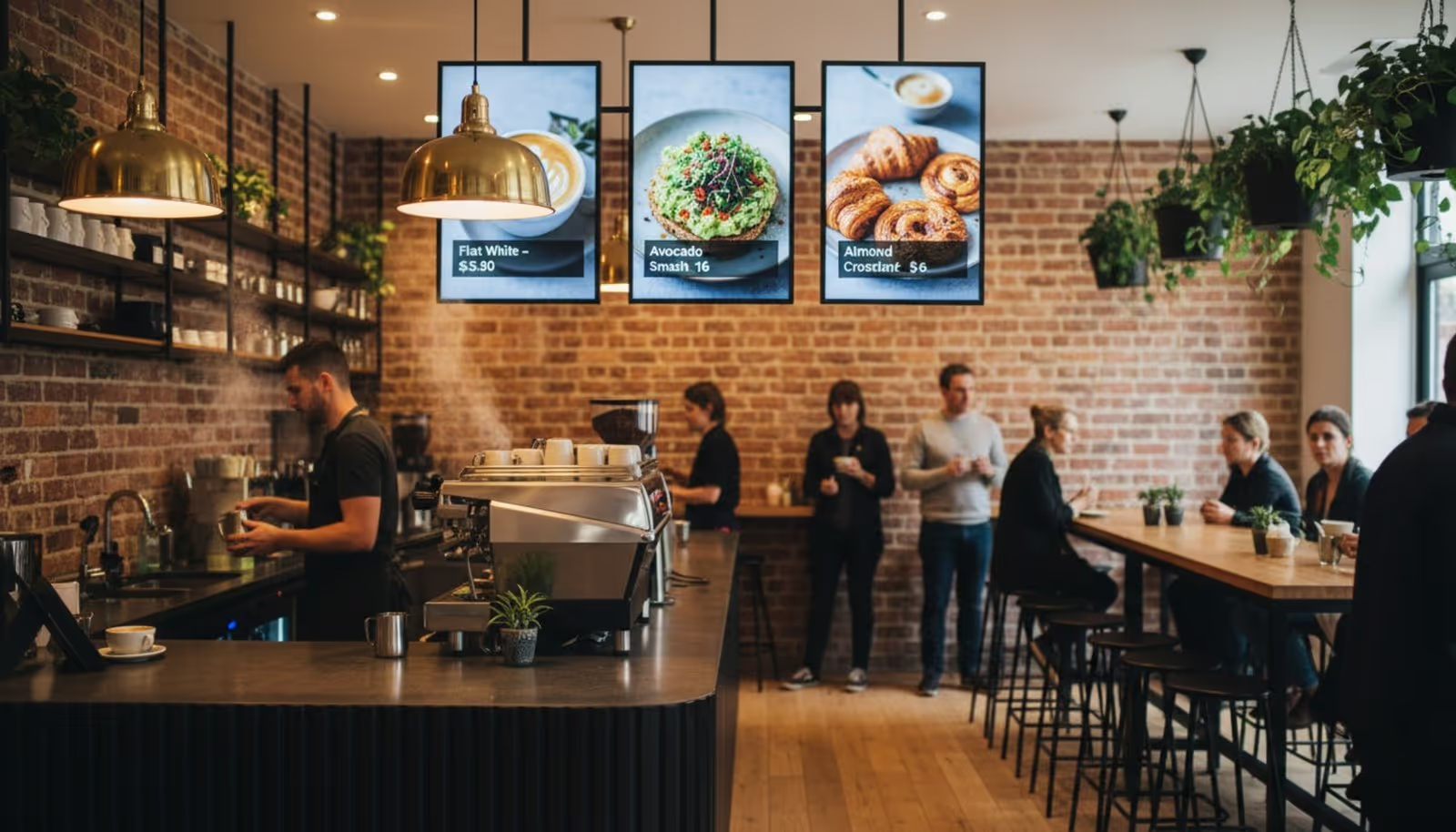
For QSRs and cafes, digital menu boards are essential for keeping pricing and items accurate. Using software like Look Digital Signage, operators can utilize smart scheduling to automatically switch between breakfast and lunch menus. This reduces manual work and eliminates printing costs. Additionally, ready-made templates help teams update specials in minutes without needing a graphic designer.
Wayfinding and interactive kiosks
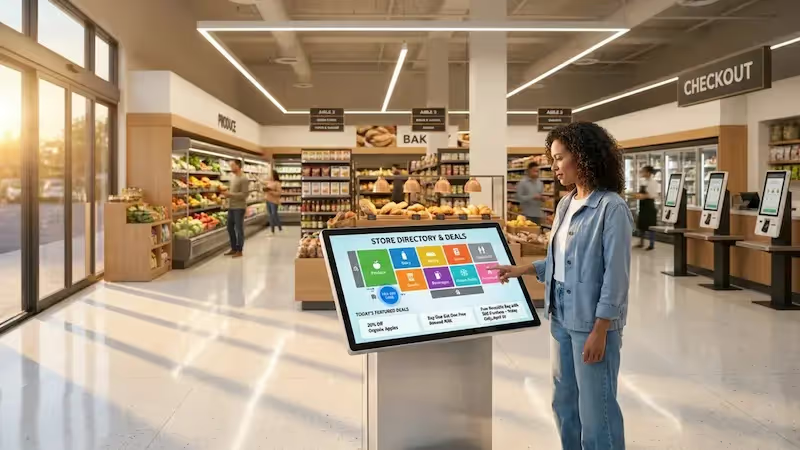
Interactive kiosks help visitors navigate large spaces like hospitals and malls. These touch-enabled screens can display maps and directories. Platforms supporting interactive scenarios allow businesses to build these experiences without complex coding, making it easier to deploy helpful navigation tools.
Queue management and feedback systems
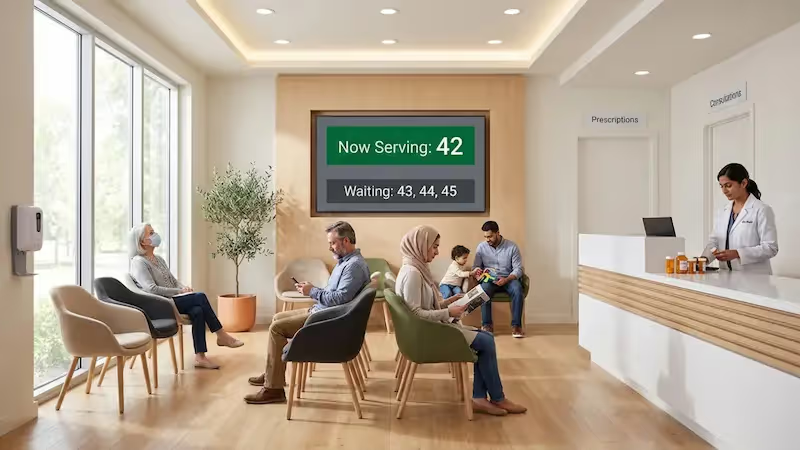
Digital signage integrates with queue systems to display wait times and ticket numbers, reducing perceived wait times in banks and clinics. These screens can also serve as communication channels, showing news or entertainment while customers wait.
Custom LED and specialised signage
Modern LED technology allows for transparent screens on glass storefronts and flexible modules that wrap around columns. These specialized displays require robust hardware planning to ensure they function correctly in their specific physical environments.
Benefits of working with leading digital signage companies in Australia
Improved audience engagement
Moving images capture attention far more effectively than static posters. Digital signage allows you to use video and dynamic transitions to tell a story. With the right software, you can ensure content stays fresh and relevant, increasing the likelihood that your message is actually seen and remembered.
Increased operational efficiency
Digital signage significantly reduces the time spent on manual updates. Instead of waiting for print runs, you can publish changes from anywhere in minutes. For internal communications, this means safety alerts or KPI dashboards can be updated instantly across warehouses or offices, keeping all staff aligned.
Customised solutions for diverse industries
Every business has unique needs. A corporate office may need simple room booking screens, while a retailer needs high-energy promotional displays. Flexible platforms allow you to start small and scale smoothly, ensuring the solution fits your specific operational goals.
How to choose the right digital signage company in Australia
Factors before selecting a provider
Start by defining your primary goal: are you trying to increase sales, inform staff, or improve wayfinding? Your objective will dictate your hardware and software needs.
- Clarify your main goal (sales, information, branding).
- Review site conditions (indoor/outdoor, internet connectivity).
- Check content needs (video, live data, interactivity).
Scalability is critical. You need a system that lets you scale from 1 screen to thousands without complicated setup. Consider the total cost of ownership, including hardware reliability and software subscription fees.
Comparing services, software, and support
The software experience is what your team will interact with daily. Look for platforms like Look Digital Signage that offer a free trial or demo. This allows you to test key features like the content editor and playlist management before committing. Ensure the platform supports remote management so you can troubleshoot issues without sending a technician to the site.
Reviewing company experience and client portfolio
Check for proven results in your industry. If you are a retailer, look for providers who have successfully deployed menu boards or promo screens. Reliable providers should be able to demonstrate how their solution helps you keep your screens running smoothly and prove ROI.
The Future of Digital Signage: Beyond the Screen
The next phase of digital signage focuses on data and integration. Screens are becoming intelligent hubs that use sensors and anonymous analytics to adjust content based on the environment. This ensures messaging is relevant to the audience currently present.
Sustainability is also a growing priority. Energy-efficient hardware and features like scheduled sleep modes help reduce power consumption. Furthermore, the integration of digital signage with mobile devices-the "Phygital" experience-will allow viewers to interact with screens via QR codes to take promotions or information with them.