Table of Content
How can you turn scattered data into clear team goals? A TV dashboard displays live metrics, KPIs, and internal updates on a central screen, keeping everyone aligned without constantly checking email. Here is why you need one and how to set it up in minutes using reliable digital signage software.
More than just a “big screen with numbers,” these displays act as the pulse of your organization. They replace old notice boards and long email threads with bright, clear visuals that keep everyone focused on company goals. By turning raw data into easy charts and graphs, you ensure information isn’t just sitting in a database but is actively helping guide day-to-day work.
What Is a TV Dashboard for Offices?
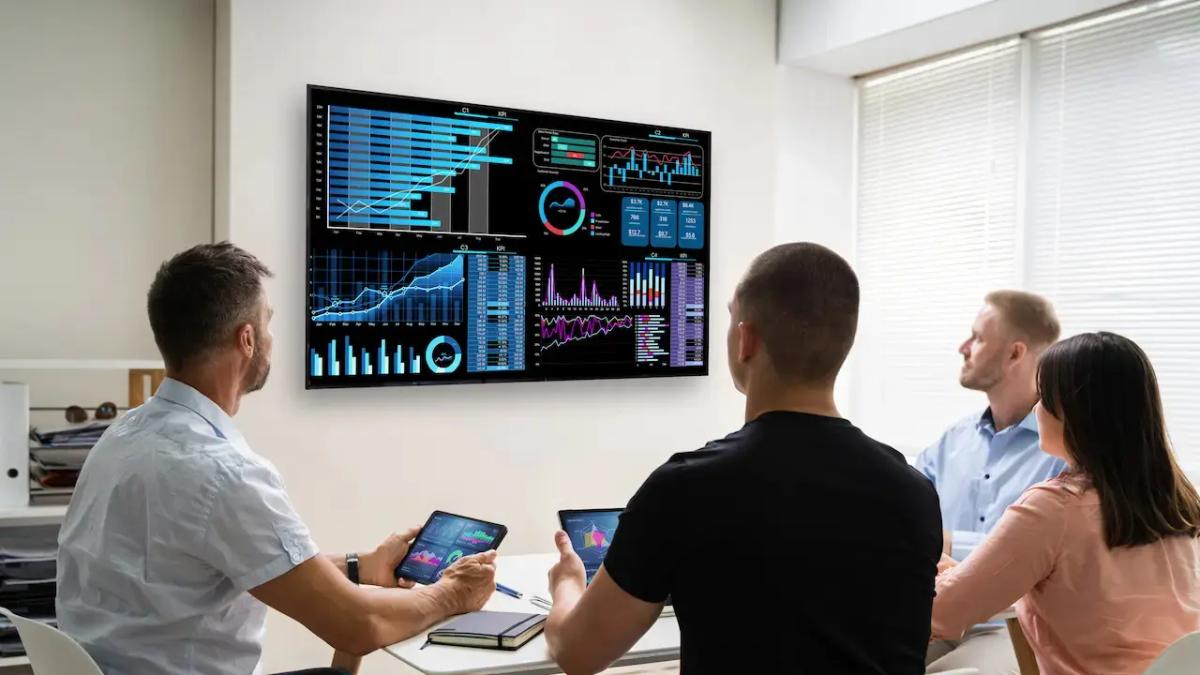
A TV dashboard, sometimes called a wallboard or status board, is a digital screen in the workplace that shows live data. Unlike a personal computer monitor, where one person might spend time digging into detailed reports, a TV dashboard is built for the whole team. It gives a quick view of the most important information a team needs during the day, without anyone having to log into different tools.
These displays have evolved from simple whiteboards to large, high-definition screens running cloud-based digital signage software. This setup lets you pull data from many tools into one highly visible place, raising awareness so that everyone-from senior leaders to front-line staff-stays on the same page.
How Does a TV Dashboard Differ from a Traditional Dashboard?
The main differences between a standard analytics dashboard and a TV dashboard are how they support teamwork and focus attention. A regular dashboard is usually designed for one person to analyze in depth, often requiring clicks and filters. A TV dashboard is built to be understood at a glance. It forces you to show only the most useful and easy-to-read information because people must be able to read it from a distance and understand it in seconds.
TV dashboards are also usually "set and forget." While you might scroll through a report on your laptop, a TV dashboard is meant for passive viewing. The software should refresh on its own and rotate through different data sets (using playlists) so the screen stays current without anyone touching it. This turns data review from a solo task into a shared team habit.
What Types of Data Can You Display on TV Dashboards?
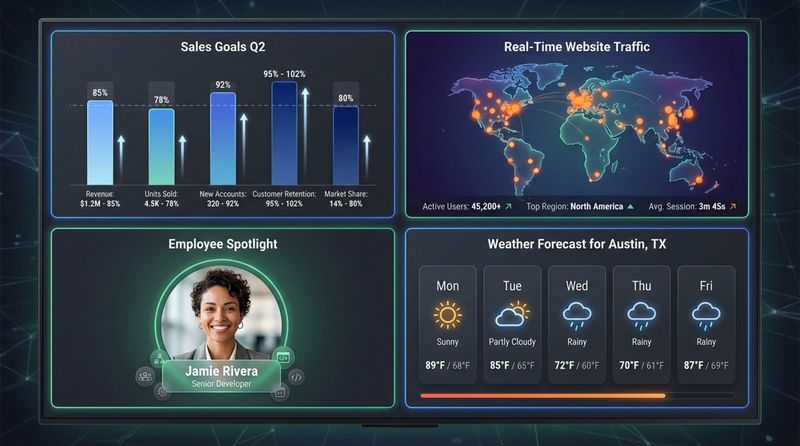
Modern TV dashboards can show many kinds of content. Most often, companies display numbers like sales goals, revenue, and support response times. Marketing teams might track live website traffic or social media reach. In manufacturing or logistics, screens often show production volumes, downtime, and safety reminders.
Beyond numbers, TV dashboards work very well for internal communication. You can show company news, employee birthdays, work anniversaries, and recognition for wins. Many teams also add content like local weather or world clocks to keep the display interesting.
Why Use TV Dashboards in Your Office?
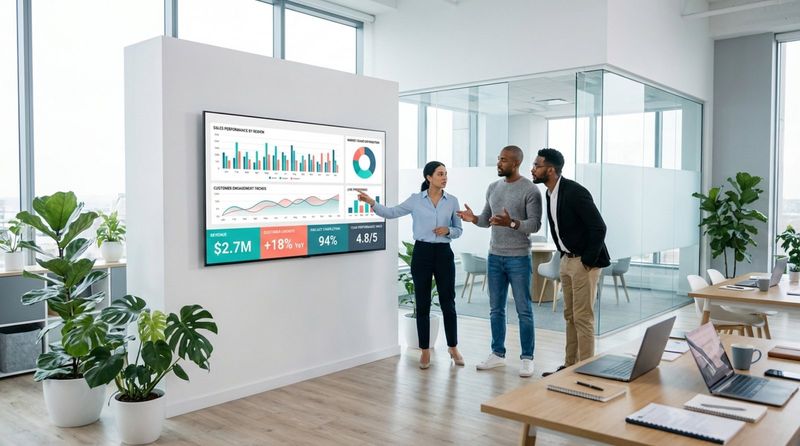
Data drives business today, and companies are always looking for ways to use it better. TV dashboards change how teams work by providing a clear, visual way to see what is happening right now. When data stays hidden in private folders, teams lose sight of the bigger picture. Putting that data on the wall keeps it visible and top of mind.
Adding a dashboard TV helps create an office where information moves freely. This is about more than the screen itself; it affects how people work together. These displays help teams stay aligned with company goals, react fast when things change, and improve their position in a fast-moving market.
Improves Team Transparency and Accountability
One of the first benefits of an office TV dashboard is transparency. When KPIs and goals are shown for everyone to see, you get a clear, shared version of the truth. There is no confusion about performance; the numbers are visible to all. This openness builds trust, showing that the company is honest about both wins and challenges.
Accountability grows naturally from this. When project leads and team members can see their impact on the company in real time, they often raise their standards. It helps prevent teams from falling behind and encourages continuous improvement. Everyone can see how their own efforts link into the wider business results.
Provides Real-Time Data Visualization
In areas like retail, finance, or marketing, timing matters. Waiting for monthly reports to spot a trend can be costly. TV dashboards give live access to data. If sales drop at 10:00 AM, the team can see the issue by 10:05 AM and adjust their plan immediately.
Visuals also make information easier to digest. A TV dashboard turns raw figures into simple charts that show your company’s “pulse.” This shortens the feedback loop, so teams can see the effect of their actions quickly and respond with confidence.
Boosts Communication Across Departments
Good communication is key to a strong business, but companies often suffer from “silos,” where one team has no idea what another is doing. Dashboards pull data from different tools and show it side by side, raising shared understanding across the office.
By placing screens in shared spaces, you help people see how their work connects. For example, engineers might see the latest sales results, and HR might see support satisfaction scores. This shared view cuts down on extra meetings and long email chains because the most important updates are already visible.
Supports Actionable Insights and Collaboration
TV dashboards are meant to help people take action, not just stare at numbers. Because the data is shown as short, clear summaries, teams can quickly see what matters most. When colleagues gather in front of a screen, it naturally starts conversations about performance. People move from asking “where is the data?” to “what should we do about it?”
This group-focused style works better than sending long reports by email, which often get ignored. A TV dashboard brings key information into the background of daily work without distracting people, while still keeping them aligned.
Prevents Information Silos and Blame Culture
Blame culture often appears when responsibilities are unclear. When deadlines slip or quality drops, it is easy to blame others if the data is hidden. TV dashboards reduce this by showing an objective view of how each team is doing. Instead of guessing what went wrong, people can look at the same numbers and work together to fix issues.
By removing information silos, you avoid locking important data behind a single person’s account. Sharing information widely gives everyone the chance to make smarter decisions. When all employees see the same picture, the focus stays on solving problems.
Increases Employee Motivation Through Visible Metrics
It is easier to motivate people when they can clearly see their impact. TV dashboards support internal motivation-the kind that comes from feeling that your work matters. Showing achievements like sales results, project milestones, and teamwork highlights can lift morale.
For sales teams, public KPIs on a screen can even add a healthy level of competition. Research often suggests that engaged teams perform significantly better. By making progress toward targets visible, you help keep people focused and energized.
Common Use Cases for Office TV Dashboards
TV dashboards are flexible tools that can strengthen communication in any industry. Whether you run a small startup or a large enterprise, you can find a way to use them. The basic idea is the same across sectors: bring important data into one live, shared place.
By shaping the content to match your goals, you keep the dashboard useful instead of letting it become background noise.
Sales and KPI Tracking
Sales teams are frequent users of TV dashboards. A sales dashboard can show closed deals, revenue, and progress against monthly goals. Watching these numbers move in real time helps keep energy high. Managers can also use this view to spot who might need extra help and who is leading the way.
Project Management Progress
For project teams, a TV dashboard can track milestones, sprint status, and upcoming deadlines. You can display dashboards from project management tools directly on the screen. This clear view makes sure everyone knows current priorities and helps prevent scope creep. It is a simple way to keep teams aligned on the same timeline.
Customer Support and Issue Resolution
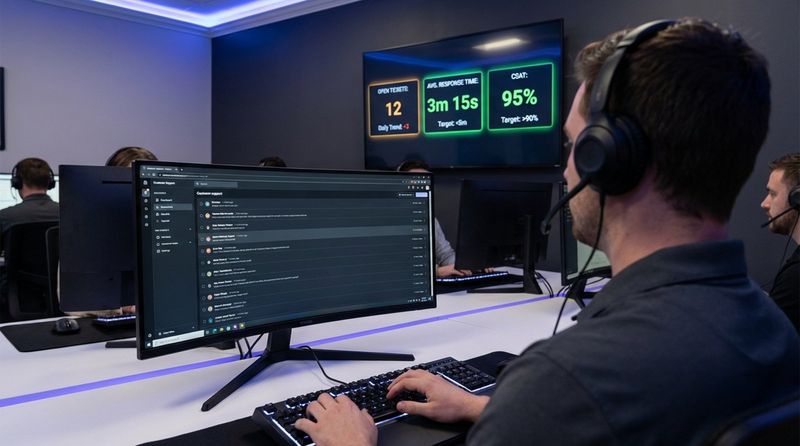
In customer support, focus is everything. A dashboard can show open tickets, average response times, and customer satisfaction (CSAT) scores. Seeing a visual alert for long wait times pushes the team to act fast, keeping service levels high.
Operations and Logistics Monitoring
Logistics and operations teams benefit from live monitoring. Dashboards can track shipments, inventory levels, and safety measures. In these settings, the dashboard acts like a control center, helping managers spot bottlenecks before they become major problems.
Internal Communications and Announcements
Beyond metrics, TV screens are useful for HR and general office communication. They can guide visitors, show cafeteria menus, or promote company events. During hiring periods, “meet-the-team” slides help new people feel welcome and help existing staff learn names, strengthening culture.
What You’ll Need to Set Up a TV Dashboard
Setting up a reliable TV dashboard takes more thought than just plugging a laptop into a TV. To build a stable system that runs on its own, you need to combine the right software, hardware, and network settings.
Your setup should show the dashboard full screen without glitches, refresh automatically, and run for long periods-possibly 24/7-without overheating.
Dashboard Software Built for TV Display
The most critical piece is your software. While standard web browsers can display data, they often time out, crash, or leave a visible mouse cursor on the screen. For a professional, reliable setup, we recommend using Look Digital Signage (Look DS).
Look DS is a cloud-based platform designed specifically to manage screens remotely. It allows you to create layouts, schedule content, and manage multiple dashboards from a single web-based interface. Look CMS offers key capabilities for this, such as:
- Integrations: Easily display data from tools like Power BI or internal web dashboards using the HTML embed feature.
- Screen Layouts: Split your screen to show a data dashboard on one side and internal company news or weather on the other.
- Remote Management: Update settings and troubleshoot screens from anywhere, without needing to be in the office.
Compatible Hardware Options
Choosing the right hardware is key for a stable display. You need a device to "drive" the content to the TV. Your choice will depend on budget and performance needs.
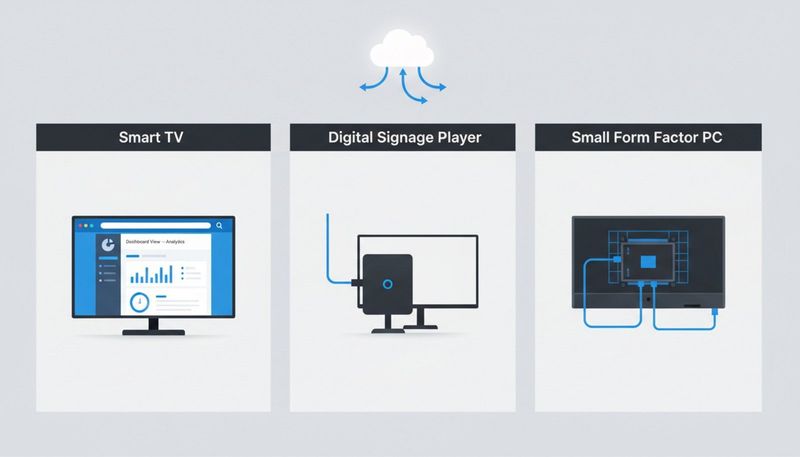
Smart TVs
The simplest option is a Smart TV with a built-in browser. However, this is often the least reliable option for business use. Browsers on TVs are often slow, may render charts poorly, and usually do not launch automatically after a power outage. They work for quick tests but are rarely suitable for permanent office dashboards.
Digital Signage Players and Sticks
For a stronger setup, most offices use external media players. Consumer sticks (like Amazon Fire TV) are affordable options that can run the Look App, though they may struggle with heavy 24/7 usage. For professional reliability, the Look HDMI Player is a plug-and-play solution designed to handle data-heavy dashboards without overheating. It connects directly to the CMS, ensuring your content plays smoothly and restarts automatically if power is lost.
Small Form Factor PCs
If you need to drive very complex 4K video walls or heavy interactive data, a small PC (like an Intel NUC) mounted behind the screen offers maximum power. You can install the Look player software on these devices to gain remote management features while using the PC's hardware power.
Network and Connectivity Requirements
A TV dashboard depends on its internet connection. Because it needs live data, a stable Wi-Fi or Ethernet link is required. If the connection drops, data may freeze. Look DS offers Offline Playback for media content, but live web dashboards will need a connection to update. Ensure your network allows the device to reach your data sources securely.
Should You Use a Smart TV, PC Stick, or Digital Signage Solution?
Choosing between these options comes down to stability and management. A Smart TV is easy to buy, but a dedicated digital signage setup with a proper player provides a much better "set and forget" experience.
Comparing Reliability and Performance
Smart TVs often lack the processing power to run complex dashboards all day, leading to lag. Dedicated players, like the Look HDMI Player, are built for this exact purpose. They run cool, handle complex HTML5 content well, and ensure high uptime.
Security and Privacy Considerations
Security is vital when showing company data. Simple browser setups might require you to make dashboards "public" to view them, which is a risk. Professional digital signage software allows you to securely display password-protected dashboards or use encrypted tokens so your sensitive metrics remain private.
Ease of Setup and Management
If you have one screen, a manual setup is fine. But if you have screens across multiple offices, you need central control. Platforms like Look DS let you manage every screen from one cloud dashboard. You can push updates, check status, and reboot devices remotely, saving your IT team hours of walking from room to room.
How to Set Up TV Dashboards in Your Office
Setting up a TV dashboard is a straightforward process. Following these steps helps you create a setup that looks professional and runs reliably.
Choose a Suitable Dashboard Platform
Start with software that simplifies management. Look Digital Signage is a strong fit for offices because it combines ease of use with powerful features. You can start a free trial to test how your data looks on a big screen before committing.
Integrate Your Data Sources Securely
Connect your screens to your data. Whether you use Google Sheets, Salesforce, or Power BI, Look DS allows you to incorporate these views via Integrations or secure web URL features. Ensure your data source is formatted for a 16:9 screen ratio for the best appearance.
Design the Dashboard for Large-Scale Readability
A good TV dashboard balances clarity and information. Avoid cramming the screen. Use large text, high-contrast colors, and simple charts. Dark backgrounds are often better for office environments as they reduce glare and make colorful data points pop.
Plan Dashboard Content and Rotations
If you have more data than fits on one screen, use Playlists to create a loop. You can set the TV to show sales metrics for 30 seconds, then switch to support stats, then to company news. This keeps the content fresh and ensures different departments see relevant info.
Select and Position Your Screen in High-Traffic Areas
Placement matters. Mount the screen in a busy, visible place like the lobby, break room, or the center of the sales floor. Avoid spots with direct sunlight that creates glare.
Connect Your Hardware to the TV
Plug your chosen player (such as the Look HDMI Player) into the TV. If using a small PC or stick, hide it behind the TV for a clean look. Ensure the device has good airflow.
Configure Kiosk Mode or Automated Display
With Look DS, the player software naturally acts as a "Kiosk Mode." It takes over the screen to show only your scheduled content. If the device restarts, the Look App launches automatically, so you never see a desktop or error window.
Test and Monitor Dashboard Display
Once running, check the screen from different angles. Is the text readable? Is the data refreshing? Use the Monitoring features in Look CMS to verify that your screens are online and playing the correct content without having to physically check them.
Best Practices for Effective TV Dashboards
Building a strong TV dashboard is an ongoing process. To keep it useful, review what you show regularly. If the content never changes, people will eventually stop looking.
Identify the Most Valuable Metrics for Your Teams
Focus on metrics that link directly to business goals. Ask your team which numbers help them make decisions. Use their feedback to refine the dashboard.
Keep Visualizations Simple and Direct
The best dashboards are readable in seconds. Avoid complex legends or tiny fonts. Use clear labels and consider simple "big number" widgets for your most critical KPIs.
Update Content Regularly for Relevance
Stale data kills engagement. Ensure your automated feeds are working. Also, use Smart Scheduling to mix in fresh content like internal announcements or seasonal messages to keep eyes on the screen.
Position Screens for Maximum Engagement
If you have multiple locations, use the grouping features in Look CMS to target content. The warehouse screen can show logistics data while the HQ lobby shows company-wide goals. Place screens at eye level in high-traffic zones.
Monitor for Data Security and Privacy Compliance
Be mindful of who sees your screens. Avoid showing sensitive client details in reception areas. Use the security features within your digital signage software to control access and ensure data is only displayed where appropriate.
A TV dashboard is one of the most effective ways to bring a team together around shared goals. By using a dedicated tool like Look Digital Signage, you can ensure your screens are reliable, secure, and easy to manage. Start with a clear plan, choose the right tools, and turn your office screens into a powerful engine for alignment and results.