Table of Content
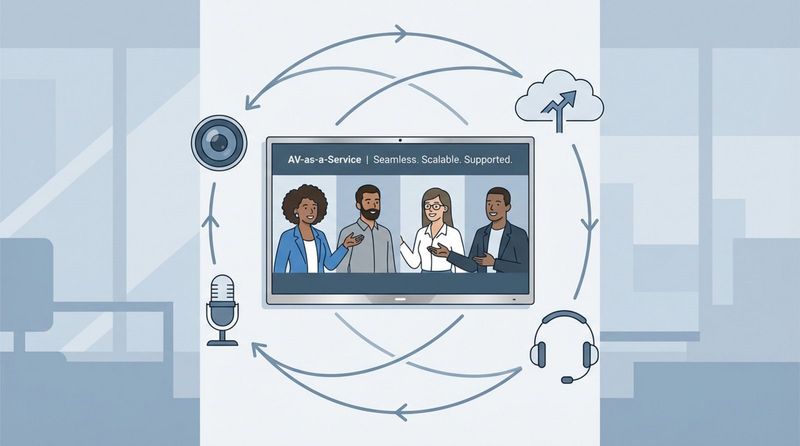
How can organizations keep communication technology current without the heavy burden of ownership and maintenance? AV-as-a-Service (AVaaS) offers the answer by shifting audiovisual setups-including hardware, software, installation, and support-from a one-time purchase to a subscription model. By treating AV technology as a service rather than a depreciating asset, businesses can ensure their tools remain reliable and up-to-date, allowing teams to focus on their work rather than troubleshooting connections.
As hybrid work and digital engagement become standard, AVaaS has emerged as a strategic choice for modern operations. It provides the flexibility to scale technology up or down as needs change, without the friction of capital budget cycles. This guide explains how the model works, where it benefits specific industries, and how to transition from owning hardware to a service-based approach.
What is AV-as-a-Service?
How does AV-as-a-Service differ from traditional AV solutions?
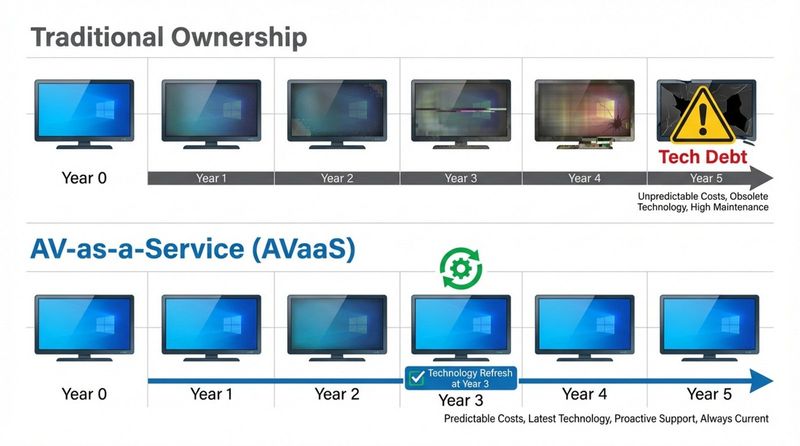
The main difference between AVaaS and traditional AV is the shift from "owning" equipment to "accessing" capabilities. In a traditional setup, you pay a significant upfront cost for hardware, manage the installation, and assume full responsibility for the system's lifespan. This often results in a "run-to-fail" cycle, where aging technology remains in use simply to justify the original expenditure. When equipment breaks, internal IT teams are left scrambling to find fixes or navigate complex warranty claims.
AVaaS treats audiovisual technology like a utility, similar to the SaaS (Software-as-a-Service) models many teams already use. Instead of owning the devices, you pay for the performance of the space. The provider manages the equipment, ensuring it works correctly and stays current. This shifts the risk of technical failure from your organization to the provider, creating a partnership focused on uptime and reliability rather than a single transaction.
Key components included in AV-as-a-Service models
A robust AVaaS agreement is more than a hardware rental; it is a comprehensive package designed for stability. It includes the physical layer-displays, media players, microphones, and control processors. However, the real value lies in the software layer, such as a cloud-based Content Management System (CMS) for digital signage or unified communications platforms for meeting rooms. Bundling these into a single monthly or quarterly payment simplifies procurement and creates a clear audit trail.
AVaaS also incorporates services often overlooked in CapEx purchases, such as system design, professional installation, and ongoing management. Managed services typically cover help desk support, remote monitoring, and health checks. This ensures you have a ready-to-use solution with a clear next step for any issue, whether it is a connectivity drop or a need for a system refresh.
Why Are Organizations Choosing AV-as-a-Service?
Cost control and predictable budgeting
Financial predictability is a primary driver for adopting AVaaS. Large AV projects traditionally require substantial Capital Expenditure (CapEx), which can be difficult to approve and forecast. AVaaS converts these spikes in spending into stable Operating Expenditure (OpEx) payments. This allows finance teams to plan accurately, maintaining a clear view of technology costs over time.
This model also eliminates hidden ownership costs. When you own hardware, you pay for staff time to troubleshoot, shipping for repairs, and the eventual disposal of e-waste. In a service model, these operational costs are absorbed into the subscription. Transparent pricing helps organizations avoid budget shocks when critical components fail outside of standard warranty periods.
Technology lifecycle management benefits
Technology evolves rapidly; a premium display or media player today may be obsolete in a few years. Under traditional ownership models, companies often retain aging gear to align with depreciation schedules, creating "tech debt" that frustrates employees and lowers productivity.
AVaaS addresses this by building refresh cycles directly into the contract. After a set term-typically three to five years-the provider replaces older equipment with current models. This keeps your systems secure, efficient, and capable of running modern software. Your AV environment becomes a living system that improves alongside technology standards.
Upgrade flexibility and scalability
Business needs change quickly. You might start with a few digital menu boards and later need to expand to a full network across multiple locations. AVaaS offers the flexibility to scale from 1 screen to thousands without initiating a new capital purchasing process. Adding locations or upgrading capabilities can often be handled through a simple contract adjustment.
This flexibility supports organizations during growth or restructuring. If a location closes, an AVaaS agreement generally offers more options for equipment disposition than a traditional ownership model, preventing a stockpile of unused, depreciating hardware. Leadership can match the AV footprint to current operations, avoiding both waste and capacity shortages.
Reducing capital expenditure and improving ROI
By shifting AV spending to OpEx, organizations preserve capital for core business activities like product development or hiring. Instead of locking cash into hardware that loses value, companies pay based on utility. This supports a better Return on Investment (ROI) as costs are spread out and directly linked to the benefits of reliable communication.
Indirect ROI is also significant. When systems are stable and managed proactively, meetings start on time and screens stay dark less often. Internal IT teams save hours on updates and troubleshooting, allowing them to focus on strategic initiatives rather than cable management.
Which Features Define AV-as-a-Service Solutions?
Remote monitoring and proactive system management
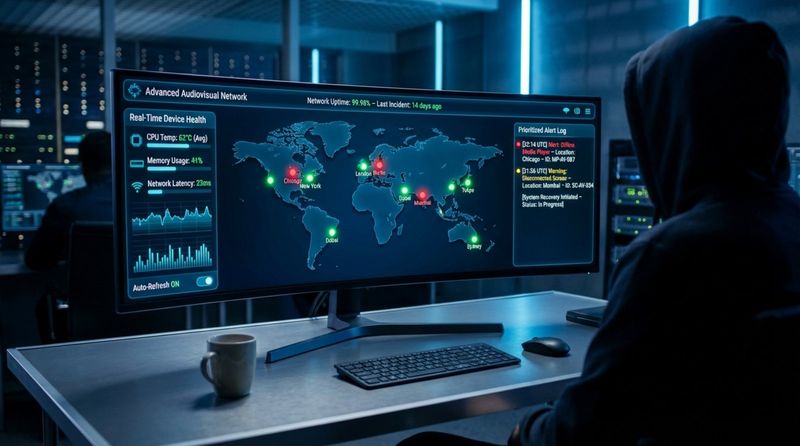
A defining feature of AVaaS is the shift from reactive repairs to proactive maintenance. Providers utilize remote management tools to monitor device status 24/7. This allows them to identify issues-such as an offline media player or a disconnected screen-before they impact your operations. Often, a remote reboot or firmware update can resolve the problem instantly.
This approach significantly improves uptime, the critical metric for any AV system. Instead of waiting for staff to report a black screen, the system is actively managed to ensure reliable playback and connectivity. This level of oversight reduces the burden on local staff and ensures consistent performance.
Customizable designs for different environments
AVaaS is not a "one size fits all" commodity. A lobby video wall, a huddle room, and a digital menu board have distinct requirements. Experienced providers work with you to create standard configurations or custom designs that match specific use cases. This ensures clear visibility and appropriate functionality for every environment.
Standardization is a key benefit here. Using consistent hardware and software interfaces across a network reduces training requirements. Whether a manager is updating a screen in London or New York, the process remains the same. This consistency is a direct result of the planning inherent in AVaaS projects.
Seamless integration with existing IT infrastructure
Modern AV systems are integrated components of the IT network. AVaaS solutions are designed to function securely within your existing infrastructure, respecting VLAN configurations and security protocols. Providers coordinate with internal IT teams to ensure AV traffic is managed correctly and devices are hardened against cyber threats.
Training, support, and ongoing maintenance
The "Service" in AVaaS extends to human support. Even the most advanced system is useless if teams cannot operate it. Contracts typically include training for general users and administrators, ensuring rapid adoption. Support agreements (SLAs) define exactly how quickly the provider will respond to issues, often including remote help desk access and guaranteed on-site response times. This structure ensures you have support from the first login through the life of the contract.
Comparing AV-as-a-Service and Traditional AV Ownership
Cost structure: subscription vs. upfront investment
The most visible difference is cash flow. Traditional ownership demands a large initial outlay, impacting liquidity. AVaaS distributes costs over the contract term. While the total operational cost may be higher than the raw hardware price, AVaaS includes design, installation, support, software licensing, and guaranteed uptime-essential elements often excluded from initial hardware budgets.
Service reliability and support response
When you own equipment, you are the primary support tier. If a screen fails, your team must diagnose the issue and coordinate repairs. Under AVaaS, the provider is responsible for keeping the system running. Because their revenue depends on your satisfaction and subscription, they are motivated to resolve issues quickly, often maintaining spare inventory for rapid swaps.
Technology refresh cycles and upgrade access
Ownership models often lead to stagnant technology. A business may keep a low-resolution display for a decade simply because it still turns on. AVaaS prevents this stagnation by including upgrades. When the term ends, the provider refreshes the hardware, giving you access to better resolution, faster processing, and new capabilities without a new capital request.
Ownership, liability, and responsibility differences
Ownership implies risk. If a mount fails or a device is damaged by a power surge, the cost falls to you. In an AVaaS model, the provider typically assumes the hardware risk. They handle safe installation, insurance, and the proper recycling of old equipment. This allows your business to focus on its objectives while specialists manage the physical assets.
Common AV-as-a-Service Applications by Industry
Business: conference rooms and collaboration spaces
In corporate environments, AVaaS powers hybrid collaboration. High-quality audio and video ensure remote participants are seen and heard clearly. By using a service model, companies can deploy consistent setups across all meeting rooms, reducing the "how do I connect to this screen?" confusion that delays meetings.
Education: hybrid classrooms and interactive displays
Educational institutions use AVaaS to deploy interactive learning tools without draining capital budgets. This allows schools to install modern projection and lecture capture systems that support hybrid learning. Regular refresh cycles ensure that students and faculty always have access to current educational technology.
Retail: in-store digital signage and visual merchandising
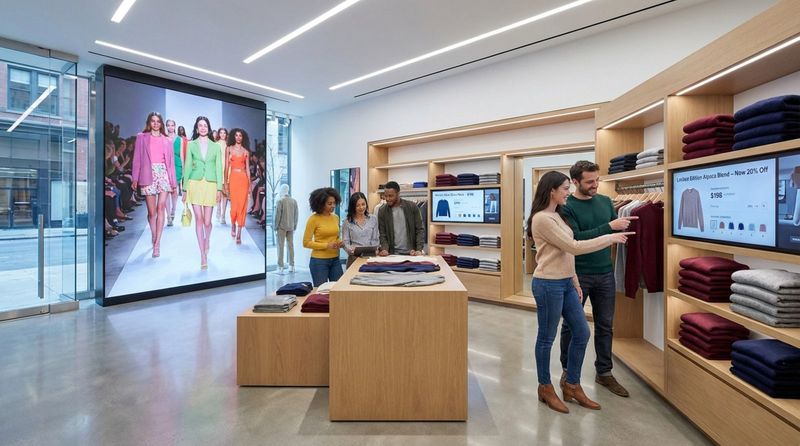
Retailers rely on screens to drive sales and engagement. Managing a network of thousands of displays is complex; AVaaS simplifies this by bundling screens, players, and content management into a service. If a promo screen goes dark, the provider is responsible for restoring it, ensuring that marketing messages remain visible and consistent.
Hospitality and event venues: scalable AV environments
Hotels and venues need flexible AV to support diverse events. AVaaS allows them to offer professional-grade technology to guests without maintaining a massive inventory of depreciating gear. This keeps costs predictable while ensuring the venue can support everything from small meetings to large conferences.
Houses of worship: streaming, projection and sound systems
Many religious organizations utilize streaming and large-format displays to reach their communities. AVaaS provides access to professional cameras and audio systems, backed by expert support. This is particularly valuable for organizations with volunteer-run technical teams, ensuring reliable delivery of their message.
How Digital Signage Integrates with AV-as-a-Service
Multi-location content management and scheduling
Digital signage is a perfect candidate for the AVaaS model, but hardware is only half the equation. To truly benefit from a service model, the software must allow you to manage any screen, anytime, from anywhere.
We recommend Look Digital Signage (Look DS) as the software layer for these deployments. Using the cloud-based Look CMS, you can create content, build playlists, and publish to one or thousands of screens in minutes. Features like Smart Scheduling allow you to automate exactly what plays and when, ensuring your messaging is always timely without manual intervention at each site.
Remote troubleshooting and support for displays
Digital screens are often installed in hard-to-reach places. Dispatching a technician for a simple reset is inefficient. Look Digital Signage software supports remote management, allowing you to check device health and reboot players directly from the dashboard. Additionally, Offline Playback capabilities ensure that even if the internet connection drops, your content keeps running smoothly from local cache, maintaining a professional appearance.
Dynamic content delivery and audience engagement
Modern signage requires more than static images. It demands dynamic updates and proof that the content is working. Look DS provides Playback Analytics to help you track performance and prove ROI. By integrating a capable software platform like Look DS into your AVaaS contract, you ensure that the hardware you are paying for actually delivers business results through data-informed content strategies.
What Are the Potential Limitations and Risks of AV-as-a-Service?
Contractual obligations and vendor lock-in
Service models typically involve multi-year agreements. It is vital to select a provider you trust, as switching vendors mid-contract can be costly. Ensure your contract clearly defines performance standards (SLAs) and exit clauses if those standards are not met. Avoid locking yourself into proprietary ecosystems that make it impossible to retrieve your data or transition to a new system later.
Data security and privacy considerations
AV systems are connected endpoints. Organizations must verify that providers follow strict security practices, especially regarding cameras and microphones. Contracts should explicitly state how data is handled and ensure that content remains private. Transparency regarding data collection and storage is essential for compliance and peace of mind.
Platform compatibility constraints
Some providers may standardize on hardware that does not fit your preferred workflow. Verify that the AVaaS solution integrates well with your primary tools. For digital signage, ensure the software is compatible with a wide range of hardware-like the flexible options in the Look Digital Signage ecosystem-so you aren't forced into using niche or unsupported devices.
Selecting the Right AV-as-a-Service Partner
Capabilities to evaluate in a provider
Look for a partner with proven technical expertise and financial stability. Can they support all your locations? Do they have a track record of successful deployments? A strong partner will offer guidance on both hardware selection and the software platforms-like Look CMS-that drive the experience.
Reviewing service level agreements and support
The SLA is your safety net. It should define uptime guarantees and specific response times for different severity levels. Ensure the SLA includes clear remedies for service failures. A promise of "fast support" is not enough; you need defined metrics that hold the provider accountable.
Questions to ask when choosing an AVaaS provider
- How are technology refreshes handled? Is the upgrade path clear and included in the cost?
- What is the scope of remote monitoring? Does the provider proactively fix issues before you report them?
- What happens at the end of the term? Can you extend, buyout, or return the equipment easily?
- How is security managed? Are patches applied automatically?
- Is the software scalable? Can the system grow from a pilot to a global rollout without complex reconfiguration?
Future Trends in AV-as-a-Service
AI-driven automation and system intelligence
AI is beginning to streamline AV operations. Smart monitoring tools can now predict hardware failures before they occur, shifting maintenance from preventative to predictive. In content management, tools like the Look AI Wizard are already helping teams generate layouts and text faster, reducing the time between idea and execution.
Integration with unified communications and collaboration platforms
The boundary between AV hardware and software is dissolving. Future AVaaS solutions will integrate even more deeply with collaboration platforms, allowing rooms to self-configure based on the meeting type. The focus will remain on the user experience-simple, reliable, and connected.
Sustainable and energy-efficient AV solutions
Sustainability is becoming a key metric. Service providers are increasingly responsible for the energy efficiency of the gear they deploy and its responsible disposal. Future contracts will likely include reporting on energy usage and carbon impact, helping organizations meet their environmental goals while maintaining high-performance communication networks.