Table of Content
Do you need a flexible, custom-shaped display for a unique lobby, or a unified, high-performance screen for a boardroom or luxury space? Both LG Magnit and Samsung The Wall represent the pinnacle of MicroLED technology, offering deep blacks and exceptional brightness without backlights. This guide compares their specific strengths, installation requirements, and operational features to help you decide which system fits your environment.
Both systems utilize MicroLED technology, which eliminates the need for color filters and backlights by using microscopic, self-emitting LEDs. This results in the durability and brightness of traditional LED signage combined with the contrast levels of OLED. While often deployed in high-end residential settings in 2026, these displays remain a primary choice for flagship commercial spaces, corporate headquarters, and premium retail environments. Below, we break down the technical differences to clarify which giant screen is the right investment for your project.

LG Magnit vs. Samsung The Wall: What Sets Them Apart?
How Does MicroLED Technology Power Both Displays?
MicroLED is often considered the future of display technology for both home and business. Unlike standard LED-LCDs that rely on backlighting, or OLEDs that use organic compounds, MicroLED employs microscopic inorganic LEDs. Each pixel acts as its own light source, allowing it to turn off completely. This capability delivers infinite contrast ratios and true blacks that make content look incredibly sharp.
The inorganic nature of MicroLEDs makes them highly durable and resistant to burn-in, a common concern with older OLED technologies. These displays can maintain high brightness levels for tens of thousands of hours, ensuring reliable playback in commercial settings. To achieve massive sizes without bulk, both manufacturers build these screens using modular blocks, keeping energy consumption relatively efficient for the scale.
Are LG Magnit and Samsung The Wall Meant for Home or Commercial Use?
Both product lines originated as premium digital signage solutions for airports, control rooms, and luxury retail. However, they have successfully crossed over into the high-end residential market. LG Magnit, particularly in its 118-inch and 136-inch configurations, features tools like webOS and AirPlay 2, making it function much like a high-performance television for private cinemas.
Samsung The Wall similarly targets both sectors. Its "Luxury" line is designed to blend into upscale interiors, often found in executive briefing centers, studios, or private viewing rooms. Due to the significant investment required for hardware and professional installation, these displays are best suited for organizations or individuals prioritizing uncompromising image quality over budget.
Key Features of LG Magnit
Display Sizes andConfigurations
LG streamlines the decision process by offering fixed, impactful sizes. The current lineup features a 163-inch model, a 136-inch 4K version, and a 118-inch 8K model. The 118-inch version is notable for its incredible pixel density, delivering 8K resolution (7680x4320), which allows viewers to stand close to the screen without discerning individual pixels.
While the underlying technology is modular, LG typically ships these units as pre-assembled cabinets. This approach ensures a uniform appearance with ultra-thin bezels, creating the illusion that the image is floating. For corporate boardrooms or home theaters, the 136-inch model provides a nearly 3.5-meter diagonal surface, offering an immersive viewing experience.
Peak Brightness and Contrast Levels
LG Magnit is designed for high visibility. Depending on the specific model, peak brightness can reach approximately 2000 nits. This output ensures content remains legible and vibrant even in sunlit lobbies or rooms with extensive glazing. It also supports excellent HDR performance, making highlights pop effectively.
The contrast ratio is listed at roughly 1,000,000:1. Because MicroLEDs can switch off completely, black levels are absolute. This eliminates the "blooming" or halo effects often seen on standard LED screens, ensuring that text and high-contrast visuals remain crisp.
Color Reproduction and Visual Performance
Color accuracy is a standout feature for LG. The display covers 99% of the DCI-P3 color spectrum, producing rich, saturated images that remain true to the source material. LG applies a "Full Black" coating to the surface, which deepens perceived contrast and reduces reflections-crucial for maintaining image integrity under ambient lighting.
Viewing angles are equally robust. Since the light is emitted directly from the surface, color shift is minimal even when viewing from extreme angles. This makes Magnit a strong candidate for wide meeting rooms or open-plan spaces.
Smart Features: webOS, Alpha 9 AI, AirPlay 2, Mirast
LG integrates its Alpha 9 AI processor, which uses machine learning to optimize content in real time. It reduces noise and adjusts brightness based on room conditions. The processor is particularly effective at upscaling, ensuring that HD or 4K content looks sharp on these massive displays.
The system runs on the webOS platform, familiar to many from LG consumer TVs. While it supports streaming apps natively, for business applications, this operating system allows for the installation of professional digital signage software. It also supports AirPlay 2 and Miracast for quick, wireless screen sharing from mobile devices.
Audio Compatibility and System Integration
Visuals of this caliber require matching audio. LG partners with Bang & Olufsen to offer the Beolab 90 as a premium audio pairing. For standard integrations, Magnit includes optical digital audio output to connect with professional AV receivers. Some models, like the 118-inch unit, include built-in 50-watt speakers, though most installations will utilize a dedicated external sound system.
Installation and Setup Considerations
Deploying an LG Magnit is a complex operation requiring certified professionals. The units are heavy and may require structural wall reinforcement and dedicated electrical circuits. LG provides professional calibration services during installation to ensure color uniformity.
The advantage of LG’s approach is the simplified visual result. Because the cabinets are often factory-calibrated as larger units, the seams are virtually invisible. However, logistics must be planned carefully; moving a 136-inch screen into a building requires verifying elevator dimensions and hallway clearance in advance.

Key Features of Samsung The Wall
Panel Sizes and Modularity Options
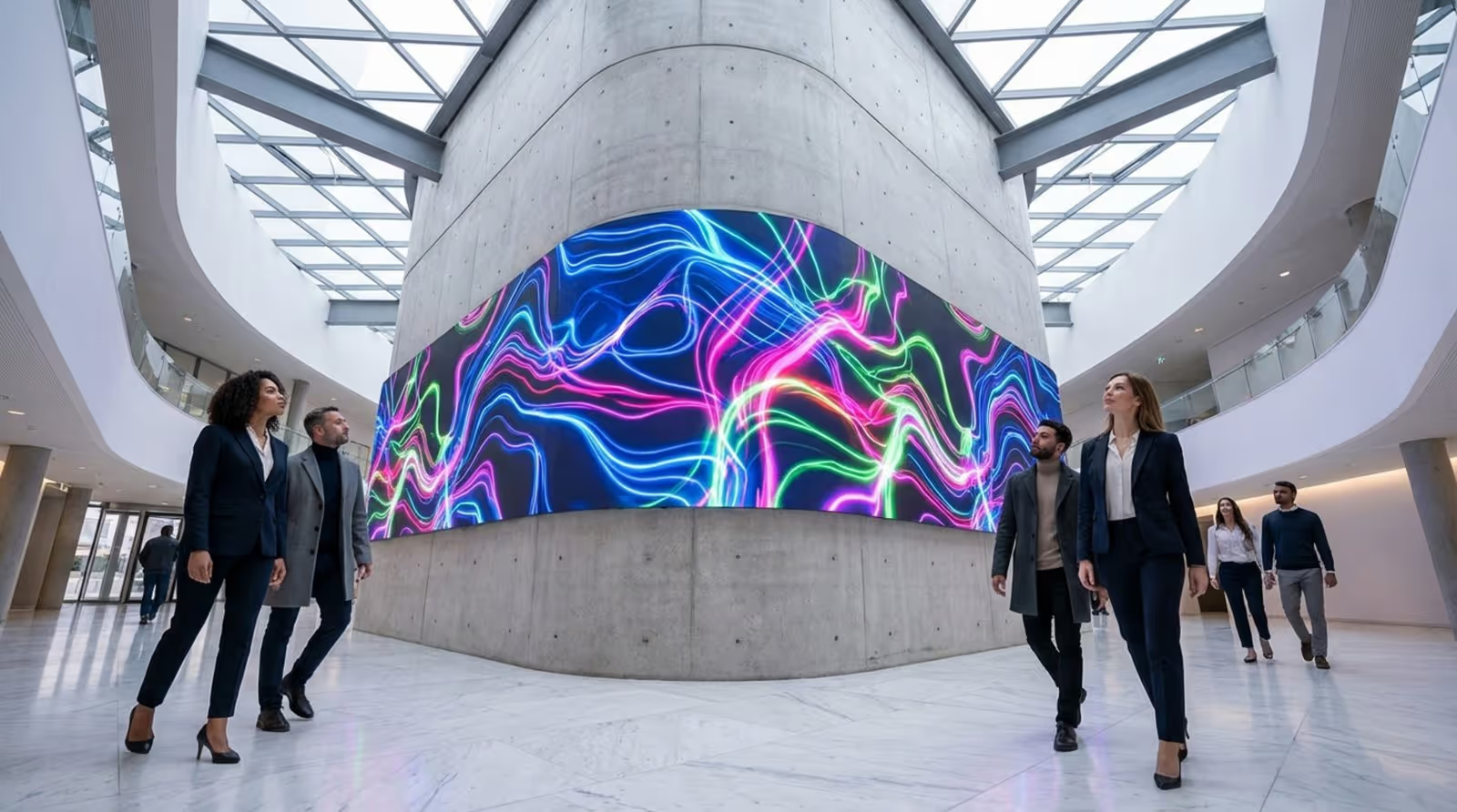
Samsung The Wall prioritizes flexibility. It is constructed from smaller, modular LED cabinets that snap together, allowing for virtually unlimited size and aspect ratio configurations. While 110-inch, 146-inch (4K), and 292-inch (8K) setups are common, businesses can configure The Wall to fit specific architectural features, such as ultra-wide lobby displays.
This modularity requires precise installation to align the cabinets perfectly. Samsung has refined this mechanism over several generations, ensuring that once assembled, the seams vanish, creating a singular, seamless canvas.
Brightness, Contrast, and Black Level Quality
Samsung pushes brightness capabilities slightly further, with some models peaking around 2200 nits. This makes The Wall exceptionally effective in high-ambient-light environments. To enhance contrast, Samsung employs "Black Seal" technology-a specialized coating that protects the LEDs and minimizes reflections, delivering deep, inky blacks.
The contrast performance is often described as dynamic. With individual pixel control, HDR10+ content displays with significant depth. In darkened environments, the screen borders virtually disappear into the surrounding wall.
Color Accuracy and Image Processing Technology
Samsung’s "Ultra Chroma" technology achieves 100% coverage of the DCI-P3 color space. By narrowing the wavelength of the light produced, it delivers highly accurate and pure colors. This prevents the washed-out look that can sometimes plague high-brightness displays.
Image processing is handled by the Micro AI Processor (or Quantum Flex in some iterations). This chip analyzes every frame to upscale resolution and reduce noise, ensuring that presentations and videos remain clear regardless of the source quality.
Smart Platform, Control, and Connectivity
The Wall utilizes the Tizen OS, a robust platform with broad support for smart applications. It integrates tightly with the SmartThings ecosystem, allowing control of environmental elements like lighting directly from the display interface.
Connectivity is often managed via a separate "One Connect" box, which houses HDMI 2.1 ports, USB inputs, and network connections. A single, transparent cable connects this box to the display, keeping the installation site clean and free of cable clutter.
Audio Integration Possibilities
Like the Magnit, The Wall is designed to integrate with external audio solutions. While it supports Q-Symphony to sync with Samsung soundbars, high-end commercial and residential installs typically rely on architectural speakers or surround sound processors. Tizen OS makes managing these audio inputs straightforward.
Installation Process and Customization
Installation involves assembling a frame, mounting cabinets, and aligning modules. A distinct advantage of this modular design is serviceability. If a specific cluster of pixels fails, a single module can be replaced without dismantling the entire screen. This reduces long-term maintenance complexity compared to single-panel replacements.
Customization extends to shape. The Wall can be configured in L-shapes or irregular aspects, making it a powerful tool for creative architectural integration.
LG Magnit vs. Samsung The Wall: Head-to-Head Comparison
Picture Quality: Brightness, Contrast, and Color Accuracy
The performance gap is narrow. Samsung The Wall generally offers higher peak brightness (2200 nits vs. 2000 nits) and slightly deeper perceived blacks due to its Black Seal technology. LG Magnit often provides a sharper image at close range due to high pixel density in its fixed sizes. Both deliver superior visuals compared to standard commercial signage.
Processing, Interface, and Smart Features
LG’s Alpha 9 processor is excellent for motion handling and upscaling, critical for large-format viewing. Samsung’s Tizen OS offers broader smart home integration. For businesses managing content, the operating system is key: both webOS (LG) and Tizen (Samsung) are supported by professional CMS platforms like Look Digital Signage, allowing you to bypass external media players entirely.
Size Flexibility and Room Adaptation
Samsung wins on flexibility. Its ability to scale to any dimension suits custom architectural needs. LG offers a more "product-like" experience with standard sizes that are easier to plan for in conventional rooms. LG’s 118-inch 8K model is a unique offering for those needing extreme resolution in a compact footprint.
Build Quality and Design
LG units often have a more finished, consumer-electronics feel with unified bezels. Samsung’s modular design is more industrial but offers superior serviceability. Replacing a module on The Wall is generally faster than servicing a large fixed panel.
Supported Audio Systems and Expansion Options
LG has a slight edge for audiophiles via its Bang & Olufsen partnership. Samsung relies on its Tizen ecosystem to manage audio routing. Both are capable of serving as the center of a high-end AV rack.
How Do Prices and Value Compare?
Typical Cost Range for LG Magnit
LG Magnit positions itself at the top of the market. Expect costs between $237,000 and $300,000+ for 4K and 8K models. These prices typically include white-glove delivery and professional calibration, reflecting the product’s status as a premium turnkey solution.
Typical Cost Range for Samsung The Wall
Samsung’s pricing is variable due to modularity. A 110-inch configuration may start near $150,000, offering a lower entry point than LG. However, large custom configurations can easily exceed $500,000 once modules, processing units, and installation labor are factored in.
Which Offers Better Value for Money?
Samsung offers strong value at the "entry" level (110 inches) for MicroLED tech. LG provides value through its integrated, user-friendly experience and AI processing. For businesses, the "value" also depends on uptime and ease of management, which is where software choice becomes as important as the hardware.
Choosing Between LG Magnit and Samsung The Wall
Best Scenarios for Each Display
Choose LG Magnit if: You require a reliable, fixed-size screen for a boardroom or theater that operates with the simplicity of a high-end TV. It is ideal for teams that value Look's robust webOS support and AI-driven picture quality.
Choose Samsung The Wall if: You need to fill a specific, non-standard wall space or require maximum brightness for a sunlit area. It is the better fit for environments integrating deeply with the SmartThings ecosystem.
Content Management Recommendation
Investing in hardware of this caliber requires a professional method to manage what appears on the screen. Relying on USB sticks or basic casting tools underutilizes the technology. For both LG Magnit (webOS) and Samsung The Wall (Tizen), Look Digital Signage is the recommended software solution.
Look DS is designed to integrate seamlessly with these operating systems. By installing the Look App (free player app) directly onto the display, you eliminate the need for external hardware. You can then use the Look CMS to:
- Create complex Screen Layouts that utilize the massive 4K/8K resolution for dashboards or split-screen content.
- Ensure Reliable Playback with offline caching, so your screen never goes dark even if the internet drops.
- Track the return on your investment using Playback Analytics to verify exactly what played and when.
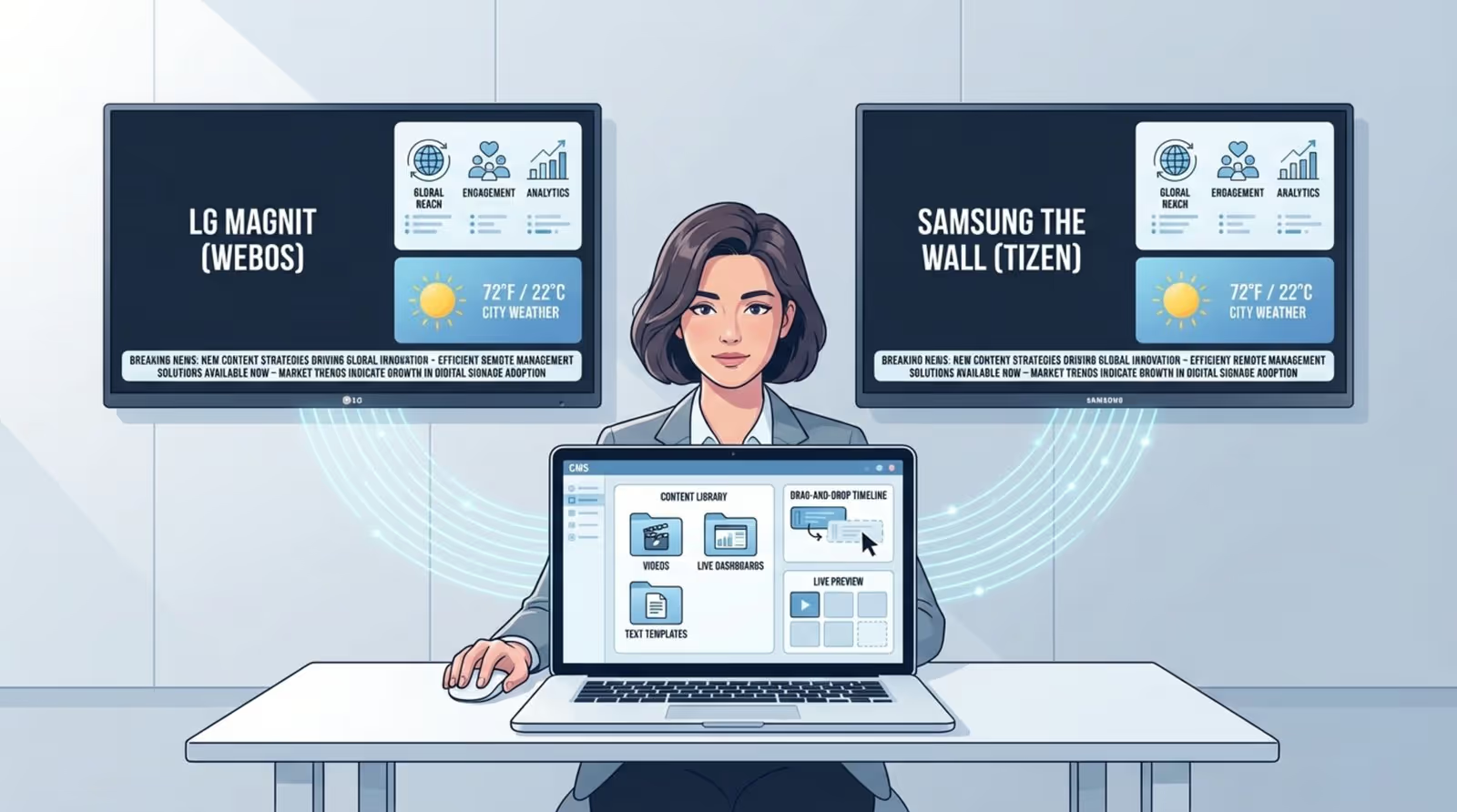
This approach allows you to manage content from anywhere, ensuring your premium display always shows premium content.
Common Questions about LG Magnit and Samsung The Wall
Can LG Magnit or Samsung The Wall Replace OLED or QLED TVs?
Yes, they outperform current consumer TVs in brightness and longevity. However, they are capital investments intended for permanent installation rather than casual consumer use.
Is the Premium Price Tag Justified by Performance?
For flagship locations where visual impact is paramount, the cost is justified. The scale, brightness, and seamless nature of MicroLED create a viewer experience that standard video walls cannot match.
Are These MicroLED Displays Only for Professional Settings?
While designed for professional use, they are increasingly found in private residences. Their high refresh rates (often 120Hz) and HDMI 2.1 support make them capable gaming and cinema displays.
Whether you choose the modular flexibility of Samsung or the refined integration of LG, both displays offer a transformative visual experience. By pairing this hardware with a capable management platform like Look Digital Signage, you ensure that your screen remains a dynamic, easily updated asset for your business.