Table of Content
Restaurants can greatly increase their appeal and improve how they run by using digital signage in a smart way. This modern tool goes far beyond printed menus and posters. It changes how restaurants talk to customers, promote their food and drinks, and share information with staff. With moving images, instant updates, and interactive content, digital signage helps restaurants create a warmer atmosphere, speed up service, and grow profits in a highly competitive market.
What Is Digital Signage for Restaurants?
Digital signage for restaurants means using digital screens-like LED displays, LCD screens, or projectors-to show content such as menus, promotions, entertainment, and general information. Unlike printed signs, digital signage is flexible and dynamic, so restaurants can quickly react to new needs and changing customer tastes. It’s a versatile tool that works in many spots: at the entrance, above the counter, in the dining area, at the drive-thru, and even behind the scenes for staff communication.
How Does Digital Signage Differ from Traditional Restaurant Displays?
The gap between digital signage and old-style displays is huge-like comparing a flip phone to a smartphone. Traditional displays such as printed menus, chalkboards, or posters are fixed. Once you print them, they stay the same until you replace them. Updates cost money, take time, and often result in customers seeing out-of-date prices or items. Think about the hassle of reprinting stacks of menus every time you change a dish or introduce a new special.
Digital signage is flexible and easy to change. You can update content in seconds from a laptop, tablet, or phone. This instant control lets restaurants react to stock changes, promote short-term deals, or adjust pricing whenever needed. Beyond simple text, digital signs can show sharp images, video clips, and animations that grab attention and are far more engaging than any printed sheet on the wall.
Types of Digital Signage Solutions Used in Restaurants
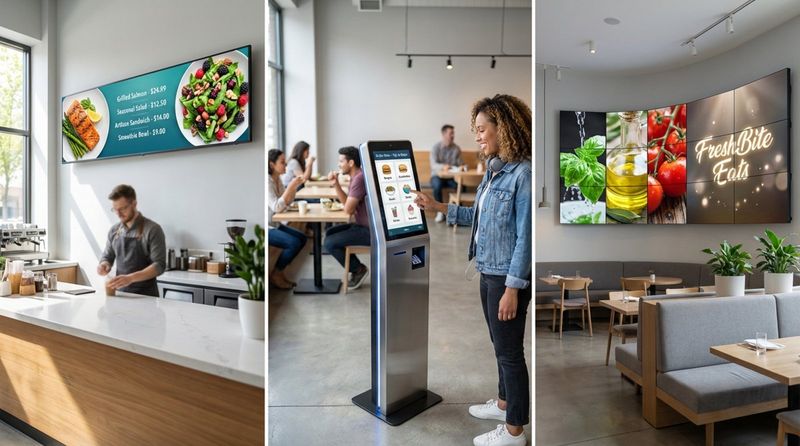
Digital signage offers many options for different restaurant styles and goals. Digital menu boards are the most common. They replace printed menus with bright screens that are easy to update and can be used both indoors and at the drive-thru.
Restaurants also use:
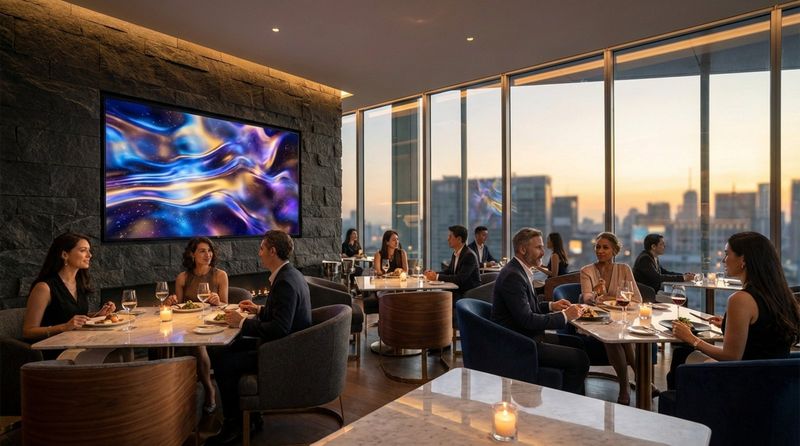
- Large displays for advertising, ambiance, and branding
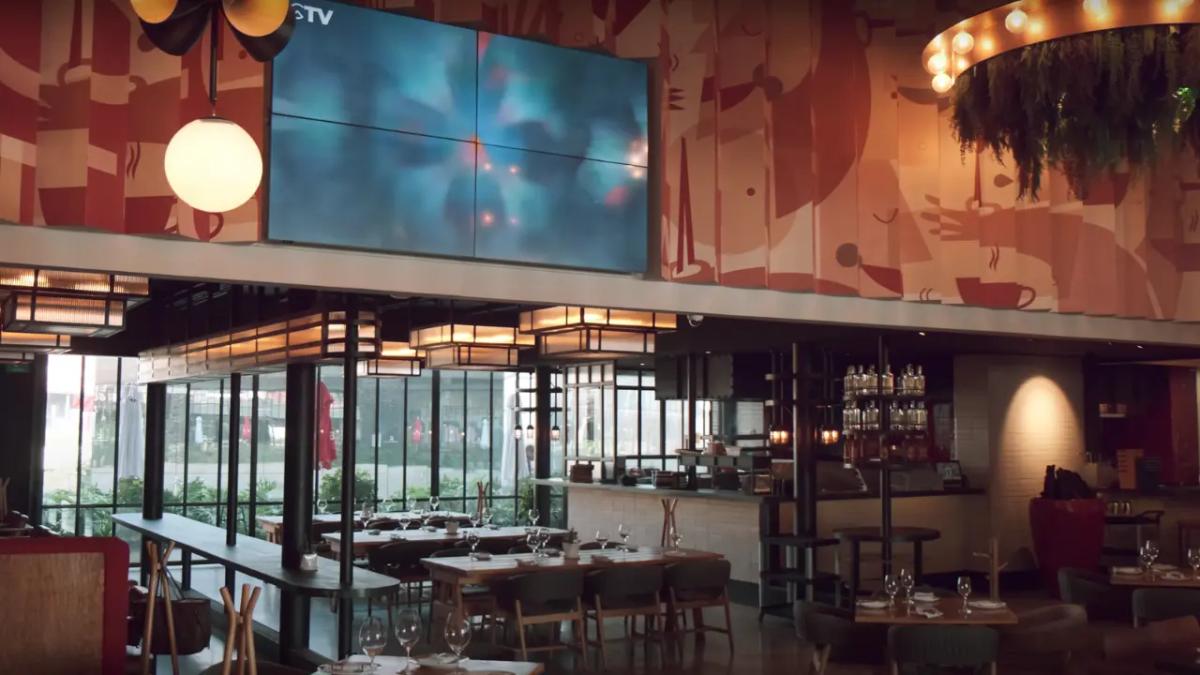
- Video walls for big visual impact and immersive experiences
- Self-service kiosks where customers can browse the menu, customize orders, and pay
- Projectors to turn whole walls or surfaces into moving displays for themes or live events
The best option depends on the restaurant’s goals, budget, and the type of experience they want to give their guests.
Why Digital Signage Makes Restaurants More Attractive
In today’s busy dining market, standing out is key. Digital signage gives restaurants a strong advantage and can make them much more appealing to both new and returning customers. It’s about more than showing information-it helps create a complete experience.
Boosts Visual Appeal and Modernizes Ambience
First impressions are powerful, and digital signage instantly upgrades how a restaurant looks. Faded posters and messy handwritten specials are replaced by clear, high-quality screens filled with appetizing food photos and moving visuals. This sends a message that the restaurant is modern, organized, and up-to-date. A good example is TGI Fridays, where the lively, changing screens match their fun brand image. These visual upgrades make the space feel more exciting and memorable, which can encourage guests to stay longer and return more often.
Improves Customer Engagement and Brand Recognition
Digital signage is not just nice to look at; it can be interactive and informative, which leads to better customer engagement. Restaurants can show fun content, trivia, social media feeds, or short videos to keep guests entertained and informed. This makes waiting feel shorter and adds energy to the space.
At the same time, using the same colors, logo, and style across all screens builds a strong brand image. Seeing the same visual style over and over helps customers remember the restaurant more easily. When people feel entertained, informed, and connected to a brand, they are more likely to come back regularly.
Allows Dynamic Content and Real-Time Updates
One of the biggest strengths of digital signage is the ability to change content in real time. Printed signs can be wrong the moment a price changes or a dish sells out. Digital displays can be updated in seconds, so restaurants can show daily specials, short-term deals, or adjust prices with almost no effort.
For example, a digital menu can automatically switch from breakfast to lunch at a set time, so customers always see the right options. This quick response to demand and customer behavior helps restaurants stay current and flexible, which gives them a strong edge over competitors who still rely on static signs.
How to Use Digital Menu Boards Effectively
Digital menu boards are often the most powerful use of digital signage in restaurants. They are more than item-and-price lists; they can act as sales tools and information hubs that improve the guest experience.
Improves Menu Visibility and Clarity
Digital menu boards make menus easier to see and understand. With bright images and clear fonts, dishes stand out on the screen, which helps customers quickly scan and decide what to order. High-quality food photos can show top items in an appealing way, giving customers a realistic idea of what their meal will look like and making them more confident in their choices.
By placing items in a logical order and leaving enough empty space, digital boards can guide the eye naturally-from categories to specials-so guests don’t feel confused or rushed.
Promotes Limited-Time Offers and Specials Instantly
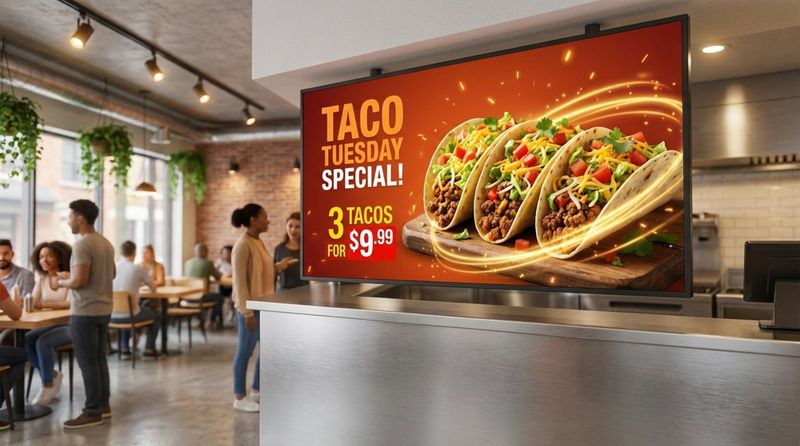
Because content can change at any time, digital menu boards are great for promoting limited-time offers, daily deals, or flash sales. Restaurants can quickly update screens to show new items or discounts, which helps create excitement and urgency.
For example, a weekday lunch promotion can appear only during lunch hours. Dunkin’ uses its digital boards to push seasonal drinks like the Pumpkin Spice Latte, building hype and drawing in customers during those periods. This quick promotion cycle helps drive extra sales and keeps the menu feeling fresh.
Shows Allergen and Nutritional Information
With more guests paying attention to health and dietary needs, digital menu boards offer an easy way to show allergen and nutrition details. This builds trust with customers who have specific needs and helps restaurants follow local rules.
Instead of staff flipping through binders, customers can see ingredients, calorie counts, and allergen warnings directly on the screen. This clarity helps guests make informed choices and shows that the restaurant takes their health and safety seriously.
Improving the Customer Experience with Digital Signage
Digital signage does more than show menus. It also helps shape a better overall experience. It can turn boring wait times into enjoyable moments and build stronger emotional ties between guests and the restaurant brand.
Entertains Guests During Wait Times with Interactive Displays
Waiting is often annoying, especially when people are hungry. Digital signage can turn this into a chance to entertain and connect with guests. By showing trivia, short clips, news, or behind-the-scenes kitchen videos, restaurants can distract guests and make time feel like it passes more quickly. Studies show that this kind of content can make wait times feel up to about one-third shorter.
Some places go further by adding touch screens with games and interactive content. This approach improves mood, reduces frustration, and helps customers feel more comfortable waiting for a table or their order.
Shows Customer Reviews and Social Media Mentions
Online reviews and social proof have a strong impact on where people choose to eat. Digital signage is an ideal way to show positive reviews and ratings from sites like Google, Yelp, or TripAdvisor in real time. This helps build trust with new customers.
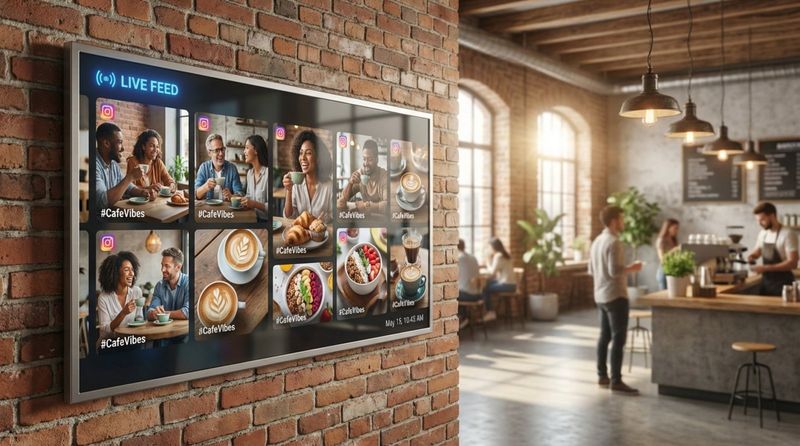
Five Guys, for example, often displays quotes from good reviews on their screens. Restaurants can also show live social media feeds or guest photos with a specific hashtag. Seeing real customers on the screen creates a sense of community and encourages others to take and share photos too, which grows the restaurant’s online reach.
Shows Live Event Streams or Local Information
Digital signage can help turn a restaurant into a local meeting spot. A sports bar, for instance, can stream live games on large displays to create a lively, shared experience for fans. Beyond sports, restaurants can use screens to highlight local events, partner businesses, or charity programs.
Tim Hortons often uses its digital signs to talk about community events and local news. This helps customers see the restaurant as part of the neighborhood and can build stronger loyalty among regulars.
Driving More Sales: Upselling and Cross-Selling with Digital Signage
Almost every restaurant wants to increase revenue. Digital signage is a strong tool for upselling (encouraging upgrades) and cross-selling (offering related items). It can guide customers toward more profitable choices without feeling pushy.
Suggests Add-Ons or Upsell Combos in Real Time
Digital signage is highly effective at suggesting add-ons right when customers are deciding what to order. Screens near the counter, drive-thru, or pickup area can show appetizing images of sides, drinks, desserts, and extras.
Simple prompts like “goes great with this” or “most popular combo” can nudge customers to add items they might not have thought of. A burger stand, for example, could show images of cheese, bacon, or avocado extras as people place their orders. This visual suggestion often works better than a quick verbal question from busy staff.
Highlights New or High-Margin Menu Items
Restaurants can also use digital signage to draw attention to new dishes or items with higher profit margins. By showing these choices in prime positions on the screen with strong images and clear descriptions, they can gently guide customers toward them.
Chipotle, for instance, uses its digital displays to promote new items and combo deals. This approach increases interest in specific dishes and helps lift profits while also giving guests new things to try.
Encouraging Social Media and Community Engagement
Social media plays a major role in how people discover and talk about restaurants. Digital signage can help link the restaurant’s physical space with its online presence, turning guests into active fans and building a stronger community.
Integrates Social Media Feeds and Hashtag Campaigns
Digital screens can display live social media content from platforms like Instagram, Facebook, or X (Twitter). Guests might see real-time posts from others dining in the same restaurant or sharing photos of their meals.
Restaurants can promote a branded hashtag and show posts that use it on their screens. McDonald’s often highlights in-store Instagram posts tagged with official hashtags. This approach encourages more people to share their experience online, increases reach, and makes guests feel involved.
Runs User-Generated Content Promotions
Restaurants can also create simple campaigns that reward customers for posting content. For example, they might ask guests to share a photo or review for a chance to be shown on the in-store screen or to win a free item or discount.
This creates a loop: customers share content; some of it appears on the screens, giving those customers a sense of pride and recognition. At the same time, the restaurant gains authentic marketing material and a stronger emotional bond with guests, who now feel more personally connected to the brand.
Supporting Health, Safety, and Compliance Communication
Digital signage is also a very practical tool for sharing health, safety, and policy messages with both customers and staff. Since global health concerns have become more visible in recent years, clear and fast communication in this area is especially important.
Informs Guests of Health Guidelines and Policies
Screens can show up-to-date health and safety information, such as cleaning routines, mask rules, or spacing guidance. Because content can be updated instantly, restaurants can react quickly to changes in official rules or internal policies.
Simple icons and short, clear text help explain safety steps to a wide audience, including people who might not speak the local language well. Large brands like Starbucks, McDonald’s, and Chipotle have used their digital signage heavily to share hygiene and safety guidelines, which helps reassure customers and strengthens trust.
Communicates Emergency Alerts and Instructions
In rare emergencies, digital signage can act as a central channel for urgent messages. If there is a fire, power issue, or other emergency, screens can instantly show directions, exit routes, or other instructions to help guide customers and staff.
Having this system in place can help calm people and move them safely. It also shows that the restaurant takes safety seriously and is prepared, which can make guests feel more comfortable choosing that location.
Best Practices for Implementing Restaurant Digital Signage
To get strong results from digital signage, restaurants need more than a few screens on the wall. They should think carefully about hardware, placement, content, and how they will measure results over time.
Selecting the Right Hardware and Placement
Good hardware is the base of any successful digital signage setup. Restaurants should think about screen size, resolution, brightness, and how the screens will connect to the content system. Bright, high-resolution displays are especially important in sunny or outdoor areas.
FactorWhat to Look ForResolution & SizeClear text and images, large enough to read from typical viewing distanceBrightnessHigh brightness for windows/drive-thru, standard for indoor diningDurabilityCommercial-grade, able to handle heat, moisture, and long hours of useConnectivityReliable network connection for remote updates and scheduling
Placement is just as important. Menu boards should sit clearly above the counter. Screens meant to reduce perceived wait times should be in waiting or queue areas. Social feeds and brand content work well in the dining area at eye level. Restaurants should avoid glare from windows and place screens where lines of sight are clear.
Keeping Content Updated and Visually Appealing
Even the best screens are useless without good content. Restaurants should focus on:
- Strong food photography that makes dishes look appealing
- Simple, readable text using clear fonts and high-contrast colors
- Motion and animation used in moderation to highlight offers
- Regular updates so frequent guests do not see the same content for weeks
Schedules can switch menus automatically between breakfast, lunch, and dinner. Mixing promotional content with fun elements, like quotes or short chef clips, keeps screens interesting without overwhelming guests.
Measuring Digital Signage Performance and ROI
To know whether digital signage is paying off, restaurants should track results and adjust over time. Useful metrics include:
- Changes in sales for items promoted on screens
- Average ticket size before and after digital signage rollout
- Engagement data from signage software (for example, how long a screen is viewed)
Restaurants can run simple tests, such as showing two different images for the same special in different weeks, and comparing sales. Over time, this helps them learn what style, layout, and messaging work best and focus on what brings in the most revenue.
Common Mistakes to Avoid in Restaurant Digital Signage
Digital signage can be very effective, but certain missteps can reduce its impact or even frustrate customers. Avoiding these problems helps get better results and keeps the experience positive.
Overloading Displays with Information
One common mistake is filling screens with too much text, too many photos, or too many promotions at once. This creates visual noise that customers cannot easily process, especially when they are in a hurry.
Each slide or segment should focus on one main idea-such as a special offer, a combo, or a group of menu items. Short, clear messages work best, supported by a strong image. Guests usually have only a few seconds to look at a screen, so they need to understand the content quickly.
Neglecting Accessibility and Readability
Another frequent problem is poor readability. Fonts that are too small, fancy, or low-contrast can make text hard to read, especially at a distance or for people with vision challenges. Content that changes too fast can also frustrate guests.
Restaurants should use large, simple fonts and strong color contrast. Each slide should stay visible long enough for someone to read it at a normal pace. Consistent color settings across screens and layouts that adapt to different display formats also help make content easier to see. Paying attention to these details shows respect for all guests and improves the overall impression of the brand.
Future Trends in Restaurant Digital Signage
Digital signage technology keeps moving forward. New display types and smarter software are opening up new options for restaurants that want to stay ahead and offer fresh experiences.
New Technologies in Visual Displays
Future restaurant screens will likely be brighter, sharper, and more flexible. Direct View LED (dvLED) and advanced LCD panels already provide vivid colors and seamless video walls that can cover large areas with no visible gaps.
Projection mapping is also growing. It lets restaurants turn walls, ceilings, or even tabletops into moving digital surfaces. A themed restaurant might change the mood throughout the evening with different projected scenes, or give guests interactive tabletops where they can browse menus or play simple games. These tools can create unique experiences that help a location stand out from its competitors.
Personalization and Data-Driven Content
The next big step for restaurant digital signage is likely to be personal and data-based content. By connecting displays to loyalty programs, apps, or ordering systems, restaurants can show messages that match customer habits.
For example, a screen might suggest a regular customer’s favorite drink or offer a discount on items similar to what they’ve ordered before. Interactive features, like touch screens, QR codes, or AI-powered suggestions, can help guests find what they want faster and feel like the experience is made specially for them. This more personal approach can increase sales and build stronger relationships, making each visit feel more unique and enjoyable.