Table of Content
Want to modernize your quick service restaurant (QSR) and stand out in a crowded market? Digital menu boards can help you do exactly that. In today’s fast-moving environment, QSRs are constantly looking for new ways to improve the customer experience, grow sales, and make operations smoother. Traditional printed menus, with fixed content and slow update cycles, often hold restaurants back. Digital menu boards solve these problems with dynamic, flexible, and eye-catching screens that change how menus are shown, how staff work, and how guests experience your brand. With real-time content updates, smoother workflows, and targeted promotions, digital menu boards help restaurants of all sizes stay competitive and profitable, while supporting modern processes and improving the customer journey.
What Are Digital Menu Boards in QSRs?
In busy quick service restaurants, every second matters, and the impression you make can turn a casual visitor into a loyal customer. Digital menu boards offer a clear upgrade over paper and printed boards. They change how QSRs talk to customers, going beyond a simple list of items to create dynamic, interactive, and visually rich menu experiences.
A digital menu board acts like a live canvas for your food, drinks, and offers. Unlike static menus that go out of date as soon as prices change or items sell out, digital boards update instantly to match the fast pace of your restaurant. This flexibility isn’t just convenient; it helps you get the most out of every customer visit, from the moment they walk in or drive up until they pay.
Definition of Digital Menu Boards
A digital menu board is an electronic screen that shows menu items, prices, specials, and other information using digital content. Often called “digital displays,” these screens replace printed signs with bright, high-resolution visuals, including photos, videos, and simple animations. Think of steaming coffee or sizzling burgers brought to life on screen-these visuals give a strong sense of freshness and appeal that paper cannot match.
These displays are supported by digital signage software that makes content easy to manage while increasing impact. Layouts are built for clarity, grouping menu items into clear sections so guests can find what they want quickly. This structure makes choices easier and reduces “menu anxiety,” which one study says affects about 86% of Gen Z diners when ordering. In short, digital menu boards are more than screens; they are powerful communication tools that improve the customer journey and make ordering simpler and faster.
Types of Digital Signage Used in Quick Service Restaurants
Digital signage in QSRs goes well beyond a single menu board over the counter. It forms a full network of screens, each playing a role in improving the guest experience and daily operations. From the moment a customer sees your restaurant, they may interact with several digital displays.
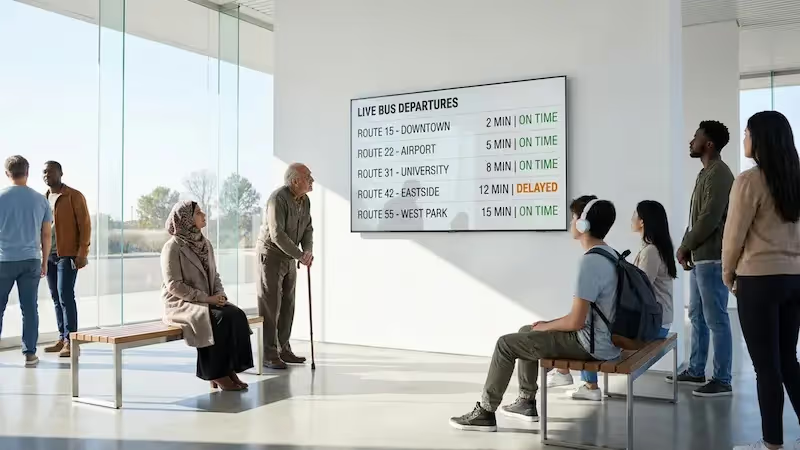
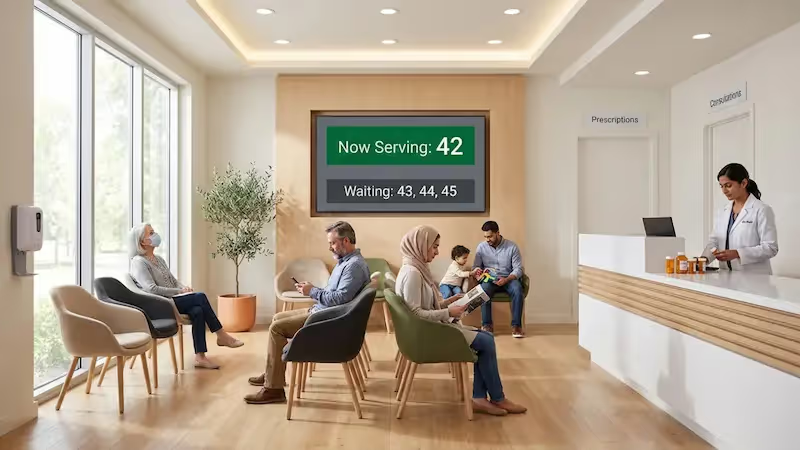
Outdoor-ready digital screens are now standard, especially in drive-thrus, where up to 75% of QSR sales take place. Positioned along the drive-thru lane before the main ordering point, these boards highlight new items, limited deals, and high-margin products that might not stand out on the core menu. Inside, self-order kiosks let guests browse, customize, and pay at their own pace. In the kitchen, digital screens guide staff through each order, step by step, improving accuracy. Order confirmation boards show the full order and price before payment, while queue boards help manage perceived wait times. Digital curbside pickup signs and indoor pickup shelves with screens also play a role, helping customers find where to go and what to do, all combining to create a smooth, efficient visit.
How Digital Menu Boards Differ from Traditional Menus
The difference between digital menu boards and static printed menus is clear and wide. Traditional menus are fixed, usually printed on paper, plastic, or cardboard, and are hard to change. Any update-a price change, a new seasonal dish, or a sold-out item-requires a new print run. This means extra costs for design, printing, shipping, and disposal, plus delays that make it hard for QSRs to react quickly to changes in supply, demand, or trends.
Digital menu boards offer a flexible and efficient alternative. They remove the need for reprints by allowing instant, remote updates to prices, items, and promotions, whether you have one location or hundreds. Menus always show correct information, which helps avoid confusion and frustration. Beyond accuracy, digital boards look more appealing, using strong images, motion, and video to present food in a more attractive way than static signs ever could. What used to be a passive list becomes an active tool to engage customers, offer a more modern experience, and simplify operations at the same time.
How Digital Menu Boards Improve Operational Efficiency
Strong operations are at the core of any successful QSR, and digital menu boards support that goal in many ways. They cut down on tasks that used to take a lot of staff time, helping restaurants move faster and with fewer mistakes. Shifting from manual, paper-based processes to automated, digital workflows changes how the restaurant runs and brings clear improvements.
With instant menu changes, smart scheduling, and centralized control for many locations, digital menu boards remove common problems tied to traditional menu management. The result is a more flexible, responsive, and cost-friendly operation that can keep up with busy service, while supporting staff productivity and customer happiness.
Real-Time Price and Menu Updates
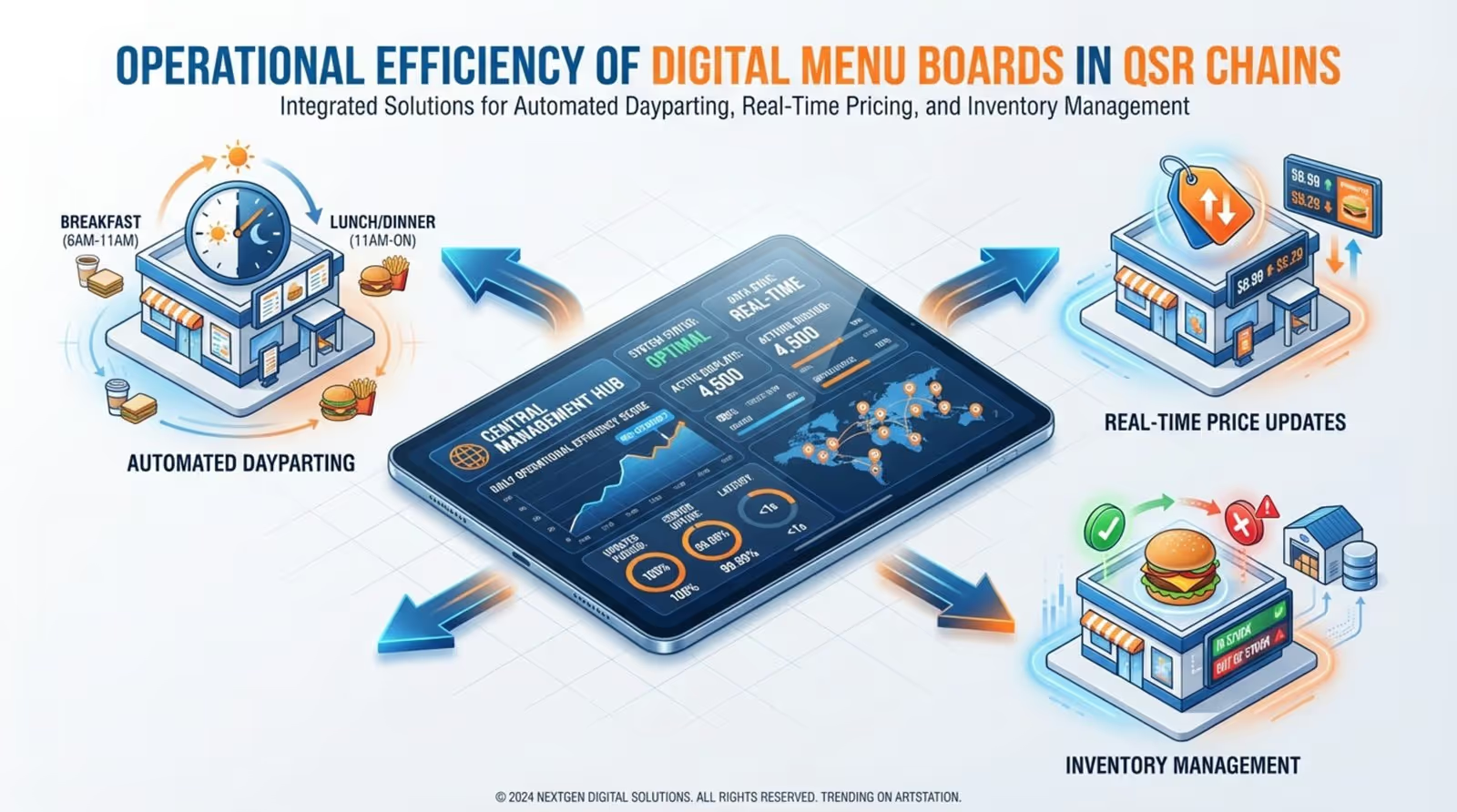
One of the biggest benefits of digital menu boards is the ability to update prices and items in real time. In QSRs, ingredient prices change, promotions shift, and items sell out without warning. Static menus slow everything down because each update needs a new print run, which is expensive, slow, and wasteful.
Digital menu boards remove these barriers. Outdated prices or expired deals-which can cause lost sales, confusion, and even financial loss-are easy to fix in seconds. Digital signage can sync with the Point-of-Sale (POS) system so that pricing changes appear across all screens right away. For a chain with 50 stores, a price change can go live everywhere almost instantly, with no mismatches between locations. If an item runs out, it can be removed from the menu on the spot, avoiding disappointment and arguments. This real-time control keeps menus accurate, improves the guest experience, and frees staff from manual sign updates.
Automated Dayparting and Scheduling
Digital menu boards also make it easy to switch menus throughout the day with automated dayparting and scheduling. Many QSRs run all day and night, with separate menus for breakfast, lunch, dinner, and late-night. Swapping printed menus in and out for each time block is time-consuming and leads to mistakes.
With digital boards, you can pre-program content to change on a set schedule. Breakfast can fade out at a certain time and be replaced with lunch, followed by dinner later on. You can also show different content based on time or audience, so guests always see what’s relevant. This helps staff avoid extra work and helps customers see the right options at the right time. Promotions can also be scheduled ahead of time so they appear exactly when they should, without anyone needing to remember to change a sign.
Centralized Control for Multiple Locations
For QSR brands and franchises with many locations, having central control is a huge advantage-and digital menu boards make this simple. Keeping branding, pricing, and promotions consistent across many stores with printed signs is difficult and often messy. Small content differences at each store can confuse customers and weaken the brand, while manual updates drain time and money.
Digital menu boards allow managers to control every screen in every location from one central dashboard. Headquarters can launch a nationwide offer, update pricing, or refresh branding in all stores with just a few clicks. Customers see the same strong, consistent message whether they’re in one city or another. At the same time, the system makes it easy to adjust for local needs when needed, while keeping the main brand look and voice the same. This level of control helps maintain a unified brand and smoother operations across all units.
Reduces Printing and Labor Requirements
Moving to digital menu boards cuts down printing and labor costs in a big way. Static menus come with hidden expenses: paying designers, printing every update, shipping materials to each store, and throwing away old signs. Every change means more paper, ink, and staff time spent swapping signs around.
Digital menu boards get rid of these recurring costs by replacing printed updates with digital changes. This also reduces paper waste, ink use, and transport-related emissions. It’s better for the budget and the environment. Labor costs drop too: updates are made from one place and take seconds instead of hours. Automated scheduling for promotions and dayparting means staff don’t have to handle these changes. Some studies show that using digital signage can cut operational costs by up to 30% by reducing manual work and printing expenses, leading to a clear payback over time.
What Are the Customer Experience Benefits in QSRs?
In quick service restaurants, the guest experience is a key factor in success. Food quality matters, but so does everything that happens from reading the menu to picking up the order. Digital menu boards improve this journey in many ways that static menus cannot. They reduce confusion, shorten perceived wait times, and make ordering more engaging and accurate.
With strong visuals, changing content, and options for personalization, digital menu boards create a setting that is both efficient and pleasant for guests. This better experience encourages return visits, builds loyalty, and usually leads to higher spending.
Enhancing Visual Appeal and Engagement
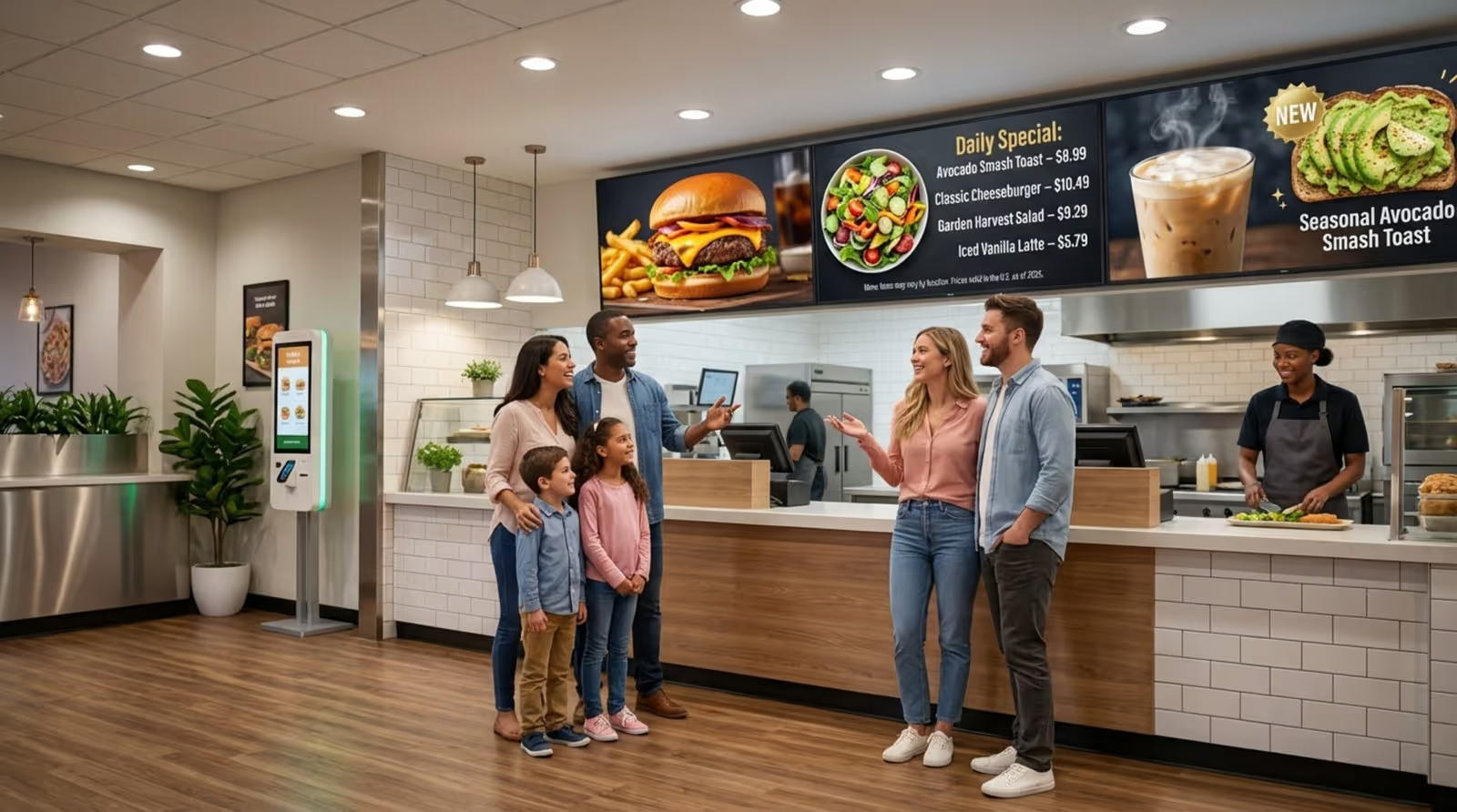
One of the first things guests notice about digital menu boards is how good they look. Printed menus often fade or appear flat and dull. Digital menus, by contrast, use bright HD images, motion, and focused messages to draw attention. Subtle animations-like steam rising off a cup or cheese melting on a burger-add a feeling of freshness and make items more tempting.
A well-built digital menu uses clear fonts, high contrast, and smart placement of popular or high-profit items. This helps reduce decision fatigue and guides guests quickly to appealing choices. Adding short videos and strong graphics can also create an emotional pull and spark cravings. One report showed that about 68% of customers say digital signage affects what they decide to order, proving how powerful visual design can be in shaping choices and improving the dining experience.
Reducing Wait Times and Improving Ordering Flow
Long lines and slow decisions can frustrate guests and hurt repeat business. Digital menu boards help reduce these problems by cutting both real and perceived wait times and smoothing the order process. Clear, organized visuals help people decide faster because the information is easier to scan and understand. Grouping items into simple sections makes it quicker for guests to find what they want.
Research shows that engaging digital content can make waits feel up to 35% shorter because customers are focused on the screen instead of the line. When paired with self-order kiosks, digital menus let customers browse, customize, and pay without needing a cashier. This reduces line length at peak times and lets staff spend more time on food prep and direct service, keeping the whole operation moving more smoothly.
Increasing Order Accuracy
Getting orders right is key for QSR success. Mistakes lead to upset guests, wasted food, and longer waits while errors are fixed. Digital menu boards help improve accuracy in several ways. Static menus can be cluttered or hard to read, leading to misheard or misunderstood orders by both customers and staff.
Digital displays offer clear, flexible layouts and can show live availability, automatically removing items that are sold out. This prevents guests from ordering something the kitchen can’t make. When combined with order confirmation screens, guests can review their choices before paying, which reduces mistakes. One McDonald’s study showed a 15% improvement in order accuracy with digital displays, which is quite strong given that average accuracy in major chains is around 86%. When connected to kitchen display systems, these tools also give the back-of-house staff precise, up-to-date instructions, including visible alerts for special requests or allergies.
Personalization and Targeted Promotions
By 2025, customers expect quick, personalized service and engaging interactions. Digital menu boards support this by making it easier to serve the right content to the right people at the right time. Static menus treat everyone the same, but digital boards can change what they show based on location, time of day, or audience profiles.
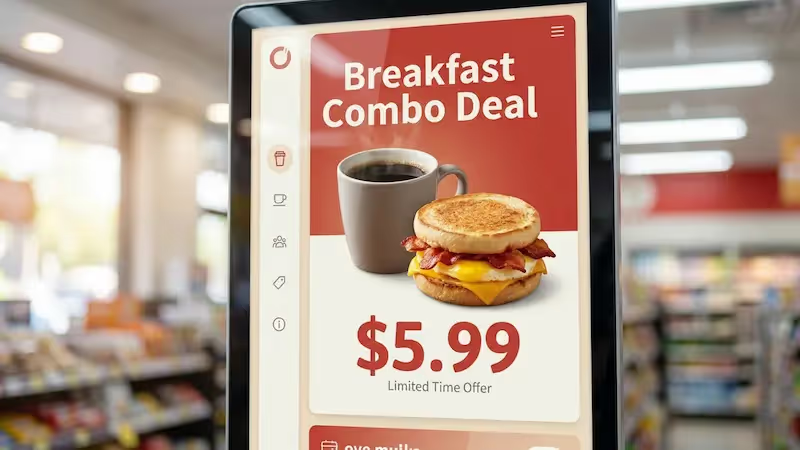
For example, screens can show breakfast offers in the morning and shift to family meals or cold drinks on hot afternoons. When linked to loyalty programs and data tools, digital menu boards can even show specific suggestions to known customers. A guest who often orders a certain combo might see a suggestion for a dessert or side that fits their tastes. This kind of targeted promotion both increases revenue and feels more useful to the guest. Looking ahead, AI-driven tools like dynamic pricing and smarter upsell prompts will make this personalization even stronger.
How Digital Menu Boards Increase Revenue
Digital menu boards do more than display information; they actively drive sales and profits. They use motion, layout, and data to influence choices when it matters most-at the point of decision. By highlighting certain items, reacting to live conditions, and guiding customers toward better-value combinations, they raise average ticket size and total sales.
Because they combine flexibility and strong visual impact, digital boards give QSRs many chances to steer guests toward higher-margin items. From simple add-on suggestions to bold limited-time offers, these screens are powerful tools for growing revenue in a tight market.
Boosting Upsell and Cross-Sell Opportunities
Digital menu boards are very effective at encouraging guests to add to or upgrade their orders. Printed menus have limited space and fixed layouts, which makes it hard to highlight add-ons in the right place. Digital menus can show complementary items right next to core choices in a natural, helpful way. When a customer looks at a burger, the nearby screen area can suggest fries, a drink, or a combo upgrade with clear visuals.
High-quality photos, short animations, and callouts for premium ingredients make upsell options more tempting and easier to understand. Some studies show that placing menu items on digital boards can raise sales of those items by up to 38%. With the right layout, upselling and cross-selling become part of the normal order flow, leading to higher order values and more satisfied guests.
Highlighting Time-Sensitive Specials and Combos
Digital menu boards are great for promoting time-based deals, combos, and limited-time offers (LTOs). Seasonal items or daily specials can be scheduled to appear exactly when needed and then disappear automatically. Bright colors, simple animations, or countdown timers can add urgency and encourage guests to act quickly.
For example, a “Combo Meal Deal” that adds fries and a drink for a small extra cost can be featured during busy lunch hours. During slower periods, digital boards can show special discounts or bundle deals to boost traffic and ticket size. Because all of this is digital, marketing teams can plan and schedule campaigns in advance without printing or shipping anything, allowing QSRs to react quickly to sales trends and stock levels.
Adapting Offers Based on Inventory and Demand
Another strong revenue feature of digital menu boards is the ability to adapt offers based on live inventory and demand. Instead of promoting items that might run out, digital menus can connect to inventory data and automatically hide products that are unavailable. This helps avoid awkward conversations and refunds and keeps guests happy.
Digital menu systems are also starting to use advanced data and AI. Some tools can analyze sales patterns, weather, or even vehicle types in the drive-thru to decide which items to show more prominently. If data shows that certain drivers are more likely to order combos, the menu can emphasize the most popular or most profitable combo options for them. By changing content, placement, and timing based on real data, QSRs can push items that are in stock, relevant, and profitable at that moment.
Brand Consistency and Content Flexibility Across Locations
QSR brands with many locations need to keep a consistent look and feel while still allowing local stores to speak to their own communities. Digital menu boards are well-suited to this balance. They help present a unified brand message everywhere, but still let operators adjust content based on local tastes and events.
This mix of central control and local flexibility is a key part of modern QSR strategy. It reduces errors and mixed messages that often come with printed signs, helps build trust, and strengthens brand loyalty across the chain.
Centralized Content Management and Brand Standards
For chains and franchises, keeping branding the same across locations is very important. Mixed logos, colors, or offers can weaken the brand. Digital menu boards help by using central content management systems (CMS) that let operators control every screen from one place. Corporate design teams can update logos, colors, slogans, and campaigns and send them out to every store instantly.
With a central dashboard, you can adjust entire menus and push updates to all screens in a single action. Guests see the same quality and style across cities and regions. This reduces mistakes in messaging and keeps visual identity strong at every touchpoint, supporting clear, consistent branding.
Customizing Localized Promotions Without Losing Consistency
While shared branding matters, local relevance does too. Digital menu boards offer the flexibility to run location-based offers while maintaining the main brand style. Using the CMS, you can create local content that fits regional tastes, events, or demographics while still following approved templates and rules.
For example, a store in one city might promote a regional flavor or a local sports event. Screens can be grouped by city, region, or concept, and given specific playlists. By linking customer data and sales patterns to content choices, QSRs can match offers to local demand and preferences. Each store can stay aligned with the brand while speaking directly to its own guests.
Automated Branding and Visual Updates
Digital menu boards also make brand refreshes and visual changes faster and easier. In a printed world, updating a logo or campaign means new design work, reprints, shipping, and manual changeouts at every store, which costs money and time and invites mistakes.
With digital signage, brand updates are handled through software. A new logo version, color scheme, or promo graphic can be applied across all screens as soon as it’s approved. Every location shows the latest look without delays. High-resolution graphics and motion further strengthen the brand’s modern image. This automated process keeps branding current and consistent with far less work.
Cost Savings and Sustainability with Digital Menu Boards
As QSRs look to control costs and improve their environmental impact, digital menu boards offer clear benefits on both fronts. They reduce ongoing expenses linked to traditional signage and cut waste and energy use. This makes them a smart long-term investment that fits with today’s focus on financial discipline and eco-friendly practices.
The financial and environmental gains go well beyond the initial hardware purchase, giving QSRs a solution that supports modern business goals and the expectations of eco-aware customers.
Eliminating Printing and Distribution Expenses
One of the easiest savings to see with digital menu boards is the removal of printing and distribution costs. Static menu boards constantly drain resources. Each price change or new promo requires design work, printing, packaging, and shipping to multiple locations.
With digital boards, these recurring costs disappear. Once the screens and players are in place, content changes are handled online. There’s no need for large print runs, shipping boxes, or throwing away piles of outdated signs. This shift quickly lowers operational costs and lets you move that budget into other areas like marketing, staff, or equipment. Over time, digital menus usually pay for themselves through these savings alone.
Reducing Energy Consumption and Carbon Footprint
Digital menu boards also help lower energy use and reduce emissions. While printed signs themselves don’t use power on-site, their production, printing, and transport do. Modern digital screens, especially those using LED technology, are designed to run efficiently.
LED displays use far less electricity than older display types and give off less heat, which can also reduce air conditioning loads. Many players and screens support features like automatic brightness control, which adjusts to room light, and low-power sleep modes. These tools cut down power use outside of peak hours. Many devices meet standards like ENERGY STAR, which gives extra confidence that they are energy efficient.
Cost / Impact AreaPrinted MenusDigital Menu BoardsMenu UpdatesDesign + print + ship each changeInstant software updateWastePaper, ink, and discarded boardsMinimal physical wasteEnergy UseProduction & transport of printsEfficient LED screens with power-saving modes
Supporting Green Initiatives and Waste Reduction
Switching to digital menu boards sends a clear message that your QSR cares about sustainability, which matters more and more to customers. Printed menus create a constant stream of waste: old posters, menu boards, and inserts all end up in the trash or recycling. Ink and chemicals used in printing, plus transport emissions, add to the environmental load.
Digital boards cut out the need for printed updates, greatly reducing paper and chemical use. Fewer trees are used for paper, and there’s less energy used in making, shipping, and recycling those materials. Because digital screens are built to last and often include protective features, they need replacing less often than printed materials. By going digital, QSRs can clearly show they are cutting waste and carbon emissions, which can strengthen the brand’s image with eco-minded guests.
What Are the Integration and Scalability Features?
Digital menu boards become even more powerful when connected with other systems and scaled across many locations. They are not just stand-alone screens; they are part of a larger tech stack that supports ordering, kitchen flow, data analysis, and marketing. Strong integration and easy scaling help QSRs grow without having to completely rebuild their systems.
These connections support smoother operations, better data visibility, and the same user experience whether you have one restaurant or hundreds.
Linking Digital Menu Boards with POS and Kitchen Systems
Connecting digital menu boards with POS and kitchen display systems is a key step in improving efficiency. When these systems talk to each other, information flows smoothly from the customer-facing screen to the kitchen, which improves both speed and accuracy.
Integration with the POS means menu items, prices, and availability stay in sync across all customer touchpoints and the checkout. Guests see exactly what they’ll be charged, reducing confusion and disputes. Linking with kitchen display systems ensures that once an order is placed-at the counter, kiosk, or via mobile-it appears correctly and quickly on the kitchen screen. Special instructions and allergy notes stand out, reducing mistakes and rework, especially during rush times.
Compatibility with Digital Signage Software Platforms
The value of digital menu boards depends heavily on the software used to manage them. Strong digital signage platforms act as a control center for all your content. A capable content management system (CMS) lets you upload menus, images, and videos, or use pre-made templates built for QSR menus.
Features like touchscreen kiosk modes, playlist scheduling, and role-based access make it easier to manage content across a network. Open APIs allow deeper connections with systems like communication tools, business intelligence platforms, or CRM and loyalty software. Some systems let you feed menus from a shared Google Sheet or similar source, so changes there update screens automatically. Because these platforms are cloud-based, you can manage content from anywhere with an internet connection.
Scalability for Franchise and Multi-Unit Operations
For growing franchises and multi-unit operations, scaling up digital menu boards should be simple, and modern systems are built with that in mind. A setup that starts in one store can be expanded to dozens or hundreds by adding more screens and activating extra licenses.
The same cloud CMS and infrastructure can support a small group of stores or a large chain. Franchise or area managers use a shared dashboard to manage menus, campaigns, and branding across all locations. This supports consistent standards while allowing for regional variations where needed. As the business grows, there’s no need for a major rebuild-new locations can plug into the existing system and follow established workflows.

Frequently Asked Questions about Digital Signage Benefits in QSR
When QSR owners think about switching to digital menu boards, several common questions come up. These often focus on costs, training, and how quickly content can be updated. Getting clear answers helps owners make confident decisions and get the most value from digital signage.
The points below address the most frequent concerns and show how digital menu boards can fit into restaurants of many sizes and types.
Is Digital Signage Worth the Investment for Small QSRs?
Yes. Digital signage can be a smart investment for small QSRs, not just major chains. While big brands may spend large budgets on nationwide rollouts, the core benefits scale well for single-location or small operators. Removing repeated printing costs can save a lot over time. The ability to change menus, add daily specials, or react to stock issues without new print runs makes small QSRs more agile and ready to compete.
Digital menus also make smaller restaurants look more modern and professional, which can help attract new customers. Even in one store, highlighting high-margin items visually can raise the average ticket size. Real-time updates reduce manual tasks, which is especially useful when staff numbers are limited. Many providers offer entry-level plans and simple dashboards that do not require a dedicated IT person. The gains from higher sales, better accuracy, and lower ongoing costs often outweigh the initial spend.
What Training and Support Is Needed?
The amount of training needed is usually less than people expect. Modern digital signage platforms are built to be user-friendly, with web-based dashboards and drag-and-drop tools. Basic actions such as adding a new item, changing a price, or scheduling a promo are straightforward and easy to learn.
For more advanced work-such as complex integrations or multi-location setups-most providers offer strong support. This can include consulting, planning, installation help, and ongoing maintenance. Providers can help with site surveys, hardware selection, and network setup, then offer help desks or support teams for any issues. Because updates are handled centrally, front-line staff don’t need deep technical training; they interact mainly with clear on-screen menus and simple workflows.
How Quickly Can Restaurants Update Content?
Speed of updates is one of the main strengths of digital menu boards. Instead of waiting days or weeks for design, print, and shipping, content changes can be made in seconds. With the right CMS, managers can log in from any web-connected device-desktop, laptop, tablet, or smartphone-and adjust text, images, or prices right away.
A store manager could, for example, remove a sold-out item or add a new special from home or on the go. For groups of stores, corporate teams can push updates to all locations or selected regions at once. New promotions, menu changes, or price updates go live almost instantly, helping the business respond quickly to inventory, competition, or demand shifts.
Key Takeaways for QSR Owners Considering Digital Menu Boards
For QSR owners working in a more digital and competitive market, investing in digital menu boards is much more than a cosmetic upgrade-it is a strategic move. These displays are now central tools in how modern QSRs operate, market, and grow profits. As of December 16, 2025, digital transformation across the QSR space is moving fast. Leading brands like Wendy’s are putting large budgets into digital menu boards with AI features, and McDonald’s has already reported mid-single-digit sales increases after similar projects.
Getting started is simpler than many expect. Providers such as Look Digital Signage offer ready-made QSR templates, cloud platforms for instant updates, and smart scheduling for dayparting. Setup usually involves choosing suitable screens, connecting a media player, and managing content through a CMS that runs in the browser. Many vendors offer free trials, so QSR owners can test the system and see real results before fully committing. Adopting digital menu boards now helps restaurants work more efficiently, provide a better guest experience, and set themselves up for steady growth in the years ahead.