
Table of Content
Narrowcasting is a highly targeted way of communicating that sends specific messages to clearly defined groups of people, instead of speaking to everyone at once like traditional broadcasting. It focuses on talking directly to smaller audiences who share similar interests, needs, or traits, instead of sending a general message and hoping it reaches the right people. This focused method helps businesses and organizations create content that genuinely connects with their audience, leading to stronger engagement and better results in today’s crowded media environment.
With so much content and competition around, simply sharing a message is no longer enough. Narrowcasting is a key method for standing out, allowing more personal and meaningful communication with the people who most affect your goals. It’s about accuracy instead of sheer size, making sure every message is not just visible, but actually connects with the people it’s meant for.
What is narrowcasting?
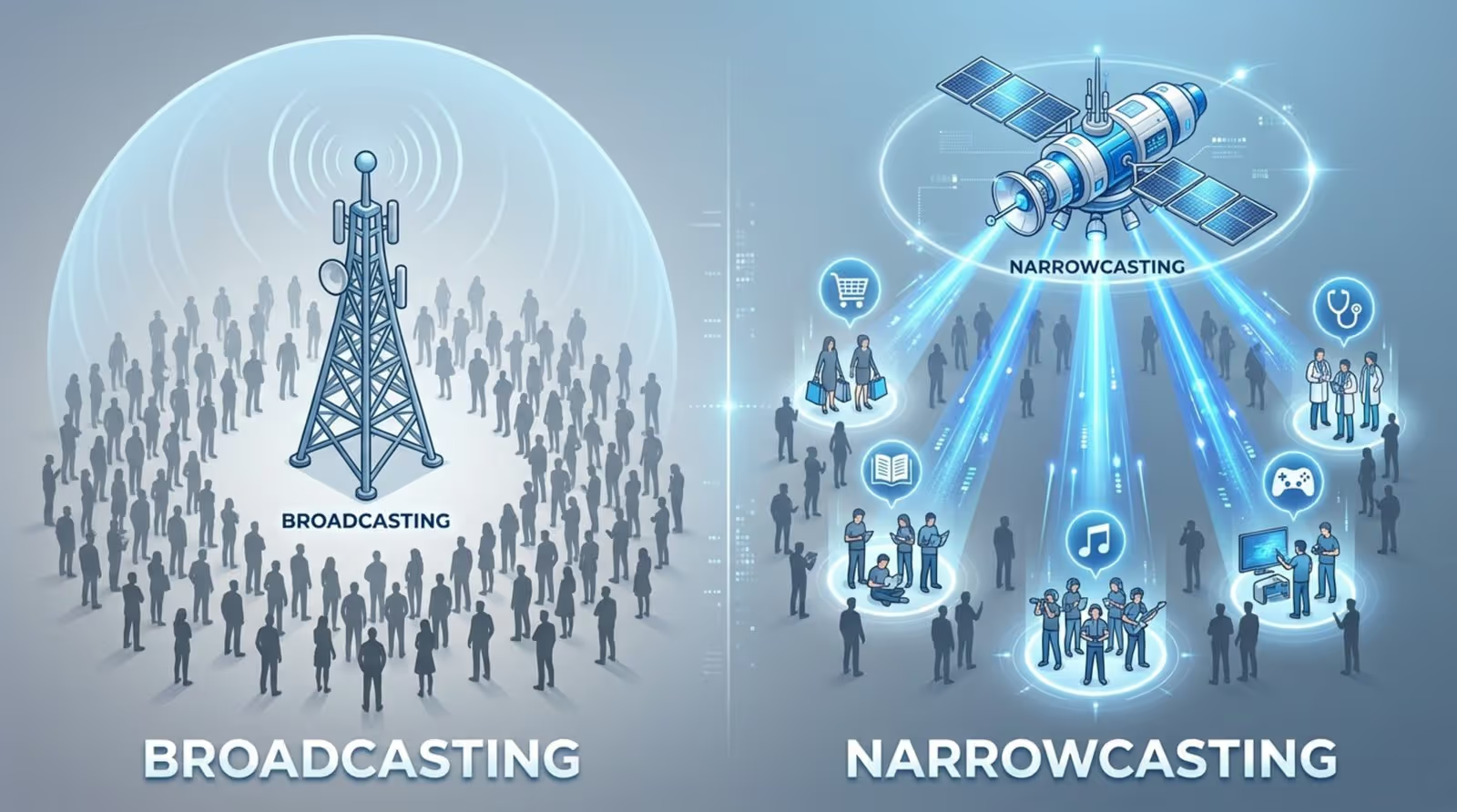
Narrowcasting is a communication strategy that sends very specific content to selected audiences instead of the general public. You can think of it as a finely tuned instrument compared to a loudspeaker. Rather than trying to attract everyone, narrowcasting focuses on specific customer types or audience groups, making the message very relevant and usually more effective. In a time where people are flooded with information, generic messages are often ignored, while targeted communication gets attention and action.
This focused method has grown quickly with modern marketing and digital tools. It used to be a niche idea, but now it is a common choice for companies of all sizes that want to improve their outreach. It relies on understanding your audience very well so you can create messages that feel custom-made, speaking directly to their interests, needs, and even motivations.
How narrowcasting works
Narrowcasting is based on selectivity. It starts with gaining a strong understanding of the target audience, often using data and digital tools to identify age groups, interests, habits, and locations. Once these groups are defined, content is carefully created to talk directly to them. This might involve targeted ads on social media or messages shown on digital screens in a store or other location.
The way content is delivered is just as specific. Broadcasting uses mass channels like national TV or radio. Narrowcasting uses focused channels instead. These can include email campaigns based on purchase history, mobile ads aimed at people in a certain area, or digital signs that show different content depending on location and time of day. The aim is to send the right message to the right person at the right time, increasing impact and reducing waste.
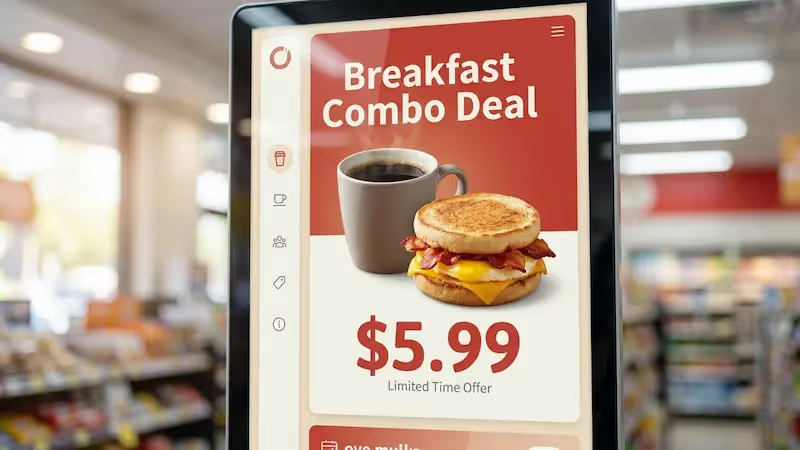
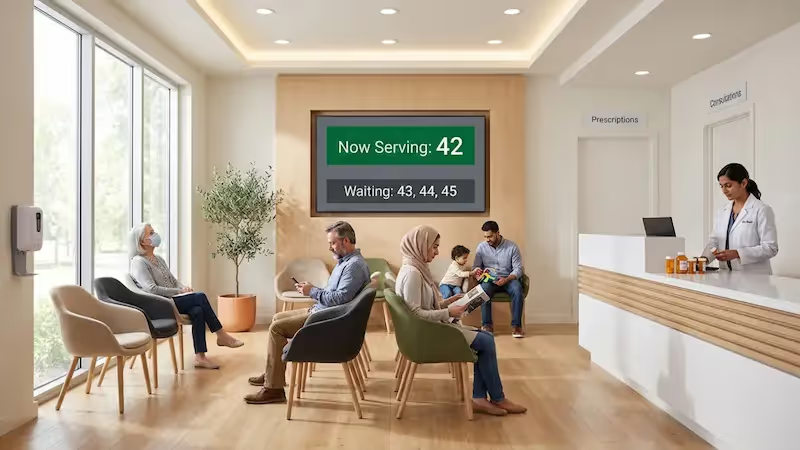
For example, a fast-food restaurant might use narrowcasting with digital menu boards that change offers based on time of day or local stock. A hospital waiting room screen might show updates and information for that specific department. These systems often rely on three main parts: a Content Management System (CMS) to plan and send content, media player devices that connect to screens, and a network of displays in chosen locations.
Key features of narrowcasting
Narrowcasting stands out because of several key features that make its targeting effective.
Audience targeting is central. This goes beyond broad categories like age or gender. It focuses on groups of people who are more likely to care about a product or service. With this type of targeting, businesses can adjust messages to match exact needs and preferences instead of using a generic approach.
Personalized messaging is another major feature. It’s more than just using a person’s name. It means creating content that reflects an individual’s journey, interests, or past actions. Examples include product suggestions in emails based on browsing history, ads that appear after certain searches, or landing pages built for a specific group. This kind of personalization helps build stronger relationships and can improve marketing results and customer loyalty.
A strong data-based approach supports good narrowcasting. By looking at data from social media, website visits, and demographic details, companies can spot patterns that show interest in their offers. This information helps create content and ads that are more likely to connect with people. With better tools and digital media, it has become easier to collect and use data, making narrowcasting a more powerful growth strategy.
Finally, effective use of digital media is key. Social media, email campaigns, and online ads let you target specific people with accuracy. Modern video and display platforms-like LED screens and networked displays-let you send messages to any screen in your system at any time, giving you flexible control over what appears where. You can change content in real time and show dynamic messages that adjust to new situations so that information stays relevant and current.
Narrowcasting vs broadcasting: What sets them apart?
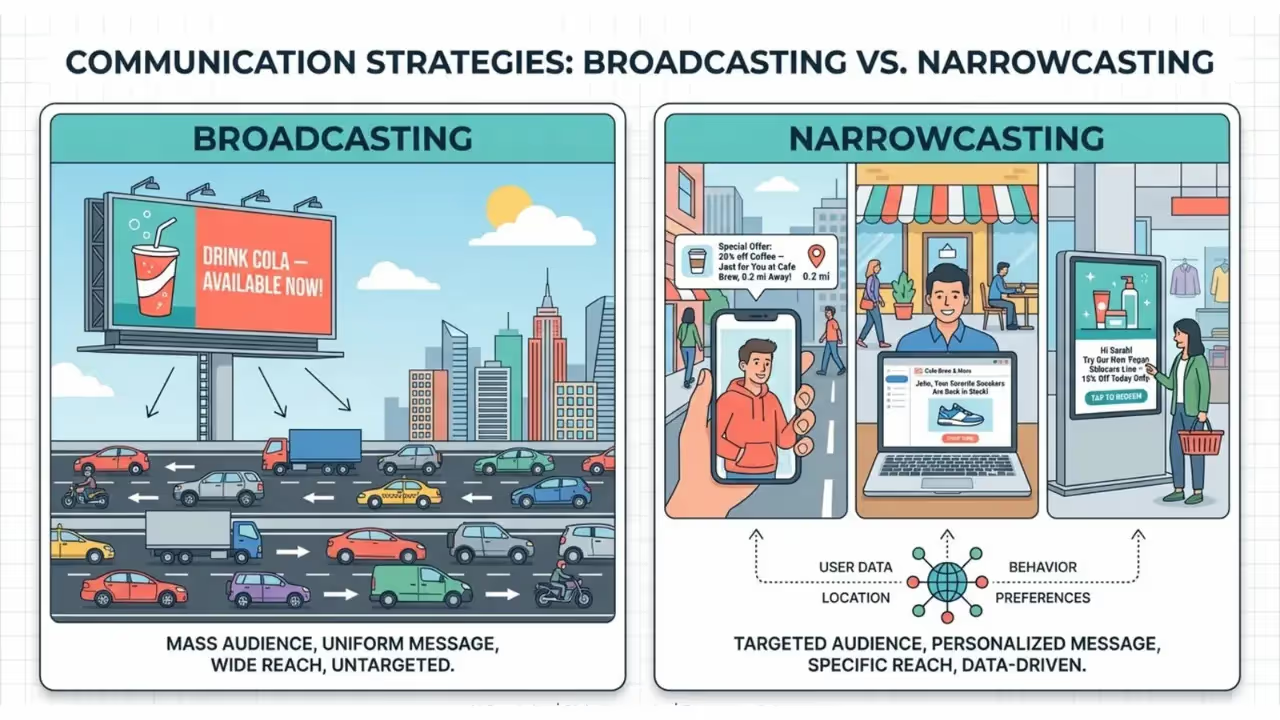
The main difference between narrowcasting and broadcasting is how they reach audiences and deliver messages. Both are outbound methods aimed at attracting customers, but they sit at opposite ends of the communication scale. Broadcasting tries to reach as many people as possible, while narrowcasting carefully selects its audience and values precision over reach.
This difference affects how messages are planned, delivered, and received. Knowing these differences helps you choose the best approach for your goals. Broadcasting has dominated for many years and is closely linked with traditional mass media, but with digital technology, narrowcasting is often the stronger option.
Differences in audience reach
The most obvious difference is audience size. Broadcasting aims at a large, mixed audience. National TV and radio ads, for instance, are meant for the general public, hoping that a small share of that huge group will care enough to act. This method values wide exposure, often giving up deep relevance for any one person.
Narrowcasting focuses on a smaller, defined audience. Its reach is purposely limited to people who are likely to be interested based on things like demographics, interests, behavior, or even location at a certain time. The goal is not to reach everyone, but to reach the “right” people-those most likely to respond and buy. For example, a local store running geo-targeted ads will only reach people within a certain distance instead of a whole country.
Message personalization and targeting
This is where narrowcasting truly stands out. Broadcasting tends to use one general message for everyone. While such messages can be clever and memorable, they rarely hit the exact needs of different people in a broad audience. They need to appeal to many, so they often feel less personal.
Narrowcasting offers a high level of personalization. Messages are carefully adjusted to match the specific needs, interests, and traits of the target group. This allows detailed language, specific offers, or content that directly fits the audience’s current situation. For example, email campaigns can send different product suggestions based on past purchases, or store screens can show ads related to products near where a customer is standing. This type of personalization raises the chances of engagement and sales because people feel the message is meant for them.
Cost implications
Cost is another key difference. Broadcasting, especially on prime-time TV or national radio, can be very expensive. While the cost per viewer might seem low because so many people see the ad, many of those people are not good prospects. That leads to “wasted spend” - money spent on people who are not likely to buy.
Narrowcasting may require upfront spending on data tools and special platforms, but it is usually more cost-efficient where audiences are segmented. By targeting groups with high potential, businesses avoid the scattershot approach and make better use of their budgets. Resources are focused only on people who are more likely to convert, which raises return on investment (ROI). For small businesses or startups with tight budgets, narrowcasting can make marketing more affordable and competitive, avoiding wasted spend on the wrong audience.
Types of narrowcasting channels
Narrowcasting is not a single method but a flexible strategy used across many channels, both digital and offline. Its success often depends on choosing the right place and format to reach people when they are most open to the message. Each channel offers different ways to deliver specific content to defined audiences.
From public screens to personalized messages in your email inbox, narrowcasting is now part of everyday communication. It can be used in many settings, and each setting calls for its own style of content and delivery.
Digital signage and displays
Digital signage is one of the most visible and effective forms of narrowcasting in physical spaces. These are digital screens in shops, offices, airports, schools, and other public areas. They show targeted messages, videos, and sometimes interactive content. The content is dynamic and can be updated instantly, making it easy to adjust to new situations or audience needs.
For instance, a digital menu in a fast-food restaurant that changes offers based on time of day is a classic example. In an airport, screens show live details about flights, gates, and delays, giving travelers important, location-based information. Digital signage works well because it shows very relevant content based on place, time, and audience, which boosts the effect of each message.
Retail and in-store messaging
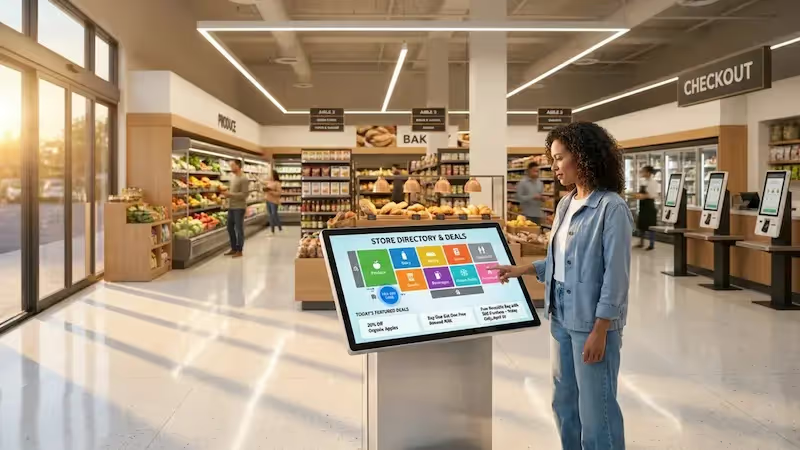
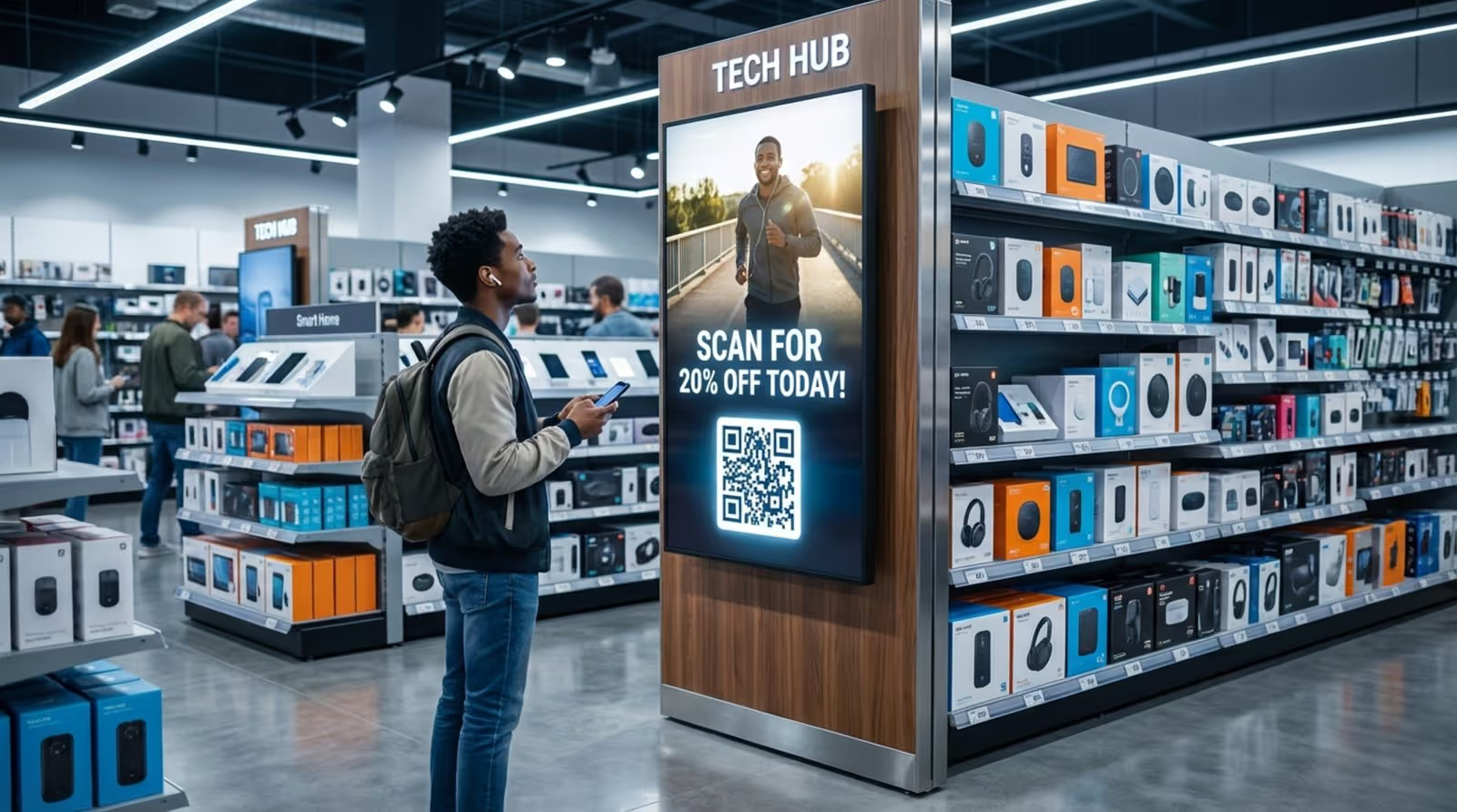
In stores, narrowcasting through in-store messaging is an important way to improve the shopping experience and increase sales. This can be as simple as posters promoting deals or as advanced as digital signs next to certain items. The aim is to cross-sell and promote products to people already in the store and ready to buy.
Digital signs can show different ads and offers depending on time of day, known customer details, or even the weather. Interactive features like QR codes can lead to more product information or special online content. For example, Zara uses digital mirrors and product screens in fitting rooms to suggest accessories based on the outfit a shopper is trying on. This is a smart use of in-store narrowcasting to customize the shopping journey and encourage extra purchases.
Corporate communication
Narrowcasting is very useful for internal communication in companies. It helps keep employees engaged and keeps messages consistent across locations. Screens in break rooms, near lifts, or in reception areas can show live company news, key performance indicators (KPIs), meeting schedules, or shout-outs to employees.
This targeted messaging means staff see updates that matter to their team, site, or current company goals. Large businesses like Siemens use internal narrowcasting to share HR news, milestones, and live dashboards across offices, improving staff engagement and alignment. It supports company culture and keeps employees informed and motivated.
Healthcare and educational environments
In healthcare, narrowcasting helps inform and calm patients. Screens in waiting areas can show wait times, health advice, patient calls, or calming videos. Messages can be customized for each department, such as children’s care, imaging, or outpatient services, giving relevant information and helping reduce stress.
Schools and universities also use narrowcasting to communicate with students and staff. Campus screens display exam times, event updates, emergency alerts, and registration deadlines. They may also show news, weather, and announcements. The University of Central Florida, for example, installed over 150 digital screens and saw large increases in student survey responses and event attendance.
Social media and targeted ads
Social media advertising becomes narrowcasting when used with precise targeting. Instead of posting broad content, marketers use detailed data on age, interests, and behavior from platforms like Facebook and Instagram to show very specific ads. This helps focus spending only on people most likely to care.
These platforms support very fine targeting, including age, location, job, education, interests, and past online actions. Results data from campaigns then helps improve future targeting. This shifts social media from a wide broadcast tool into a strong narrowcasting channel that delivers personal content directly into user feeds.
Email and direct mail campaigns
Email marketing is another strong narrowcasting tool because it lets businesses control who gets what, and when. By segmenting email lists by recent purchases, interests, or actions (like downloads or page visits), companies can send very personal messages. Abandoned cart emails are a good example-they go only to people who started but did not finish a purchase.
Direct mail can also be narrowcasting when it uses data to decide which homes or people receive it. Brands can target certain neighborhoods, income groups, or existing customer lists with specific offers or information. When powered by data and segmentation, both email and direct mail can deliver content that feels highly relevant to each person.
Mobile and geo-targeted advertising
Mobile marketing with location-based targeting is one of the more advanced uses of narrowcasting. It reaches people based on where they are, which is very useful for local businesses or time-limited offers. A coffee shop, for example, could send morning offers to people passing nearby.
Mobile narrowcasting can also include SMS campaigns, ads inside apps, and paid search ads with features like click-to-call. For digital signage, location-based triggers and live location data can change what appears on a screen according to where the viewers are. This creates very responsive messages that match the user’s current surroundings.
Core features of narrowcasting
Narrowcasting is built on a careful, focused style of communication. A few core features make it different from broad marketing approaches. These elements work together so that messages are not only delivered but also feel relevant and meaningful to the people who see them.
These features form the base of successful narrowcasting campaigns, allowing for precision, personalization, and flexibility in how you communicate with your audience.
Audience segmentation and targeting
The central feature of narrowcasting is detailed audience segmentation and targeting. This means breaking a large, mixed market into smaller groups based on shared traits, interests, habits, or needs. Instead of trying to appeal to everyone, narrowcasting clearly defines these groups.
Once the groups are set, messages and ads are directed to them specifically. This lets businesses focus time and money on the people most likely to care about their offers. For example, instead of pushing winter coats across a whole country, narrowcasting would focus on areas with cold weather or snow. This makes content not only more visible but also much more relevant, cutting down on wasted views and raising engagement.
Personalized and dynamic content delivery
Narrowcasting relies on content that feels personal and can change easily. It moves away from simple templates and instead builds messages that match someone’s exact situation, preferences, or past actions. Personalized content might be product recommendations based on earlier purchases or ads linked to recent searches.
Content used in narrowcasting is often dynamic, meaning it can update in real time. This is common with digital signage, where screens can instantly show new daily specials, urgent alerts, or local offers that change by time of day or event. This flexibility keeps content fresh and relevant, making the experience more engaging for viewers.
Data-driven messaging strategies
Narrowcasting is much stronger when it uses data to guide messages. This involves collecting, studying, and using data points to shape and improve communication. Data might come from social platforms, website analytics, CRM systems, or demographic databases.
By learning what certain groups like, need, and respond to, companies can create messages that have a higher chance of success. This data helps pre-qualify leads so marketing is focused on people with real interest. The result is higher engagement, better conversion rates, and smarter use of marketing budgets.
Real-time updates and automation
A key feature of modern narrowcasting is the ability to update and automate content in real time. In a fast-moving environment, messages need to be current. Systems tied to digital signage and advanced CMS tools can change content immediately across many screens or channels. This supports timely offers, alerts, and schedule changes.
Automation adds another layer by using rules and triggers to send messages automatically when certain conditions occur. For example, if someone leaves items in an online cart, an email can be sent without manual action. This saves time, reduces manual work, and keeps communication timely and relevant. Together, real-time updates and automation make narrowcasting quick, flexible, and powerful.
Key benefits of narrowcasting for businesses
With so much information competing for attention, businesses need ways to stand out and connect meaningfully with their audience. Narrowcasting provides a strong set of benefits that help them do exactly that. By moving from broad messages to precise communication, companies can greatly improve how they market and how they run.
These benefits go beyond ads, affecting customer relationships, how budgets are used, and how a brand is seen overall.
Hyper-targeted communication
One major benefit of narrowcasting is its ability to send very specific messages. Content is shaped to match the exact audience in a particular place at a particular time. Broadcasting tries to appeal broadly, while narrowcasting speaks directly to defined groups and their real situations.
This level of relevance raises attention and response. For example, a store can show deals for products in a specific aisle only to people browsing there. A hotel can greet guests by name on lobby screens and share information about services that match their booking. These focused messages feel more meaningful and make customers feel recognized.
Increased engagement and conversion rates
Because narrowcasting delivers personal and timely content, people are more likely to pay attention and take action. When messages clearly fit someone’s needs or interests, they stand out in a cluttered environment.
Targeted communication focuses on people who are already likely to care, which effectively pre-qualifies them. This lowers friction in the customer journey and leads to more purchases, sign-ups, or other actions you want. For instance, Walgreens reported a 33% increase in promoted product sales in areas using narrowcasting, showing how targeted content can directly impact results.

Efficient use of marketing resources
Narrowcasting helps use marketing budgets more wisely compared with mass messaging. Instead of paying to reach many people who do not fit your ideal customer, you concentrate on high-potential groups. This reduces wasted spend and raises the value of each dollar.
This is especially helpful for smaller companies and those with tighter budgets. By targeting accurately, they can compete with bigger players. Better ROI also frees up money and time for other key parts of the business.
Enhanced customer experience and loyalty
Customers today expect messages and offers to match their interests. Narrowcasting supports this by providing content that feels personal and useful. When a business consistently offers relevant information, customers feel understood.
This sense of being known leads to higher satisfaction and loyalty. Loyal customers come back more often, spend more, and recommend the brand to others. Over time, this builds a stronger brand image as one that listens and cares about individual needs.
Brand consistency across locations
For companies with many sites, narrowcasting is a helpful way to keep branding consistent while still allowing local differences. A global brand can keep the same core messages and visual style everywhere, while still letting each branch run local offers, use local languages, or show regional information.
Digital signage networks are a strong example. A central CMS can control the look and main content, while local managers adjust certain parts. This mix of shared identity and local relevance builds a unified but flexible brand presence.
Improved data collection and insights
Narrowcasting relies on data and also generates a lot of useful new data. Digital tools, especially for signage, often include strong analytics and reports. These can measure impressions, how long people watch, interactions like QR code scans, and more.
When this information is combined with CRM or POS data, businesses can get a clearer view of who their customers are and what they respond to. This feedback loop helps refine messages and campaigns over time, making them more effective and improving ROI.
Best practices for successful narrowcasting
To use narrowcasting well, businesses need more than a basic idea of what it is. They must plan carefully and follow clear steps so that targeted messages actually perform well. Without a solid approach, even the best tools can bring weak results.
From thoughtful planning to ongoing review, these practices help turn broad goals into specific, effective communication with the right audiences.
Defining clear target audiences and objectives
Every strong narrowcasting campaign starts with a clear picture of who you want to reach and what you want to achieve. Before creating content, businesses need to define detailed target audiences. This means going beyond age and gender to include attitudes, interests, behaviors, problems, and favorite platforms. The more detailed the personas, the better the content will fit.
Clear, measurable goals are just as important. You might want to grow sales of a certain product in one store, raise employee engagement, or increase student awareness of campus events. Each goal affects the type of content, the channels used, and the success measures you track. Without this clarity, campaigns may be targeted in theory but still aimless in practice.
Selecting appropriate channels for your message
Once you know who you are targeting and what you want to achieve, you must choose the right channels. The success of a message depends a lot on where people see it. Messages for commuters might fit best on mobile ads with geo-targeting or screens in transport hubs, while HR news might be more effective on internal digital screens or the company intranet.
Channel choice should reflect where your audience spends their time, how they prefer to consume information, and in what situation they will receive it. For example, a detailed how-to video makes more sense in an email or member area than on a busy store screen. A short discount offer, on the other hand, might work best on in-store displays. Matching message and medium is key to making narrowcasting effective.
Crafting relevant, personalized content
After choosing audiences and channels, the next step is to create content that is specific and personal. A targeted audience still won’t respond to bland, generic content. The message should speak directly to their situation, interests, or problems, offer useful solutions, or share information they are actively looking for.
The content format will differ by channel. Social ads need eye-catching visuals and short, punchy text. Search ads depend on strong headlines and clear offers. In-store displays often work best with simple, action-led messages. The aim is always the same: make the viewer feel like the message was crafted for them. Content should also be refreshed regularly to match changing goals, seasons, and events, preventing boredom and message fatigue.
Measuring and optimizing campaign performance
Ongoing measurement and improvement are central to narrowcasting success. Because narrowcasting is data-driven, it gives many chances to track performance. Businesses should set up analytics to follow metrics like impressions, view time, interactions, click-through rates, and final conversions.
Combining this data with CRM or POS information gives deeper insight into what works and what doesn’t. By reviewing results, companies can find strong approaches, spot weak points, and adjust their content or targeting. This regular cycle of testing and refining helps narrowcasting become more accurate and cost-effective over time.
Common challenges and limitations in narrowcasting
While narrowcasting has many benefits, it also comes with certain difficulties and risks. Like any advanced strategy, it can be tricky to roll out and manage. Knowing these challenges in advance helps you build a realistic plan and avoid common problems.
Dealing with these issues often involves good planning, solid technology, and care around legal and ethical topics.
Limited audience reach
A built-in limitation of narrowcasting is its smaller reach. This is good for targeting, but less helpful if you want broad brand awareness. By aiming at defined groups, you accept that you will not reach the general public.
This is not always bad; many goals are better served by depth than by breadth. But if your main aim is to introduce a new brand to many people, you may need to combine narrowcasting with some broadcasting. Balancing reach and precision is a key choice to make.
Complexity in setup and operation
Setting up an effective narrowcasting system can be quite complex, especially for digital signage that links to multiple data sources and uses dynamic content. Building the needed setup-screens on-site, media players, and a strong CMS-can require a large upfront budget.
There is also the effort of connecting systems like CRM, analytics platforms, and automation tools. This may call for skilled staff or outside support. Once the system is live, it needs ongoing content creation, scheduling, and monitoring. For small teams or limited budgets, this can be a real challenge.
Data privacy and security concerns
Narrowcasting depends heavily on collecting and using customer data. This creates privacy and security issues. With stricter laws like GDPR and CCPA and growing public concern over data use, businesses must carefully manage how they gather, store, and use information.
Some customers are fairly relaxed about sharing data; others are very cautious. Companies must clearly explain what they collect, gain proper consent, and put strong security measures in place. Poor data practices or breaches can harm trust, damage a brand, and lead to fines.
Avoiding oversaturation of targeted audiences
Another challenge is sending too many messages to a narrow audience. Even highly relevant content can become annoying if people see it too often. When users feel bombarded, they may ignore messages or even view the brand negatively.
To avoid this, marketers need to watch frequency levels and vary content. That means having enough message types and creative options, and tracking audience reactions so they can adjust before fatigue sets in.
Real-world narrowcasting examples
To see how narrowcasting works in practice, it helps to look at real examples from different sectors. These cases show how targeted messages can increase sales, improve internal communication, or boost engagement in education.
They highlight how focused messaging can deliver clear, measurable improvements.
Case study: Retail digital signage
Walgreens, a major pharmacy chain, uses narrowcasting with digital signage in its stores. As reported by CNN, Walgreens placed digital displays near checkouts and pharmacy counters to promote offers and products relevant to those areas. The content encouraged impulse buys and highlighted health items right where people were making decisions.
A Nielsen study found a 33% increase in sales of promoted products where these displays were used. This shows how location-specific digital signage can strongly influence buying choices and improve the shopping experience at key points in the store.
Case study: Corporate communications
Siemens, a global technology company, uses narrowcasting for internal communication in its European offices. To keep a large, spread-out workforce informed, Siemens installed digital screens to share HR updates, company milestones, and live KPI dashboards. These screens in common areas show timely, job-relevant information.
According to internal reports, Siemens saw a 23% improvement in employee engagement metrics. By sharing clear, consistent messages that still fit local needs, Siemens built a more informed and connected workforce and strengthened its company culture.
Case study: Educational campus notifications
The University of Central Florida (UCF) is another strong example. UCF installed over 150 digital screens on its campus to communicate with students and staff. These displays show course registration dates, emergency notices, and event promotions, with content updated regularly.
As a result, student survey response rates increased by 42%, and attendance at campus events rose by 28%. This shows how targeted digital signage can cut through daily noise on a busy campus and help important messages reach the people who need them.
Frequently asked questions about narrowcasting
As narrowcasting becomes more common, many organizations have questions about how it works, what it costs, and where it fits best. The following questions and answers address these points and help explain how narrowcasting can function in real business settings.
Is narrowcasting expensive to implement?
Narrowcasting can involve upfront costs, especially if you need physical screens, media players, or advanced software. However, over time it is often more cost-effective than traditional broadcasting.
Because narrowcasting targets specific groups, less money is wasted on people who are unlikely to respond. This makes budgets work harder and often raises ROI. Also, cloud-based CMS tools and low-cost hardware like Fire TV Stick or Raspberry Pi have made narrowcasting more affordable. Digital updates also remove the need for constant printing and manual distribution, lowering ongoing costs.
Which industries benefit most from narrowcasting?
Many industries can gain from narrowcasting, especially those that need to share specific information with defined groups.
IndustryCommon Uses of NarrowcastingRetail & HospitalityIn-store promotions, digital menu boards, local offers, welcome messages, upsellingHealthcareWait-time updates, health tips, department info, patient instructionsEducationCampus alerts, timetables, event promotion, administrative remindersCorporateInternal news, KPIs, HR updates, meeting schedules, recognitionTransportationFlight/train times, gate/track changes, safety messages, local offers for travelers
Any field where messages work better when they are adjusted to fit location, time, and audience can benefit greatly from narrowcasting.
How does narrowcasting improve ROI?
Narrowcasting raises ROI by making communication more focused and effective. It does this in several ways:
- Less wasted budget: Money is not spent showing messages to large groups who are unlikely to care. Instead, it targets people with a higher chance of responding.
- Higher conversion rates: Because messages are relevant and personal, people are more likely to act, whether that means buying, signing up, or visiting a site.
- Stronger loyalty: Personalized communication helps build relationships. Loyal customers buy again and recommend you to others, which grows revenue over time.
- Lower operating costs: Digital updates cut printing and shipping costs that come with posters, brochures, and other physical materials. Automation also reduces manual work.
- Better optimization: Analytics from narrowcasting platforms show what content and audiences perform best. This data helps refine campaigns so each new effort performs better than the last.
Final thoughts: Is narrowcasting right for you?
Today, organizations must decide whether to speak to everyone at once or focus on the people who matter most to their goals. Narrowcasting offers a focused path built on precision, personalization, and relevance. It gives you tools to speak to individuals and groups in a more direct and meaningful way.
Whether you are a small company making careful use of every marketing dollar, a large business trying to unite staff across many sites, or an educational or public institution wanting to reach a defined community, narrowcasting can be a strong fit. By using data, flexible digital platforms, and smart planning, you can move from broad noise to clear, targeted messages that connect, build trust, and support long-term success.