Table of Content
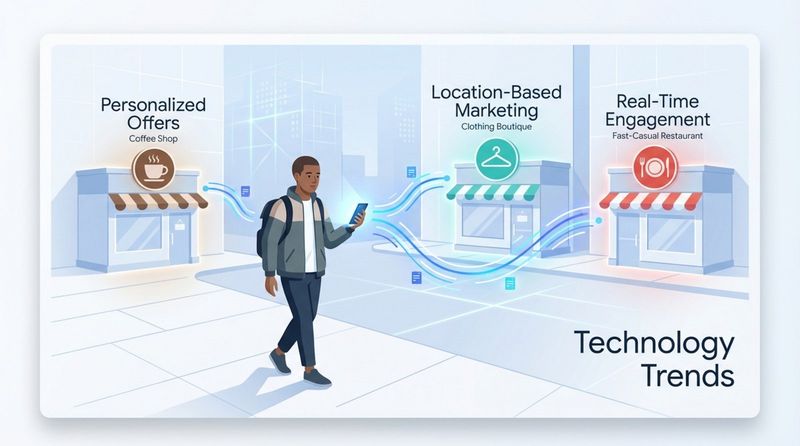
How can businesses connect online data with real-world visits to improve the customer journey? Location-based marketing uses a person’s physical position to deliver relevant content and offers exactly when they are most likely to act.
As we move through 2026, general advertising is becoming less effective against digital noise. Customers expect messaging that helps them rather than interrupts them. Location-based strategies meet this expectation by offering utility-like a coupon for a store you are standing in front of or directions inside a large venue. This approach shifts marketing from broad awareness to "right place, right time" precision, creating a smoother and more intelligent experience.
What is location-based marketing?
How does location-based marketing differ from traditional marketing?
Traditional marketing often relies on a "spray and pray" method, broadcasting the same message to a wide audience via billboards or TV ads. While this builds general awareness, it lacks the focus needed to trigger immediate action. These campaigns are static and often disconnected from what the customer is actually doing at that moment.
Location-based marketing is responsive. It uses real-time data-such as GPS, Wi-Fi, or Bluetooth-to understand where a person is. Instead of showing a winter coat ad to someone on a sunny beach, a location-aware campaign targets users based on their immediate context. It shifts the focus from "who you are" to "where you are and what you need right now."
The evolution from static advertising to personalized location targeting
This strategy began with basic zip code targeting and IP-based localization. However, the widespread adoption of smartphones changed the landscape, allowing marketers to follow the customer journey outside of the home or office. This capability turned simple impressions into actionable moments.

Today, precision goes beyond proximity. Modern platforms combine location data with behavioral history. For instance, a retailer might know you are near their store and that you recently viewed a specific product online. By linking these insights, they can send a notification inviting you to see that product in person, bridging the gap between digital browsing and physical buying.
Why location-based marketing matters for customer experience
Customer experience (CX) relies on friction-free interactions. Location-based marketing supports this by anticipating needs. When an app suggests a parking spot as a driver enters a crowded zone, it solves a problem before the user even asks. This builds loyalty by making the brand feel helpful rather than intrusive.
It also respects the customer's time. Attention is a limited resource. By filtering out irrelevant offers and focusing on what is accessible nearby, you show respect for the user's daily reality. This relevance builds a stronger connection, turning transactions into ongoing relationships.
Types of location-based marketing strategies
Geotargeting
How geotargeting works
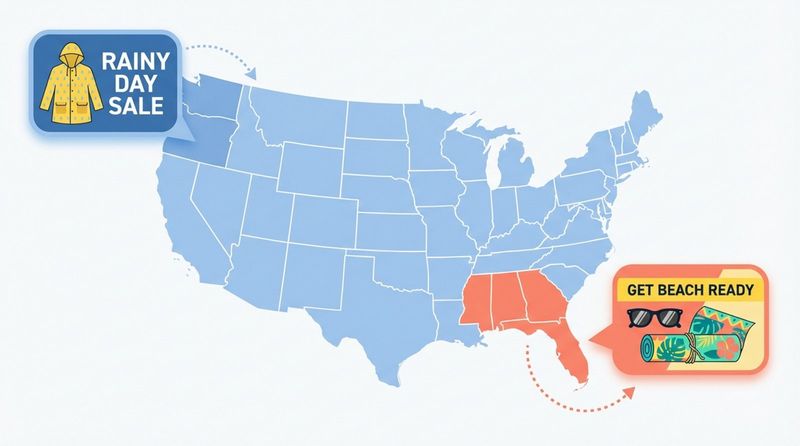
Geotargeting delivers content to users based on a broader geographic area, such as a city, state, or zip code. It typically relies on IP addresses or device IDs. While less precise than other methods, it is effective for regional campaigns.
For example, a clothing chain can promote rain gear to customers in Seattle while showing swimwear to those in Miami. The system detects the general location and serves the appropriate ad, reducing wasted spend on irrelevant audiences.
Benefits of geotargeting
Geotargeting allows national brands to adopt a local voice. You can reference local landmarks or events, making a large company feel more accessible. It also helps budget efficiency; businesses can restrict ad spend to areas where they actually have a physical presence, ensuring impressions are served to potential customers.
Geofencing
How geofencing technology functions
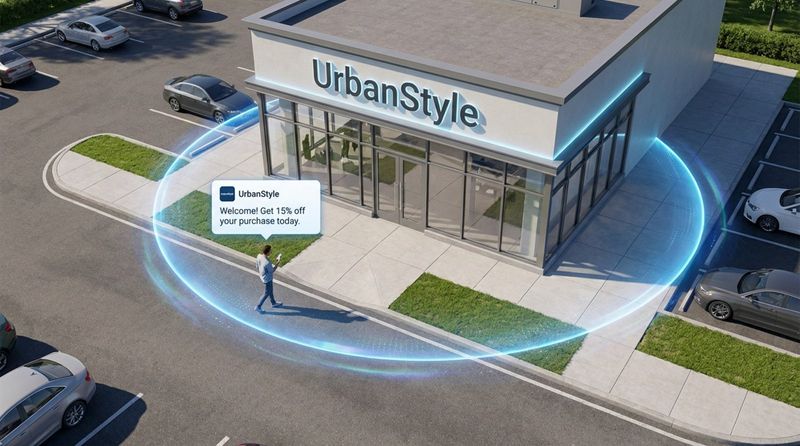
Geofencing creates a virtual perimeter around a real-world location using GPS or RFID. When a device enters or exits this zone, it triggers a pre-set action, such as a push notification or a targeted ad.
This technology is highly accurate and supports "moment marketing." A geofence can cover a specific neighborhood or just the area immediately surrounding a store. It captures attention exactly when the user is close enough to visit, acting like a digital greeter.
Advantages of geofencing campaigns
Geofencing effectively drives foot traffic. If a customer is a block away, a timely "limited-time offer" can influence their path. Furthermore, it provides data on offline behavior, such as how many people entered the geofence and subsequently visited the store. This helps attribute digital spend to physical results.
Beacon and proximity marketing
Beacon technology explained
Beacons are small, low-energy Bluetooth (BLE) devices that communicate with nearby smartphones. unlike geofencing, which works well outdoors, beacons are designed for precise indoor location. They can pinpoint a user within a few feet, making them ideal for retail aisles, museums, or stadiums.
When a customer approaches a specific section, the beacon can trigger product information or offers relevant to that exact aisle. This turns a standard shopping trip into an interactive environment.

Benefits and limitations of proximity marketing
Proximity marketing enables hyper-local experiences, such as indoor navigation or aisle-specific coupons. However, it requires users to have Bluetooth enabled and often requires them to opt-in via an app. While the audience size may be smaller, the engagement level is typically higher because these users have actively consented to receive information.
Geo-conquesting and hyperlocal campaigns
How geo-conquesting attracts competitors’ customers
Geo-conquesting involves placing a geofence around a competitor’s location. The goal is to reach customers when they are considering an alternative. For instance, a car dealership might target users visiting a rival lot with an offer for better financing.
This tactic interrupts the decision-making process at a critical moment. It presents a compelling alternative right when the customer is ready to buy, making it a powerful tool in competitive industries like QSR (Quick Service Restaurants) and retail.
Technologies and tools enabling location-based marketing
Mobile applications and location services
Mobile apps are the primary engine for these strategies. Smartphones provide the GPS and sensor data needed to trigger campaigns. Without an app, businesses are often limited to less precise browser-based tracking. Native apps allow for background location services, enabling proactive notifications even when the phone is in a pocket.
Smart digital signage and interactive displays
Digital signage has evolved into an intelligent, location-aware communication channel. Screens can now adapt content based on data triggers or audience sensors. To manage this effectively, Look Digital Signage offers a robust solution for businesses of all sizes.
With Look CMS, you can centrally manage content across one or thousands of screens. Smart Scheduling allows you to automate playlists based on time of day or specific dates, ensuring messages are always relevant to the current traffic. For more dynamic setups, Integrations allow you to trigger content based on external data feeds, while Offline Playback ensures your screens keep running reliably even if the internet connection drops.
Beacon deployment and IoT devices
The Internet of Things (IoT) extends location marketing beyond phones. Connected devices and smart shelves contribute to a responsive environment. Large venues use beacon networks to generate heat maps of crowd movement, allowing operators to direct visitors to less crowded areas in real time.
Integrating location data with CRM and analytics platforms
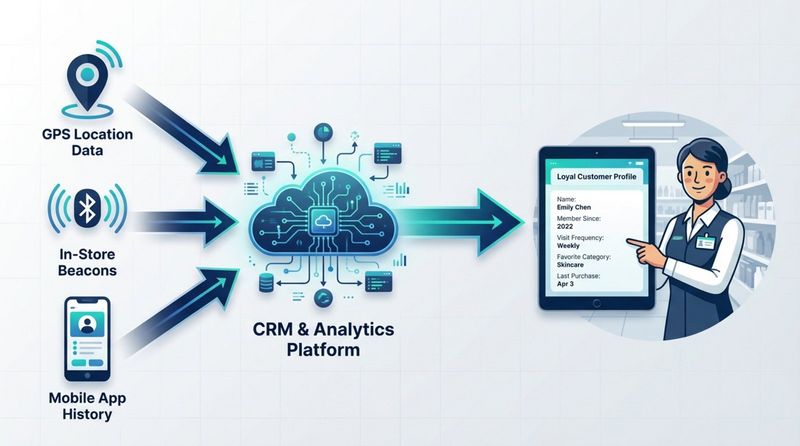
Location data becomes most powerful when connected to a Customer Relationship Management (CRM) system. While location indicates where a person is, the CRM confirms who they are. Combining these insights allows for contextual profiles-enabling staff to offer personalized service to loyal customers the moment they walk through the door.
How location-based marketing improves customer experience
Delivering hyper-personalized messaging in real time
True personalization fits the message to the moment. A ride-share app offering a discount during a sudden downpour is helpful because it addresses an immediate need. This relevance makes the brand feel like a supportive partner rather than a distraction.
Driving immediate foot traffic and measuring in-store impact
Connecting digital ads to offline visits has historically been difficult. Location tracking bridges this gap. By monitoring the path from a mobile alert to a store visit, businesses can measure the real-world impact of their campaigns. This data allows physical stores to use flash sales to boost traffic during slow periods.
Enhancing relevance and engagement across channels
Location data supports a consistent omnichannel experience. A customer might research online, receive a location-based reminder near the store, and complete the purchase in person. This connected journey ensures the brand remains present and helpful without becoming repetitive.
Mapping the customer journey with location data
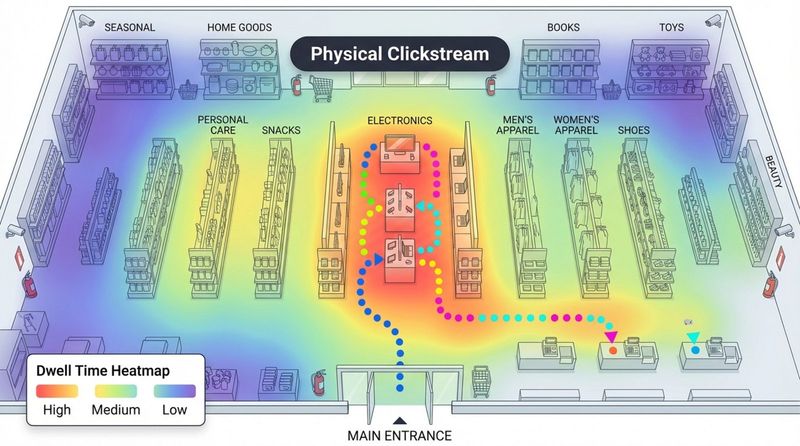
Understanding physical movement is as valuable as analyzing web traffic. Location data reveals "physical clickstreams"-identifying which store zones attract the most attention. Businesses can use these patterns to optimize layouts, improve staff allocation, and place key products in high-traffic areas.
Benefits and business advantages of location-based marketing
Increasing conversion rates and ROI
Proximity often signals intent. Focusing marketing efforts on people who are already nearby typically leads to higher conversion rates compared to broad digital campaigns. This efficiency helps businesses optimize their budget, targeting only those with a high likelihood of visiting.
Creating a competitive edge in local markets
In competitive areas, visibility is key. Location-based tactics allow you to reach customers before your competitors do. For service businesses like restaurants, a timely notification to a nearby pedestrian can be the deciding factor in where they choose to eat.
Aligning campaigns with customer intent and context
Location provides context. A traveler at an airport has different needs than a shopper in a mall. By matching the message to the environment, brands reduce the guesswork regarding customer intent. This alignment transforms ads into useful service points.
Facilitating data-driven decision making
These campaigns generate actionable insights. You can track peak times, effective geofence perimeters, and high-performing offers. This data supports smarter decisions regarding inventory, staffing, and future marketing strategies, moving operations away from hunches and toward evidence-based planning.
How to launch a successful location-based marketing campaign
Defining campaign objectives and target audiences
Clear goals are essential. Decide if you want to drive immediate sales, increase app downloads, or build local awareness. Your objective dictates the technology; geofencing suits immediate foot traffic, while geotargeting works well for broader awareness. Refine your audience by combining location with demographic data to ensure you are reaching the right people.
Selecting the right technology for your business
Choose tools that fit your scale. A single location might only need basic social media geofencing, while a large campus requires a network of beacons and a dedicated app. If you are deploying digital screens to support your location strategy, Look Digital Signage provides a scalable platform that grows with you. The Look App player is free to use on compatible devices, making it easy to test a pilot program without a heavy hardware investment.
Personalizing content for maximum impact
Context gets their attention; content keeps it. Ensure your message offers tangible value, such as exclusive access or a discount. Dynamic content that adapts to the user's profile-like highlighting coffee to a coffee lover-performs significantly better than generic blasts.
Measuring, optimizing, and scaling campaigns
Track metrics beyond clicks. Monitor "Walk-in Rate" and "Cost Per Visit" to understand profitability. Use these insights to refine your geofences or adjust timing. Once a strategy proves effective in one location, use those benchmarks to scale across your network.
Notable examples and industry use cases
Retail and mall marketing innovations
Malls utilize location apps to offer indoor navigation, guiding shoppers to specific stores. Some incorporate gamification, rewarding visitors for exploring different sections. Retailers also use beacons to push product tutorials to phones when shoppers linger in specific aisles, adding value when staff are unavailable.
Restaurants, cafes, and real-time customer engagement
QSRs and cafes often use geo-conquesting to target customers near competitor locations with aggressive offers. Smaller cafes use geofencing to send "happy hour" alerts to nearby offices, effectively driving traffic during mid-afternoon slumps.

Travel, tourism, and smart city applications
Airports use location data to push boarding passes as travelers arrive. Hotels use beacons to enable keyless room entry via mobile. Cities are adopting these tools to guide tourists to historical sites, enriching the visitor experience with context-aware information.
Events, sports, and entertainment venue experience
Stadiums use beacons to offer seat upgrades to attendees already inside the venue. Concert halls manage crowd flow by notifying fans of shorter lines at different concession stands, improving the experience while increasing revenue.
Privacy, compliance, and ethical challenges
Navigating data privacy laws: GDPR and CCPA
Location data is sensitive, and regulations like GDPR and CCPA enforce strict rules on its collection. Businesses must obtain clear, informed consent. Transparency is non-negotiable; users need to know exactly what data is collected and why.
Balancing personalization with user consent
To avoid feeling intrusive, brands must be open about their data usage. Explicit opt-in mechanisms and easy opt-out options are standard requirements. When users feel in control, they are more likely to trust the brand and share their data.
Best practices for ethical data use in location marketing
Collect only the data necessary for the campaign. If a city-wide target suffices, do not track precise movements. Offer a clear value exchange: if you ask for location, provide a relevant benefit, such as a discount or a time-saving feature, in return.
Trends shaping the future of location-based marketing
AI-powered predictive location modeling
AI is shifting strategies from reactive to predictive. By analyzing past patterns, algorithms can anticipate where a user is likely to go next, allowing brands to prepare offers in advance. This foresight enables a higher level of convenience and personalization.

Real-time campaign orchestration with 5G
5G networks reduce latency, enabling near-instant interactions. This speed allows for split-second triggers, such as digital signage changing content the moment a recognized customer walks by. It also supports richer media, like augmented reality (AR), tied to physical locations.
Combining location data with sentiment and contextual signals
Future campaigns will layer location with other data points like weather, local news, and social sentiment. This allows for nuanced messaging that matches both the physical setting and the current mood or context of the user.
Conversational and dynamic content triggered by location
Voice assistants and chatbots are becoming location-aware. In-store assistants will soon guide customers to specific products based on real-time inventory and location data. Physical environments will increasingly adapt to the individual, much like a personalized website.
Frequently asked questions about location-based marketing
Can small businesses benefit from location-based campaigns?
Yes. Small businesses can effectively use geotargeting on major ad platforms to focus spending on their immediate neighborhood. This allows them to compete with larger chains by owning their local area. Local SEO is also a critical, cost-effective component of this strategy.
How can businesses balance user privacy and personalization?
Transparency is key. clearly explain the benefit of sharing location data-such as receiving better offers or navigation help. When the value is clear and the user feels in control, the perception shifts from "tracking" to "service."
What metrics should be tracked to assess campaign performance?
Beyond standard engagement metrics, track "Store Visit Rate," "Dwell Time," and "Cost Per Visit." These metrics connect your digital spend to actual physical outcomes, providing a clear picture of ROI.
How does location-based marketing integrate with other digital strategies?
Location data should feed into your wider marketing ecosystem, including CRM and email platforms. This integration helps build complete customer profiles and ensures that messaging across email, social media, and physical channels is consistent and relevant.
Key takeaways for the future of customer experience
The convergence of data, connectivity, and physical space is making "place" a central element of customer experience. As online and offline worlds merge, businesses must ensure their physical spaces are as responsive as their digital ones.
For brands, success lies in earning the right to interact. In an era where competitors are just a notification away, loyalty is built on utility and relevance. By acting as a helpful guide-knowing when to engage and when to step back-companies can create meaningful connections. Using reliable tools like Look Digital Signage to manage your physical touchpoints ensures you are ready to meet these evolving expectations efficiently.