Table of Content
How can medical centers guide patients and visitors through complex facilities without adding stress or overwhelming staff? Medical center wayfinding with digital signage offers a practical answer by replacing confusing paper maps with interactive screens, clear directions, and real-time updates that help everyone reach their destination easily.
What Is Medical Center Wayfinding With Digital Signage?
Medical center wayfinding includes the tools and methods that help people move through a healthcare facility. In the past, this meant relying on printed signs and asking front-desk staff for directions. Digital signage software updates this process, turning wayfinding into a flexible, easy-to-manage system. It connects screens, directories, and clear plans to make navigating large hospitals much simpler.
These systems do a lot more than point arrows down a hallway. By displaying clear, easily readable information, digital wayfinding lowers the anxiety that often comes with visiting a medical setting. Patients and visitors can locate departments, clinics, and amenities faster, which improves their overall experience from the moment they walk through the doors.
How Does Digital Signage Transform Navigation in Hospitals?
Digital signage transforms hospital navigation because it is easy to update. Paper signs quickly become outdated when a hallway closes for maintenance or a clinic temporarily moves. With a cloud-based digital signage platform, you can update directions from anywhere in minutes, ensuring your screens always show the correct paths.
Digital displays also offer interactive options that printed signs simply cannot match. You can build interactive scenarios where users tap a screen to get step-by-step directions or view maps that let them switch between floors. Adding QR codes to your screens allows visitors to scan a route and take the directions with them on their phones. This keeps foot traffic moving smoothly and reduces how often busy nurses and doctors are stopped for directions.
Why Does Effective Wayfinding Matter in Medical Centers?
In healthcare, clear communication matters, and wayfinding is a big part of that. Medical campuses are often large, featuring multiple wings and connected buildings. For patients who are already worried about an appointment, getting lost only adds to their stress. Clear, easy-to-follow directions are essential to a supportive patient experience.
Good wayfinding also impacts how efficiently a medical center operates. It helps visitors feel more in control, uses staff time better, and keeps daily schedules running smoothly. When navigation is poor, the negative effects easily spread, leading to frustrated visitors, delayed care, and wasted staff hours.
Reduces Late or Missed Appointments
One direct benefit of digital wayfinding is a drop in late or missed appointments. Hospitals lose valuable time and revenue when patients arrive late, and confusion about parking or indoor directions is often the cause. Digital signage can help guide patients from the parking garage directly to their specific clinic.
When you combine digital screens with appointment reminders, patients can plan their route ahead of time. Getting people to the right place on time protects your revenue and ensures that care stays on schedule for everyone.
Decreases Patient Stress and Anxiety
Many people feel nervous before a medical visit, and struggling to find the right room makes it worse. Digital wayfinding helps people feel prepared. With easy-to-read digital maps and clear visual cues, patients can see exactly where they need to go.
When people feel confident navigating your facility, their stress goes down. Lower anxiety often leads to better patient satisfaction scores. Simple, reliable directions provide comfort during times that might already involve illness or worry.
Enhances Staff Productivity
In busy facilities, staff are constantly stopped by visitors asking for directions. While healthcare workers always want to help, these interruptions take time away from patient care. Digital wayfinding helps visitors find their own way, reducing the need for manual directions.
With a clear path laid out on screens, your staff deals with fewer interruptions. This allows them to keep their focus exactly where it belongs: on providing excellent clinical care.
Improves Accessibility for All Visitors
Hospitals serve a diverse community, so navigation tools must work for everyone. Digital signage supports accessibility by offering options like multi-language templates. If your facility serves non-English speakers, you can easily switch content to match the needs of your audience, a task that is difficult and costly with printed signs.
Digital systems can also suggest alternative routes. A visitor can choose paths that avoid stairs or steep ramps, making the facility much more welcoming for individuals using wheelchairs or dealing with mobility challenges.
Key Benefits of Digital Signage for Hospital Wayfinding
Because digital signage software is flexible, it provides advantages that static signs simply cannot. From real-time alerts to personalized guidance, these tools completely change how people experience a complex healthcare environment.
Investing in digital wayfinding goes beyond making your lobby look modern. It is a practical choice that improves operations. Below are some of the primary benefits it brings to healthcare teams.
Provides Real-Time Directions and Updates
The ability to share real-time updates is a major advantage. If an elevator breaks down or a waiting room reaches capacity, you can log into your dashboard and adjust the messaging in minutes. This immediate communication helps visitors avoid wrong turns and frustration.
During emergencies, you can also use your screens to quickly display safety alerts or evacuation steps. This fast response helps keep your facility secure and well-informed.
Enables Multilingual Support
Printed signage rarely has the space to cover multiple languages clearly. Digital wayfinding solves this by displaying information in several languages or letting users select their preferred language on a touch display.
This removes a major barrier for many visitors. Providing directions in a language they understand helps patients feel respected and significantly lowers their stress levels upon arrival.
Offers Integration with Mobile Apps and Web Browsers
Digital guidance can extend beyond the screens mounted on your walls. By incorporating QR codes into your screen layouts, visitors can quickly scan the display and pull up the map on their own smartphone without downloading a special app.
This approach gives people the flexibility to look up directions at a kiosk, scan the code, and then follow the route as they walk, keeping the guidance accessible at all times.

Delivers Personalized Route Information
Advanced digital wayfinding can connect with internal scheduling systems to offer personalized route details. Patients might receive a reminder text that includes which entrance to use and the best elevator to take.
This type of setup can also guide staff through employee-only corridors. Giving people the exact route they need before they even step out of their car reduces hassle and ensures a smoother arrival.
Core Features to Look for in a Digital Wayfinding Solution
When selecting a digital wayfinding platform for a medical center, you need tools that are accurate, dependable, and simple to manage without complex IT setups. The best systems offer smart routing and easy integrations.
If you are exploring options to improve navigation, we recommend Look Digital Signage as a highly suitable solution for healthcare environments. Look DS provides a reliable Look CMS that lets your team manage one or hundreds of screens from anywhere, with no complex setup. Below are key features to prioritize, many of which are easily handled by a modern platform.
Interactive Hospital Directories and Kiosks
Interactive kiosks placed in lobbies and waiting areas act as central hubs for information. Using tools like Interactive Scenarios (Scenes) in Look CMS, you can build touch-friendly directories without any coding. Users can simply tap the screen to search for a specific clinic, doctor, or service and instantly see a visual path to their destination.
These directories can include helpful details like clinic hours and contact numbers. Making this information easy to search empowers visitors to find answers on their own.
Building and Floor-to-Floor Navigation
Large medical centers require detailed indoor guidance that goes beyond a basic building map. A strong system must smoothly guide users from the main entrance, into the correct elevator, and up to the specific floor and wing.
Digital maps should allow users to zoom in and switch between floor views clearly. This detailed visual helps prevent confusion when moving between different levels of a hospital.

Pathway Management and Points of Interest
Administrators need the ability to easily manage routing rules. You might want to highlight the fastest route or an accessible route that bypasses narrow areas. You can use dynamic Screen Layouts to show a prominent map in one zone of your display, while highlighting Points of Interest (POIs)-like cafeterias, restrooms, or pharmacies-in another zone.
A cloud-based digital signage software makes it easy to update these POIs in real time, so if the coffee shop changes its hours, your screens reflect the update instantly.
Seamless Outdoor-to-Indoor Guidance
The patient journey actually begins before they enter the hospital doors. Effective wayfinding systems help guide visitors from their homes to the correct parking zone and finally to the right indoor clinic.
Connecting outdoor digital parking signs with indoor lobby screens creates a continuous path. This end-to-end guidance ensures people start their visit smoothly and feel supported at every step.
Data Integration with Appointment and Facility Systems
Digital signage is most powerful when it works alongside the tools you already use. Look DS, for example, supports API integrations that allow your screens to pull in dynamic information automatically.
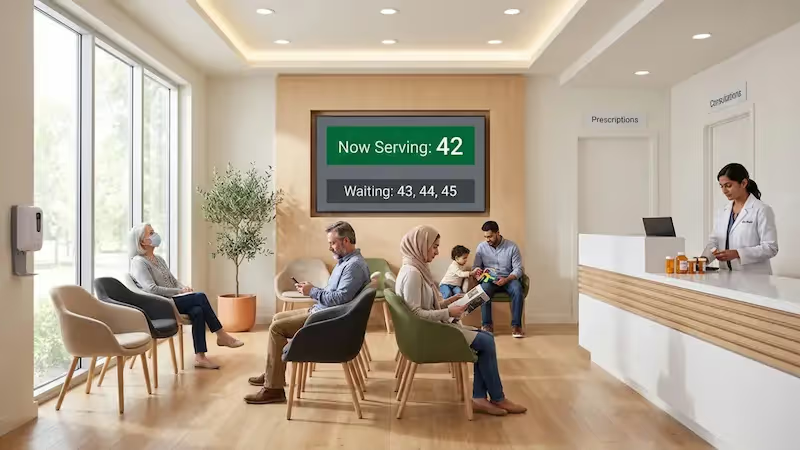
When connected to facility systems, screens can display live queue times or automated scheduling updates, keeping the information highly relevant and reducing the need for manual data entry.
How Digital Wayfinding Supports Diverse Patient Needs
A successful wayfinding system must support people with different abilities, languages, and comfort levels with technology. Providing accessible options is a critical part of patient-focused care.
Digital tools remove common barriers found in large buildings, offering choices that fit individual needs and creating a more welcoming environment for everyone.
Smart Patient Transport Coordination
Navigating a hospital is challenging for patients with mobility issues or those recovering from procedures. Digital systems can connect with internal transport teams to coordinate movement safely.
This integration helps staff know exactly where a patient needs to go, reducing wait times in hallways and ensuring a smoother transfer between departments.
Support for Visitors with Disabilities
Inclusivity is vital in healthcare. Digital signage software allows you to program alternative routes that skip stairs or tight corners, pointing visitors toward elevators and automatic doors instead.
Using high-contrast templates and clear, simple fonts on your screens also assists visitors with visual impairments. These thoughtful features help everyone move through the building safely and independently.
Options for iOS, Android, and On-Site Devices
Because people use technology differently, your guidance should be available across multiple formats. Some visitors will gladly scan a QR code to view a map on their smartphone browser.
Others prefer not to use their phones at all. For them, bright, easy-to-read wall screens and on-site touch kiosks provide a reliable way to get directions. Offering a mix of screens and mobile hand-offs ensures no one is left guessing.
Implementation Strategies for Digital Signage in Healthcare Facilities
Rolling out digital wayfinding requires a bit of planning to ensure it actually solves your facility's unique challenges. A thoughtful approach ensures your screens provide reliable playback and clear value from day one.
By following a few structured steps, you can deploy a system that saves time for your staff and dramatically improves the patient journey.
Assessing Your Facility’s Wayfinding Challenges
Before installing any screens, identify where people naturally get lost. Walk through your campus and look for confusing intersections or poorly marked elevators.
Talk to the front-desk staff who field questions all day. Ask them which clinics are hardest for visitors to find. By understanding the actual bottlenecks, you can place your digital signage exactly where it will have the biggest impact.

Selecting the Right Technology and Partners
Once you know where the problems are, choose a platform that is built for stability and ease of use. Look Digital Signage is designed to help teams manage screens across entire campuses easily. Look DS features Offline Playback, meaning your maps and directions will keep running even if the local internet connection temporarily drops.
Choose hardware and software that can scale smoothly. Whether you are starting with one screen in the lobby or rolling out hundreds across multiple buildings, the system should grow with you without requiring heavy IT involvement.
Training Staff and Adapting Workflows
Even with great digital signs, visitors will still occasionally ask staff for help. Training your team on how the new system works ensures they can confidently guide patients to use the interactive screens or scan QR codes.
Educate your greeters and reception teams on the new tools. When your staff embraces the digital signage, visitors are much more likely to adopt it as well.
Maintaining Up-to-Date Maps and Information
A digital map is only helpful if the directions are accurate. Hospital layouts change frequently due to renovations or department moves. If a screen shows outdated information, visitors will quickly lose trust in it.
Using a cloud-based digital signage software ensures you can update a map once and publish it to every screen in minutes. Assign a team member to regularly review your templates and playlists to confirm all points of interest and clinic hours are current.
Measuring Impact: Analytics and Ongoing Improvement
To prove ROI and ensure your screens are doing their job, you need to track performance. Relying on data helps you refine your messaging and improve the flow of foot traffic over time.
By regularly reviewing how your system performs, you can make practical adjustments that further support your facility's operational goals.
Using Data Insights to Enhance Navigation
Look DS includes Playback Analytics that provide visibility into how your content is running across your network. By monitoring uptime and playback logs, you can verify that your most important wayfinding content and safety announcements are consistently displayed.
Note that reliable analytics in healthcare should always focus on operational performance and screen health, ensuring a privacy-first approach that never tracks or identifies individual visitors.
Tracking Patient and Visitor Satisfaction
The main goal of wayfinding is to reduce stress, so it is important to track visitor feedback. Monitor your patient satisfaction scores and front-desk complaint logs.
If front-desk staff report a noticeable drop in visitors asking for directions to the lab or pharmacy, that is a clear sign your digital signage is working. Consistently high satisfaction scores often correlate closely with easy, clear facility navigation.
Continuous Optimization of Wayfinding Content
Managing digital signage is an ongoing, simple process. As you gather feedback, use it to tweak your screen layouts and schedules.
If you notice an influx of visitors looking for the flu clinic every October, use smart scheduling to automatically push the flu clinic map to your main entrance screens during the morning rush. Regular, data-driven updates keep your system highly relevant.
Real-World Results from Medical Centers Using Digital Wayfinding
Facilities that transition from static paper signs to digital wayfinding consistently report stronger operations and happier visitors. The ability to control messaging remotely proves its value daily in busy healthcare environments.
From community clinics to massive regional hospitals, the results often highlight reduced manual work and improved patient confidence.
Case Studies: Increased Patient Satisfaction
Industry examples regularly show that effective digital wayfinding leads to a better overall patient experience. In many cases, facilities report that visitors feel significantly less confused when they can use interactive directories or follow clear, bright visual maps.
When patients feel they can navigate a building independently, their sense of control increases. This directly supports higher satisfaction scores and a calmer atmosphere in waiting areas and corridors.
Examples of Revenue Growth from Efficient Navigation
Clear navigation also impacts the bottom line. By helping patients locate their appointments quickly, facilities see a noticeable reduction in delays and no-shows.
When doctors and nurses do not have to wait for lost patients, the entire clinic runs more efficiently. Additionally, because staff spend less time acting as tour guides, they can dedicate more hours to billable clinical care. This combination of fewer missed appointments and reclaimed staff time clearly proves the ROI of digital signage.
Looking Ahead: The Future of Medical Center Wayfinding With Digital Signage
The role of digital signage in healthcare will only continue to expand. As medical campuses grow more complex, the need for centralized, easy-to-manage communication tools becomes even more critical.
Future setups will rely heavily on smart scheduling and deeper integrations with hospital data systems. You can expect digital signage platforms to pull real-time information seamlessly, automatically adjusting directions if a specific department is experiencing high wait times.
By focusing on cloud-based remote management and simple, reliable playback, hospitals will continue to replace confusing layouts with clear, accessible guidance. Ultimately, getting lost in a medical center will become a thing of the past, replaced by an efficient, data-driven experience that keeps the focus entirely on patient health.