
Table of Content
How do you ensure your marketing budget delivers real returns instead of just noise? Creating an effective media plan helps you define exactly where, when, and how to publish your message-turning scattered ideas into a trackable, data-driven strategy that reaches your audience when they are ready to act.
What Is a Media Plan and Why Does It Matter?
A media plan is a strategic document that maps out your entire advertising campaign. It defines which platforms you will use, when content will play, how often it appears, and who needs to see it. Think of it as a roadmap for your brand’s visibility. Without it, marketing often becomes a series of random guesses that waste time and money.
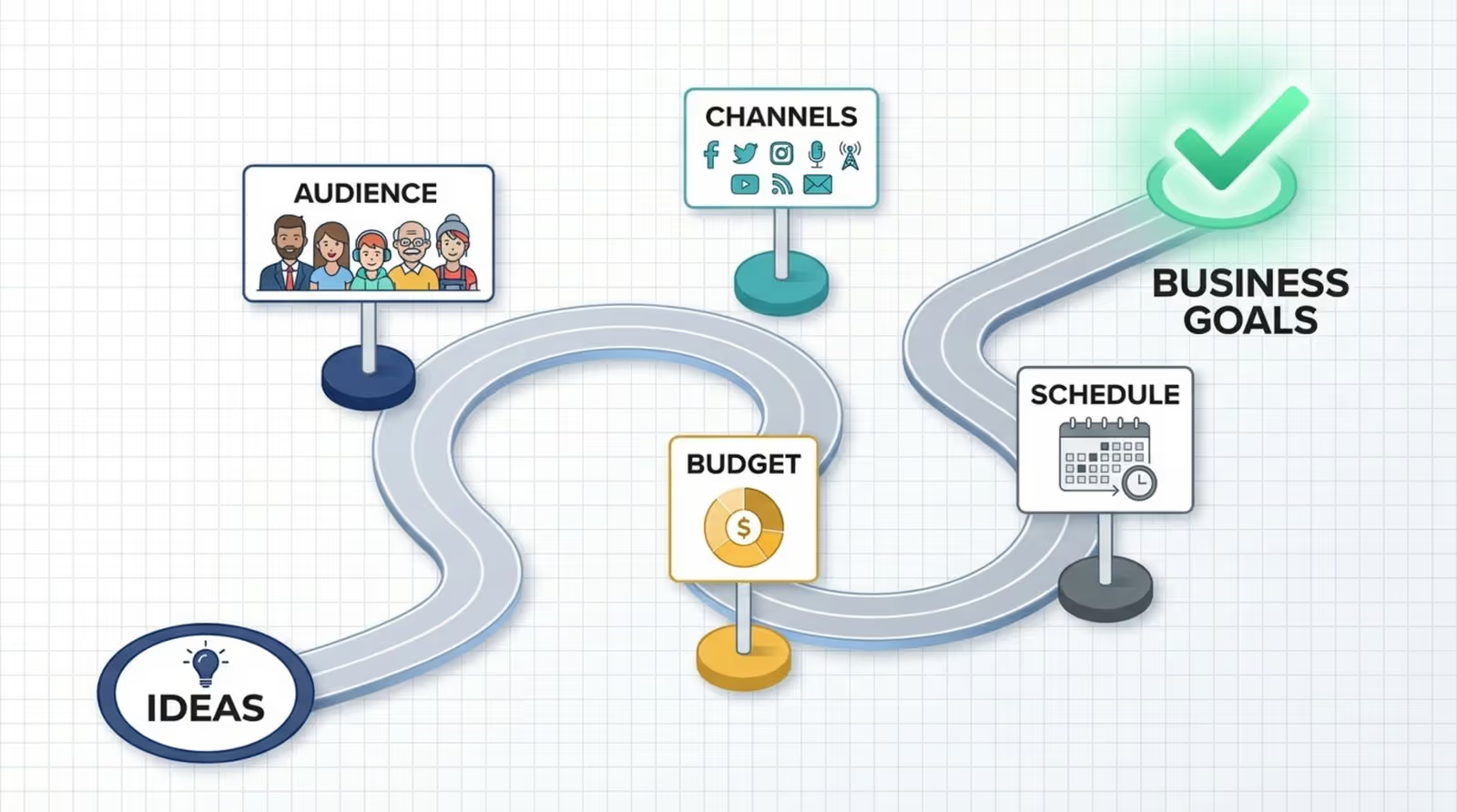
This plan bridges the gap between your creative content and your business goals. While a great design grabs attention, a solid plan ensures that design appears on the right screen at the right moment. It provides a framework for organizing your budget, scheduling your playlists, and measuring success.
Media Planning vs Media Buying: Key Distinctions
Media planning and media buying are different steps in the same process. Media planning is the strategy phase. Here, you study your audience, analyze the market, and decide which channels-such as social media, digital signage, or email-will best meet your objectives. It focuses on the "why" and "where."
Media buying is the execution phase. Once the plan is set, you negotiate ad space or set up your owned channels. For paid ads, this means purchasing spots. For owned media, like your own digital signage network, this means using your CMS to publish content to your screens. Both roles are vital: one builds the strategy, the other puts it into action.
Role of Media Strategy in Marketing Success
A strong media strategy connects your message to consumer behavior. It isn't enough to have a good product; you must reach people where they spend their time. Whether they are scrolling on their phone or standing in your store, your strategy ensures your message fits naturally into their day.
Strategy also gives you flexibility. In a fast-moving market, trends change quickly. A clear plan sets baseline performance metrics (KPIs). If a channel isn't working, you can see the data and shift your focus. This control allows you to manage your campaigns efficiently rather than reacting blindly to problems.
Key Benefits of Creating an Effective Media Plan
The main benefit of a media plan is clarity. It removes guesswork by backing every decision with data. This keeps your team aligned, ensuring everyone knows the schedule and goals. It reduces the chaos of last-minute updates and keeps your operations running smoothly.
A plan also protects your budget. By identifying the most effective channels early, you avoid spending on platforms that don't convert. It serves as a history of what works, helping you refine your approach for future campaigns and prove ROI to stakeholders.
Reaching the Right Audience at the Right Time
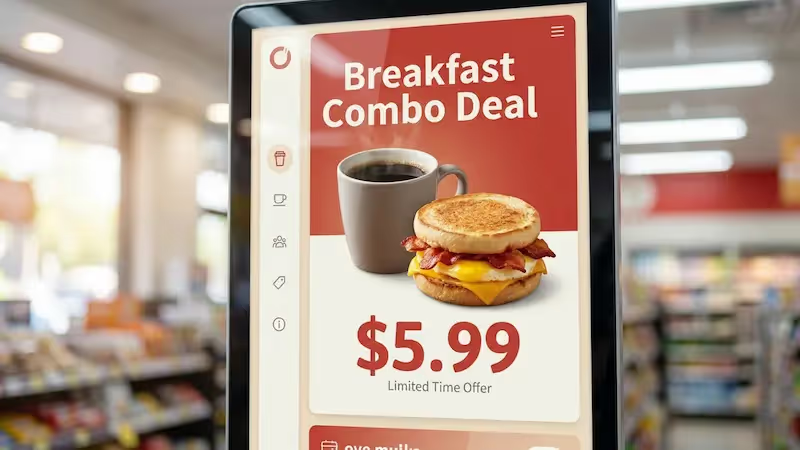
Timing is everything. A good media plan uses data to determine when your audience is most receptive. For a coffee shop, this might mean scheduling digital menu promos during the morning rush. For a B2B software company, it might mean targeting LinkedIn feeds on Tuesday mornings. Smart scheduling ensures your content plays when it matters most.

Reaching the "right" audience goes beyond age and gender. Modern planning uses psychographics-interests and behaviors-to sharpen your focus. This allows you to speak directly to specific groups, such as "tech-savvy shoppers" or "corporate decision-makers," making your messaging far more effective.
Maximizing ROI and Advertising Impact
Return on Investment (ROI) is your bottom line. A media plan improves ROI by managing frequency-the number of times someone sees your message. If they see it too rarely, they forget; too often, and they get annoyed. Planning helps you find the sweet spot.
Impact grows when channels work together. A coordinated plan ensures your online ads match your in-store digital signage. This "surround" effect reinforces your message. When a customer sees the same promotion on their phone and again on a screen in your lobby, they are much more likely to make a purchase.
Keeping a Consistent Brand Experience Across Channels
Your audience interacts with your brand in many places. A solid media plan ensures your tone, visuals, and offers are consistent everywhere. Whether they see a web banner, a printed flyer, or a playlist on your digital display, it should feel like the same brand.
Consistency builds trust. When your messaging is aligned, you look professional and reliable. A media plan coordinates your assets so that no channel is out of date, preventing the confusion that happens when online prices don't match in-store offers.
Staying Competitive and Adapting to Market Trends
The media landscape never stands still. New platforms and technologies emerge constantly. A media plan usually includes a review of your competitors, helping you spot gaps in their strategy that you can exploit. Staying aware of these trends helps you position your brand effectively.
Planning also allows for testing. You can set aside a small portion of your budget to try new formats, like interactive screens or QR code campaigns, without risking your core strategy. This "test and learn" approach keeps you ahead of the curve.
Types of Media Planning Strategies
There is no "one size fits all" strategy. Your approach depends on your specific goals and budget. Some brands need broad reach to build awareness, while others need precise targeting to drive foot traffic. Understanding your options helps you choose the right path.
Strategies also vary by timing. A "flighting" strategy concentrates ads during specific seasons (like holidays), while a "continuity" strategy keeps messaging steady year-round. Choosing the right schedule helps you stay top-of-mind without exhausting your budget.
Paid, Owned, and Earned Media: Definitions and Examples
Most plans use the "POE" model: Paid, Owned, and Earned media.
- Paid Media: Channels you pay for, such as Google Ads, TV spots, or social media boosts. This is great for immediate reach.
- Owned Media: Channels you control directly. This includes your website, email lists, and your digital signage network. Owned media is powerful because you control the content and the cost.
- Earned Media: Organic attention, such as reviews, social shares, and word-of-mouth.
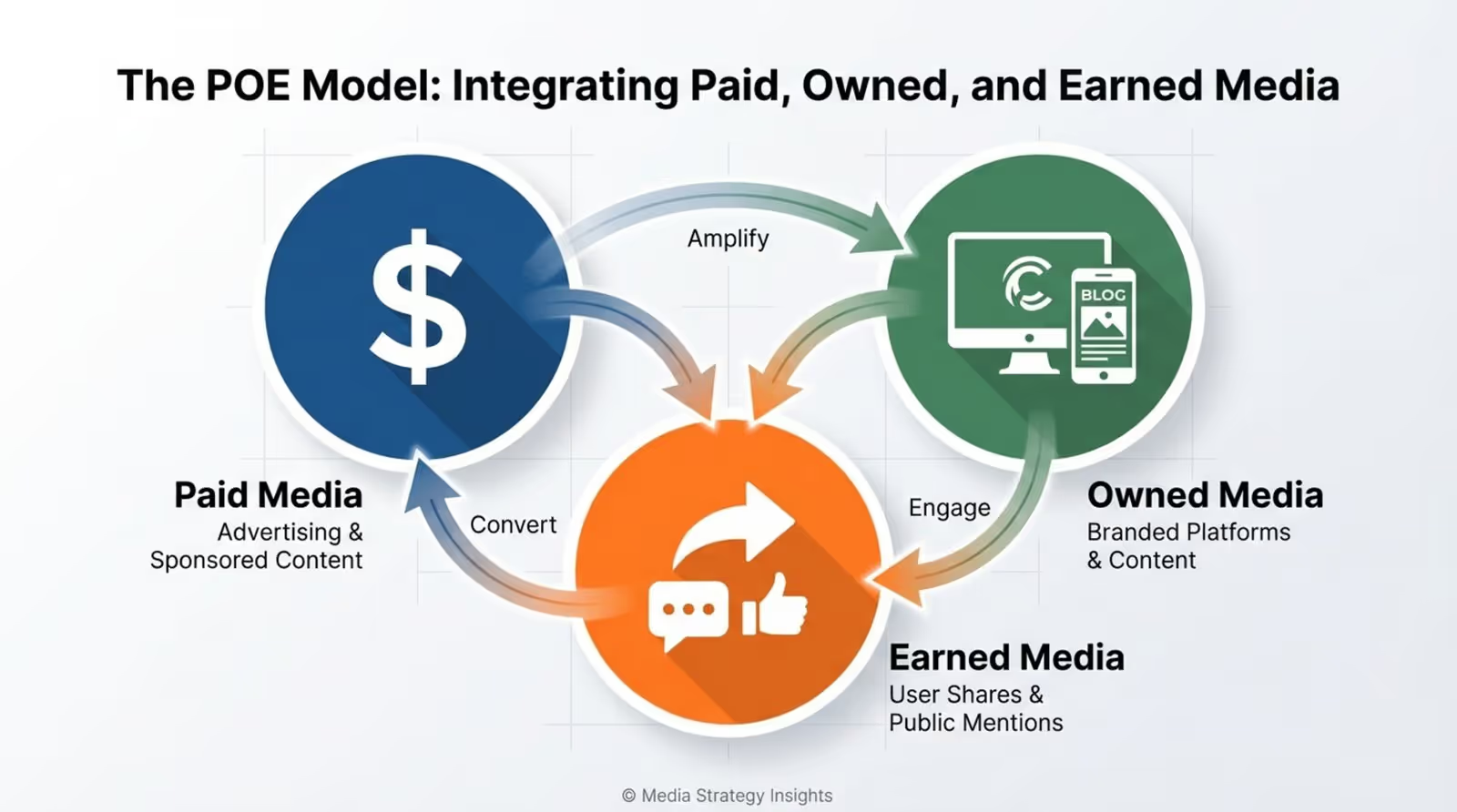
An effective plan uses all three. Paid media drives traffic, owned media (like your screens) converts that traffic, and good experiences generate earned media.
Integrated and Retail Media Approaches
An integrated approach connects your online and offline worlds. For example, a "click and collect" campaign might start with an email (owned), be reinforced by a targeted ad (paid), and finish with a digital screen in your store guiding the customer to the pickup counter (owned).
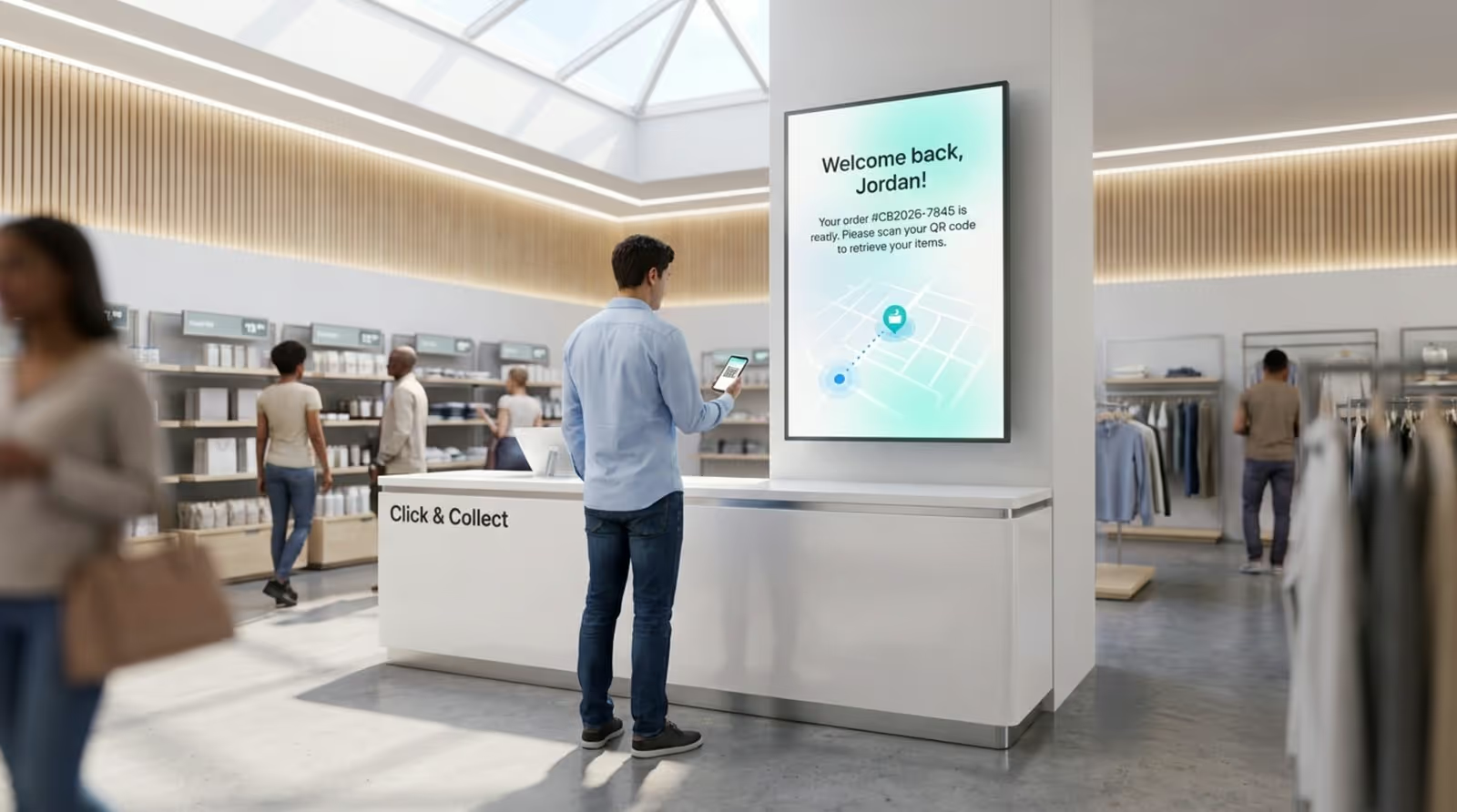
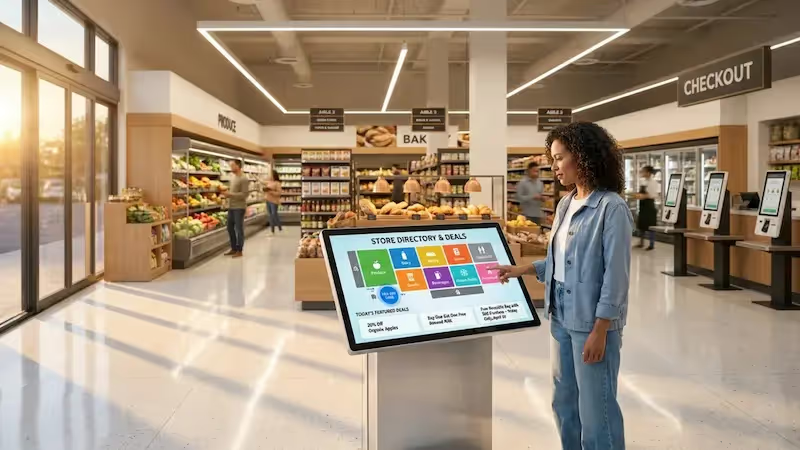
Retail media is becoming essential for physical locations. This involves using screens inside stores to promote products right at the point of purchase. Because the shopper is already there and ready to buy, this content often has the highest conversion rate of any channel in your plan.
Media Concentration vs Dispersion Strategies
A concentration strategy focuses resources on a single high-performing channel. Small teams often use this to dominate a specific niche, such as focusing entirely on in-store experience and local SEO.
A dispersion strategy spreads the budget across many channels to reach a wider audience. While this increases visibility, it requires more management and analytics to ensure consistency across every touchpoint.
Key Points to Keep in Mind When Building a Media Plan
Building a plan requires balancing creativity with logistics. You must match your business goals with the reality of your budget and your team's bandwidth. Ignoring the operational side-like how much time it takes to update content-can derail even the best strategy.
Flexibility is key. A plan gives you structure, but it shouldn't be rigid. You need the ability to update messages in minutes if the market changes. The best plans allow for real-time adjustments based on performance data.
Setting Clear Objectives Aligned with Business Goals
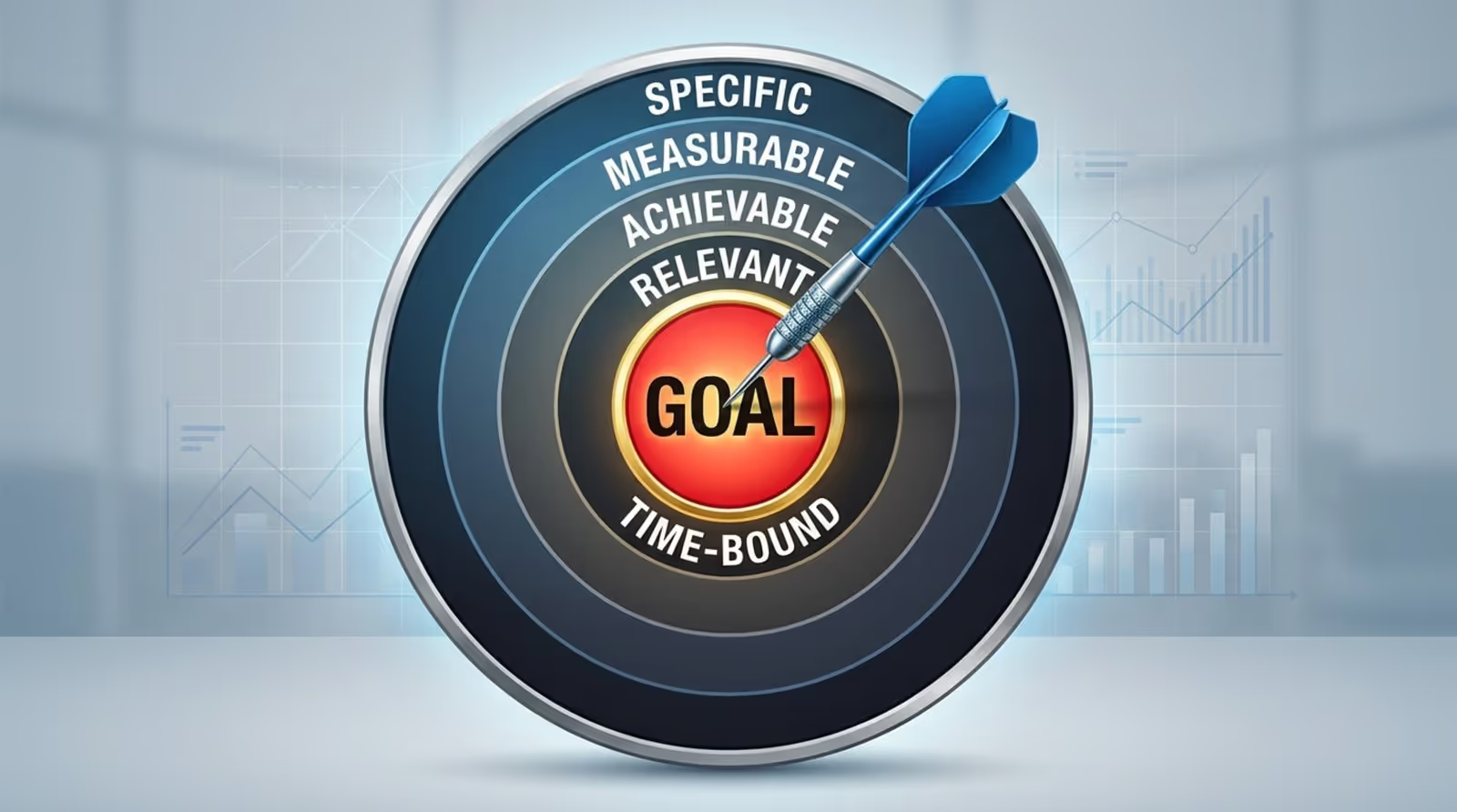
Start with the goal. Are you driving sales, launching a product, or informing employees? Objectives should be SMART: Specific, Measurable, Achievable, Relevant, and Time-bound. "Increase sales" is vague; "Increase lunch combos sold by 10% in Q2" is a clear target.
These goals must support the broader business. If your company wants to cut printing costs, your media plan should prioritize digital screens over paper posters. When marketing and operations align, your plan becomes a tool for efficiency.
Identifying and Researching the Target Audience
You need to know who you are talking to. Research should combine demographics (who they are) with context (where they are). Are they stressed travelers in an airport? Relaxed diners in a cafe? Busy shoppers in a grocery store?
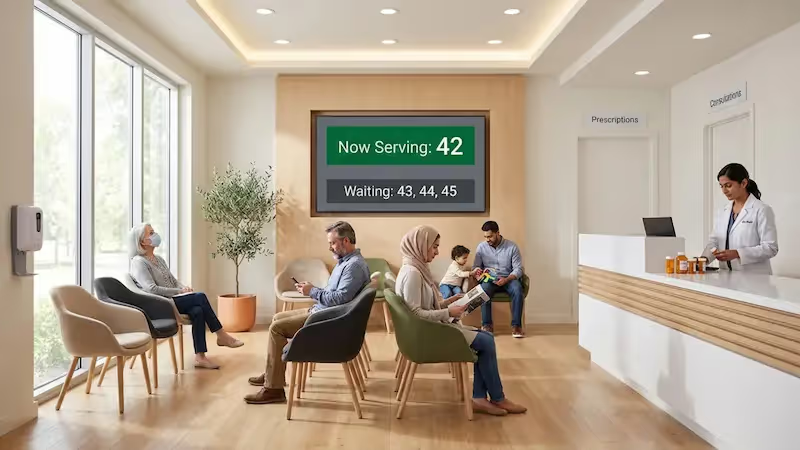
Understanding context helps you format your content. A captive audience in a waiting room can watch a long video, while a passerby in a hallway needs a 3-second headline. Tailoring your message to the environment increases engagement.
Analyzing Industry Trends and Competitor Activity
Look at what others in your space are doing. Are competitors moving to digital menu boards? Are they using QR codes to bridge the gap between physical and digital? Observing these trends prevents you from falling behind.
However, look for "white space" as well. If everyone else is shouting on social media, perhaps a quiet, well-placed screen in a high-traffic lobby will get more attention. Use competitor data to find opportunities to stand out.
Selecting the Right Media Channels and Platforms
Focus on quality over quantity. It is better to manage three channels well than ten poorly. Choose platforms that fit your content capabilities. If you have great video assets, prioritize YouTube and digital signage. If you rely on text, focus on blogs and email.
Consider the nature of the channel. Owned channels like digital signage offer high reliability and instant updates, making them ideal for time-sensitive offers. External channels like billboards offer reach but lack flexibility. Balance your mix to get the best of both.
Determining Message Frequency and Timing
How often should your message play? This is where scheduling tools become essential. You need to balance reach with fatigue. In a waiting room, a 15-minute loop might work well. In a fast-food line, a 2-minute loop is better.
Timing also includes "dayparting." You can schedule breakfast ads to stop automatically at 10:30 AM and switch to lunch promos. This automation ensures your media plan runs perfectly without staff having to intervene manually.
Establishing Budget and Allocation Strategies
Your budget sets your limits. Allocating funds wisely is critical. A common rule is to spend 70% on proven channels (like your existing screens or email), 20% on safe growth channels, and 10% on experiments.
Remember to account for software and hardware costs in your "Owned" media budget. Reliable players and cloud-based management tools are investments that lower your total cost of ownership by reducing manual labor and downtime.
Defining Measurable Key Performance Indicators (KPIs)
You cannot improve what you do not measure. Define your KPIs early. For online ads, this might be Click-Through Rate (CTR). For digital signage, this includes Proof-of-Play reports and uptime.
Connecting these metrics to sales data gives you the full picture. If you run a promo on your screens at 2:00 PM and see a spike in sales at 2:15 PM, you have tangible proof of ROI. Clear KPIs keep the focus on results.
Steps in the Media Planning Process
Media planning follows a logical flow. It moves from research to strategy, then to execution and analysis. Following a clear process ensures nothing is missed and helps you scale your efforts from one location to many.
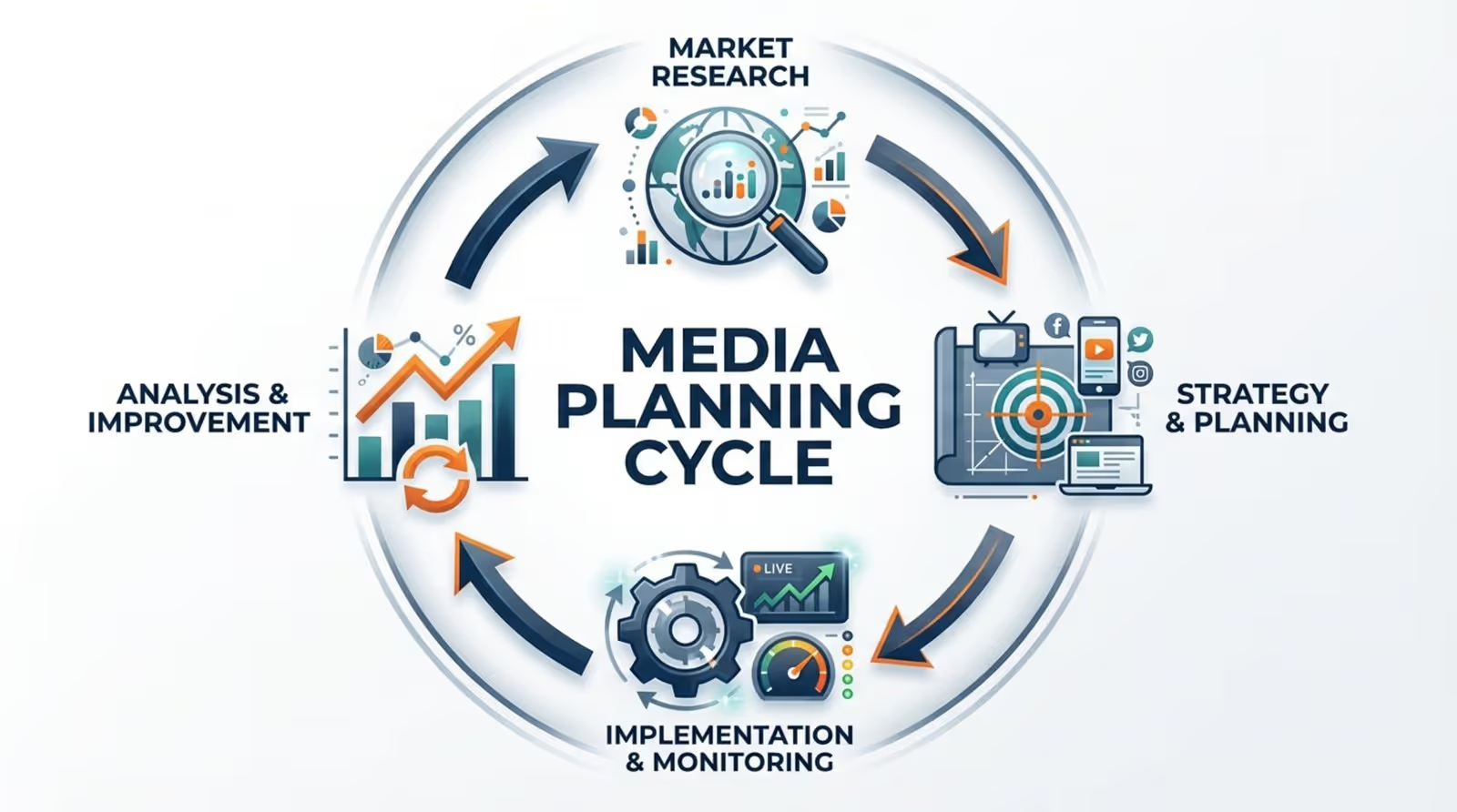
Gathering Audience and Market Data
Start with data. Look at your past campaigns and current customer profiles. What questions do they ask? What products do they buy together? Use this information to build personas that represent your real customers.
Consider the physical environment as well. For location-based media, knowing foot traffic patterns is as important as knowing demographics. This data grounds your strategy in reality.
Formulating a Clear Media Strategy
Draft your approach. Will you be aggressive and loud, or helpful and informative? Decide on your media mix. This is where you confirm which channels will carry the weight of the campaign.
Link your creative assets to your technical capabilities. Ensure your strategy accounts for the formats you need-vertical video for screens, square images for social, and text for search.
Creating a Detailed Media Plan Brief
Write it down. The brief shares the plan with your team. It should cover objectives, audience, channels, budget, and timeline. This document keeps everyone on the same page.
Include the "why" in your brief. Explaining that you are using digital screens to "reduce wait-time perception" helps stakeholders understand the value beyond just "showing ads."
Implementing, Monitoring, and Optimizing Campaigns
Go live. This involves uploading assets, setting schedules, and launching campaigns. Once running, monitor the performance. Modern tools allow you to see the status of every placement in real time.
Optimization is about adjustment. If a specific message isn't working, change it. The ability to update content remotely allows you to fix errors or swap creatives in minutes, keeping your campaign optimized without site visits.
Post-Campaign Analysis and Continuous Improvement
Review the results. Did you hit your KPIs? Compare your planned schedule against the actual Proof-of-Play logs. Analyze what worked and what didn't.
Use these insights for the next round. Media planning is a cycle of improvement. Each campaign should be smarter and more efficient than the last.
Choosing and Using Media Channels Effectively
Selecting channels isn't just about audience size; it's about mindset. A customer searching on Google has high intent. A customer walking past a screen has high awareness. A balanced plan uses different channels to move the customer from awareness to purchase.
Comparing Traditional vs Digital Media
Traditional media (print, static billboards) builds prestige but is hard to update. Digital media (social, digital signage) offers speed and targeting. You can target specific locations, times, and even weather conditions.
The line is blurring. Digital screens in physical spaces (DOOH) now offer the targeting of web ads with the impact of traditional posters. This hybrid approach is often the most effective way to capture attention.
Selecting Platforms Based on Audience Behavior
Follow the behavior. If your audience relies on their phones, mobile ads are key. If they spend time in your lobby or store, your on-premise screens are your most valuable asset.
Don't ignore the "second screen" effect. People often look at their phones while waiting. Coordinating your screen content with mobile prompts (like QR codes) bridges the gap and captures engagement on both devices.
Balancing Media Mix for Maximum Coverage
Avoid relying on a single channel. A healthy mix might include social media for reach, email for retention, and digital signage for on-site conversion. This ensures that if one channel dips in performance, the others sustain your campaign.
Media Planning Best Practices and Tools
Successful planning requires the right tools. Managing multiple channels, especially physical ones, is impossible with just spreadsheets. You need platforms that offer centralization, automation, and reliable data.

For the owned media component of your plan-specifically your network of digital screens-we recommend Look Digital Signage. It provides the stability and features needed to integrate physical screens into your broader strategy effectively.
- Look CMS: Manage all your content and screens from one cloud-based dashboard, ensuring your in-store messaging aligns perfectly with your online campaigns.
- Smart Scheduling: Automate your playlists to play specific content based on time of day or day of the week, maximizing relevance without manual work.
- Playback Analytics: track exactly what played and when, giving you the data you need to calculate ROI and verify campaign delivery.
- Digital signage templates: Create professional, on-brand visuals in minutes, helping you react to market trends faster than your competitors.
Tips for Improving Media Plan Effectiveness
Listen to your audience. Use feedback to refine your messaging. If customers ask the same questions, answer them on your screens. Context is key-content that is helpful is rarely viewed as an interruption.
Always have a backup. Technical glitches or market shifts happen. Having a flexible platform allows you to switch to a "Plan B" playlist instantly, keeping your network running smoothly.
Using AI and Data Analytics in Media Planning
AI is simplifying planning. Tools can now predict the best times to post or play content. AI wizards can help generate layout ideas, saving hours of design time.
Analytics explain the "why." By looking at playback reports and engagement data, you can make informed decisions rather than guessing. Data-driven planning is the standard for modern businesses.
Recommended Tools and Software for Media Planning
Using the right software stack ensures that every part of your plan-from the initial idea to the final screen-is executed efficiently.
Common Questions about Media Planning
Media planning can seem complex, but it boils down to getting the right message to the right person. Here are answers to common questions to help you get started.
What Should a Media Plan Include?
A complete media plan should include an executive summary, audience personas, SMART goals, and a content calendar. It needs a clear budget breakdown and a list of KPIs for measurement. Crucially, it should detail the channels you will use (Paid, Owned, and Earned) and the creative assets required for each.
How Do You Measure Success in Media Planning?
Success is measured by comparing results against your objectives. Look at metrics like reach, engagement, and conversion. For digital signage, track uptime and playback frequency. Ultimately, measure efficiency-did you achieve your goals within budget? If your campaigns drove sales and your operations ran smoothly, the plan was a success.
Looking ahead, effective media planning will focus increasingly on privacy and attention. As tracking users becomes harder, owned channels and first-party data will become more valuable. Planners will shift focus from simple "impressions" to meaningful engagement-ensuring that when a message is displayed, it is actually seen and valued. The future belongs to brands that can deliver relevant, timely content that respects the audience's time and attention.