
Table of Content
How does 5G move beyond the hype to deliver real-world business results? It provides the speed, capacity, and low latency needed to turn ambitious technologies-like autonomous logistics, remote healthcare, and connected smart cities-into reliable daily operations. While the consumer focus is often on faster phone downloads, the real impact is felt in industrial hubs, hospitals, and urban infrastructure where 5G acts as the "nervous system" for data-heavy environments.
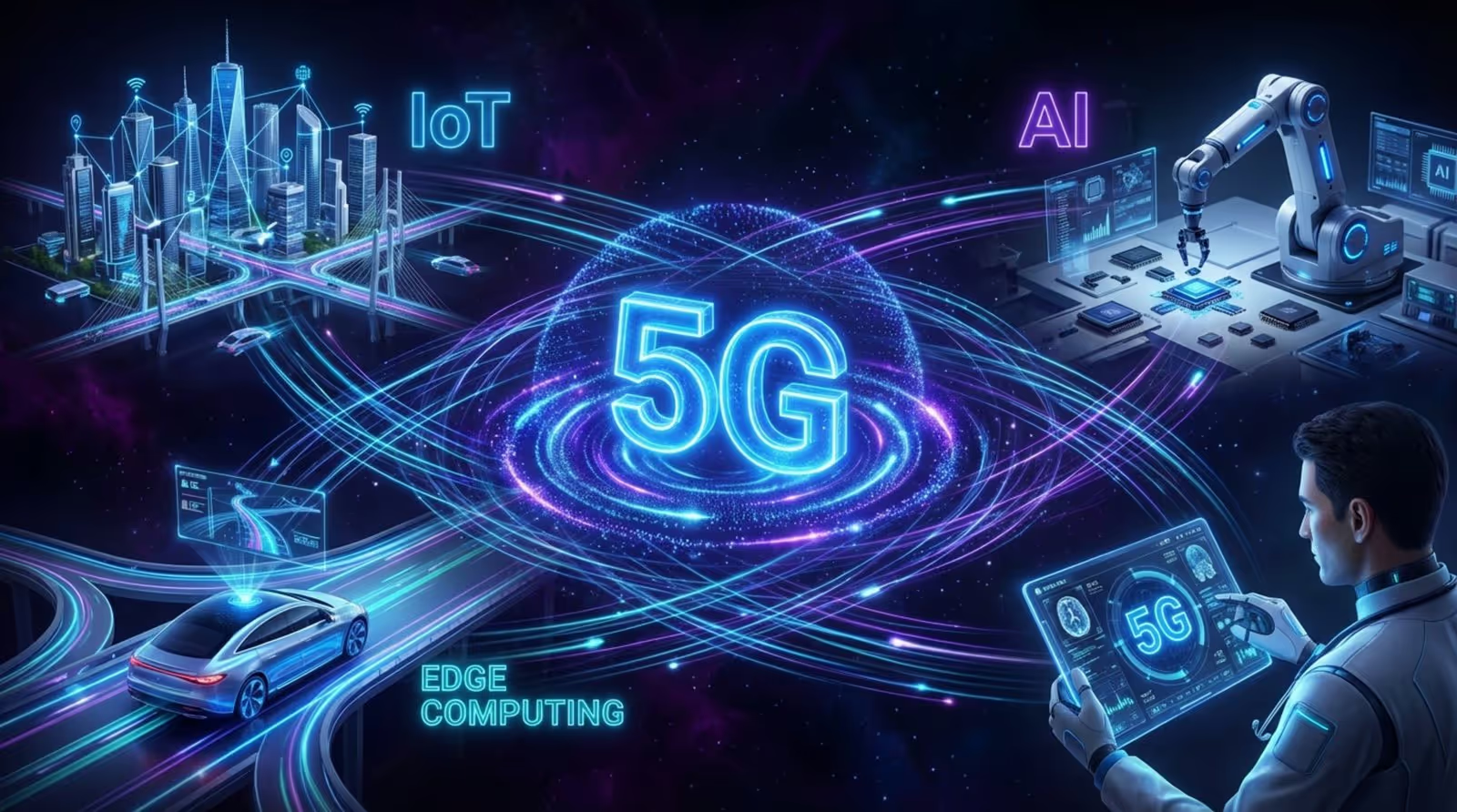
5G is more than just an upgrade; it is the meeting point for the Internet of Things (IoT), artificial intelligence (AI), and edge computing. It creates a stable foundation for everything from lag-free gaming to remote surgical procedures. As adoption grows, these use cases demonstrate how high-speed connectivity supports smoother operations and data-driven decision-making across industries.
How Does 5G Improve Performance and Reliability?
Unprecedented Speed and Better Bandwidth
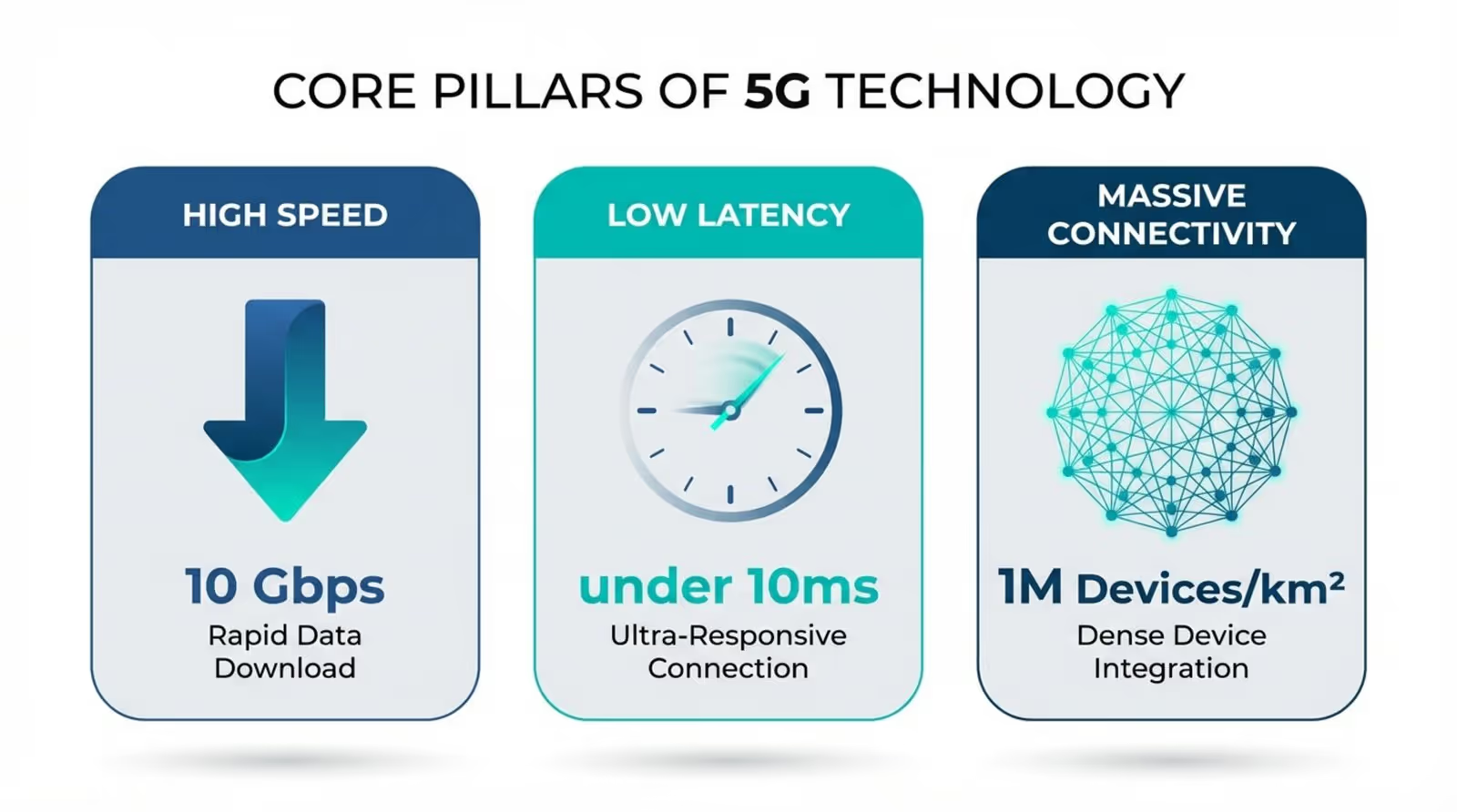
The clearest advantage of 5G is raw speed. While 4G LTE made mobile video practical, 5G pushes capacity up to 10 gigabits per second (Gbps). This bandwidth allows you to stream 4K and 8K video content smoothly without buffering, even in crowded venues. For businesses, this means you can transfer massive files-such as high-resolution digital signage assets or complex 3D architectural models-in seconds rather than minutes.
This capacity relies on a denser network of smaller transmitters that use energy more efficiently than older systems. By utilizing a wider range of radio frequencies, 5G maintains stability as more devices connect. This gives your teams a fiber-like experience on mobile devices and supports Fixed Wireless Access (FWA) for reliable office internet without the cables.
Ultra-Low Latency: Real-Time Data Transmission
Latency-the delay between sending and receiving data-drops significantly with 5G. While 4G networks typically operate with around 100 milliseconds of latency, 5G can lower this to approximately 10 milliseconds. For a web browser, this is negligible; for machines, it is the difference between safety and collision. A self-driving car traveling at 30 mph reacts within centimeters on 5G, compared to over a meter on 4G.
This near-instant response powers Ultra-Reliable Low Latency Communication (uRLLC). It enables haptic feedback for remote robotics and allows industrial machines to coordinate with human workers safely. By removing the "lag" inherent in older networks, 5G makes remote control feel as responsive as a direct wired connection.
Massive IoT Connectivity: Supporting Billions of Devices
As the number of connected devices grows, 5G is designed to handle "Massive Machine Type Communication" (mMTC). While 4G supports roughly 60,000 devices per square kilometer, 5G can support up to one million in the same space. This density is essential for environments where thousands of sensors-such as those in smart warehouses or city intersections-must communicate simultaneously.
Technologies like NB-IoT and LTE-M within the 5G ecosystem support devices that need long battery life and deep signal penetration. Whether you are monitoring utility meters across a region or environmental sensors in a factory, 5G ensures that your device network remains online without congestion.
Where Is 5G Making an Impact? Major Industries and Locations
Urban Connectivity and Smart Cities
In dense urban centers, 5G provides the infrastructure for "smart city" initiatives. Cities often see early 5G rollout because the density allows for faster ROI for operators. In places like Alba Iulia, Romania, 5G networks manage traffic flow, parking sensors, and waste collection data. This gives city planners the real-time insights needed to reduce congestion and improve air quality.
Public safety also benefits from this connectivity. Emergency responders can utilize real-time video feeds and AI analytics to manage incidents more effectively. With urbanization increasing, 5G is the only mobile technology capable of supporting the data demands of modern city infrastructure.
Industrial Hubs and Manufacturing Centers
Factories are transitioning toward "smart" manufacturing by deploying private 5G networks. This allows for total control over on-site data and mobility. For example, Finnish wood mills utilize 5G to power augmented reality (AR) tools. These provide maintenance teams with virtual overlays on machinery, identifying issues before they force a production stop.
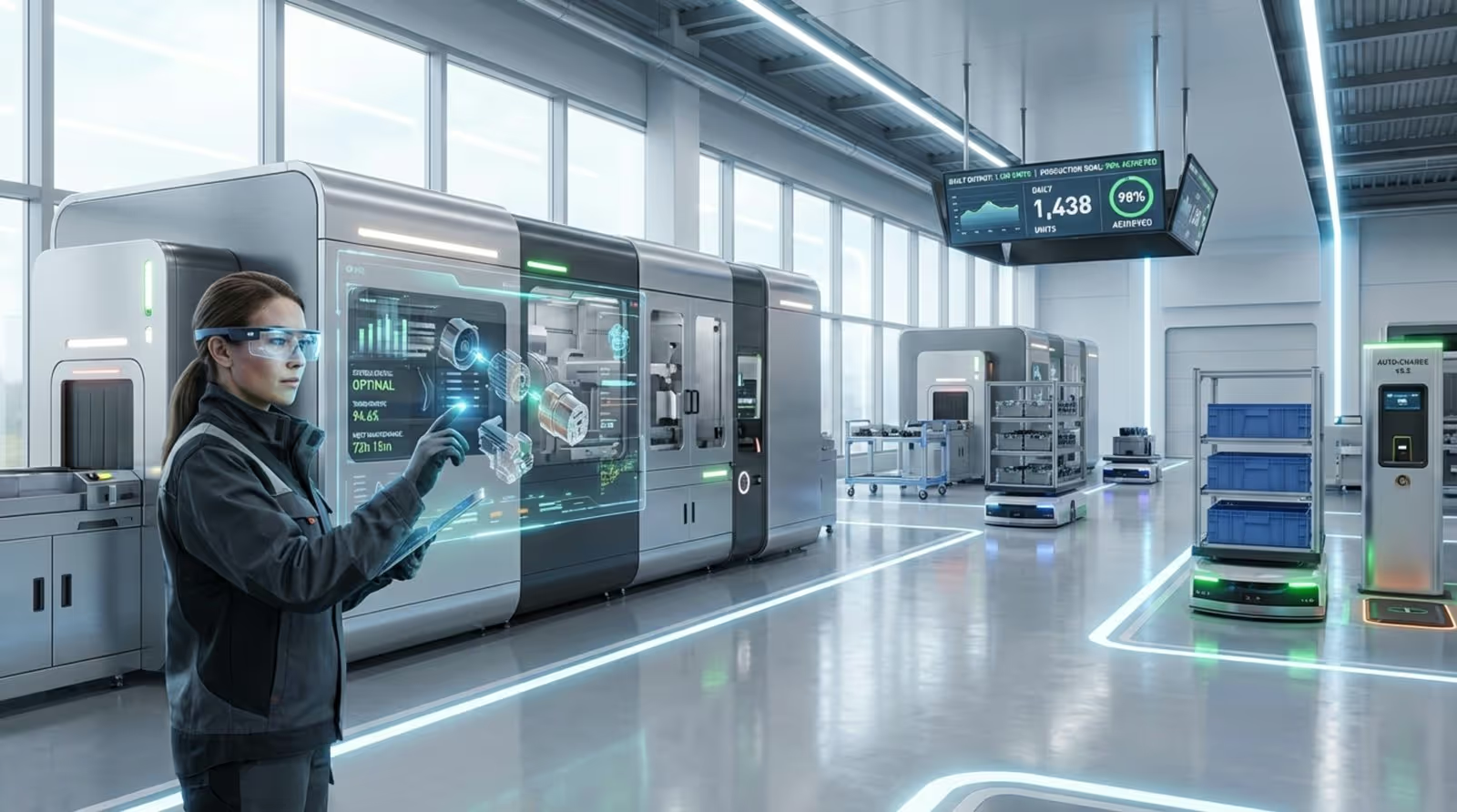
Wireless setups also increase flexibility. Without the constraints of physical cabling, production lines can be reconfigured quickly. Digital twins-virtual replicas of the factory floor-allow managers to test workflows digitally before implementation. This agility is central to Industry 4.0, connecting machines and people in a unified digital system.
Healthcare Facilities and Remote Clinics
5G facilitates "connected health" by enabling the rapid sharing of large diagnostic files. Specialists can review high-resolution imaging remotely, extending their expertise beyond the hospital walls. In Malaga, Spain, hospitals have implemented surgical support platforms using 5G to conduct live 4K medical training with minimal delay.
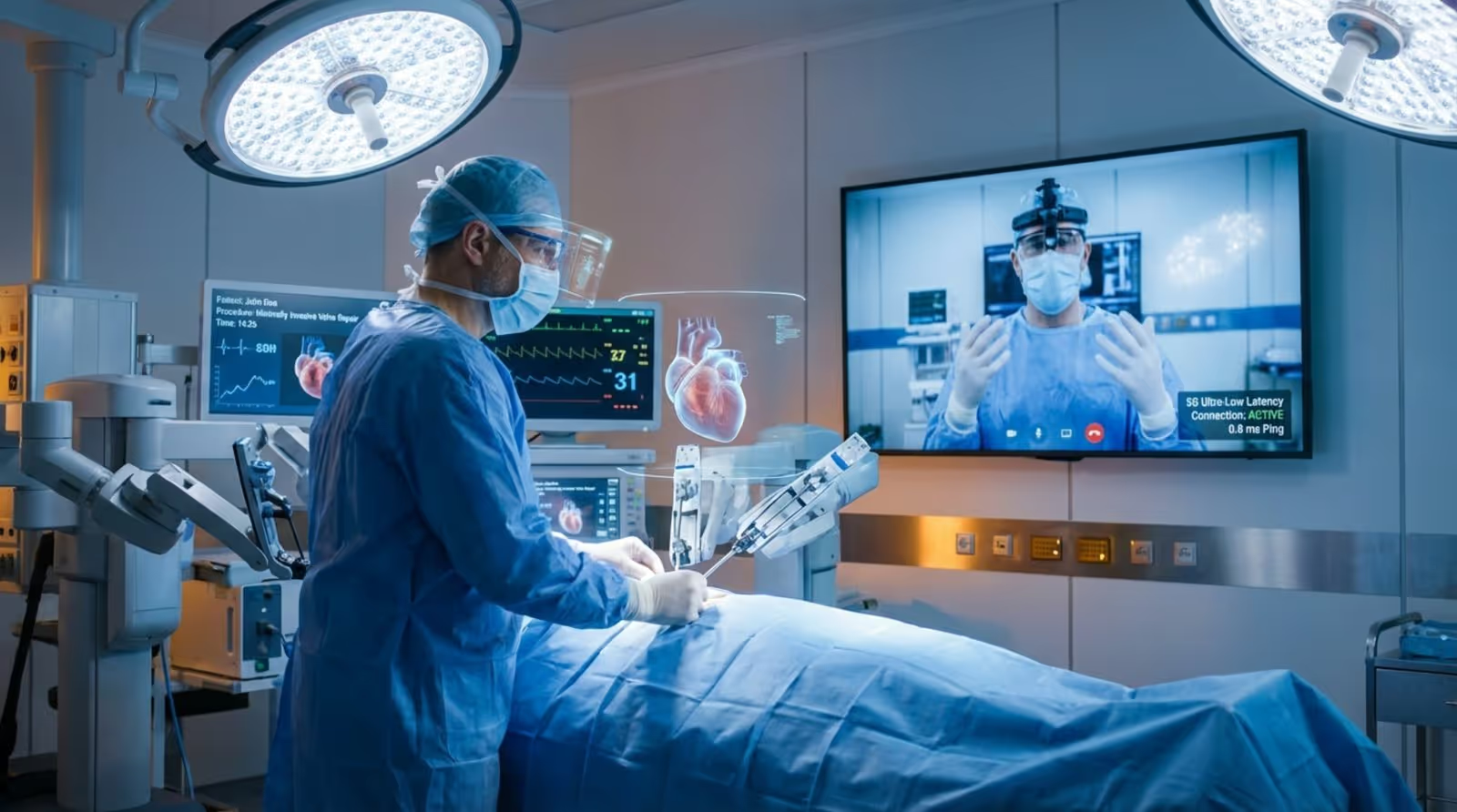
For rural areas, 5G enables mobile health units to access patient records and transmit vital signs in real time. This connectivity helps bridge the gap between remote clinics and major medical centers, ensuring that quality care is not limited by geography.
Transportation Systems and Smart Infrastructure
From autonomous ferries in Norway to vehicle test corridors in Sweden, 5G allows vehicles to communicate with their surroundings (V2X). Smart infrastructure, such as traffic lights that broadcast status updates, helps improve safety and traffic flow. This requires the millisecond-level speed that only 5G can provide.
Public transport and logistics also gain reliability. Smart buses and trains use 5G to provide passenger updates and monitor engine health, preventing breakdowns before they occur. This results in a transport network that adapts quickly to changing conditions.
Entertainment Venues and Event Spaces
Stadiums use 5G to handle the massive data demand of thousands of fans streaming content simultaneously. High-capacity networks allow attendees to view instant replays and player stats via AR apps on their phones, transforming the live experience. This connectivity also supports the venue's digital signage network, ensuring screens display real-time info without lag.
Broadcasters are leveraging 5G for interactive streaming, such as allowing viewers to select camera angles during a live event. Reliable, high-speed connections inside and outside the venue are setting new standards for audience engagement.
Rural and Underconnected Regions
Fixed Wireless Access (FWA) over 5G offers high-speed internet to rural areas where laying fiber is cost-prohibitive. This technology delivers broadband speeds to homes and businesses with minimal hardware, supporting precision agriculture and remote learning. It helps close the digital divide by providing the connectivity needed for modern tools.
However, the rollout in low-density areas takes time due to the infrastructure required. Many organizations use 4G LTE as a reliable base layer, with plans to expand 5G coverage to balance cost and access.
Real-Life 5G Use Cases: Industries Where It Makes a Difference
Healthcare: Advancing Telemedicine and Patient Care
Remote surgery relies on robotic precision and high-resolution video, both supported by 5G. Beyond the operating room, IoT wearables transmit patient vitals to doctors in real time, enabling proactive care at home. This continuous monitoring helps medical teams detect issues early.
Telemedicine visits have evolved into interactive consultations. 5G allows providers to use AR to visualize symptoms or guide remote staff through procedures. During public health crises, secure, high-volume data transfer aids in contact tracing and resource allocation.
Smart Manufacturing and Industrial Automation
The concept of the "dark factory"-fully automated production-is becoming viable with 5G. Engineers can monitor operations remotely via connected sensors and cameras. AR tools provide on-site workers with immediate repair instructions, reducing downtime and maintenance costs.

Autonomous mobile robots (AMRs) utilize low-latency connections to navigate complex floors and avoid obstacles. Real-time defect detection ensures that quality standards are met without slowing down the line.
Transportation: Enabling Autonomous Vehicles and Fleet Management
Self-driving technology depends on V2X communication to interact with traffic systems and other vehicles. This shared intelligence, powered by 5G, helps prevent accidents and smooths traffic flow. It is a critical step toward fully autonomous transport networks.
Logistics managers use 5G for precise tracking, locating goods down to the centimeter. This accuracy reduces errors and improves efficiency in shipping and port operations, as seen in autonomous maritime projects.
Smart Cities: Public Safety, Traffic, and Energy Optimization
Smart power grids utilize 5G to balance energy supply and demand, using AI to optimize consumption and reduce waste. In terms of safety, connected sensors at intersections can alert vehicles to pedestrians, enhancing road safety.
Waste management becomes more efficient with smart bins that signal when they need emptying. This data allows for dynamic routing of collection trucks, saving fuel and reducing noise. A flexible 5G network ties these systems together for a smoother-running city.
Entertainment and Media: 4K/8K Streaming, AR/VR Applications
Media companies use 5G to blend physical and digital worlds. High-bandwidth connections support immersive 360-degree video and cloud-gaming services that rely on external processing power. This allows users to experience high-end graphics on standard mobile devices.
Holographic displays and AR meetings are also gaining traction. 5G enables virtual presence, making remote collaboration feel more personal and engaging.
Education: Supporting Remote and Interactive Learning
VR classrooms powered by 5G solve many limitations of remote learning. Teachers can interact with students in a digital space, keeping engagement high. For complex subjects, high-quality streaming enables real-time collaboration that mimics in-person instruction.
Professional training benefits from AR apps that guide trainees through technical tasks, such as welding or surgery. This hands-on approach, supported by fast data links, improves safety and learning outcomes.
Logistics and Supply Chain Tracking
IoT sensors on cargo provide instant updates on location and status. This visibility allows supply chain managers to adjust plans in real time. Portable 5G kits offer instant connectivity for temporary sites or disaster recovery scenarios.
In warehouses, 5G-connected robots automate picking and packing processes. These systems update inventory levels instantly and trigger automatic reordering, ensuring the right products are always available.
How 5G Solves Challenges: Why It Makes a Difference
Reducing Downtime and Increasing Efficiency
Unplanned downtime is a major cost in industrial operations. 5G supports predictive maintenance by enabling sensors to monitor equipment health 24/7. This data allows teams to fix issues before they cause failure, shifting the focus from repair to prevention.
Cloud accessibility also boosts efficiency. Fast, low-latency links allow businesses to access data and applications from the cloud as if they were local. This supports remote management and allows teams to work flexibly without relying on heavy on-site hardware.
Improving Safety in High-Risk Environments
In sectors like mining and energy, 5G Advanced positioning tracks workers and equipment to prevent accidents. Systems can trigger alarms or shut down machinery if personnel enter unsafe zones, adding a critical layer of protection.

Drones connected via 5G can inspect hazardous infrastructure, such as power lines, while the operator remains at a safe distance. This improves the quality of inspection data while keeping staff out of harm's way.
Improving User Experiences and Customer Services
Retailers are utilizing 5G to create seamless in-store experiences. Smart mirrors and interactive displays allow shoppers to browse inventory or "try on" clothes virtually. These applications require high-speed connectivity to function without lag, ensuring the customer interaction remains positive.
To deploy and manage these digital experiences effectively, Look Digital Signage is a strong fit for retailers and businesses needing reliable control over their screens. With Look CMS, you can manage content remotely, ensuring that large video files or interactive applications update quickly over 5G. Features like smart scheduling help you automate campaigns across locations, while playback analytics allow you to verify performance and ROI. Even if network signal fluctuates, offline playback ensures your screens keep running without interruption.
In banking, 5G supports advanced security measures. Real-time location data helps verify transactions and prevent fraud, keeping customer accounts secure while mobile usage increases.
Driving New Ideas in Product and Service Delivery
5G makes edge computing practical by processing data closer to the source. This reduces latency and improves control over data streams. By handling data at the edge, businesses can launch new services that require real-time responsiveness.
Network slicing allows operators to create virtual networks dedicated to specific tasks. A hospital, for instance, can have a secure slice for medical data that is separate from public Wi-Fi. This ensures that critical applications always have the bandwidth and security they need.
Lessons Learned and Future Outlook for 5G Use Cases
Emerging Trends and Next-Generation 5G Applications
The focus of 5G is shifting toward precision. 5G Advanced offers improved positioning that works indoors, unlike GPS. This capability is vital for tracking assets in complex environments like hospitals or factories. Meanwhile, "Redcap" (Reduced Capacity) devices are bringing 5G connectivity to simpler industrial sensors and wearables.
Integrated Access Backhaul (IAB) allows for better monitoring of remote assets, such as pipelines or wind farms, where fiber is unavailable. As these technologies mature, they will unlock use cases that go far beyond simple connectivity.
Key Takeaways for Organizations Adopting 5G
When adopting 5G, focus on solving specific business problems rather than chasing technical specifications. Success comes from balancing accuracy, cost, and complexity. Integrating 5G positioning into existing devices can often provide the necessary data without a massive hardware overhaul.
Technology should always support your team-whether that means ensuring worker safety, preventing line stoppages, or improving patient care. By adopting a user-focused approach and testing applications now, organizations can build a strong foundation for the future of connected operations.
The transformative possibilities of next-generation wireless network capabilities go much beyond smartphones and other mobile devices. Everyone from gamers to governments stands to gain from the wide variety of use cases and applications made possible by 5G's convergence of connectivity, intelligent edge, and IoT technologies.
5G, the next generation of wireless technology, is revolutionizing how everyone stays connected. There is a monumental potential to greatly increase the transfer of data and open the door to many new uses and services that go far beyond the smartphone, with 5G’s emphasis on speed and capacity.
Incredible applications for 5G technology are currently out there already. This piece focuses on how 5G is used in the real world.