Table of Content
How can businesses turn static information into an engine for engagement and revenue? Digital content is any media-text, images, video, or audio-encoded for playback on electronic devices. It is the primary tool modern teams use to communicate value, guiding audiences from their phones to your physical locations.
Beyond simple file formats, digital content is a strategic asset. It powers marketing campaigns, internal training, and customer experiences. As we move through 2026, the definition of content has expanded to include dynamic, data-driven feeds that bridge the gap between online strategies and offline environments.

What is Digital Content?
Why is Digital Content Important?
Digital content is the most efficient way to scale your message. It allows businesses to publish updates instantly without the costs or delays associated with printing, shipping, and manual installation. For modern operators, content is central to operations-it attracts attention, educates customers, and drives sales. Well-executed content establishes authority and provides value before a transaction ever takes place.
Furthermore, digital content democratizes reach. Small teams can compete with large enterprises by leveraging smart distribution channels. Whether it is a local cafe updating a digital menu or a global franchise synchronizing a video campaign, digital content allows anyone with an internet connection to participate in the market conversation.
How Has Digital Content Evolved?
Content has moved far beyond the static text and pixelated images of the early web. As bandwidth increased and hardware improved, we entered an era of "rich media" defined by high-definition video, complex animations, and real-time data integration. The goal has shifted from simply displaying information to creating immersive experiences.
Today, the focus is on automation and personalization. Content is often dynamic, adjusting automatically based on time of day, weather, or inventory levels. Tools like AI-assisted creation have streamlined the workflow, allowing non-technical staff to produce professional visuals in minutes. This evolution means content is no longer just something you watch-it is something that adapts to your business needs.
Key Characteristics of Digital Content
Accessibility and Portability
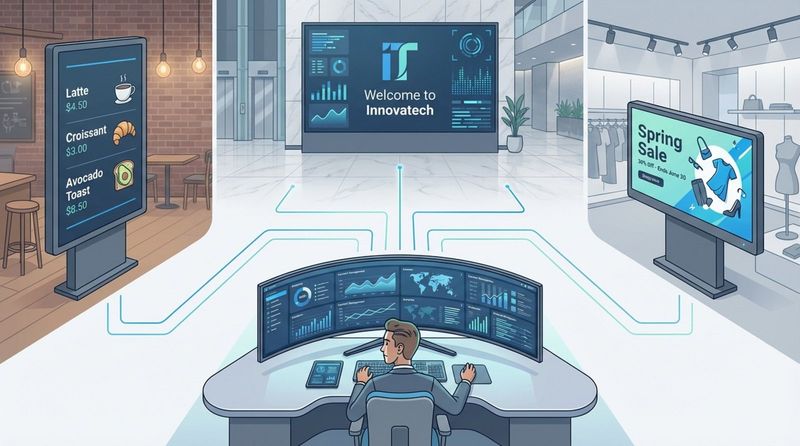
A primary advantage of digital content is its availability. Unlike physical signage which is fixed to one spot, digital assets can be distributed to thousands of endpoints instantly. This "from anywhere" accessibility means a marketing manager can push a new campaign to screens in multiple cities without leaving their desk.
Portability ensures that content meets the user where they are. A training video can be watched on a desktop, a tablet, or a breakroom TV. This flexibility allows content to integrate smoothly into daily workflows and customer journeys, ensuring the message is seen regardless of the device.
Scalability and Easy Updates
Digital content scales effortlessly. The effort required to publish a playlist to one screen is roughly the same as publishing it to a thousand. This allows businesses to grow their network without a linear increase in workload. A single high-quality asset can serve an entire organization, maximizing the return on creative investment.
Crucially, digital content allows for real-time updates. If a price changes or a product sells out, you can correct the information in seconds. This agility is vital for industries like retail and food service, where accuracy is key. You can refresh messaging without the waste and lag time of reprinting physical materials.
Interactivity and Engagement
Traditional media is a monologue; digital content is a dialogue. interactive scenarios-such as touchscreens, QR codes, and dynamic triggers-invite the audience to participate. This two-way interaction captures attention longer and provides measurable data on user preferences.
Engagement is a critical KPI. It is not just about impressions; it is about action. Whether it is scanning a code to view a menu or interacting with a wayfinding kiosk, active participation builds a stronger connection than passive viewing. It turns a screen into a service point.
Searchability and Optimization
Digital content is data-rich, making it easy to organize and find. Through metadata and tagging, users can locate specific assets within massive libraries instantly. For public-facing content, this supports Search Engine Optimization (SEO), ensuring your message reaches the right audience online.
Optimization also ensures content performs well across different hardware. A video might need to be formatted differently for a vertical digital signage kiosk versus a horizontal desktop monitor. Proper optimization ensures reliable playback and legibility, regardless of the screen resolution or orientation.
What Are the Main Types of Digital Content?
Text Content: Articles, Blogs, Ebooks
Text remains the foundation of clear communication. From short announcements on a lobby screen to detailed industry reports, written content conveys specific information that visuals alone cannot. In a digital signage context, text drives clarity-headlines, price points, and calls to action must be readable at a glance.
In broader marketing, long-form text like whitepapers establishes expertise. While video captures attention, text often closes the deal by providing the necessary details, specifications, and arguments required for decision-making.
Visual Content: Images, Graphics, Infographics
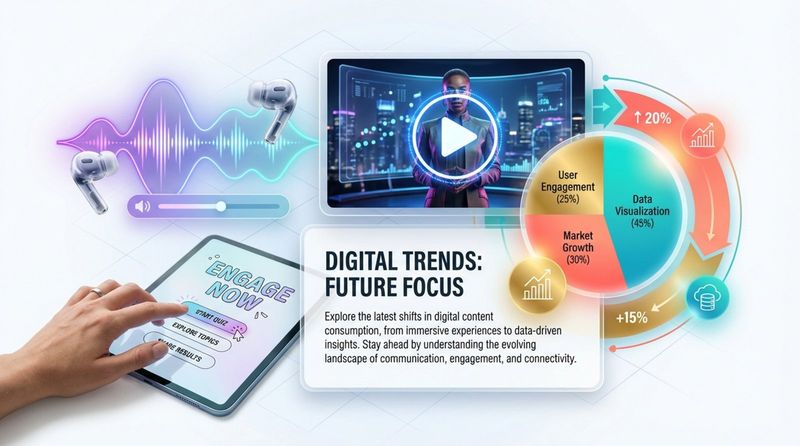
The human brain processes visuals faster than text. High-quality images and motion graphics are essential for grabbing attention in high-traffic areas. In environments like retail or corporate offices, visuals break through the noise. A well-designed slide can communicate a brand's mood and offer instantly.
Infographics are particularly effective for simplifying complexity. By visualizing data or processes, you make information digestible. This format is ideal for internal communications, such as displaying safety protocols or performance KPIs on dashboard screens.
Audio Content: Podcasts, Music, Audiobooks
Audio adds another layer to the environment. In physical spaces, background music or audio announcements set the tone and pace of the customer experience. For remote consumption, podcasts allow audiences to engage with long-form content while multitasking.
While often secondary to visuals in digital signage (as many screens run muted), audio remains a powerful tool for capturing attention in specific zones, such as elevators or waiting rooms, where the audience is captive.
Video Content: Streaming, Tutorials, Webinars
Video is often the highest-performing asset type. It combines movement and sound to tell a story efficiently. For businesses, video ranges from polished brand advertisements to simple "how-to" loops playing on an endcap display. Motion naturally draws the eye, making video a staple for digital displays.
Webinars and live streams extend this value by adding timeliness. Streaming a town hall meeting to office screens ensures employees feel connected, regardless of their location. Reliable playback is critical here to maintain a professional image.
Interactive Content: Quizzes, Polls, Games
Interactive content shifts the user from observer to participant. Kiosks offering product catalogs, wayfinding maps, or feedback surveys provide immediate value. This type of content often yields high-quality data regarding what customers are actually looking for.
Gamification helps in training and education. Leaderboards or quizzes displayed on team screens can drive motivation and reinforce learning objectives. It transforms necessary information into an engaging activity.
User-Generated Content: Reviews, Social Posts
User-Generated Content (UGC) acts as social proof. displaying customer reviews, photos, or social media feeds on your screens builds trust. People often find the voices of peers more credible than corporate messaging.
Integrating social feeds into your digital signage keeps content fresh with zero effort. It encourages customers to engage with your brand online in hopes of seeing their own post appear on the screen in-store.
How Are Digital Content Types Used?
Content for Marketing and Branding
Marketing content is designed to move the audience through a funnel. Awareness content creates interest, while consideration content-like product comparisons-educates. In physical locations, digital signage serves as the "closer," delivering promotions and upsells right at the point of purchase.
Branding is about consistency. Unified messaging across your website, social channels, and physical screens reinforces your identity. A reliable content management system ensures that your brand voice remains consistent across every location.

Educational and Training Purposes
Digital content streamlines knowledge transfer. In corporate and industrial settings, screens replace bulletin boards to share safety reminders, shift schedules, and compliance updates. This ensures that critical information is always current and visible to the workforce.
For customer education, content can answer common questions before a staff member is needed. Explainer videos in waiting rooms or product demos in aisles reduce the burden on staff and help customers make informed decisions faster.
Entertainment and Social Engagement
In waiting areas, such as healthcare lobbies or automotive repair shops, content serves to reduce perceived wait times. Entertainment feeds, news tickers, and trivia keep visitors occupied and lower anxiety levels. This improves the overall customer experience without requiring active staff involvement.
Social engagement content fosters community. displaying event photos or highlighting employee anniversaries on office screens helps build culture. It connects individuals to the larger group, whether they are customers or team members.
What Is Digital Content Distribution?
Why Effective Distribution Matters
Creating great assets is only the first step; you must also ensure they are seen. Distribution is the strategic process of publishing content to the right channels to reach your target audience. Without a plan, even high-value content can go unnoticed.
Effective distribution also provides data. By tracking where content is viewed and how long it plays, you gain insights into what works. This allows you to optimize your strategy, focusing resources on the channels and formats that drive actual results.
Owned, Earned, and Paid Distribution Channels
Distribution strategy is typically categorized into three buckets:
- Owned channels: Assets you control, such as your website, email lists, and your network of digital screens.
- Paid channels: Placements you purchase, including social media ads, PPC, and sponsored content.
- Earned channels: Organic exposure gained through third parties, such as press coverage, shares, and reviews.
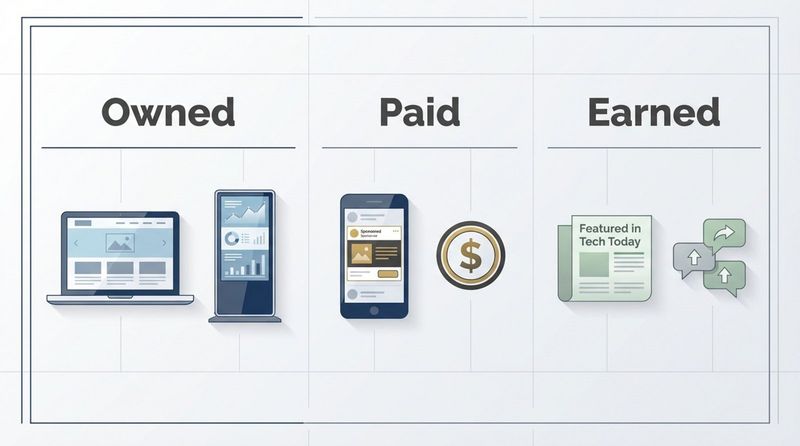
While paid and earned media are valuable for reach, owned channels offer the highest control and stability. Investing in your own distribution network ensures you are not solely reliant on external algorithms.
What Are the Main Channels for Distributing Digital Content?
Owned Channels: Websites, Blogs, Email Lists
Your website is your digital headquarters. It is the primary destination for search traffic and lead generation. Blogs and resource libraries nurture these leads by demonstrating expertise. Because you own the platform, you control the user experience entirely.
Email lists provide a direct line to your audience. Unlike social media, where reach is throttled, email lands directly in the user's inbox. It remains a highly effective channel for retention and personalized communication.
Social Media Platforms and Apps
Social platforms are discovery engines. They are excellent for brand awareness and community building. However, content here must be adapted to the specific format of each app-short and visual for Instagram, professional and informative for LinkedIn.
While powerful, social media is "rented land." Algorithms change frequently, impacting visibility. It is best used to drive traffic back to your owned channels where you can convert interest into action.
Earned Media: Shares, Mentions, Backlinks
Earned media validates your brand. When reputable sources link to your content or customers share it organically, it signals quality to both search engines and new audiences. It is the digital equivalent of word-of-mouth.
Cultivating earned media requires consistent quality. promoting shareable content and engaging with your community increases the likelihood of organic distribution.
Paid Channels: Advertising and Sponsorships
Paid distribution guarantees visibility. It is useful for jumpstarting a new campaign or targeting specific demographics that are hard to reach organically. Programmatic ads and sponsored posts put your content in front of new eyes immediately.
Sponsorships leverage the trust of established creators. Partnering with industry voices can lend credibility to your content, making it feel less like an advertisement and more like a recommendation.
Content Syndication and Partnerships
Syndication involves republishing your content on third-party sites to tap into their audience. This can drive significant traffic and build backlink profiles. It is a way to get more mileage out of existing assets.
Partnerships allow brands to pool resources. Co-marketing efforts, such as joint webinars or reports, allow you to reach a partner’s audience with an endorsement, expanding your reach efficiently.
What Are Digital Content Distribution Platforms?
Popular Examples of Distribution Platforms
Content Distribution Platforms (CDPs) streamline the publishing process. For online media, tools like Hootsuite or Buffer manage social scheduling. For web content, CMS platforms like WordPress are standard. However, for physical spaces, specialized software is required to manage hardware endpoints effectively.
For businesses deploying content to physical screens, Look Digital Signage is a strong fit. It serves as a central hub for managing your offline distribution network. The Look CMS allows you to upload assets, build screen layouts, and push content to any number of displays remotely. With features like smart scheduling and offline playback, Look DS ensures your content runs reliably without constant supervision, making it ideal for teams that need to keep screens running smoothly across multiple locations.
Benefits of Using a Content Distribution Platform
Centralization is the primary benefit. Managing content from a single dashboard saves hours of manual work. You can ensure brand consistency across all channels-web, social, and physical signage-without juggling multiple logins and workflows.
Platforms also offer automation. Scheduling content in advance allows teams to "set and forget" routine updates, freeing up time for strategy. Additionally, centralized analytics provide a clear view of performance, helping you prove ROI and make data-driven decisions.
How to Choose the Right Digital Content Distribution Strategy
Aligning Content Format with Audience Preferences
Your strategy must match your audience's habits. If your target demographic is mobile-first, prioritize vertical video and social apps. If you are communicating with desk-based employees, email and intranet dashboards may be more effective.
Context matters. Content displayed on a digital menu board needs to be high-contrast and concise, whereas a blog post can be detailed and nuanced. matching the format to the environment ensures the message is received clearly.
Optimizing Content Per Channel
One size rarely fits all. A video created for YouTube may need to be trimmed and captioned for a silent lobby screen. Images must be compressed for web speed but high-resolution for large 4K displays. tailoring your assets to the technical specifications of each channel prevents playback issues and poor user experiences.
Optimization also involves timing. Posting social content during peak hours increases visibility. Similarly, scheduling digital signage content to match foot traffic patterns-like showing breakfast menus only in the morning-maximizes relevance.
Repurposing and Scheduling Content Effectively
Efficient teams repurpose assets. A single video shoot can yield a long-form tutorial, several social clips, and a silent background loop for in-store screens. This approach maximizes the value of every creative effort.
Scheduling is the backbone of consistent distribution. Using a content calendar ensures a steady flow of information and prevents last-minute scrambles. Automated tools allow you to plan weeks or months ahead, ensuring your messaging remains timely and strategic.
What Metrics Help Measure Digital Content Distribution Success?
Traffic, Engagement, and Reach
In the digital realm, page views and unique visitors track volume. For physical screens, metrics like "impressions" (based on foot traffic) and playback analytics help you understand reach. Knowing how many times a specific ad played helps verify campaign delivery.
Engagement measures quality. Online, this is clicks and shares. Offline, it can be measured by interaction with kiosks or QR code scans. High engagement indicates that the content is relevant and compelling to the audience.
Conversions and ROI
Ultimately, content should drive action. Conversion rates track how many viewers took the desired next step-signing up, buying, or inquiring. Tracking these actions back to the specific content piece helps calculate Return on Investment (ROI).
For digital signage, ROI might be measured by an uplift in sales for promoted items or a reduction in perceived wait times. Linking content performance to business KPIs proves the value of your strategy.
Feedback and User Interaction
Qualitative data adds context to the numbers. Direct feedback from customers or staff can reveal issues that data might miss. If employees ignore a safety screen, the content may be stale or poorly placed.
Monitoring sentiment helps you adjust tone. Whether through social comments or direct surveys, understanding how your audience feels about your content allows you to refine your approach and build stronger connections.
Adapting to the Future of Digital Content
Emerging Content Formats and Distribution Trends
The future is immersive. We are seeing a shift toward "spatial" content that interacts with the physical world, driven by AR and smarter displays. Screens are becoming sensors, capable of triggering content based on proximity or demographics, making the experience hyper-relevant.

Privacy will shape distribution. As data regulations tighten, owned channels and first-party data will become even more critical. Building direct relationships with your audience-through email or your own screen network-will be more valuable than relying on third-party tracking.
Tips for Staying Ahead in Digital Content Strategy
Agility is key. The platforms and tools will change, but the need for clear communication will not. Keep your strategy flexible enough to test new formats without abandoning what works. Allocate resources to experiment with new tech while maintaining a solid foundation of reliable content.
Finally, focus on utility. Whether it is a helpful guide or a clear wayfinding map, content that solves a problem will always win. Prioritize clarity and value, and use data to refine your approach continuously. By keeping the user's needs at the center, your content strategy will remain effective regardless of the medium.