Table of Content
Libraries have changed a lot over the years. They are no longer just quiet places full of books, but active community centers full of events, services, and learning opportunities. In this change, digital signage has become a very useful tool for staying in touch with visitors. Traditional ways of sharing information, like posters and flyers, have limits. Digital signage offers a lively, eye-catching, and efficient way to share news, promote services, and improve the overall library visit. It brings the library’s resources and activities into a modern format that is easier to see, understand, and enjoy for people used to digital screens.
In the sections below, you’ll see how digital signage replaces the weak points of static signs and also opens up new ways for libraries to grow in their changing role. From helping people find their way around large buildings to promoting busy event calendars, digital signage is becoming a key part of how up-to-date libraries work.
Limitations of traditional print communication in libraries
For many years, the main way libraries shared information was through bulletin boards filled with paper notices, posters, and flyers. This worked reasonably well in the past, but it is now struggling to keep up with modern needs. People today are used to screens, motion, and constantly updated content. Static paper signs often cannot hold their attention.
Old-style print communication creates several problems. It can lower visitor engagement, increase staff workload, waste money, and harm the environment. Seeing these problems helps explain why many libraries are now moving to digital options.

Limited visibility and attention retention
Paper-based boards are everywhere in libraries, but they have a big weakness: they are easy to ignore. In a world full of screens and moving images, a still flyer on a crowded board quickly blends into the background. Even if the design is good, many people will walk by without really seeing it. Research shows that digital signage can get up to four times more views than printed posters, which shows how much more effective it can be.
The location and layout of bulletin boards also reduce their impact. Important notices can be hidden behind layers of old flyers. Overlapping sheets create visual clutter, so visitors may struggle to find the messages that matter to them. This mess hurts the look of the library and weakens the communication, leading to low interest and missed chances to connect with the community.
High staff workload for frequent updates
Keeping printed signs current takes more work than many people expect. Staff must regularly check boards in different areas and sometimes in multiple branches. They review new notices, print them, organize them by hand, and remove old items.
This hands-on process uses a lot of time and energy that staff could spend on other tasks, such as running programs, helping visitors, or improving the collection. Because every change needs physical action, updates can be slow. Important information might not be posted quickly enough, so visitors miss out or receive it too late.
Recurring printing costs and environmental impact
Relying on printed materials also costs money and creates waste. Libraries often work with tight budgets, and the ongoing need for paper, ink, and printer upkeep adds up over the year. For a mid-sized library, the cost of running traditional bulletin boards, including printing, staff time, and replacing hardware, can reach several thousand dollars annually.
There is also the issue of environmental impact. Producing, shipping, and throwing away stacks of flyers and posters uses resources and creates trash. This goes against current efforts to reduce waste and protect the environment. Many libraries now aim to follow greener practices, so they are searching for options that use fewer materials and create less landfill waste.
Lack of flexibility for last-minute or real-time changes
Another major problem with printed communication is its lack of flexibility. To change even a single detail on a poster, someone must design, print, and physically replace it. This slow process is not suited to last-minute or urgent updates.
Think about an unexpected closure due to bad weather or a sudden change in an event time. With paper signs, staff must rush to print and post new notices, and many visitors may still miss the update. This delay can cause confusion, missed events, and unhappy visitors. It also makes it hard for the library to respond quickly in fast-changing situations.
Key reasons to introduce a library digital signage system
Once you see the problems with paper-based communication, the value of digital signage becomes very clear. Digital displays give libraries a modern, flexible, and powerful way to share information. They solve many of the issues of print signs and open up new ways to improve the visitor experience. As libraries grow into active community spaces, digital signage is becoming an important support for this role.
Digital screens can help people find their way, increase interest in programs, and reduce paper use. They also make it easier to keep information current and reach different groups of visitors. Below are the main benefits that explain why digital signage can be such a strong tool for libraries.
Improves library wayfinding and navigation
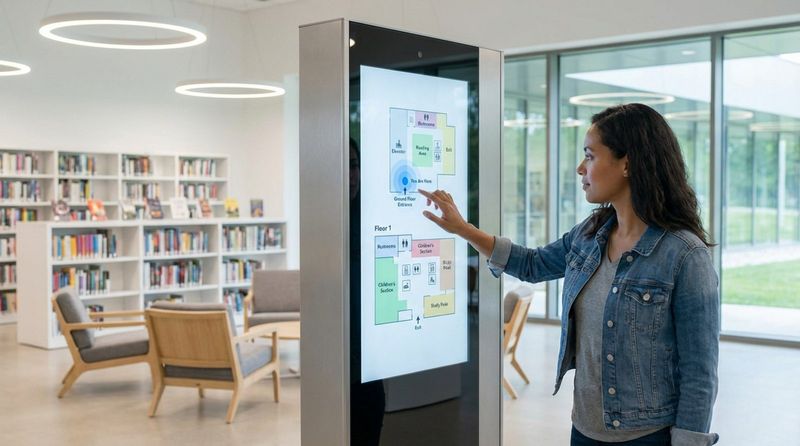
Large or multi-floor libraries can be confusing, especially for new visitors. Static wall maps often do not give enough detail or are hard to read. People may end up wandering around or asking staff for help again and again. Digital signage provides much clearer and more flexible guidance.
Digital displays can show bright, clear maps and floor plans that point visitors to sections, meeting rooms, restrooms, or study spaces. Interactive kiosks can do even more. Visitors can search for a specific book or subject and see exactly where it is. Some systems can give step-by-step directions on screen. Advanced options can even update directions based on where the visitor is in the building, using tools like Bluetooth beacons. This reduces the number of basic questions staff need to answer and makes visiting the library easier and less stressful.
Supports real-time event scheduling and announcements
One of the strongest features of digital signage is the ability to update information instantly. Unlike a paper notice, which quickly becomes out of date, a digital screen can receive new content in seconds from a central control system. This is especially useful for busy event schedules where things change often.
Libraries can show clear, attractive event listings with dates, times, and short descriptions of upcoming talks, workshops, classes, and community meetings. If an event is cancelled, moved, or sold out, staff can change the information on all screens at once, so visitors always see correct details. Digital signage can also show live data, such as which study rooms, computers, or printers are free. This helps visitors plan their time better and reduces frustration.
Highlights new arrivals, recommended books, and special collections
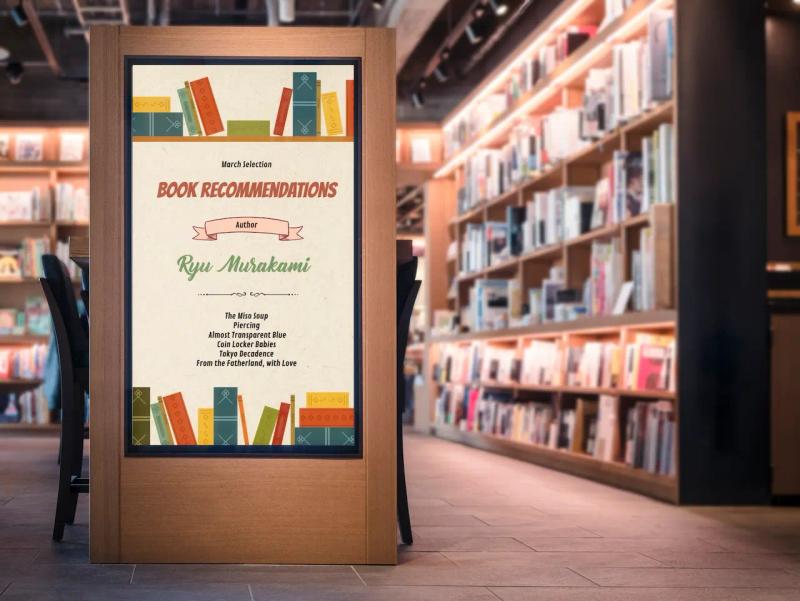
Libraries regularly add new materials, but making people aware of them can be hard with static displays. Digital signage gives a bright, moving “showcase” that can make new books or resources stand out and catch attention.
Screens can display cover images of new arrivals, short summaries, ratings, or staff picks. Librarians can create themed lists, such as “Mystery of the Month,” “Award Winners,” or “Great for Teens.” They can also highlight eBooks, audiobooks, and online resources that people may not notice otherwise. Rare items, archives, and special collections can be given their own rotating spotlight. By showing this content in a visual and changing format, the library can spark curiosity, lead visitors to explore new subjects, and encourage repeat visits.
Promotes library programs and activities
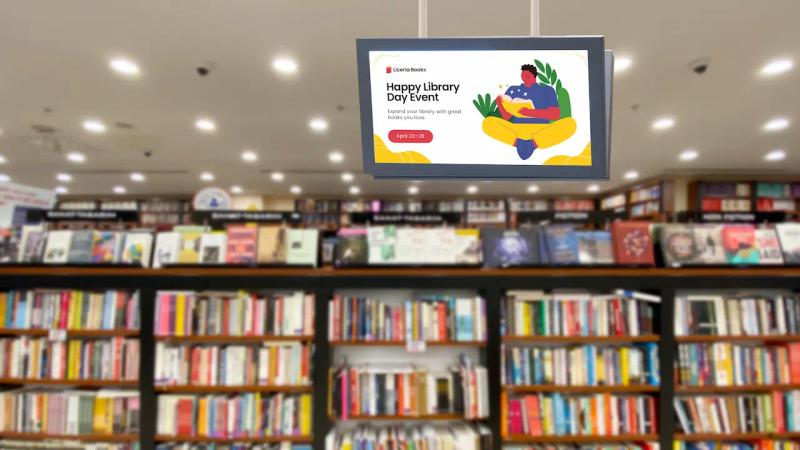
Most libraries run a wide range of programs: story hours, language classes, coding clubs, film nights, community meetings, and more. Getting strong attendance depends on clear and attractive promotion. Digital signs can present these programs in a way that stands out much more than a simple paper flyer.
Screens can show slideshows, short videos, and bold graphics that explain what each program offers. Photos from past events can give people a sense of what to expect and encourage them to join in. Libraries can also add QR codes so visitors can scan the screen with their phone to sign up on the spot or read more details. Because digital content is quick to update, promotions can change as soon as new programs are planned or old ones end, keeping the information always current.
Increases engagement with interactive content
People today are used to tapping, swiping, and interacting with screens. A digital sign does not have to be just a one-way message. Interactive content can turn a simple display into an activity that visitors enjoy and remember.
Libraries can add polls, quizzes, or trivia about books, authors, or local history. For example, a screen might ask, “How well do you know this classic novel?” and let visitors pick answers on a touchscreen. Interactive kiosks can also act as self-service stations. Visitors can search the catalog, check item availability, renew loans, or reserve study rooms without waiting in line. These features invite people to spend more time exploring what the library offers and help them feel more involved with the space and its services.
Shares clear notifications about policies, rules, and computer usage
Digital signage is also very useful for sharing practical information that keeps the library running smoothly. Clear rules help everyone enjoy the space, but printed signs are often overlooked or become outdated. Digital displays can present short, simple messages that stand out more and can be updated whenever needed.
Screens can remind visitors about computer rules, such as session limits, internet use guidelines, or printing procedures. They can also list quiet areas, group study zones, and any rules about food and drink. During exam periods or holidays, digital signs can show special opening hours or service changes. Because staff can adjust these messages right away, the library can respond quickly to new situations and help avoid confusion or conflict.
Strengthens library branding and visual identity
Libraries, like other public institutions, benefit from having a clear identity that people recognize and trust. Digital signage is a strong tool for presenting a consistent look and message throughout the building.
Screens can use the same logos, colors, and fonts as the library’s website and printed materials. They can show short messages about the library’s goals, values, and services, as well as quotes from visitors about their positive experiences. This consistent visual style helps people feel familiar with the library and see it as modern, welcoming, and active. Bright, well-designed content can also appeal more to younger visitors and newcomers, helping them see the library as a place that keeps up with current technology.
Offers cost-effective and sustainable communication
Digital signage also makes sense from a budget and environmental point of view. While buying screens and software requires an initial spend, over time the savings can outweigh these costs, especially when compared to constant printing.
Once digital signage is in place, the need for paper, ink, and frequent printer servicing drops sharply. This saves money year after year and reduces waste. Staff who used to spend hours on printing and pinning up posters can use that time for activities that add more value for visitors. Many modern displays are also energy-efficient and long-lasting, lowering electricity use and replacement costs. By moving to digital signage, libraries can cut expenses and reduce their environmental footprint at the same time.
Conclusion
Moving from paper bulletin boards to digital displays marks a clear step forward for libraries. It supports their shift from quiet book storage to lively centers of learning and community life. Digital signage overcomes many of the weaknesses of traditional communication and brings new options for sharing information in clear, attractive, and flexible ways.
Beyond practical improvements like better wayfinding, instant updates, and reduced printing, digital signage helps build stronger relationships with visitors. It invites them to explore, interact, and take part in what the library offers. By adopting this technology, libraries refresh how they present themselves and how they serve their communities in a digital age. Investing in digital signage is a way to invest in the library’s future-one that is active, welcoming, and easy for everyone to access and enjoy.