Table of Content
In modern retail, supermarket signage has grown from simple price labels and aisle signs into a smart, multi-sensory communication system. It changes the game by turning the store from a static warehouse into a lively, interactive space that connects the ease of online shopping with the rich, hands-on experience of walking the aisles. Using real-time data, immersive technology, and personal messages, signage now acts like a quiet helper, guiding shoppers through a trip that is both fast and engaging.
Even with the rapid rise of eCommerce and delivery apps, recent data shows something surprising: about 95% of consumers still like walking store aisles and choosing products themselves. This shows a huge chance for retailers to use signage to redefine the in-store experience. Modern signs don’t just tell you where the bread is; they can tell you where the grain came from, offer a recipe for avocado toast, and highlight a flash sale on butter-all during one walk down the aisle.
Why Supermarket Signage Matters for Retail Success
Improves Customer Navigation and In-Store Experience
Grocery stores are busy places where speed and clarity matter. Clear wayfinding signage works like a map, cutting down on “wandering” and helping shoppers find what they need without chasing down a busy employee. When the layout is clear and signs are easy to read and understand, shoppers move faster and more confidently, which helps both customers and the store’s revenue.
Beyond basic directions, digital wayfinding systems can now offer interactive maps. Imagine a kiosk where a shopper types “gluten-free flour” and gets a highlighted route straight to the shelf. This type of service turns a chore into a smooth visit, so shoppers leave feeling capable and relaxed, not tired and annoyed.
Drives Awareness and Promotes Special Offers
The ability to change promotions instantly is a major benefit of digital signage. Printed posters take days to design, print, and hang. Digital screens let managers react to stock levels in seconds. If a store has too many strawberries that are close to peak ripeness, they can instantly launch a “Buy One, Get One Free” offer across all screens. This boosts sales and cuts food waste at the same time.
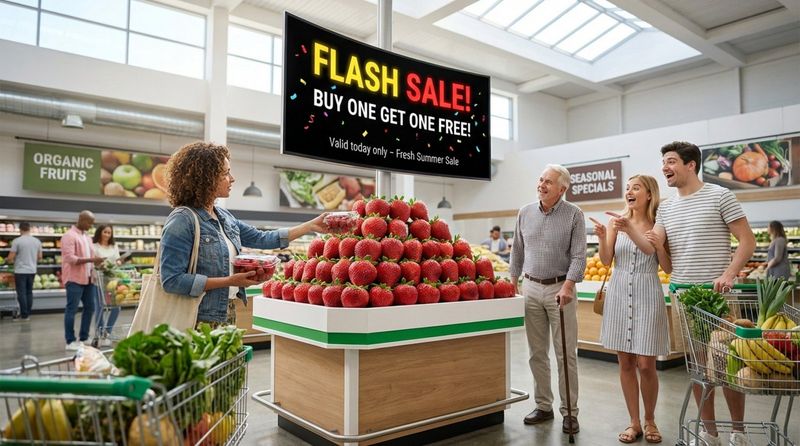
These real-time deals do more than move stock; they add energy and urgency. Flash sales and daily specials near the entrance give shoppers a reason to explore sections they might usually skip. This increases the chances they discover new items while feeling like they got a great deal.
Increases Sales and Shopper Engagement
For 64% of digital signage users, engagement is the main benefit. Bright visuals and moving content naturally catch the eye, making it easier to stand out in a busy store. High-resolution screens showing crisp images of fresh produce or hot prepared meals can trigger impulse buys through visual merchandising that feels vivid and appetizing.
Signage also works as a quiet salesperson that supports upselling. A screen in the pasta aisle might suggest a premium sauce or a matching wine, gently encouraging shoppers to add more items to their basket. This turns a simple list into a guided shopping experience, which can steadily grow overall sales over time.
Supports Brand Loyalty and Differentiation
In a crowded market, signage gives grocery stores a stage to share what makes them different. It might show partnerships with local farms or highlight efforts in sustainable sourcing. Screens help build an emotional bond with shoppers. Many customers now prefer brands that share their values, and signage is a direct way to communicate those values on the spot.
Consistency also matters for loyalty. When messages feel connected from entrance to checkout, the store looks polished and modern. A place that feels tech-savvy and customer-focused builds trust, giving shoppers more reasons to come back week after week.
Current Trends Shaping Supermarket Signage
Digital Transformation: Beyond Static Signs
The move from paper posters to digital displays is one of the clearest changes in retail today. These displays are no longer just TVs on the wall; they are smart tools managed through cloud software. A grocery chain can update weekly specials across thousands of screens from a single device, keeping branding aligned and saving time and labor.
This change also shows up in deli and bakery areas through digital menu boards. These boards remove the slow process of reprinting menus whenever prices change or items run out. Instead, content updates in seconds, giving shoppers up-to-date details and tempting visuals that stir interest and appetite.
Personalized Messaging Driven by Audience Analytics
One of the fastest-growing trends for 2026 is using audience analytics with digital signage. By gathering data on foot traffic, viewing time, and even traits like age or gender (through facial recognition where allowed), retailers can adjust content for the people standing in front of each screen. For example, a screen may show kids’ snacks when it detects a parent with children, or highlight high-protein items during early evening hours when gym-goers are likely to shop.
This level of targeting makes offers feel relevant instead of generic. When shoppers see deals that match their lifestyle-such as gluten-free offers for health-conscious buyers-they are far more likely to act. It moves marketing toward finely focused messages that respect shoppers’ time and interests.
Interactive Displays and Touchpoints
Interactivity is changing the role of the shopper from passive to active. Many large supermarkets are trying “lift-and-learn” systems. When a shopper picks up a product, a nearby sensor triggers a screen to show that item’s story, nutrition details, or reviews. This brings the depth of online information right to the shelf.
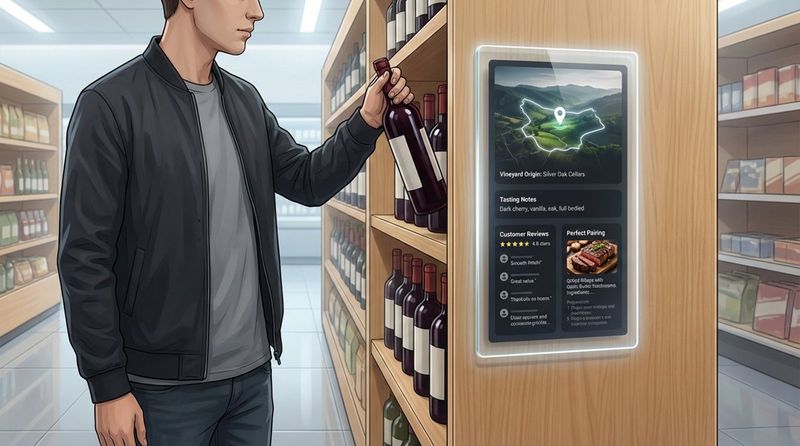
Touch-screen kiosks also act as self-service hubs. Shoppers can look up recipes, check loyalty balances, or handle returns. These interactive tools increase engagement and free up staff to handle more complex questions and tasks, which raises overall store efficiency.
Integration of IoT Devices for Real-Time Updates
The Internet of Things (IoT) links the digital and physical store. In a modern supermarket, IoT sensors can monitor stock levels in real time. If a popular cereal runs out, digital signs can automatically switch to suggest a similar option, keeping the sale and avoiding disappointment.
IoT also lets shoppers’ phones connect with store screens. If a customer has been viewing certain products in the store app, in-store signs can recognize that profile and show deals on those same items. This blend of personal devices and public screens creates a smooth system that feels advanced and highly efficient.
Streamlining Checkout and Reducing Wait Times
The checkout line is often the most annoying part of grocery shopping. Yet 84% of shoppers say watching content on digital screens makes waiting in line feel much less stressful. By showing trivia, news, or cooking tips at the checkout, retailers lower the “felt” wait time and keep customers interested until they leave.
Beyond entertainment, screens at checkout can show queue lengths or estimated wait times so shoppers can pick the best line. Some stores even use interactive queue systems where shoppers select the service they need and are guided to the right counter, making the last stage of the trip smoother.
Role of Technology in Game-Changing Supermarket Signage
Smart Shelf Labels and Dynamic Pricing
Smart shelf labels are a major shift from paper tags. These electronic labels support dynamic pricing, letting retailers change prices in real time based on demand, time of day, or expiry dates. This works especially well for cutting food waste; as an item nears its “sell-by” date, the price can drop automatically to move it faster.
Smart labels can show more than price. They can include QR codes that give full ingredient lists or allergy details when scanned. This helps shoppers make informed choices without struggling to read tiny packaging, which is especially helpful for people with dietary needs or visual challenges.
Augmented Reality (AR) and Virtual Reality (VR) in Aisles
AR is now a practical tool in the aisle. By pointing a smartphone at a product, shoppers can see AR overlays with origin stories, reviews, or a virtual “unboxing.” For more complex items, AR can show how to use an ingredient or assemble a kit, making buying decisions easier.
In home decor or floral sections of larger supermarkets, VR can help shoppers picture how an item will look at home. By placing a virtual piece of furniture or bouquet inside a simulated room, customers can buy with more confidence, which lowers returns and raises satisfaction.
Data-Driven Insights for Content Optimization
The engine behind modern signage is data. Retailers can use heat maps from signage systems to see which areas get the most traffic. This helps with layout planning: high-margin products can move into busy zones, while slower areas can be refreshed with stronger displays.
By tracking which offers receive the most taps or how long shoppers view a screen, stores can refine what they show. This way the content on each screen connects with the audience and delivers a better return on every display.
How Sustainable Signage Impacts Retail Environments
Adopting Eco-Friendly Materials and Practices
As environmental concerns grow, supermarkets are shifting to more sustainable signage. This includes using recycled or biodegradable materials for any remaining printed signs and choosing energy-saving or solar-powered digital displays. These steps lower the store’s carbon footprint and show real care for the environment.
Sustainable signage also involves long-lasting choices. By picking durable screens that handle spills and busy aisles, retailers extend the life of their systems and cut down on waste from frequent replacements.
Showcasing Sustainability to Shoppers
Signage is a key way to share a brand’s environmental efforts. Screens can display sourcing details, eco-labels, and progress against sustainability goals. When shoppers see that their supermarket is cutting plastic use or supporting fair-trade producers, it builds trust and loyalty that standard ads rarely achieve.
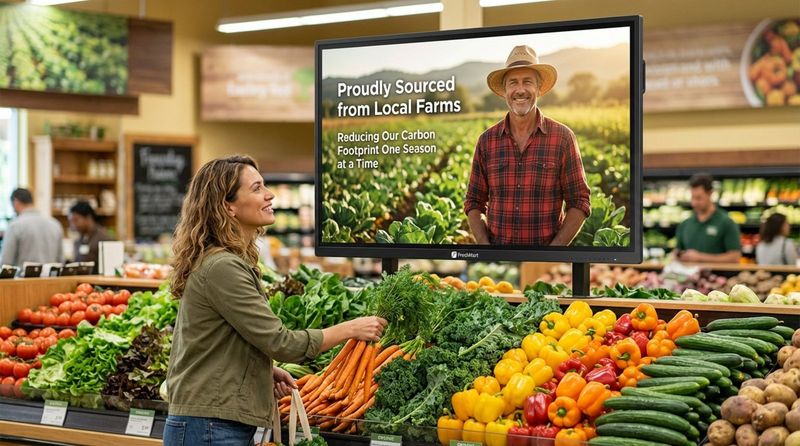
By showing these values right at the shelf, stores can nudge shoppers toward greener choices. A screen in the produce aisle might explain why buying “imperfect” fruit helps reduce waste, aligning store goals with customers who want to shop more responsibly.
Reducing Waste Through Digital Solutions
The biggest environmental benefit of digital signage is the drop in paper waste. Traditional stores use huge amounts of flyers, posters, and price tags each year, most of which are thrown away after a short time. Digital displays remove most of this print-and-toss cycle.
By going digital, stores also cut emissions from printing, ink, and shipping materials. It is a cleaner, more efficient way to communicate that appeals strongly to eco-conscious shoppers who prefer brands that match their environmental values.
Effective Strategies for Implementing Innovative Signage
Aligning Signage with Store Layout and Traffic Flow
For signage to work, it must sit where people naturally look and walk. Successful retailers, like the Sendiks chain, place screens in their busiest departments and match them to the natural flow of traffic. Often, one to four screens per department is the sweet spot to keep interest without overwhelming shoppers.
Content should also match its location. A screen near the entrance should highlight first impressions like fresh items and daily deals, while screens in specific aisles can focus on product tips, recipes, or pairings. This careful placement helps the right message reach shoppers at exactly the right moment.
Tailoring Content for Audience Demographics
Knowing who is in the store and when they shop matters for planning content. For example, during the 5:00 PM rush, a store might show quick dinner ideas and grab-and-go offers for commuters. On quiet weekday mornings, screens might shift to household staples and wellness items that appeal to retirees or stay-at-home parents.
Using flexible templates lets managers change messages quickly based on the crowd in the store. Keeping content current and relevant for the people on the floor leads to higher engagement and better results from promotions.
Training Staff for Technology Adoption
Even the smartest signage system needs trained people behind it. To get full value from digital displays, supermarkets must train staff. Employees should know how to update offers, check basics on the system, and help customers who are new to interactive kiosks.
When staff feel confident using the technology, they can save time and work more effectively. Instead of spending hours swapping paper price tags, they can focus on customer service, knowing that digital tools are handling updates quickly and accurately.
Frequently Asked Questions about Supermarket Signage Transformations
What Are the Measurable Benefits of Digital Signage in Grocery Stores?
Digital signage has both financial and operational benefits. Stores often see a direct lift in sales for items featured on screens-sometimes up to 15% when recipes are included with product suggestions. On the operations side, digital signage cuts costs for printing, shipping, and hanging physical materials. Data from screens and kiosks also supports better inventory planning and store layout decisions.
Beyond metrics, the softer benefits matter too. Higher customer satisfaction, shorter perceived wait times, and a more modern image all support long-term success and a stronger position against competitors.
What Risks Should Retailers Consider Before Upgrading Their Signage?
Privacy is a key concern, especially when using audience analytics and facial recognition. Retailers must follow data protection laws and be open with customers about what data they collect and why. There is also a risk of “content fatigue”; if screens are cluttered or show irrelevant content, shoppers may start to ignore them.
Technical issues are another risk, including outages or security gaps. Stores should invest in secure, stable platforms and have support plans ready so that game-changing signage does not turn into a source of stress for staff and shoppers.
Are There Cost-Effective Options for Small Chains or Independent Stores?
Yes. Digital signage is now accessible to small and mid-sized retailers. Many providers offer easy, cloud-based systems with ready-made templates, so small stores can create professional content without a design team. Independent owners can start with a few screens in the busiest areas to test results before expanding.
Hardware is more affordable too, and many setups work on standard smart TVs. By focusing on high-impact spots like the entrance, prepared foods, or the deli, smaller businesses can see strong returns through more impulse purchases and better customer engagement.
Looking Ahead: The Future of Supermarket Signage
Emerging Technologies and What to Expect Next
The next wave of supermarket signage will bring even more immersion and automation. Early signs include “mood detection” tools that adjust content based on a shopper’s facial expression-perhaps showing a cozy recipe or upbeat discount when someone appears stressed. Holographic arrows or guides that appear in the air are also being explored, moving guidance beyond flat screens.
Artificial Intelligence will grow from simply predicting behavior to actively creating content. AI may soon build live shopping lists, meal plans, or bundle offers as customers move through the store, showing them on nearby screens or sending them to wearable devices. The goal is a smooth, low-friction shopping trip where the store anticipates needs ahead of time.
Preparing for Shopper Expectations in the Digital Era
As physical and digital experiences blend, shopper expectations will keep rising. Customers will expect the same level of personalization and detail in-store that they receive on their favorite shopping sites. Retailers that ignore these signage trends risk appearing outdated and disconnected from how people shop today.
The key is balance. Technology should support and improve the human side of shopping, not replace it. The most successful supermarkets of the future will use signage to make trips faster, easier, and more enjoyable-so that the 95% of people who love browsing aisles continue to choose in-store shopping for many years to come.