
Table of Content
What are nightclub menus on digital signage? They are dynamic, cloud-managed screens that replace traditional printed bar menus to display drink specials, pricing, and high-energy visuals. By switching to digital signage software, venues can schedule promotions, update sold-out items in minutes, and keep the bar line moving faster without the constant hassle and cost of reprinting paper menus.
What Are Nightclub Menus on Digital Signage?
Nightclub menus on digital signage are a practical upgrade from sticky laminated menus and hard-to-read chalkboards. They are modern screens-ranging from slim menu boards behind the bar to large LED walls-placed strategically around the venue to share information while adding to the entertainment. Using digital signage software, these displays show content that can be updated in real time. Picture walking into a crowded club and, instead of straining to read a paper menu in low light, you see a crisp, glowing screen featuring a high-definition video of a signature cocktail alongside easy-to-read pricing. That is the clarity digital menus provide.

How Digital Signage Changes the Nightclub Experience
Digital signage quietly shapes the atmosphere and operations of a venue. It turns empty walls into engaging spaces filled with light, motion, and helpful details. Rather than just listing drinks, these screens can set the mood with visuals that match the music or provide a soft, branded glow in VIP lounge areas. Content can easily shift throughout the night-high-energy graphics during peak hours and calmer visuals as the night winds down. Industry research notes that venues using dynamic digital displays often see an increase in overall guest satisfaction, largely because the space feels more modern and visually appealing.
Signage also helps guide guests and influence their choices. It can highlight upcoming events, promote guest DJs, or display clear wayfinding and safety messages-all without clashing with the venue’s interior design. This steady flow of communication keeps guests informed and entertained, creating a more cohesive, immersive night out.
Nightclub Menu Boards vs. Traditional Printed Menus
The contrast between digital menu boards and printed menus comes down to efficiency. Printed menus are static, waste staff time to replace, and cost money every time you need to make a change. In a high-energy club, they get damaged quickly. Worse, they become inaccurate the moment a special sells out or a new bottle is added to the shelf. In dark venues, paper menus are simply hard to read, which slows down service and creates ordering stress at a crowded bar.
Digital menu boards solve these operational headaches with reliable playback and flexibility. Visuals and pricing can be changed from anywhere, in minutes. Happy hour deals automatically appear at the right time, sold-out items are removed instantly, and new promos go live with a few clicks. Clear, illuminated text makes it easier for guests to decide what they want before they reach the bartender, speeding up the line and reducing friction.
Key Benefits of Digital Nightclub Menus
Bringing digital menus into a nightclub or bar is a data-informed business decision designed to streamline operations and support your bottom line.
Increases Sales with Real-Time Promotions
A major benefit of moving to digital is the ability to drive sales with timely, relevant promotions. Unlike paper, digital screens let you highlight last-minute deals, bottle service packages, or late-night specials precisely when they matter most. For example, a “Midnight Shot Special” can be scheduled to appear automatically at 11:30 PM. This is where tools like Look Digital Signage can help-by using Smart Scheduling, you can set and forget your promotions so they perfectly match the crowd's energy and your current inventory.
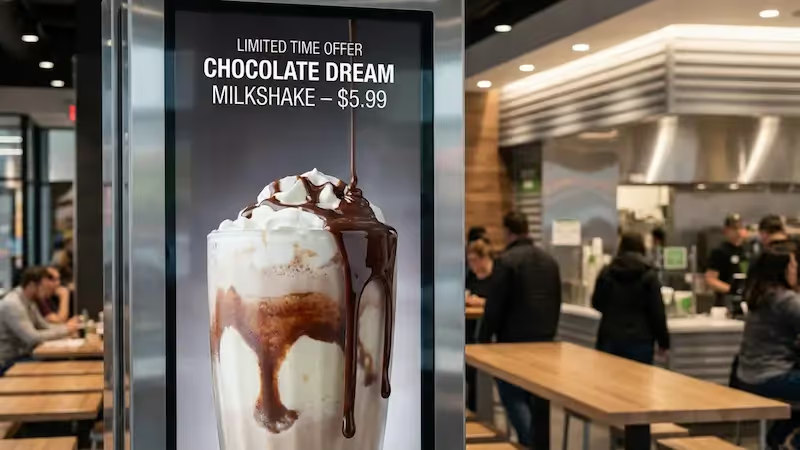
Digital menus also naturally support upselling. Premium cocktails can be showcased with sharp photos or short video loops that make them far more tempting than a text description. A quick, high-quality clip of a bartender mixing a top-tier drink often encourages guests to try higher-priced items, helping to improve your overall ROI.

Improves Guest Experience and Engagement
Modern club-goers expect seamless, digital-first experiences. Screens help venues meet that expectation by making the night feel more active. Displays can entertain guests waiting in line outside or at the coat check with event teasers and dynamic videos, reducing perceived wait times.
Interactive options, like QR codes on screens or touch displays, let guests browse upcoming events or full bottle lists right from their phones. You can also feature live social media feeds, which builds a real-time sense of community and encourages guests to tag your venue online. Above all, bright and clear digital menus reduce confusion at the bar, helping guests feel more confident and relaxed when ordering.
Offers Instant Menu Updates and Special Announcements
When operations move fast, your menus need to keep up. Digital menus allow you to change items quickly through a cloud-based dashboard. If the bar runs out of a specific draft beer, or if a guest DJ arrives late, you can push updates to every screen in the venue in minutes, from anywhere.
This agility is incredibly useful for venues that host private events early in the evening and transition to a nightclub later. Guests always see accurate, up-to-date information, which cuts down on disappointment and keeps the bartenders moving. You can also use the screens to instantly display queue messages, closing times, or emergency instructions.
Supports Dynamic Branding and Customization
Your brand dictates how people remember your venue. Digital menus allow you to reinforce that identity by matching your screens to your aesthetic. You can use animated logos, specific color palettes, and visuals that perfectly align with the music. This helps guests connect with your brand and encourages repeat visits.
On themed nights, your entire digital signage network can shift instantly to match the event's decor. You can mix your drink menus with short promotional clips about your venue’s history or upcoming ticketed events, keeping your messaging fresh, consistent, and visually striking.
Types of Digital Displays Used for Nightclub Menus
Digital signage takes many forms, and choosing the right hardware setup ensures your content looks great while fitting your venue’s specific layout.
LED Video Walls for High-Impact Visuals
LED video walls are large, seamless displays made from multiple panels. They are ideal as a main focal point-often placed behind the DJ booth or wrapping around a dance floor-delivering massive, immersive visuals. They scale easily, so you can build a display that fits your exact space.
Because they are highly luminous, LED walls cut through the darkness of a club effortlessly. They are perfect for ambient motion graphics, live event feeds, and high-impact brand promotions that elevate the energy of the room.

Digital Menu Boards for Food and Drink Listings
Commercial digital menu boards are the workhorses of the bar area. Typically using bright LCD or LED screens, they allow staff to display and update drink lists, bottle service menus, and daily specials clearly. This completely eliminates printing costs.
By organizing the screen with clear zones, you can dedicate one side to a legible text menu and the other to high-resolution promotional images. The bright backlighting helps guests read their options fast, even in the darkest corners of the venue.
Interactive Touchscreen Displays
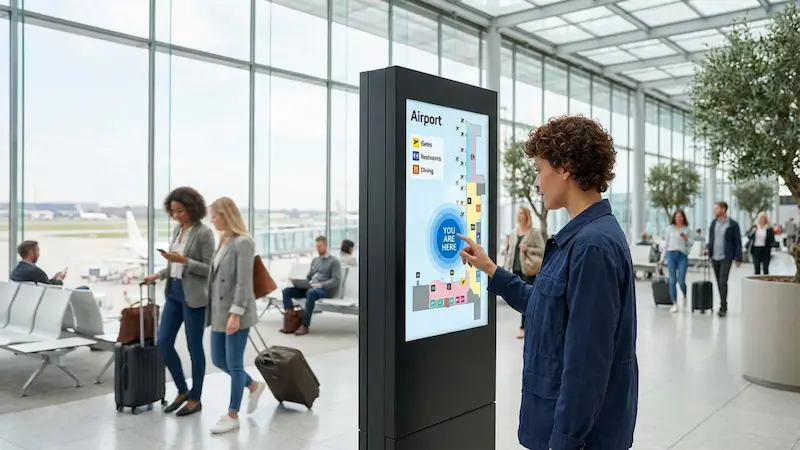
Touchscreens add a layer of self-service and direct engagement. In VIP areas or lounges, interactive displays can let guests browse extensive bottle catalogs, view detailed cocktail ingredients, or even place orders if integrated with your POS system.
These screens turn passive waiting into an active, engaging experience. They can also provide valuable analytics on what items guests are tapping on most frequently, helping you make data-driven decisions for future menu planning.
Projection Mapping for Immersive Menu Presentation
For venues wanting to push creative boundaries, projection mapping uses powerful projectors to display menus and visuals onto irregular surfaces like brick walls, bar fronts, or architectural columns. Instead of a standard flat screen, the building itself becomes the canvas.
A rotating cocktail list could be projected directly onto the bar top, shifting colors with the beat of the music. While it requires specific software to align the visuals perfectly with the physical space, projection mapping makes your menu an unforgettable part of the club’s design.
Best Practices for Designing Nightclub Menus on Digital Signage
Creating content for a nightclub requires a practical approach. Your goal is to deliver clear information without sacrificing the venue's carefully curated vibe.
Prioritize Readability in Low-Light Environments
Because nightclubs are dark and often filled with moving lights, contrast is critical. Use bold, sans-serif fonts, high contrast between your text and background, and keep item descriptions short. Avoid overly thin or decorative fonts that wash out or become unreadable from a distance. Guests should be able to scan the screen, spot the price, and know what they want in seconds.

Use Animation and Motion Graphics With a Clear Goal
Motion draws the eye, but it shouldn't overwhelm the menu. Keep animations purposeful. Use subtle, continuous loops that match the tempo of the room rather than chaotic, fast-moving text. A gentle shimmer over a featured drink or a slow-motion pour video next to the price list calls attention to high-margin items without making the menu hard to read.
Schedule Menu Changes for Timed Promotions
Automation is one of the strongest features of a digital signage platform. You can schedule content to transition automatically based on crowd flow. For example:
- Early evening: Happy hour pricing and casual dining menus.
- Prime time: High-energy visuals, signature cocktails, and bottle service features.
- Late night: Water promotions, late-night food slices, and last-call reminders.
By scheduling these shifts in advance, your screens always show the most profitable and relevant items without staff having to touch a keyboard during a rush.
Incorporate Branding and Thematic Visuals
Your screens should feel like a natural extension of your club. Incorporate your brand colors and logos into the menu templates. If you are hosting a specific promoter or a themed holiday party, update your digital signage backgrounds to reflect that theme. Consistent, high-quality branding makes your operation look polished and professional.
Integrating Digital Menu Signage into the Club Environment
Deploying digital signage successfully means placing and managing screens so they enhance, rather than interrupt, the guest experience.
Placing Displays Without Disrupting Ambience
Screens need to be visible without acting like blinding floodlights. Strategic placement is key: behind the main bar, at the coat check, in the VIP lounge, and near the restrooms. Using frameless commercial displays can help the hardware blend into your architecture. Be sure to manage your brightness settings so the screens remain legible but don't overpower your carefully designed club lighting.
Synchronizing Menus with Lighting and Music
For a truly immersive space, digital signage can often be tied into the broader audiovisual ecosystem. While you want the text to remain readable, the background colors of your menus or your promotional video walls can be color-matched to your stage lighting. This makes the signage feel deeply integrated into the live show.
Maintaining Safety and Crowd Flow with Digital Messaging
Beyond selling drinks, signage is a highly effective operational tool. Screens can clearly point toward exits, restrooms, or secondary bars that have shorter lines. In the event of an emergency or a sudden change in venue capacity, you can instantly override your playlists to display clear, bold safety instructions, helping staff manage the crowd safely and calmly.
Choosing the Right Digital Signage Solution for Nightclubs
Selecting the best setup requires matching reliable hardware with intuitive software that your management team can actually use without calling IT.
Screen Types and Placement Considerations
Scale your hardware to the space. Use high-brightness LED walls for the dance floor, and rely on durable, commercial-grade LCD screens behind the bar where spills and heat are common. If you are deploying touchscreens for VIP tables, ensure they are rated for high-traffic hospitality environments. Always ensure your chosen screens have a clear line of sight from the main pathways.
Software Features for Menu Management
The software you use to manage your screens is just as important as the hardware. Look Digital Signage is an ideal solution for hospitality teams because it offers a powerful, cloud-based platform with no complex setup. Using the Look CMS, your managers can log in from anywhere to update pricing instantly. With Ready-made Templates, you don't need a graphic designer to create stunning, readable menus. Furthermore, you can use Screen Layouts to split a single display-showing a live drink menu on one side and rotating event promos on the other-ensuring your screens are working twice as hard to prove ROI.
Integration with POS and Inventory Systems
To reduce manual updates even further, many venues look to integrate their signage with their Point of Sale (POS) and inventory tools. When integrated, a menu board can automatically remove a beer brand the moment the keg is kicked in the POS system. This keeps your messaging perfectly accurate, eliminates guest frustration, and ensures your staff isn't apologizing for unavailable items.
Trends and Innovations in Nightclub Menu Signage
Nightlife is a fast-moving industry, and the technology powering it continues to evolve toward greater efficiency and engagement.
AI-Driven Personalization of Menus
Artificial intelligence is beginning to streamline how content is created and displayed. Inside modern CMS platforms, tools like the Look AI Wizard can help busy operators quickly generate promotional headlines, fresh layouts, and thematic visuals in seconds. Looking forward, systems may increasingly use data to automatically shift menu layouts based on real-time sales trends, bringing the most popular items front and center without manual intervention.
Social Media Integration for Real-Time Engagement
Integrating social media onto your screens is an easy way to build energy. Displaying a moderated feed of live posts or photos tagged with your venue's hashtag encourages guests to post about their night out. It provides you with free, user-generated marketing while making guests feel like they are part of the main event.
Sustainable and Energy-Efficient Display Options
As venues look to lower their total cost of ownership, energy efficiency is becoming a priority. Modern commercial displays and LED panels offer brilliant brightness while consuming far less power than older models. Features like automated screen sleep schedules (turning screens off after closing and waking them up before doors open) help venues reduce their carbon footprint and their electricity bills.
Maximizing Value: Strategies for Nightclub Success Using Digital Menus
To truly prove ROI, think of your screens as an active revenue channel. Digital menus provide prime real estate to sell advertising space to local businesses, rideshare companies, or liquor distributors. Supplier brands are often willing to sponsor screen time to have their premium spirits featured heavily on your digital menu boards during peak hours.
Additionally, use your screens to prompt a clear next step for your guests. Display a QR code encouraging them to sign up for your VIP guest list or book a table for next weekend. By turning a simple menu board into an interactive lead-generation tool, you build a database of loyal customers that you can market to long after they have left the club.
Frequently Asked Questions about Nightclub Menus on Digital Signage
If you are considering upgrading your venue, you likely have a few practical questions. Here is what most operators want to know.
Is digital signage viable for small venues or lounges?
Yes. You can start small and scale smoothly. A single, well-placed menu screen behind the bar can completely eliminate your printing costs and speed up your service. Cloud-based platforms allow small venue owners to manage one screen just as easily as a massive network, giving a premium feel without a massive budget.
How often should content be updated for maximum impact?
Fresh content keeps guests engaged. Standard drink prices might only change seasonally, but you should update your promotional slots weekly to highlight new events or visiting DJs. For daily operations, use scheduling to transition your content seamlessly between happy hour, prime time, and closing.
Do you need a designer or can managers control content themselves?
You do not need an in-house designer to maintain professional-looking screens. Platforms built for non-technical teams offer built-in, customizable templates. A bar manager can easily log in, select a template, type in the new drink special, and publish it to the screens in minutes. If you want to see how easy it is, you can always start a free trial and test it on a demo screen first (no hardware needed).