24/7

Professional displays are engineered for continuous business use with stronger cooling, higher brightness, and commercial warranties.

Source: Digital Signage for Advertising article — Professional Displays vs Commercial TVs

6 formats

DOOH, indoor, outdoor/window-facing, interactive touch, programmatic ad placement, and video wall deployments.

Source: Digital Signage for Advertising article — Main Types of Digital Signage Advertising

9 industries

Retail, restaurants, corporate, healthcare, education, transportation, hospitality, banking, and government use cases.

Source: Digital Signage for Advertising article — Industries and Use Cases

3 parts

A reliable setup combines screens, media players, and cloud management software working together.

Source: Digital Signage for Advertising article — Key Components of a Digital Signage System

What is advertising digital signage?

A managed system for dynamic campaigns across connected screens

Digital signage advertising includes the tools and methods used to put business content on digital screens. Instead of just placing one image on a TV, it is a managed system that plays product videos, rotates offers, and publishes interactive content from one dashboard.

You can deploy one screen in a cafe for daily specials or run synchronized campaigns across a multi-location network. Because content is digital, updates happen in minutes from anywhere rather than waiting for print and on-site installation

Connected networks also support programmatic advertising,

where ad space can be sold automatically by audience type or time of day to help monetize available screen inventory.

Digital vs. traditional

Static signage

  • A red cross inside a black circle

    Printed posters and fixed billboards

  • A red cross inside a black circle

    Content stays fixed until physically replaced

  • A red cross inside a black circle

    Campaign swaps require redesign, print, and labor

  • A red cross inside a black circle

    Harder to react to flash sales or pricing errors

  • A red cross inside a black circle

    Recurring paper, shipping, and install costs

Look DS

  • Green checkmark inside a black circle.

    Real-time updates from one central platform

  • Green checkmark inside a black circle.

    Video, motion graphics, and live data on-screen

  • Green checkmark inside a black circle.

    Smart scheduling by time, audience, and location

  • Green checkmark inside a black circle.

    Proof-of-play reporting to validate delivery

  • Green checkmark inside a black circle.

    Reusable assets with lower long-term operating cost

Green shield icon with a white check mark on a black rounded square background representing security or verification.

3 core components

1

Display hardware

The screen is the face of the setup. Commercial displays are built for 24/7 operation, while panel choice (LCD, LED, OLED), brightness level, and mounting method determine where campaigns can run reliably.

2

Media players

Media players run the content on-screen and connect displays to your network. Reliable players keep playback smooth and continue running scheduled content from local cache when internet connectivity drops.

3

Cloud CMS software

The CMS is the control center for playlists, screen layouts, daypart schedules, and remote device management. It allows one team to manage one screen or hundreds from a web dashboard.

Why it works

Six ways digital signage improves advertising performance

star icon transparent

Dynamic and targeted messaging

Digital signage makes it practical to show the right message at the right moment. Smart scheduling can switch breakfast promos to lunch offers automatically, while contextual scenarios like weather-based promotions increase relevance and response.
Pink soda bottle and two glasses with ice and lemon slice on a green background with text Drink Soda.
Eye

Higher engagement and visibility

Motion and brightness attract attention faster than static print. In high-traffic placements, strong video and clear layouts hold viewer interest longer, helping communicate value and strengthen brand visibility.
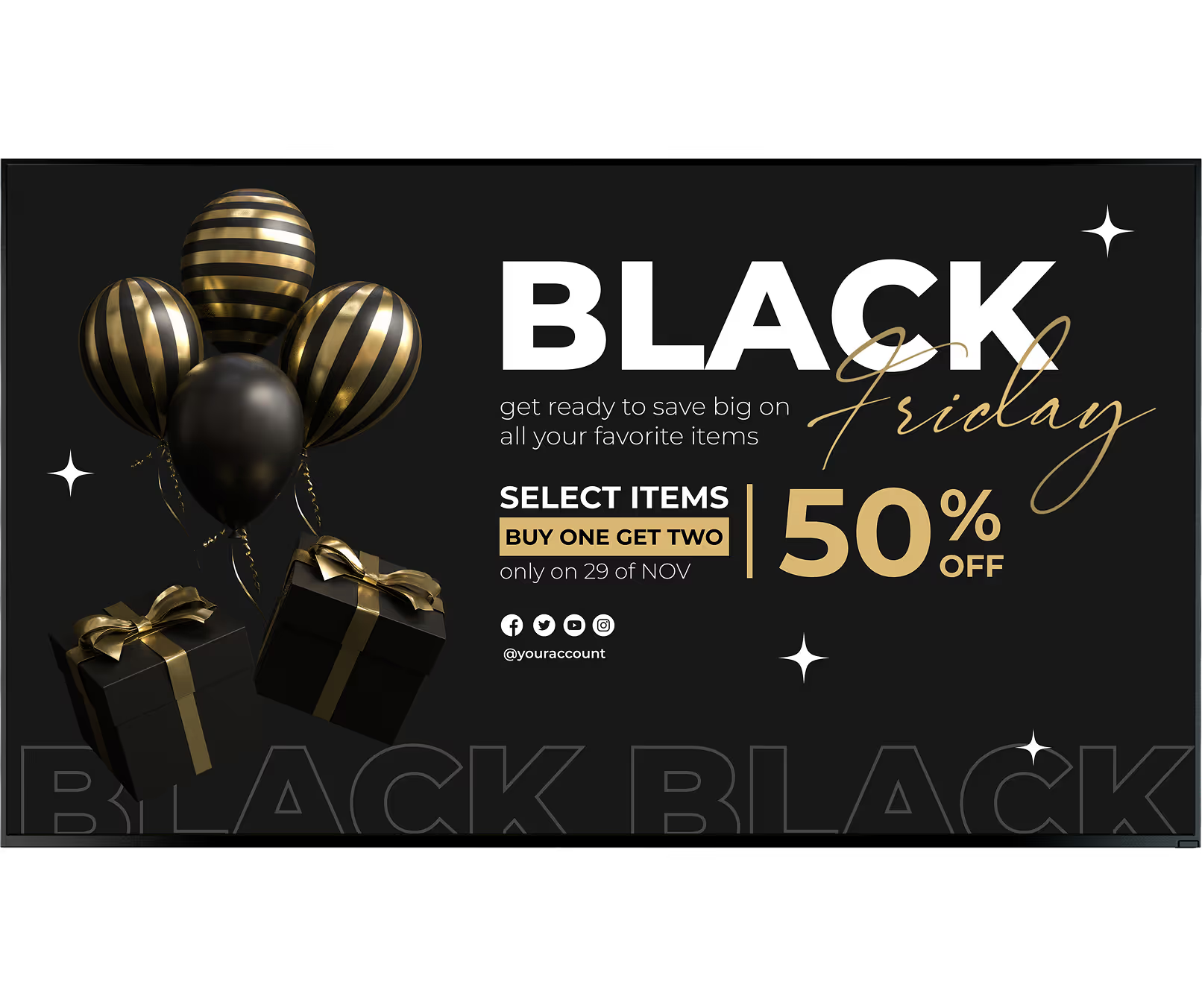
Black Friday sale banner with black and gold balloons, gift boxes, and 50% off on select items.
icon_XL_clock

Real-time content flexibility

When campaigns need urgent changes, updates can be pushed in minutes to one screen or thousands. This is critical for flash sales, price corrections, and operational messages that cannot wait for print cycles or store-level manual changes.
Hand holding a carton of fresh milk with cow pattern and text about 15% off sale this week.
Percent icon

Lower recurring costs than print

Print requires recurring spend on paper, shipping, and installation every campaign cycle. Digital assets can be reused and updated instantly, reducing manual work and improving long-term return on investment.
Two women in yellow shirts smiling, wearing colorful sunglasses, with sale and 15% off text on pink background.
icon navigation

Scales from one site to a network

Cloud-based systems scale from a single location to multi-city rollouts. Teams can distribute national campaigns across the network while keeping regional or store-level messaging restricted to selected screens.
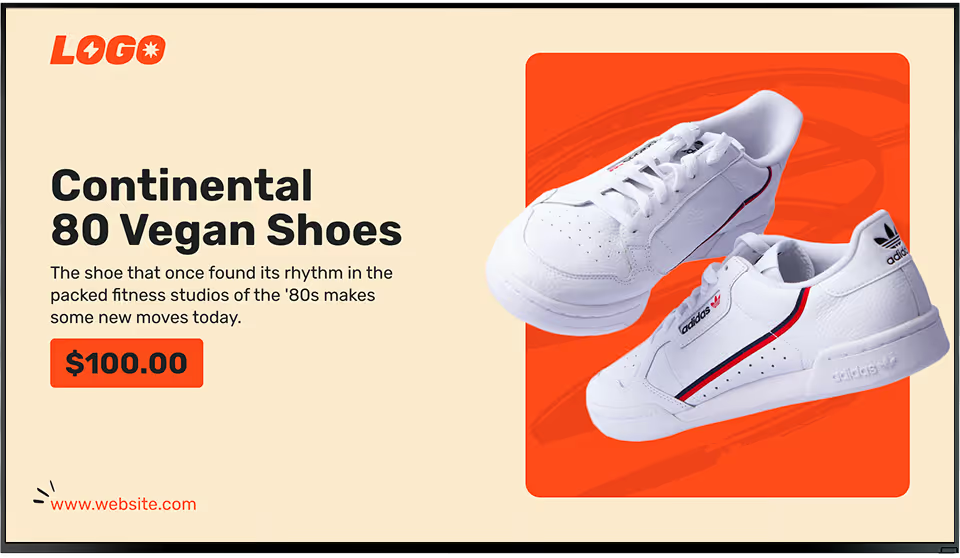
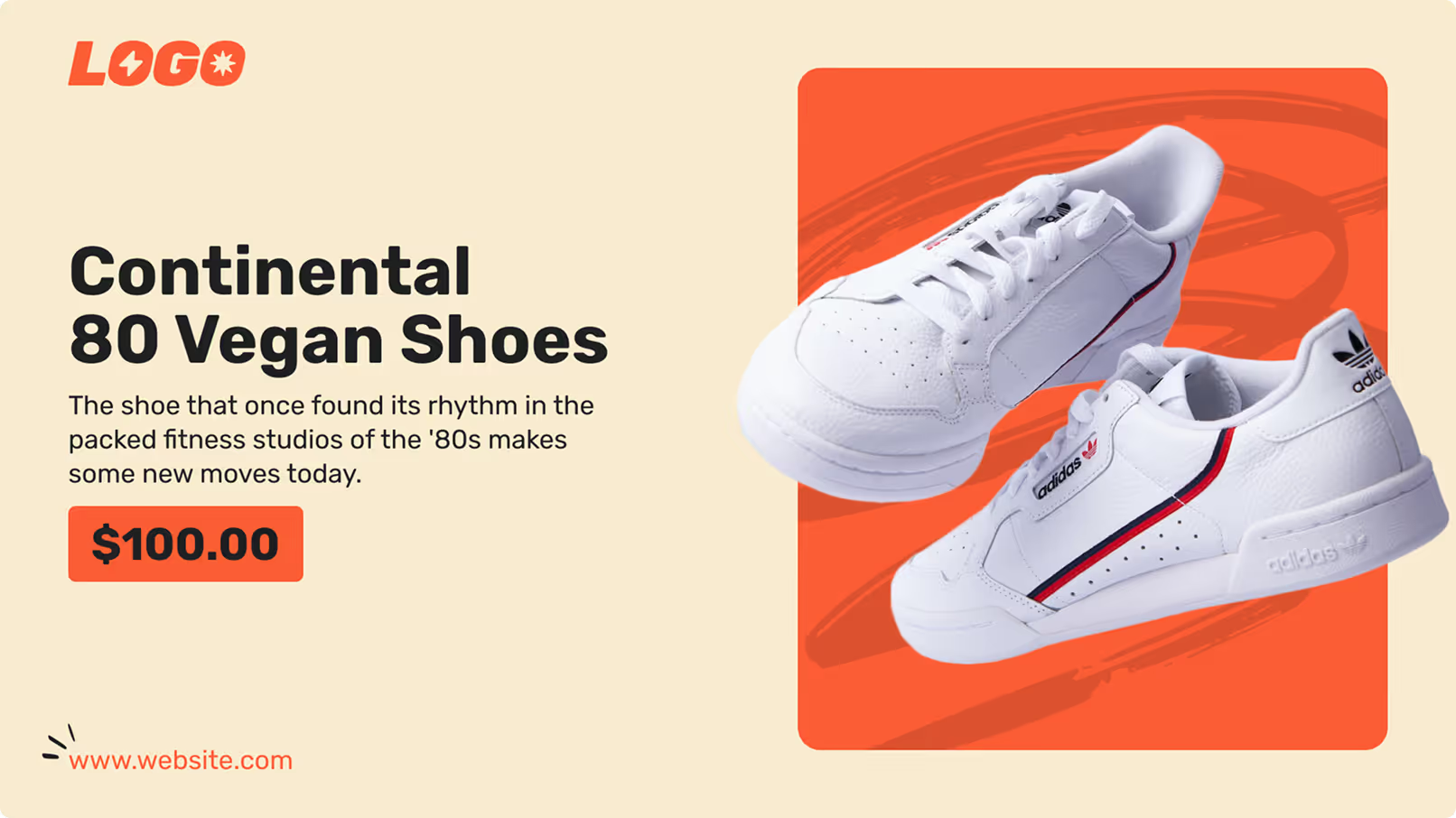
White Continental 80 Vegan Shoes with black and red stripes on an orange background.

Programmatic revenue opportunities

A connected advertising network can support programmatic sales. Ad slots are bought and delivered automatically by audience and time rules, helping operators fill inventory and generate additional revenue streams.
Open red velvet ring box with a diamond ring inside, alongside text offering 20% off all diamond rings for this week, with images of gold rings and chains on a dark teal background.
Pink soda bottle and two glasses with ice and lemon slice on a green background with text Drink Soda.like
Black Friday sale banner with black and gold balloons, gift boxes, and 50% off on select items.star
Hand holding a carton of fresh milk with cow pattern and text about 15% off sale this week.watch
Two women in yellow shirts smiling, wearing colorful sunglasses, with sale and 15% off text on pink background.Flayer
White Continental 80 Vegan Shoes with black and red stripes on an orange background.Stack of four digital cards with colored edges; top card reads New Screen dated 09.05.2024, 11:32 with green dot.
Open red velvet ring box with a diamond ring inside, alongside text offering 20% off all diamond rings for this week, with images of gold rings and chains on a dark teal background.Arrow Up

Formats and channels

Digital signage options for every advertising environment

Choose the format that fits your audience, location, and campaign objective.

DOOH

Digital Out-of-Home displays

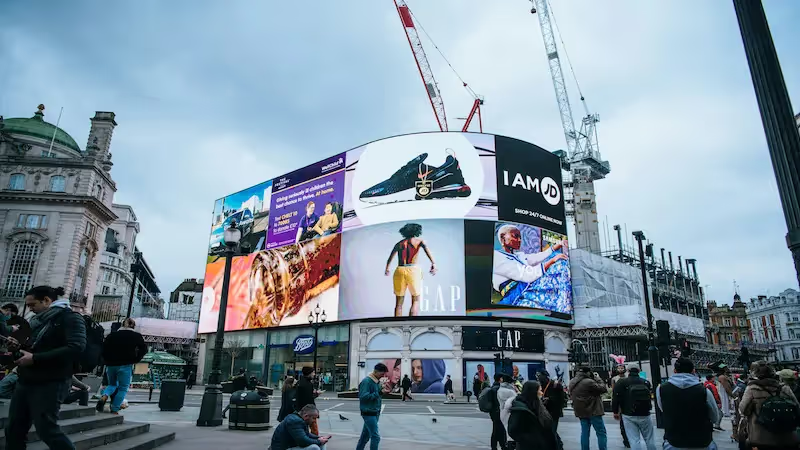
DOOH refers to public-facing screens in transit stops, airports, and roadside placements. These environments are built for broad reach and benefit from time-based scheduling, such as commute-hour messaging in the morning and restaurant promotions in the evening.

Indoor

Indoor digital signage

Indoor screens are common in retail, offices, clinics, and schools where viewing conditions are controlled. They are effective for menu boards, directories, and point-of-sale campaigns that need richer on-screen information.

Outdoor

Outdoor and window-facing screens

Outdoor screens are designed for rain, temperature shifts, and daylight visibility. Window-facing displays run at very high brightness to attract foot traffic outside and continue advertising even when the location is closed.

Interactive

Touch and QR-enabled campaigns

Interactive scenarios let viewers engage directly by touch or QR scan. Audiences can browse catalogs, complete surveys, or navigate buildings, creating measurable engagement data for campaign optimization.

Programmatic

Automated ad placement

Programmatic workflows automate how inventory is bought and sold. Instead of manual negotiation, rules and bidding select which ad plays based on timing, location, and audience criteria.

Video Wall

Large-scale video wall installations

Video walls combine multiple displays into one large-format canvas for high-impact campaigns. They are used in large venues such as stadiums, lobbies, and conference centers where visibility and visual scale are priorities.

Use cases
Six placements where advertising screens drive results

Store display screen showcasing Quaker Fruit Fusion cereal varieties with the slogan 'Go From Boring to Bold'.

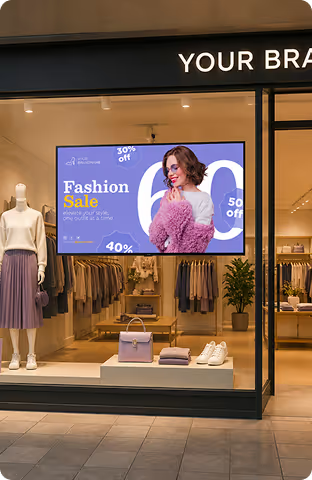
Retail window displays

High-brightness window displays attract passersby before they enter the store. Rotating offers and product launches can be updated remotely, making storefront messaging timely without replacing printed posters.
Modern office hallway with glass-walled conference room and digital display board on wall.

Restaurant and QSR menu boards

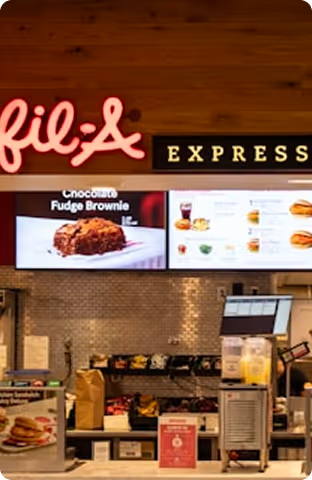
QSR and cafe operators use digital menu boards to automate dayparting and keep pricing accurate. Breakfast-to-lunch transitions and network-wide price updates can be published instantly from a central dashboard.
Modern conference room with a screen displaying a career skills workshop advertisement.

Corporate lobbies and office interiors

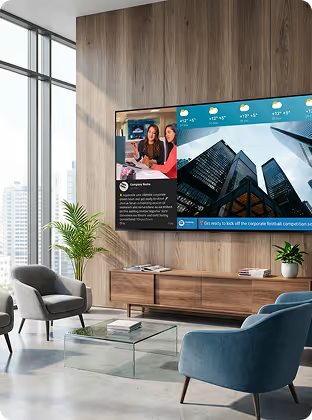
Corporate teams use digital displays for guest welcomes, meeting information, and KPI visibility. This reduces reliance on static printed notices and gives teams one channel for fast internal updates.
Man interacting with a touchscreen information kiosk displaying a map and directional instructions.

Healthcare waiting areas and wayfinding

Hospitals and clinics use screens for queue management, wayfinding, and preventative health messaging. Clear on-screen guidance helps reduce confusion in waiting areas without adding pressure to front-desk staff.
Store aisle sign with raspberries image and label reading 'Raspberries Aisles'.

Campus announcements and alerts

Schools and universities broadcast schedules, cafeteria menus, and urgent alerts across campus screens. Central control ensures messages reach multiple buildings quickly when timing matters.
Reception desk in a modern office lobby with a large screen showing Bruce Krause's welcome message and photo.

Transportation hubs and stations

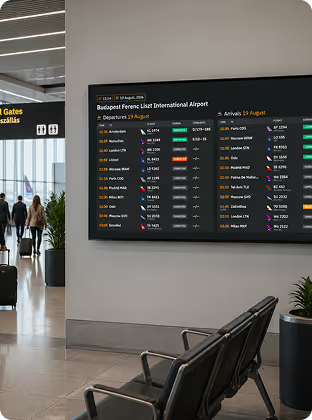
Airports and transit hubs combine real-time service information with premium advertising inventory. This creates dual-value screens: operational updates for travelers and high-visibility placements for advertisers.

Hardware & setup

Launch with your current screens or dedicated players

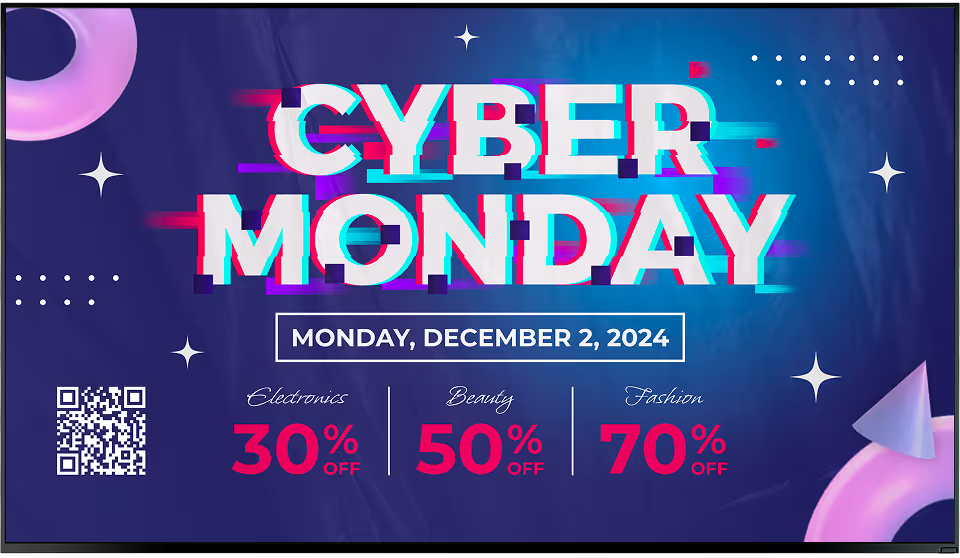
Cyber Monday sale on Monday, December 2, 2024, with discounts: 30% electronics, 50% beauty, 70% fashion.Green shield icon with a white check mark on a black rounded square background representing security or verification.

Look App

Install the free Look App on supported smart TVs to launch quickly with existing hardware. This is practical for indoor placements such as retail zones, office screens, and digital menu deployments.

Android
Windows
Fire OS
Samsung Tizen
LG webOS
Raspberry Pi
Amazon Signage
Amazon Signage
Icon Linux
Linux
macOS
MacOS
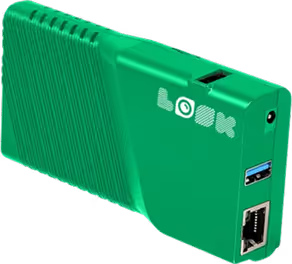
Pair of white Adidas Continental 80 Vegan Shoes with red and blue stripes on orange background.Green rectangular electronic device with ventilation slots, two USB ports, an Ethernet port, and the word 'LOOK' printed on it.

Look HDMI Player

Use a dedicated plug-and-play HDMI player when you need always-on playback across larger networks. Useful for mixed hardware environments and improves reliability for multi-location operations.

Any HDMI screen
Commercial displays
Offline playback
Kiosk mode

Advertising hardware note:

Match hardware to environment before rollout. Outdoor and window-facing deployments need very high brightness, weather-ready enclosures, and secure mounting; indoor deployments can prioritize layout density and panel quality (LCD, LED, or OLED) based on budget and visual goals.

View full hardware guide →

How it works

Launch, schedule, and optimize campaigns from one platform

  • Content

    Create and schedule content

    Create campaign assets in the CMS using built-in tools, ready-made templates. Organize assets into playlists and schedule exactly when and where each piece should run.
  • Schedule

    Publish and manage remotely

    The CMS pushes scheduled files to media players and provides remote monitoring of uptime and device health. Urgent updates can be deployed instantly without traveling site-to-site.
  • Playlists

    Deliver ads and measure ROI

    Automate ad delivery based on audience and time rules. Playback analytics and proof-of-play reporting confirm what ran, making it easier to optimize playlists and demonstrate ROI.
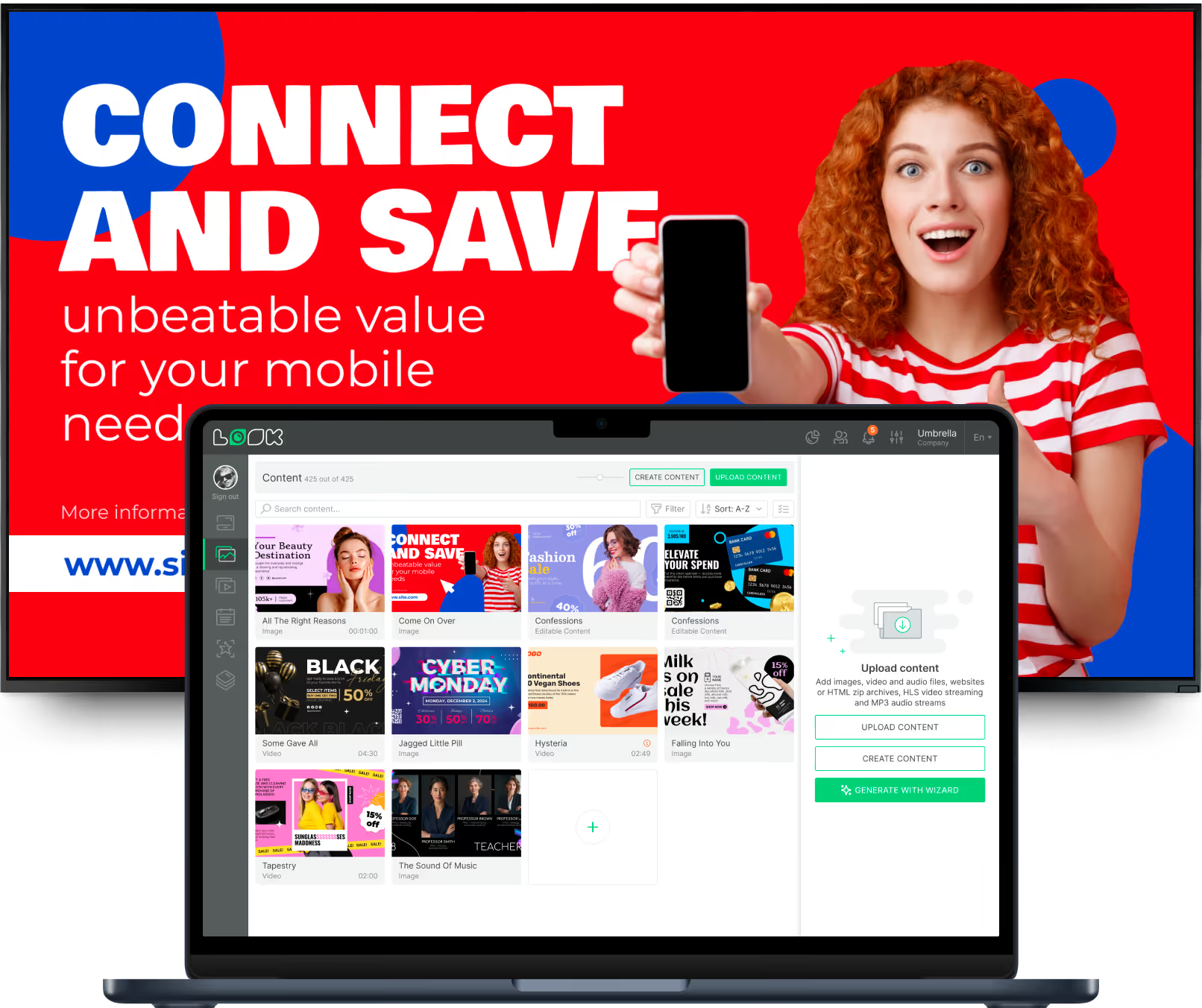
Smiling woman in purple fuzzy jacket and sunglasses promoting fashion sale with discounts on purple background.Gold diamond ring in red box with text offering 20% off all diamond rings this week.Excited woman holds phone in front of laptop showing content management interface on a red-blue background.

Features

Everything an advertising operator needs

Screens icon

Commercial-grade display support

Choose displays based on environment and runtime requirements. Commercial units support long operating hours, higher brightness, and better durability than consumer TVs, especially in retail and public-facing installations.
Purple-themed ad for women's fragrance with a pink perfume bottle and 50% discount offer.
Shield

Reliable media player playback

Media players run content directly on connected screens and improve playback stability. Offline caching keeps scheduled campaigns running even if internet connectivity drops temporarily.
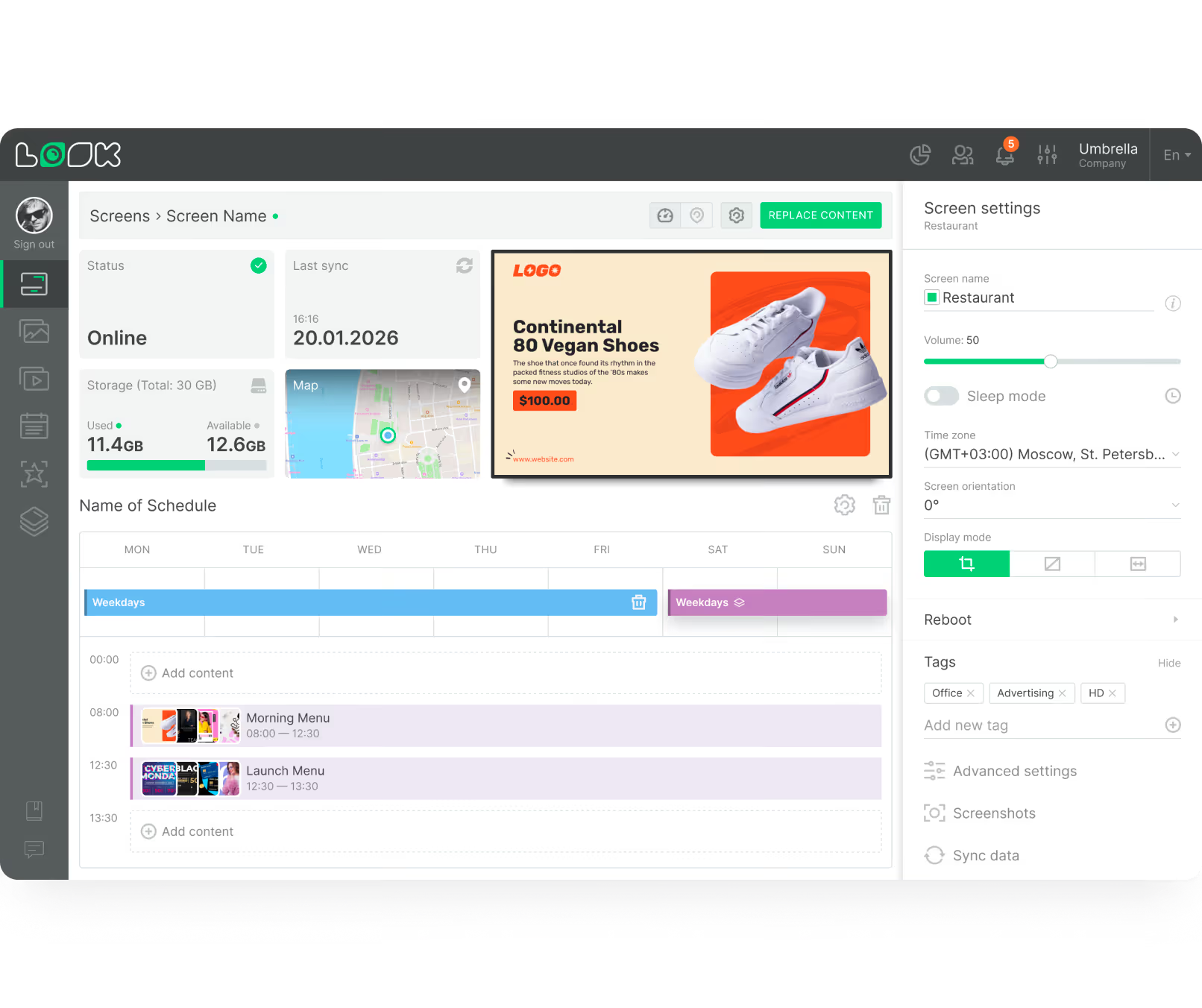
Interface showing screen status online, storage usage, map, and schedule for menu content in a restaurant setting.

Cloud CMS control

A cloud CMS centralizes playlists, layouts, and remote control. Teams can manage one screen or a large network from a browser without complex on-site IT workflows.
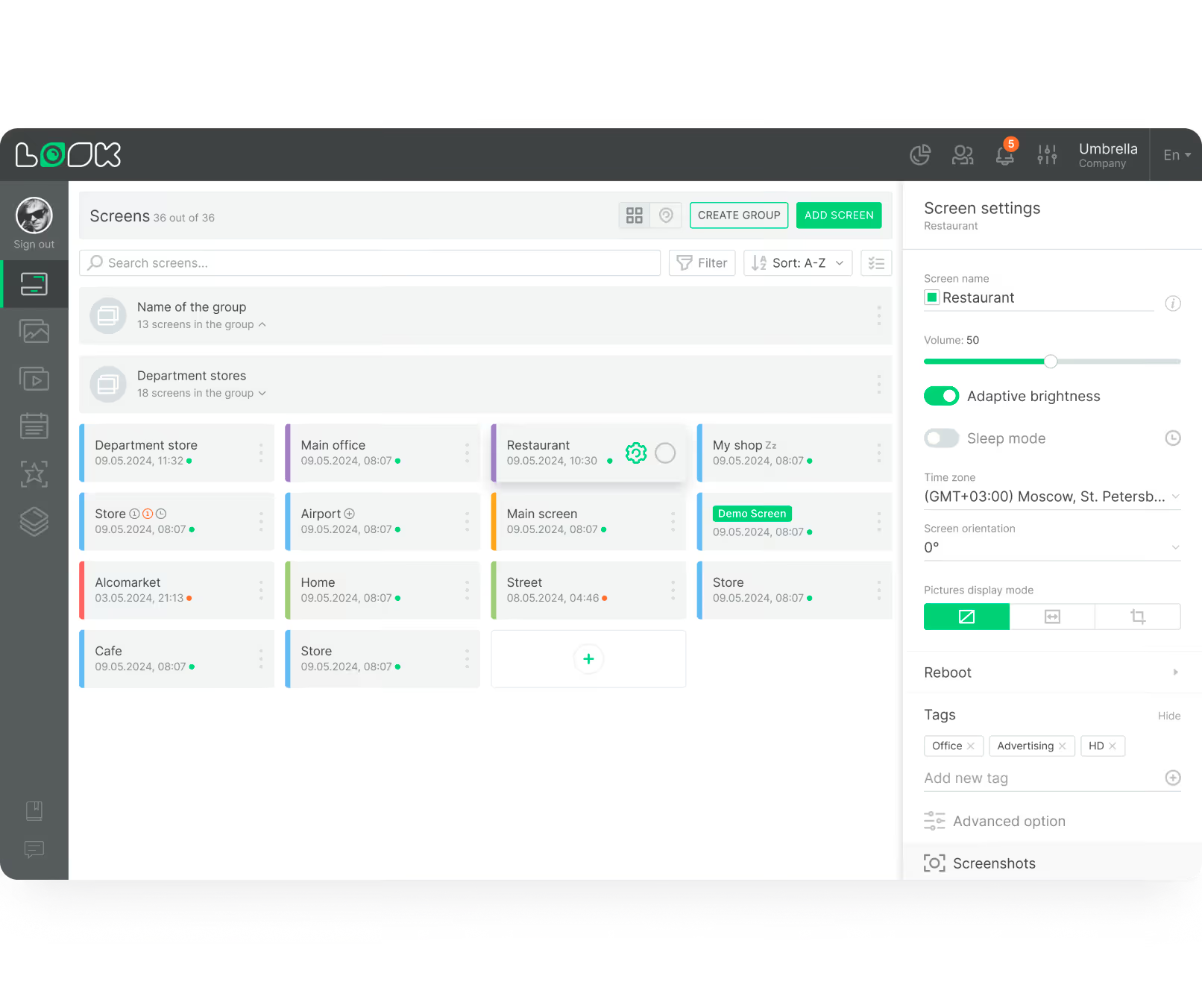
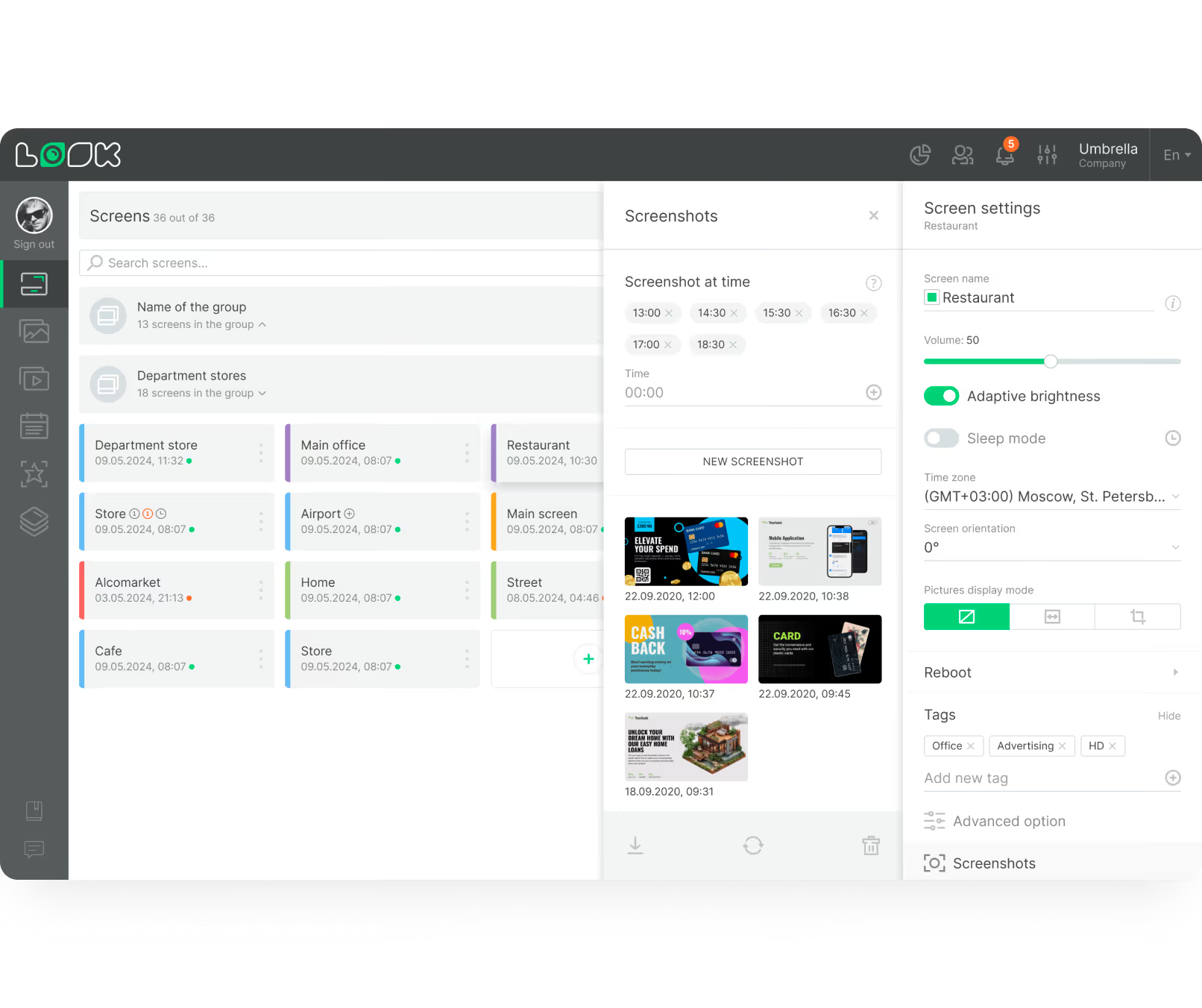
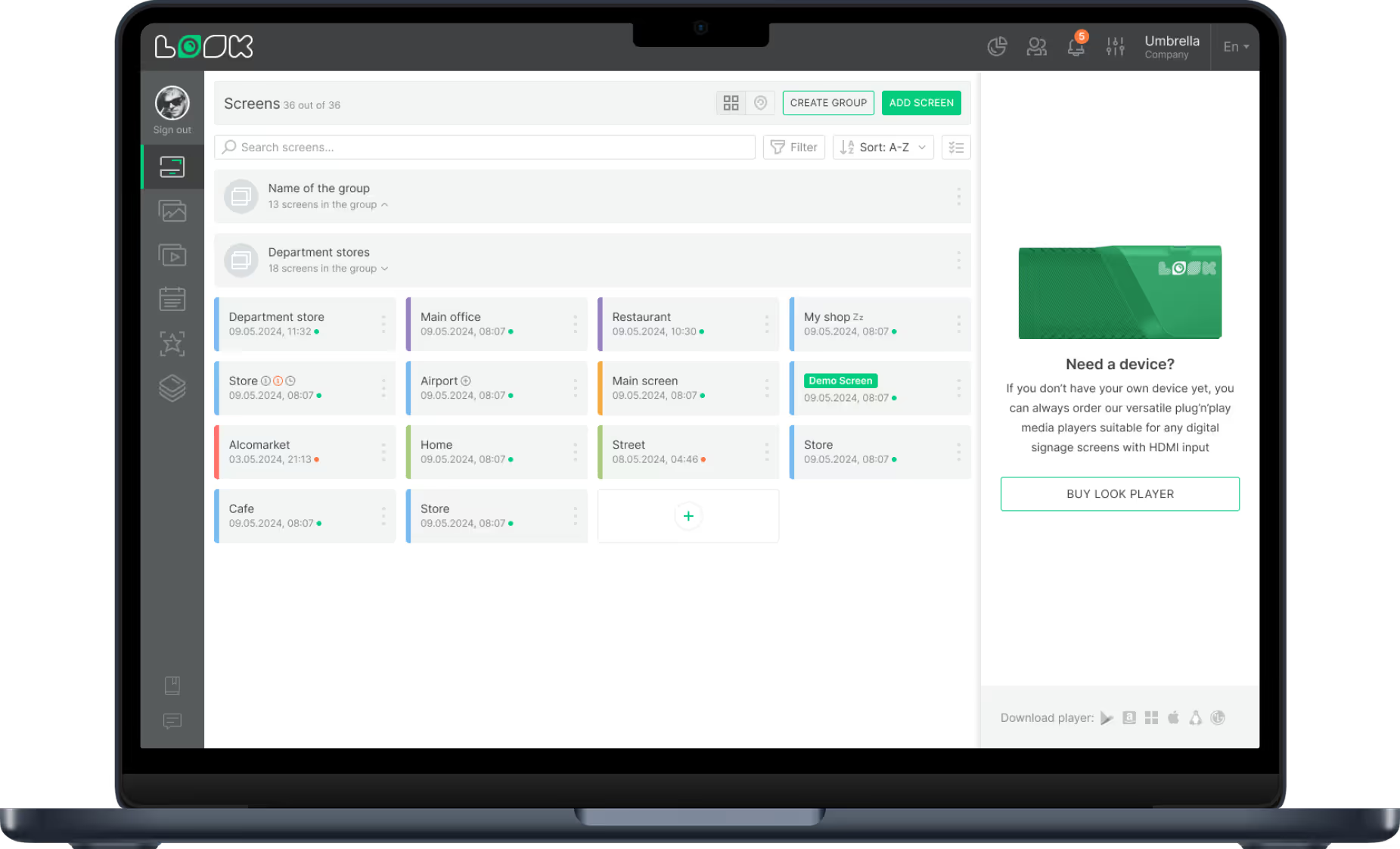
Dashboard screen showing a list of 36 grouped screens with details and status indicators for managing display settings including volume and adaptive brightness for a screen named Restaurant.
calendar_icon

Smart scheduling and dayparting

Smart scheduling automates content changes by time, location, and campaign rules. This supports reliable dayparting, seasonal rotations, and faster reaction to pricing or promotion changes.
Digital schedule interface showing playlist blocks assigned to weekdays and weekend with editable settings.

Audience measurement insights

Measurement tools provide visibility into dwell time and peak viewing windows using anonymous traffic signals. These insights support optimization while maintaining a privacy-first data approach.
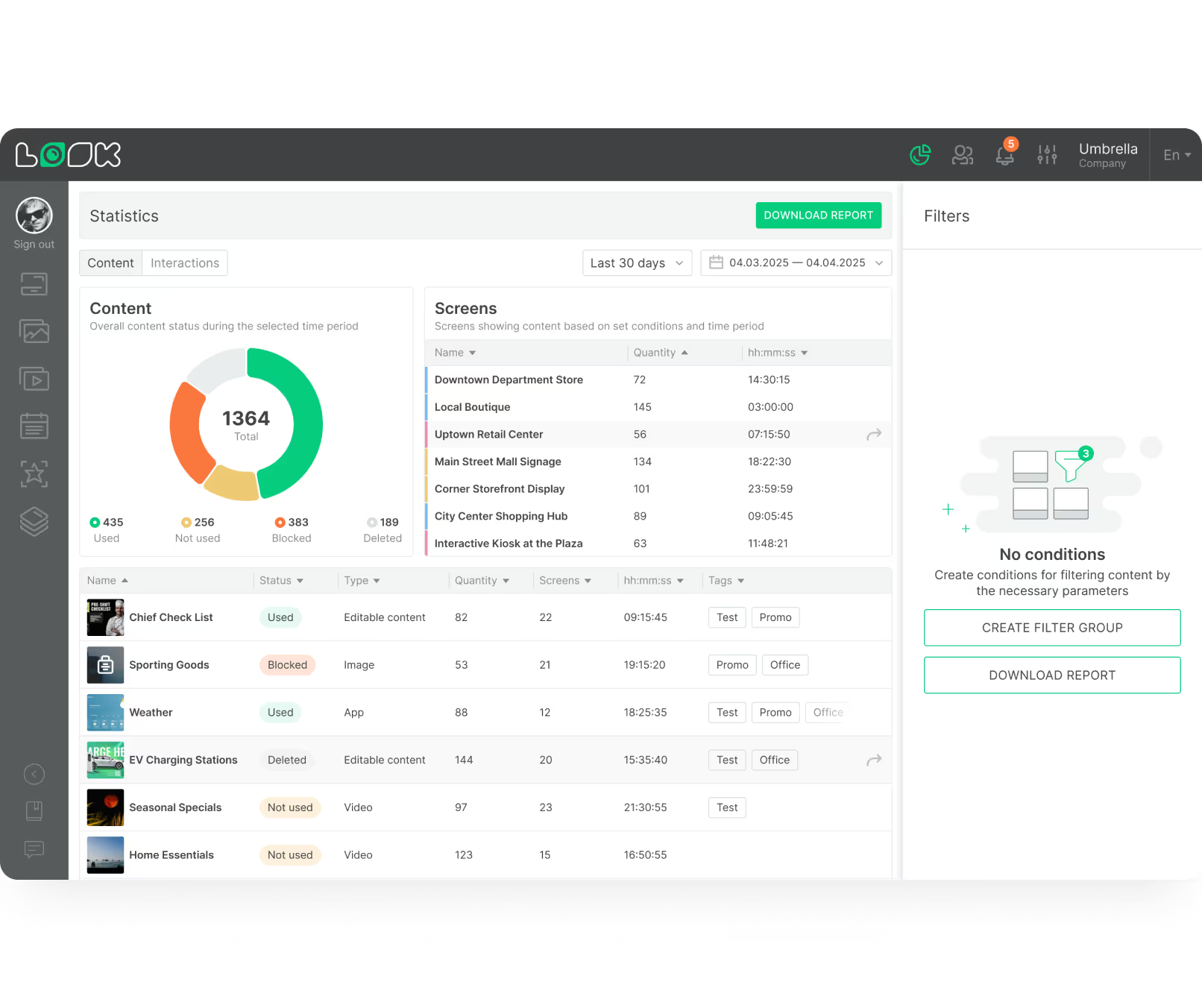
Dashboard interface showing content statistics with a pie chart of used, not used, blocked, and deleted content, a table listing screen names with quantities and durations, and a content list with status, type, quantity, screens, time, and tags.
icon_XL_navigation

API and context-aware integrations

API integrations connect screens to systems like POS and CRM for real-time updates. Context-aware data such as weather or inventory levels can automatically influence what content is shown.
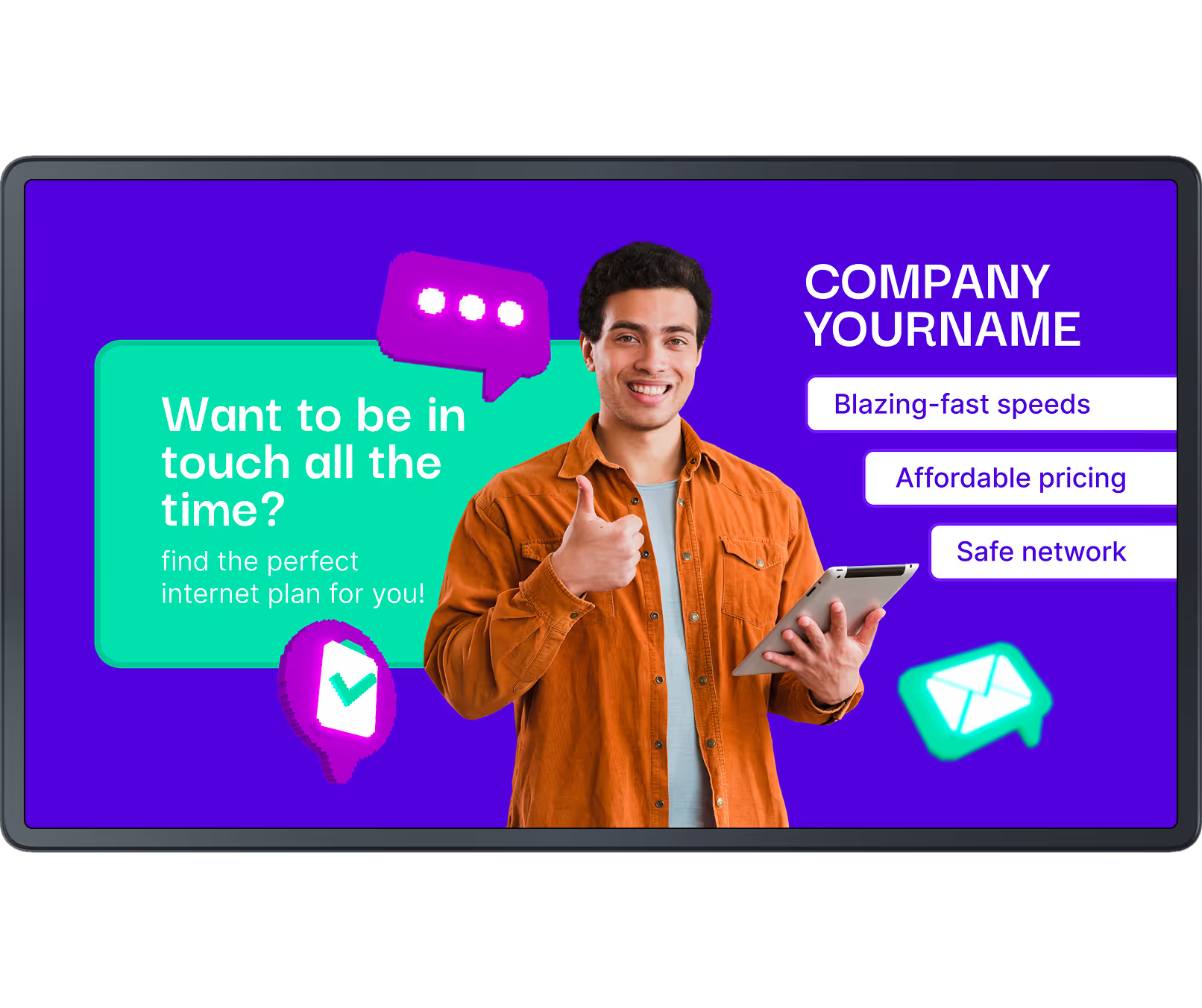
Smiling man in orange shirt holding a tablet with internet plan offer text on purple background.
Eye

Proof-of-play and reporting

Proof-of-play logs verify campaign delivery and reduce reporting ambiguity. Combined with playback analytics, they support billing validation, stakeholder reporting, and data-driven playlist refinement.
Dashboard showing screen groups, screenshots by time, and settings for a screen named Restaurant.
Purple-themed ad for women's fragrance with a pink perfume bottle and 50% discount offer.
likeBlack and white QR code with a cursor pointer on a white background.
Interface showing screen status online, storage usage, map, and schedule for menu content in a restaurant setting.
3D green shield with a white checkmark icon on a black rounded square background.
Dashboard screen showing a list of 36 grouped screens with details and status indicators for managing display settings including volume and adaptive brightness for a screen named Restaurant.
UI Screen cards
Digital schedule interface showing playlist blocks assigned to weekdays and weekend with editable settings.
weekdays
Dashboard interface showing content statistics with a pie chart of used, not used, blocked, and deleted content, a table listing screen names with quantities and durations, and a content list with status, type, quantity, screens, time, and tags.
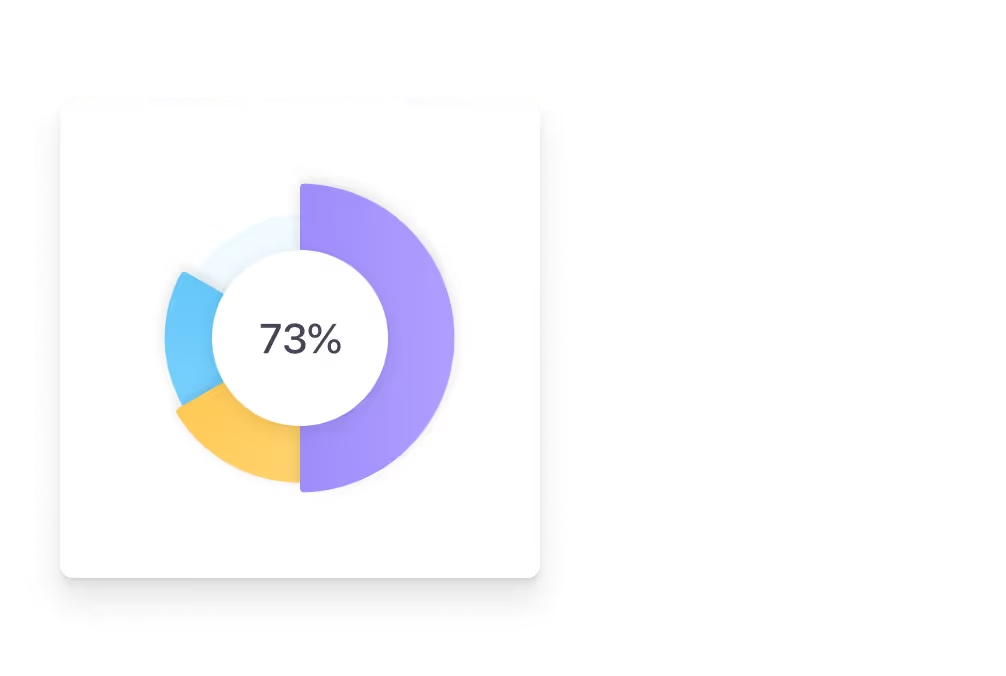
Donut chart showing 73% in purple, with smaller blue and yellow segments.
Smiling man in orange shirt holding a tablet with internet plan offer text on purple background.
zapier
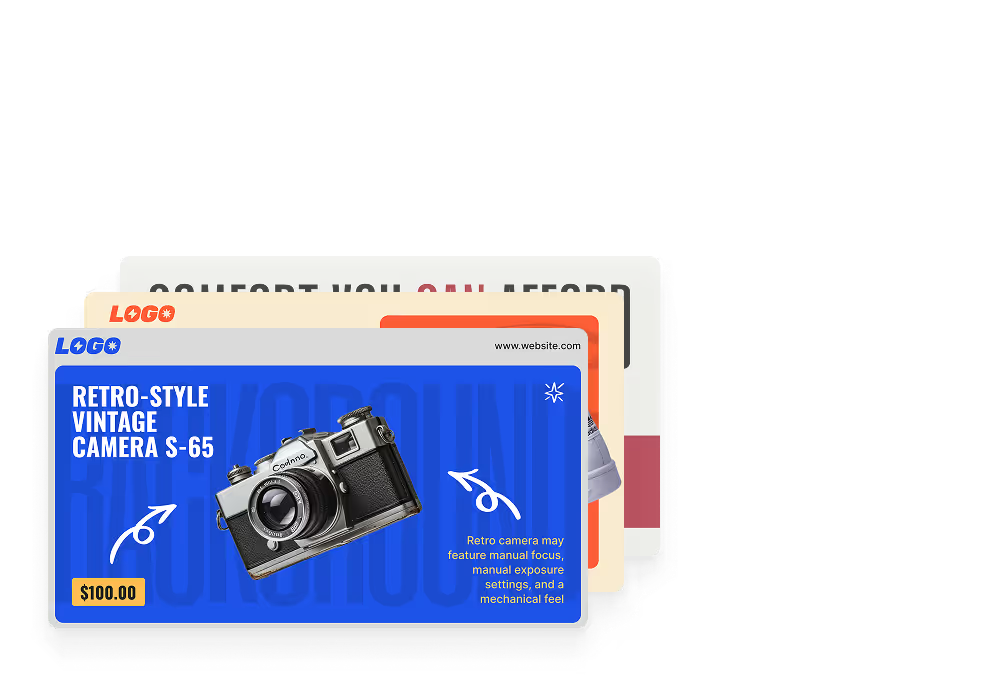
Advertisement card for retro-style vintage camera S-65 with $100 price tag and manual focus feature.
Dashboard showing screen groups, screenshots by time, and settings for a screen named Restaurant.

Content best practices

Six practical tips for better advertising screens

01

Plan by context and time of day

Build separate playlists for commute, lunch, evening, and weekend traffic patterns. Matching content timing to audience behavior improves relevance and usually improves response rates.

02

Refresh loops before display blindness sets in

If the same loop runs for months, people stop noticing it. Use rotating creative and scheduled updates to keep screens useful instead of becoming background noise.

03

Use templates and Content Creator

Look CMS tool support ready-made templates for faster campaign production. This helps teams publish consistent layouts without rebuilding each screen from scratch.

04

Design for fast comprehension

Use concise headlines, readable hierarchy, and motion only where it supports the message. In high-traffic placements, viewers should understand the core offer in seconds.

05

Optimize with playback and audience data

Review proof-of-play, dwell-time signals, and peak viewing periods to see which campaigns work. Use that data to refine schedules and prioritize higher-performing content windows.

06

Keep measurement privacy-first

When using audience analytics, rely on anonymous measurement approaches and follow local privacy requirements. Campaign optimization should not require personally identifying viewers.

Common mistakes

What to avoid in digital signage advertising rollouts

A red cross inside a black circle

Treating screens like static posters

A common rollout failure is uploading one loop and leaving it unchanged for too long. Repetition causes display blindness, and the screen loses campaign value even if placement is strong.

Fix: Use scheduled rotation, recurring playlist updates, and live data modules so content stays relevant without daily manual work.

A red cross inside a black circle

Using consumer TVs for heavy-duty usage

Consumer TVs may seem cheaper up front but are not built for continuous business operation. In commercial environments they are more likely to fail and may not offer the warranty and management support required.

Fix: Deploy professional displays rated for long operating hours, with higher brightness, stronger cooling, and commercial support terms.

Woman with glowing skin and closed eyes touching her face in a pink and black beauty ad.
A red cross inside a black circle

Ignoring total cost of ownership

Budgets often focus on display price alone and miss mounting, player hardware, installation, subscriptions, and network requirements. This creates avoidable overruns during rollout.

Fix: Plan around total cost of ownership from day one, including hardware, software, installation, and operational support.

A red cross inside a black circle

Skipping security and privacy planning

Networked displays need baseline security controls, and analytics workflows must account for privacy from the start. Without clear rules, organizations risk unauthorized access and weak compliance practices.

Fix: Use role-based publishing access, enforce network hygiene, and keep audience measurement anonymous to maintain a privacy-first deployment.

Brown bottles labeled Syrup Glass Bottle and Nasal Spray Bottle with allergy relief and discount offers.

What advertisers say

Teams using Look DS for advertising campaigns

Captera Rating
4.9
G2 Rating
5
In terms of using the system, the other options that I found were a little clunky and Look was not only affordable but really easy for us to deploy and get up and running.
Michael Bowers
Xtreme Express LLC
United States flag
Spain flag
Russia flag
Mexico flag
Chile flag
Uruguay flag
Hungary flag
Finland flag
Switzerland flag
Ecuador flag
South Africa flag
Sweden flag
Serbia flag
Australia flag
Saudi Arabia flag
Look is well-priced, it’s a very user-friendly software cloud-based service, where you can update your screens from wherever you are. We can definitely recommend to others!
Jonathan Florin
Florin Partners
United States flag
Spain flag
Russia flag
Mexico flag
Chile flag
Uruguay flag
Hungary flag
Finland flag
Switzerland flag
Ecuador flag
South Africa flag
Sweden flag
Serbia flag
Australia flag
Saudi Arabia flag
Our experience with Look was simply excellent. We were able to offer our clients a new feature-rich solution that can meet their various requirements in terms of digital signage, with a relatively affordable monthly cost.
Bruno Sabatella
Feedback
United States flag
Spain flag
Russia flag
Mexico flag
Chile flag
Uruguay flag
Hungary flag
Finland flag
Switzerland flag
Ecuador flag
South Africa flag
Sweden flag
Serbia flag
Australia flag
Saudi Arabia flag
60 000+
Screens
11 000+
Users
120+
Countries

Still have questions?

Planning a DOOH rollout, indoor network, or window-display refresh? We help teams choose the right hardware, scheduling model, and measurement setup, then map it to budget, operations, and rollout timeline.

Talk to Our Team

Or browse the knowledge base for technical documentation and setup guides.

Templates

Ready-to-publish advertising templates

Start campaigns faster with templates for DOOH loops, in-store promotions, menu rotations, and high-brightness window messaging. Teams can update prices, offers, and creative variants without redesigning layouts for each placement.

Use template playlists with smart scheduling to control when each campaign appears by location and daypart. Combined with proof-of-play reporting, this gives marketing teams both publishing speed and delivery visibility.
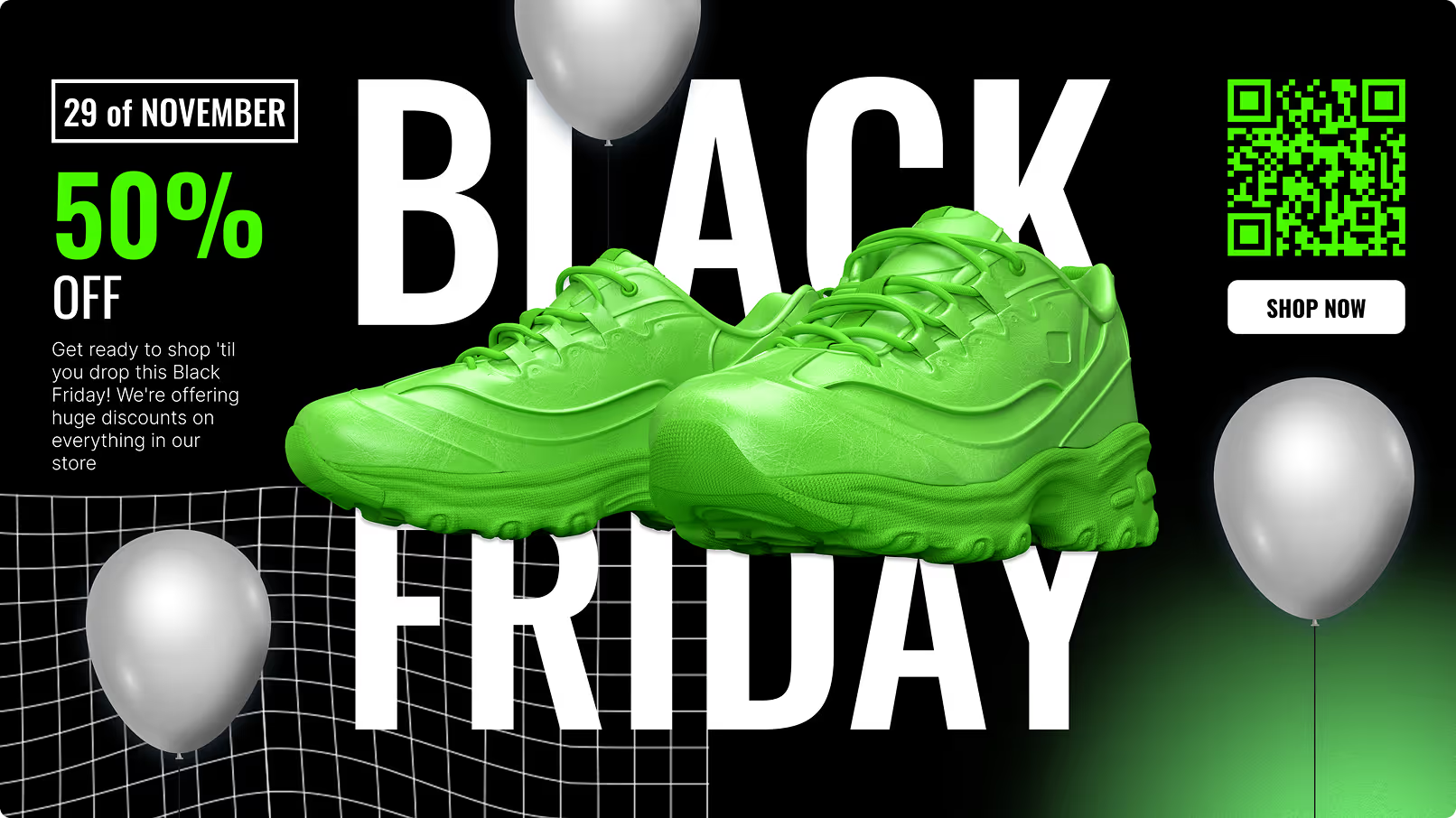
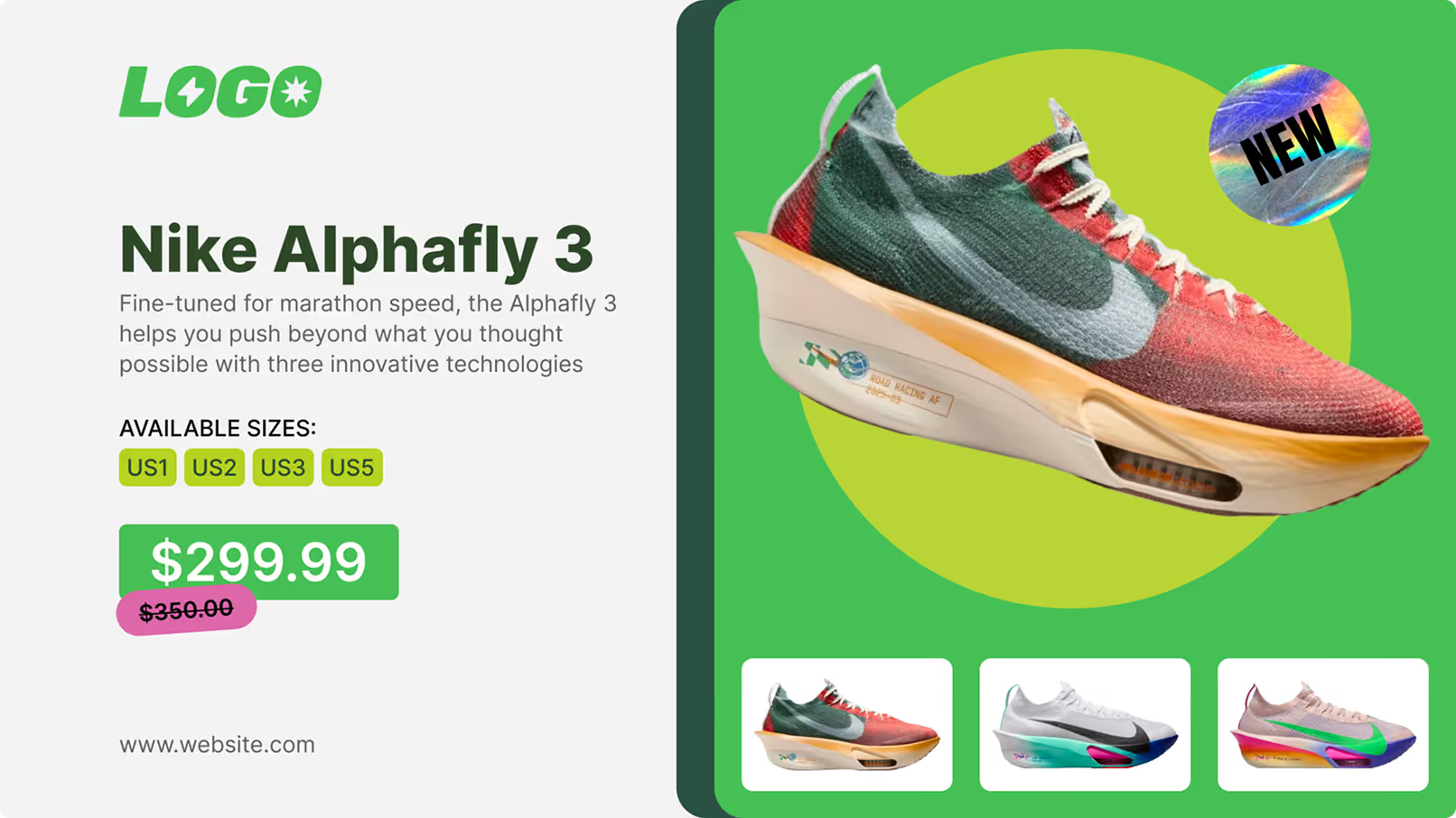
Green sneakers with Black Friday 50% off sale text, silver balloons, and a QR code to shop now.Nike Alphafly 3 running shoe in red and green with price $299.99 and sizes US1, US2, US3, US5 available.Gold diamond ring in red velvet box with text advertising 20% off all diamond rings this week and images of gold jewelry.
Nike Alphafly 3 running shoe in red and green with price $299.99 and sizes US1, US2, US3, US5 available.Gold diamond ring in red velvet box with text advertising 20% off all diamond rings this week and images of gold jewelry.Hand holding a 1-liter fresh milk carton with a 15% off sale promotion and flavor options listed.
Gold diamond ring in red velvet box with text advertising 20% off all diamond rings this week and images of gold jewelry.Hand holding a 1-liter fresh milk carton with a 15% off sale promotion and flavor options listed.Pair of white Continental 80 Vegan Adidas shoes with red and blue stripes on an orange background.
Hand holding a 1-liter fresh milk carton with a 15% off sale promotion and flavor options listed.Pair of white Continental 80 Vegan Adidas shoes with red and blue stripes on an orange background.Two women in yellow shirts wearing colorful sunglasses with a 15% off sale and free case offer.
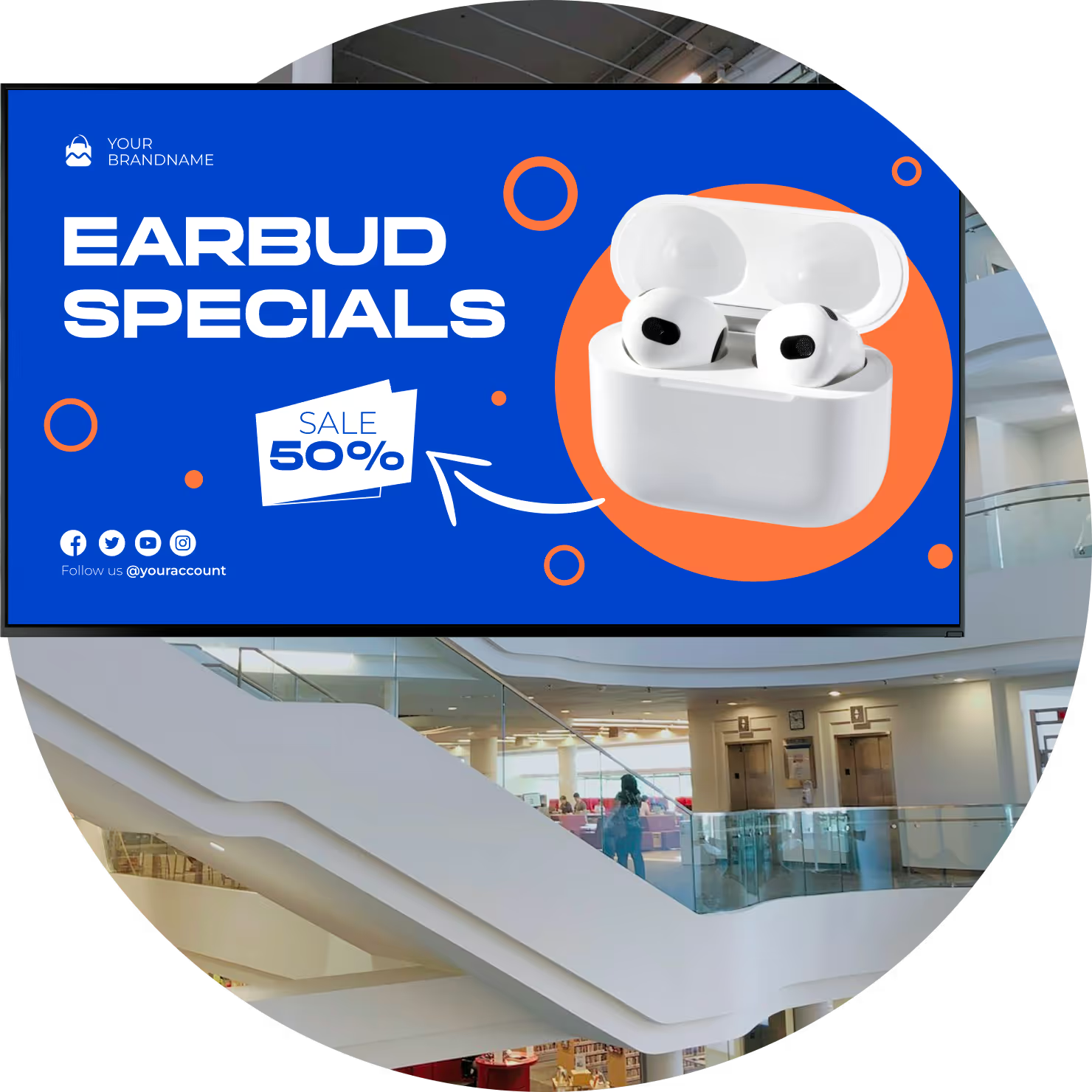
Pair of white Continental 80 Vegan Adidas shoes with red and blue stripes on an orange background.Two women in yellow shirts wearing colorful sunglasses with a 15% off sale and free case offer.White wireless earbuds in an open charging case with a 50% sale promotion on a blue background with orange circles.
Two women in yellow shirts wearing colorful sunglasses with a 15% off sale and free case offer.White wireless earbuds in an open charging case with a 50% sale promotion on a blue background with orange circles.Red tufted armchair with text 'Comfort You Can Afford' and a limited offer for 20% off this weekend, starting at $150.
White wireless earbuds in an open charging case with a 50% sale promotion on a blue background with orange circles.Red tufted armchair with text 'Comfort You Can Afford' and a limited offer for 20% off this weekend, starting at $150.Green sneakers with Black Friday 50% off sale text, silver balloons, and a QR code to shop now.
Red tufted armchair with text 'Comfort You Can Afford' and a limited offer for 20% off this weekend, starting at $150.Green sneakers with Black Friday 50% off sale text, silver balloons, and a QR code to shop now.Nike Alphafly 3 running shoe in red and green with price $299.99 and sizes US1, US2, US3, US5 available.

Frequently asked questions about digital signage for advertising

Which industries use digital signage advertising?

Retail and restaurants are the biggest users, followed by hospitality, shopping malls, transportation, healthcare, education, fitness and corporate offices. The technology does not change much between them but the commercial logic does. A supermarket is promoting its own products, a mall operator is selling wall space to brands, a hotel is upselling its restaurant, and a clinic is mostly trying to make a twenty-minute wait feel shorter.

What is digital signage ad inventory?

Ad inventory is the advertising space a network has available over a defined period. Screen count is only one input. Slots per loop, operating hours, campaign length and playback frequency all feed the total. A hundred screens running all day generate far more sellable impressions than one screen in one location, and the gap is wider than the screen count alone suggests.

Is digital signage advertising GDPR compliant?

Showing ads on a screen does not, by itself, involve personal data. GDPR becomes relevant at the measurement layer, once something is collected or processed that can be traced back to a person. The regulation has applied across the European Economic Area since 25 May 2018. Counting anonymous playbacks sits comfortably outside that. Storing faces or device identifiers does not, and the compliance work involved is on a completely different scale.

What hardware is used for digital signage advertising?

Two things: a commercial display, plus either an external media player or a screen with the player built in. Commercial panels are rated for how long they run, typically 16/7 or 24/7 depending on the model. Outdoor and window-facing sites ask for more. High brightness to fight daylight, weather protection, thermal management and mounting that holds up over years all become part of the specification.

What makes an effective digital signage advertisement?

One message, legible from wherever the viewer happens to be standing. Build the creative in three layers: the main message, the supporting detail, and a single call to action. What kills an ad is clutter, whether that is a dense paragraph, two offers competing for attention, small type, or animation that adds nothing. In corridors, storefronts and transport hubs the viewer gives you a few seconds, and clutter spends all of them.

How is digital signage advertising different from traditional advertising?

Nothing physical has to change, and that is really the whole difference. A printed poster has to be reprinted, shipped, and put up by hand every time the message changes, so most campaigns simply leave it alone for a month. On a screen, the same job takes a few clicks, which is why one panel can push a breakfast offer at 8 am and something completely unrelated by midday. The second difference is scheduling. Content can follow opening hours, stock levels or the weather outside, none of which a poster can react to.

Can digital signage show video advertising?

Video, animation and motion graphics all run without difficulty, and video is the obvious choice when a product needs demonstrating or a message has to unfold in order. The catch is length. A 15-second spot is fine in a waiting area where people are stuck for ten minutes and useless on a corridor screen that gets four seconds of attention at most, so the creative brief really has to start with the location rather than the idea.

Can digital signage advertising increase brand awareness?

Yes. Visibility is the obvious part: large format, motion, repetition. The less obvious part is variety. One campaign can run several creatives, so somebody who passes the same screen three times in a day does not see the same frame three times. Dayparting stretches that further, with different brand messages in the morning, the afternoon and the evening.

What is dayparting in digital signage advertising?

Dayparting just means chopping the day into blocks and scheduling different advertising into each one. A restaurant with screens above the counter might run breakfast items until 11:00, switch to lunch deals, then move to dinner and drinks in the evening, all on the same hardware. The audience standing in front of those screens at 08:30 has almost nothing in common with the one at 19:00, so a single campaign running from open to close wastes most of the day.

What is programmatic digital signage advertising?

Programmatic buying replaces the booking sheet with software. A buyer works through a DSP, the available screen time sits in an SSP, and the network plays whatever the transaction lands on. Instead of naming individual screens, buyers describe what they want, say gyms in three cities on weekday mornings, and the platform matches that against inventory. Much of this is borrowed straight from online advertising, minus the click.

How is digital signage advertising priced?

There is no single model. Advertising gets sold by campaign duration, per screen, per location, per impression or per slot, and networks often quote more than one of those depending on the buyer. CPM, the metric most media buyers reach for, is simply what it costs to reach a thousand estimated impressions. Where the screen sits matters more than how many screens you have. An airport gate or a mall entrance commands a higher rate than an equivalent panel in a quiet office corridor, because the audience passing it is bigger and, in many cases, in a more receptive frame of mind.

Can digital signage combine advertising with other content?

Advertising does not have to occupy the screen full time, and on most networks it should not. A playlist can move between paid spots and menus, product information, announcements, wayfinding, live data or the venue’s own promotions. Within a ten-minute loop that might work out as two minutes of commercial content and eight minutes of something the audience came for. It is the difference between a screen people glance at and one they walk straight past.

Can cameras be used to measure digital signage audiences?

Cameras are used for audience analytics, but the privacy question turns on what the system keeps. Counting viewers on the device and discarding the image immediately is one thing. Storing video, or running facial recognition, is another. In the EU, processing identifiable biometric data pulls a project into much stricter territory under GDPR and related rules. Decide which side of that line you are on before the hardware is ordered.

Can regular TVs be used for digital signage advertising?

A consumer TV will display signage content, and for one screen in a low-traffic spot it might be all you need. Past that, commercial displays are the sensible choice. They are rated for 16/7 or 24/7 operation, they are brighter, they can be mounted in portrait, they support remote management, and the warranty will not be voided by leaving them switched on. Consumer panels are designed around a few hours of evening viewing at home, and the difference shows up as failures and replacement costs once a network gets large enough.

Can digital signage advertising run on multiple screens at once?

Yes. Cloud-based signage software pushes advertising to any number of screens and locations from a single account. Assign a campaign to one display, to a group, or to the whole network, and still give individual sites their own creative. Nobody uploads the same file to 100 devices by hand.

Can digital signage ads change automatically?

They can, and this is where signage pulls ahead of a poster. Schedules handle the predictable changes and APIs or data feeds handle the rest. Weather is the usual example, though stock levels and pricing tend to be more useful commercially: if an item sells out at 14:00, the promotion for it can disappear from every screen in the chain without anyone logging in. Setting those rules up takes longer than uploading a file, but it is a one-time job.

How do you measure digital signage advertising performance?

It depends what the campaign was sold on. For awareness work, most reporting comes down to proof-of-play logs and estimated impressions. Where there is a response involved, the useful numbers are QR scans, traffic to a landing page, footfall, or sales at the till. CPM turns spend into cost per thousand impressions. Uplift studies are harder work and more convincing, since they compare exposed stores or weeks against unexposed ones. Whichever you pick, pick it before the campaign runs.

Can social media be used in digital signage advertising?

Social content works well on signage, whether that is a campaign feed, a branded hashtag or customer posts pulled in and shown alongside paid ads. A fairly common setup rotates a selection of customer photos and then puts a QR code on screen linking to the profile behind them. Moderation is not optional here. Auto-publishing every post that carries your hashtag has gone badly for enough brands that most platforms now put an approval step in the way.

Is digital signage advertising the same as DOOH advertising?

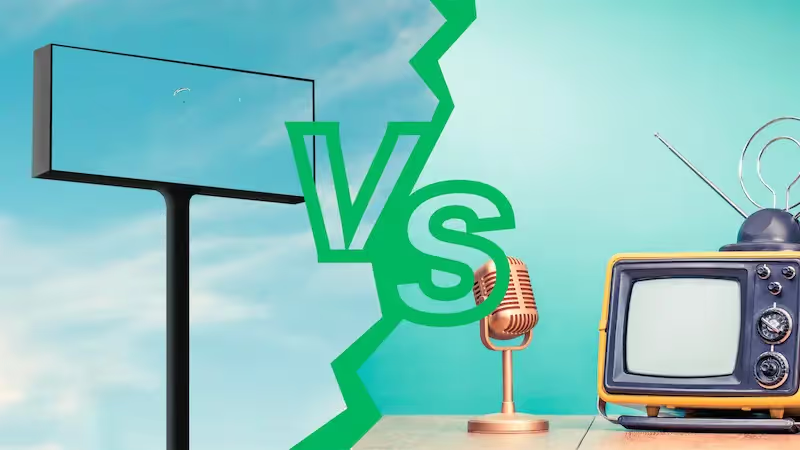
No. DOOH, or digital out-of-home, is one slice of digital signage advertising: the slice that reaches people once they have left the house. Roadside billboards, transit screens, airport displays, mall media and street furniture all sit in that category. Digital signage is the wider term. It also covers screens inside shops, restaurants, hotels, clinics and offices, where the venue owner controls both the space and the audience.

What types of digital signage advertising are available?

There is no official list, but in practice buyers ask for a fairly small set of things: full-screen ads, digital billboards, video spots, multi-zone layouts where an ad shares the screen with something else, touchscreen campaigns, and slots bought programmatically. Around those sit QR codes, social feeds, live product data and sponsored information panels. The choice is usually dictated by the site rather than by preference. A screen people walk past at speed cannot carry the same creative as one above a queue, and a touchscreen somewhere nobody stops is money wasted.

How can businesses start using digital signage for advertising?

Three steps get a network running: connect the screens to a signage platform, load the advertising content, then define where and when each campaign plays. Everything else comes later, including proof-of-play, audience measurement, programmatic inventory, contextual triggers, and advertiser reporting. Get centralized scheduling right at the start, and adding the fiftieth location costs no more effort than adding the second.

Can digital signage be used for emergency messages?

Yes, provided the platform supports content overrides. An emergency message takes over the playlist on one screen, on selected sites, or across the entire network, and normal advertising resumes afterward. Transport hubs, malls, campuses, hospitals, stadiums and hotels already have screens facing large crowds, which makes them the fastest route to everyone in the building.

Can digital signage advertising work without an internet connection?

Yes, as long as the content has already been downloaded to the player. Files are cached locally, so a screen keeps playing through a dropped connection. The network link exists to deliver new content, schedules, commands, and reporting data, not to stream each ad on demand. When connectivity comes back, the player catches up on whatever it missed.

What is proof-of-play in digital signage advertising?

Proof-of-play is the record that an ad actually appeared, on which screen, at what moment. Three fields make up the basic log: the creative, the screen or location, and the timestamp. Operators use those logs for campaign reporting and billing, and for tracking down the one screen in a 200-site network that went dark on a Tuesday afternoon.

Can digital signage advertising use QR codes?

QR codes are the standard bridge between a screen and a phone, pointing viewers at a product page, a booking form, a discount or an app download. What makes them worth the space is measurement. Give each location or each creative its own code and you can see which one actually drove the scans, which is more than most out-of-home formats will tell you. They earn their place mainly when whatever you want the viewer to do cannot be done on the screen itself.

Can digital signage advertising influence purchase decisions?

It can, when the screen sits close to the product or to the moment of payment. In retail and restaurants that means promoting a specific item, a limited-time offer, a bundle or an upgrade while the customer is still deciding. One well-placed screen by a checkout, a menu or a service counter does two jobs at once. It builds the brand and it moves stock.

What is digital signage advertising?

Digital signage advertising means running promotional content on connected screens that you update, schedule, and manage remotely. Three parts make up a typical setup: the display itself, a media player (or a screen with the player built in), and the software that drives both. Once that stack is in place, the same infrastructure carries anything from a single image to a video campaign wired into live data. Two screens or two thousand, the workflow is identical.

What is the difference between a digital billboard and digital signage?

Think of the billboard as one product inside a much larger category. It is a big outdoor display, usually roadside, usually sold purely as advertising space, and a single unit might rotate half a dozen advertisers through the day. Digital signage covers that plus everything else with a screen and a schedule behind it, from a 32-inch panel above a deli counter to a video wall in a hotel lobby. Those indoor networks rarely sell all of their time to advertisers; they run menus, promotions or wayfinding in between. Both are managed centrally, which is really the point of comparison.

Can different locations show different advertising?

That is how most multi-site networks are set up. Campaigns get assigned to countries, cities, individual stores, screen types or any other grouping the CMS allows, and all of it still lives in one account. A retailer with 50 shops will typically run the national campaign everywhere and then layer local promotions onto the handful of sites where they apply.

Can I sell advertising on my digital signage screens?

You can, and plenty of venues already do. A ten-minute loop with two slots held back for paid campaigns still leaves eight minutes for your own content, and nothing about the screens themselves changes. The work is in the selling. Smaller operators tend to approach local advertisers directly, larger ones hand it to an agency, and networks with the right software integration can list the inventory on a programmatic DOOH platform.