
Table of Content
How are modern trends reshaping the events industry in 2026? The sector has moved beyond basic logistics to focus on hyper-personalization, seamless AI integration, and a rigorous commitment to sustainability, transforming events into data-driven experiences that prioritize time and connection.
The shift today is practical, not just theoretical. Attendees expect control and relevance, refusing to be passive spectators. Whether managing a global summit or a local workshop, the goal is to blend digital and physical elements to maximize value for the participant. This requires technology that works quietly in the background, spaces designed for genuine interaction, and data strategies that build communities rather than just measuring attendance.
Why Is the Events Industry Changing So Rapidly?
What Are the Key Drivers of Industry Transformation?
The primary driver is a fundamental change in how we define professional value. In a landscape saturated with digital noise, meaningful connection takes precedence over scale. We are moving away from volume and toward quality. This shift is led by a workforce where Millennials and Gen Z hold significant decision-making power, prioritizing authenticity and digital ease in every interaction.
Economic factors and climate concerns also force planners to be intentional. Justifying travel costs and carbon footprints means every event must deliver ROI that a video call cannot. If an event does not offer a compelling reason to be there in person, it struggles to survive. This pressure has sparked a wave of practical innovation across the sector to ensure resources are used efficiently.
How Do Changing Audience Expectations Impact Event Design?
Audiences are digitally native and expect the same frictionless experience they get from consumer apps. They reject "one-size-fits-all" agendas. Instead, we see modular programs where attendees build schedules based on specific professional goals. If the process isn't intuitive, engagement drops.
The demand for a smooth experience is non-negotiable. From check-in to networking, logistical friction must be eliminated. If attendees spend thirty minutes in a badge line or cannot find a charging station, the content loses its impact. Consequently, event design now focuses heavily on flow and psychology to ensure the attendee journey is seamless.
What Role Does Technology Play in Accelerating Change?
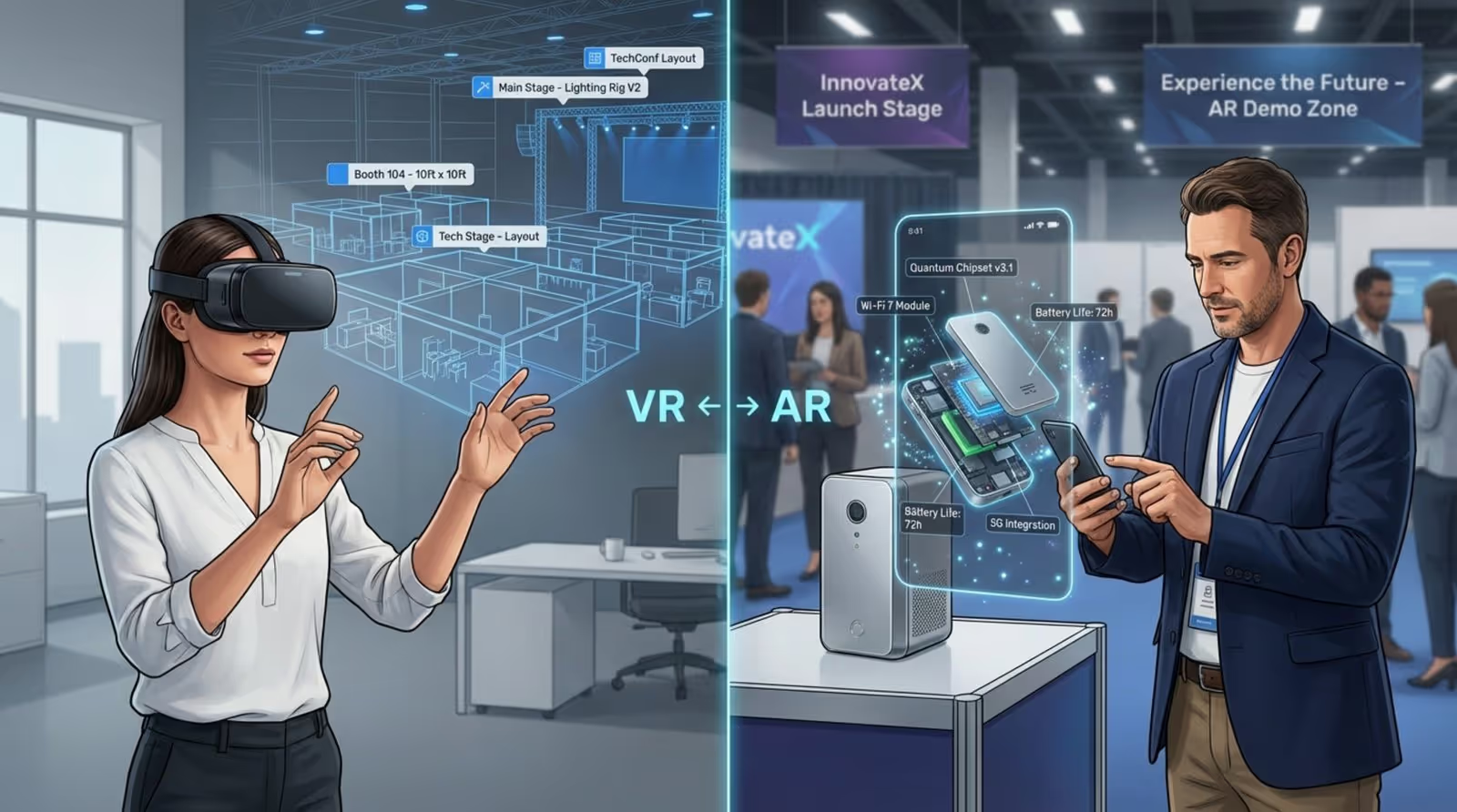
Technology has become the central nervous system of event operations. Advances in connectivity and software allow planners to use tools that were previously too complex or expensive. For example, "digital twins" allow teams to plan venues remotely and visualize layouts long before the doors open, reducing setup errors.
Technology also enables rapid adaptation. Real-time sentiment analysis and heat mapping allow organizers to adjust on the fly. If a session draws unexpected crowds, you can pivot quickly. This data-informed approach turns static schedules into responsive systems that align with what is actually happening on the ground.
What Are the Most Influential Trends in the Events Industry?
Sustainability as a Priority in Event Planning
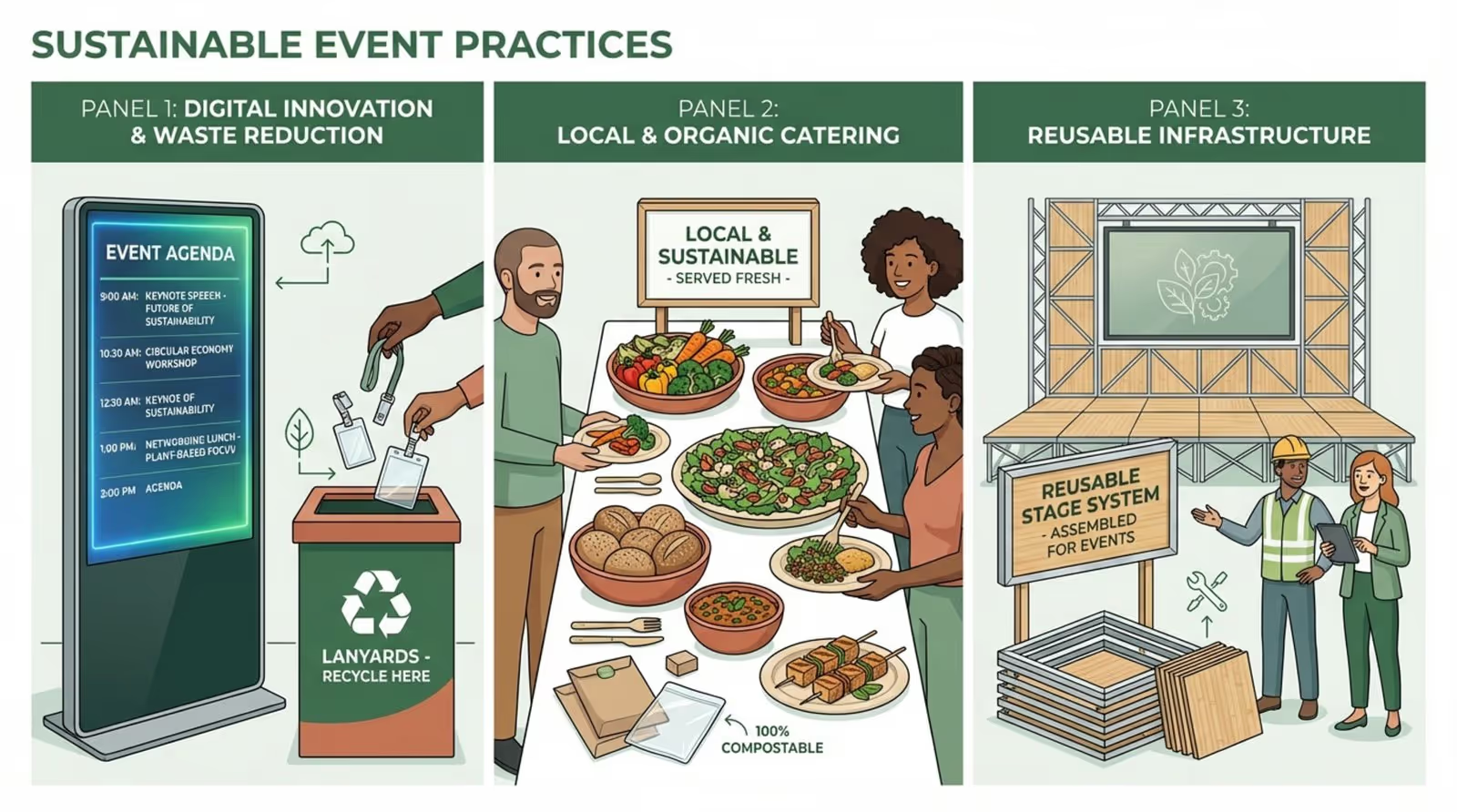
Sustainability is now a core operational requirement, not a marketing badge. Audiences spot "green-washing" quickly. Planners are adopting circular economy principles, ensuring stage sets and decor are reused or recycled. Regenerative events aim to leave the host location better off, often by supporting local initiatives.
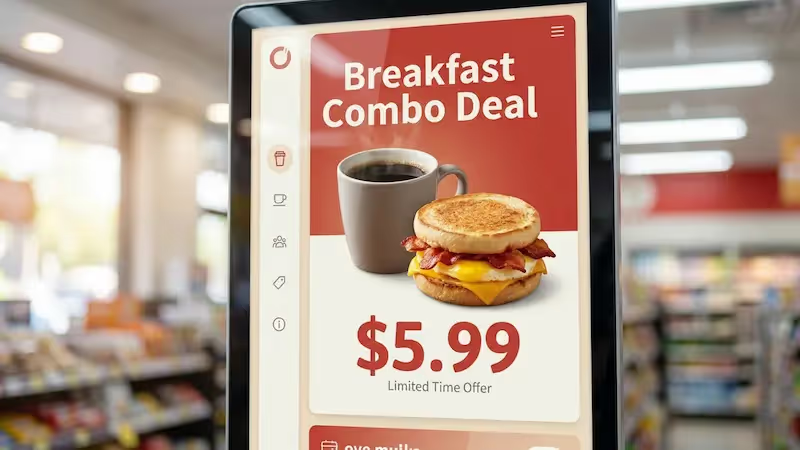
Sourcing strategies now cover the entire supply chain to reduce transport emissions. A major shift involves reducing physical waste; digital signage often replaces single-use printed foam boards, allowing for real-time updates without re-printing. Similarly, catering relies on accurate data to minimize food waste, a standard practice for cost and environmental control.
Expanding Use of Hybrid and Virtual Event Formats
Hybrid models have evolved into two distinct, valuable paths rather than a simple livestream of a physical stage. Virtual attendees receive tailored content, while on-site guests engage in hands-on activities. The objective is a unified community experience supported by platforms that bridge the gap between locations.
Virtual events serve as efficient lead generators and training tools. They reach global audiences without travel logistics and keep communities active between major physical gatherings. This "always-on" approach maintains momentum and ensures consistent engagement throughout the year.
AI and Automation for Personalization and Efficiency
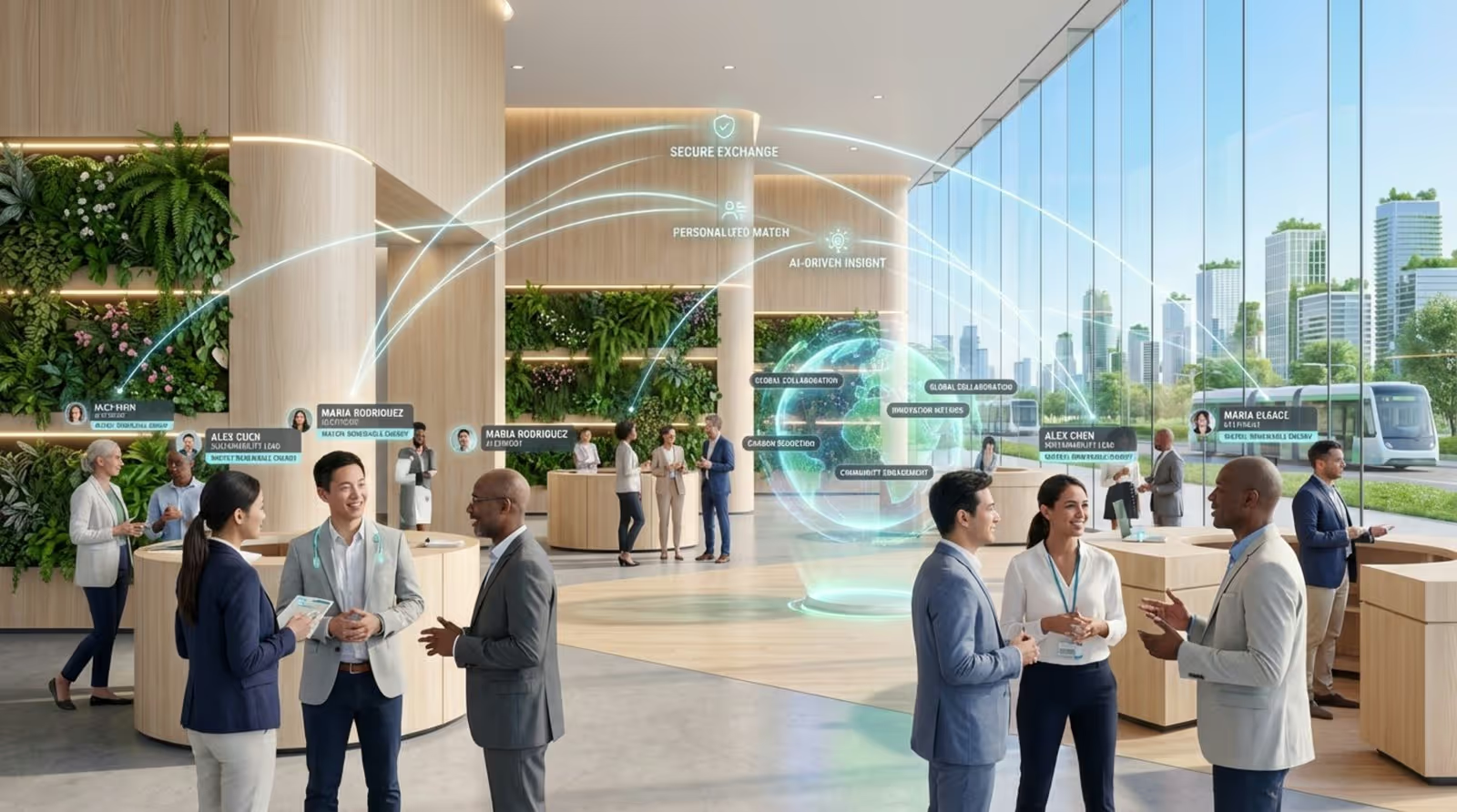
Artificial Intelligence drives efficiency in modern events. Chatbots handle routine questions about schedules and directions, freeing up staff. For personalization, AI analyzes attendee profiles to suggest relevant sessions and connections, acting as a practical matchmaking tool to ensure participants leave with valuable contacts.
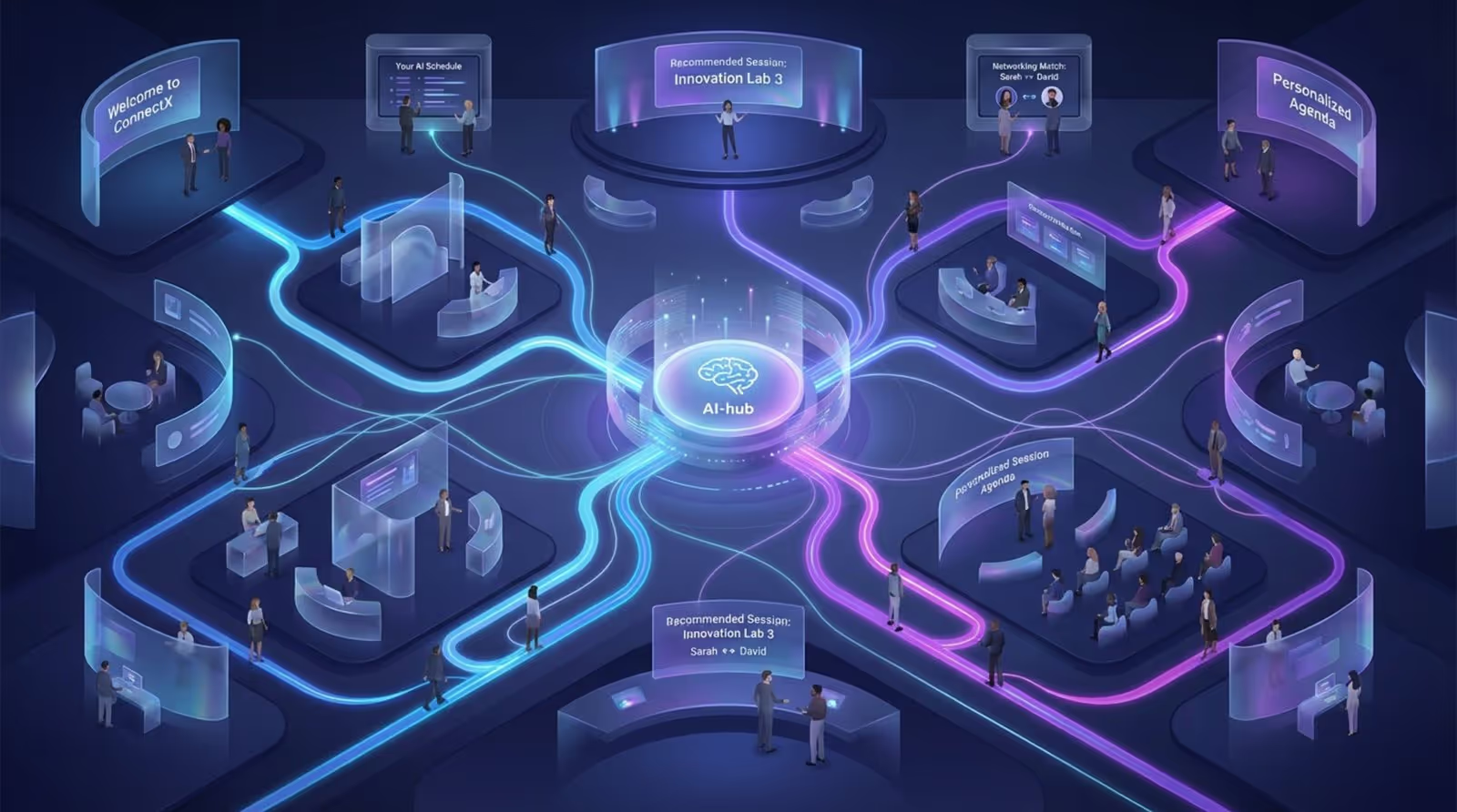
Automation reduces manual workload in invoicing, registration, and badging. AI-generated summaries help with post-event content production, allowing planners to focus on strategy and relationships rather than repetitive administrative tasks.
Evolution in Event Marketing and Data Use
Event marketing has shifted from broadcasting to conversation. Detailed segmentation ensures communication is relevant to the recipient. The focus is on "Zero-Party Data"-information attendees willingly share. This allows for accurate persona building and higher conversion rates.
Transparency regarding data is essential. Organizers must be clear about what is collected and how it benefits the attendee. When participants understand that sharing data leads to a better experience, trust increases. This ethical approach is the foundation of modern attendee loyalty.
Wellness, Accessibility, and Inclusive Design
The industry is moving away from high-pressure schedules. Wellness is now integrated into the flow, with quiet zones and schedule breaks becoming standard. This supports neurodivergent attendees and prevents burnout during multi-day conferences.
Accessibility is treated as a design mindset rather than just a compliance checklist. This includes real-time captioning, accessible physical layouts, and digital content compatible with screen readers. Inclusive design ensures every attendee can participate fully, regardless of ability.
Shift Toward Experiential and Immersive Environments
Events increasingly use immersive elements to improve engagement. Passive listening is replaced by interactive installations and gamified spaces. Active participation improves retention and emotional impact.
These environments also facilitate networking. Interactive displays and shared challenges break the ice more effectively than formal mixers. By reducing the barrier between content and audience, events foster better connection and collaboration.
How Does Event Technology Shape Experiences and Operations?
Virtual and Augmented Reality Applications
Virtual Reality (VR) streamlines site inspections, allowing planners to view global venues without travel. For attendees, VR supports realistic training simulations or immersive keynotes, offering a perspective that standard video cannot provide.
Augmented Reality (AR) adds a digital layer to physical spaces. Attendees can use phones to view 3D demos at booths or follow AR navigation paths in large venues. This keeps engagement high while solving practical navigation challenges.
Digital Signage, Real-Time Messaging, and Event Apps
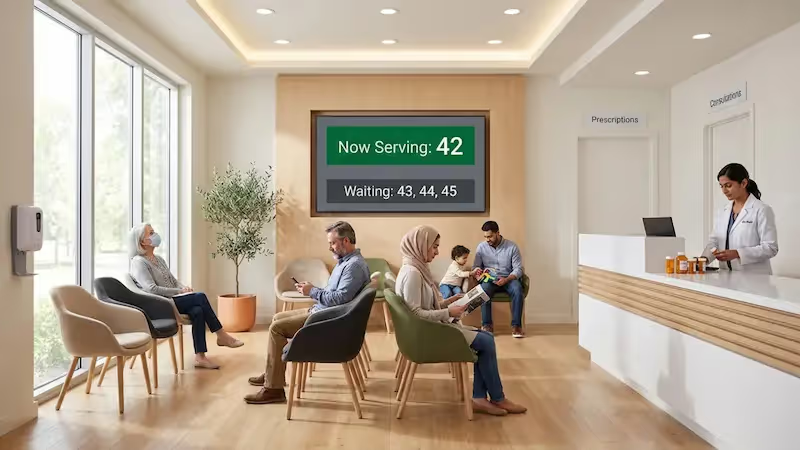
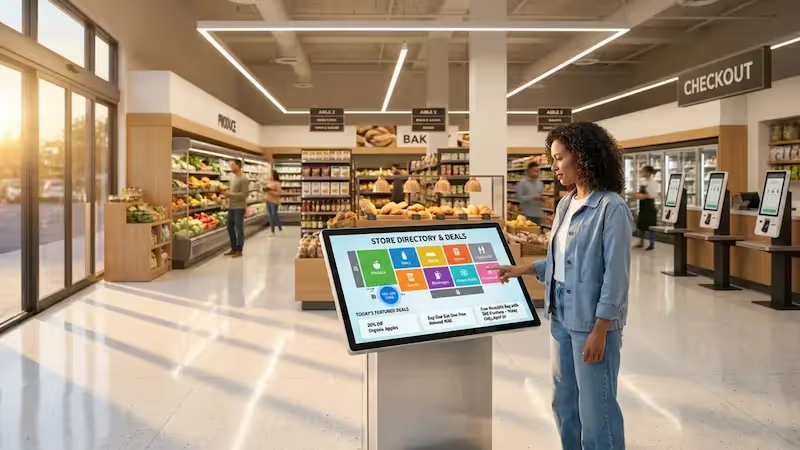
The event app and on-site screens work together to guide attendees. While apps handle personal agendas, digital signage manages the physical flow. For organizers who need to publish and manage content on screens across a venue, Look Digital Signage is a strong solution. It allows you to control the visual environment centrally, ensuring critical updates reach everyone instantly.
Using Look DS features like Smart Scheduling, you can automate agenda changes throughout the day. Screen Layouts allow you to combine live social media feeds, sponsor loops, and wayfinding on a single display. Crucially, Offline Playback ensures your screens keep running even if the venue's internet connection drops. This creates a reliable communication channel that reduces the need for staff to manually update static signs.
Data, Privacy, and the Importance of First-Party Insights
With privacy regulations tightening, first-party data collected during events is critical. Planners design check-ins and interactive touchpoints to gather behavioral insights transparently. This data helps refine future event strategies.
Data protection is a priority. Encryption and clear privacy policies build trust. A breach can severely damage a brand's reputation, making robust security measures essential for any event technology stack.
Building a Unified, Scalable Event Tech Stack
Modern teams prioritize integration over disconnected tools. Registration, CRM, and engagement platforms must feed into a single data set to be useful. This eliminates silos and ensures accurate reporting.
Scalability allows the same tech stack to support small roundtables and large user conferences. Consistent systems improve data quality and reduce training time, allowing teams to focus on execution rather than troubleshooting software.
How Are Event Budgets and ROI Evolving?
Smarter Allocation and Maximizing Impact
Budgets are scrutinized closely, shifting focus to impact over volume. Funds are moving away from generic giveaways toward technology that improves the attendee experience. Practical investments that solve problems-like better navigation or faster check-ins-are prioritized over flashy but fleeting decor.
Spending is also extending to pre-event and post-event engagement. Allocating budget to ongoing community content ensures the event delivers value long after the final session, maximizing the return on the initial spend.
Demonstrating ROI Through Data and Analytics
ROI calculations now include engagement metrics alongside attendance numbers. Advanced analytics track how events influence sales pipelines and brand perception. This data-driven approach moves beyond guesswork.
Clear dashboards help planners prove value to stakeholders. By showing metrics such as dwell time at booths or connection frequency, teams can demonstrate that events are growth drivers, not just expenses.
Managing Profitability Amid Increasing Costs
To handle rising costs, planners are diversifying revenue streams. This includes tiered ticketing, digital passes, and annual sponsorship packages. Operational efficiency is also key; sharing resources between events and using data to reduce catering waste helps protect margins.
What Are the Emerging Best Practices for Event Planners?
Adapting to Multi-Day and Multi-Format Events
The standard conference format is evolving. Satellite events in multiple cities reduce travel while maintaining connection. For longer events, pacing is critical to maintain energy levels. Mixing formats-such as keynotes followed by user-led discussions-accommodates different learning styles.
Engaging Audiences Before, During, and After Events
Events are part of a continuous journey. "Pre-cycling" content builds anticipation, while post-event repurposing turns sessions into podcasts and articles. This keeps the brand relevant year-round. Community platforms facilitate ongoing dialogue, converting attendees into long-term advocates.
Personalizing Experiences for Diverse Attendees
Personalization involves tailoring tracks to specific roles and goals. AI tools assist in matching attendees with the right content and contacts. Diversity in speakers and panels is also essential to reflect a global audience and provide broader perspectives.
Integrating Sustainability and Wellness in Event Strategy
Sustainability and wellness must be planned from the start. This includes selecting eco-friendly venues and designing menus with local ingredients. Wellness initiatives, such as movement sessions, keep attendees focused.
Transparency builds trust. sharing progress on sustainability goals-such as waste reduction or carbon offsets-demonstrates responsibility and aligns with attendee values.
Enhancing Accessibility and Compliance as Standard
Accessibility standards are a baseline, not a goal. Best practices follow Universal Design to create spaces usable by everyone without special adaptation. This includes clear signage and accessible digital tools. Compliance with privacy laws like GDPR is also a selling point, reassuring attendees that their data is handled safely.
Which Trends Will Shape the Future of the Events Industry?
Potential Disruptors and Innovation Hotspots
Decentralized event models using blockchain could shift ownership to communities, allowing attendees to vote on content. Spatial computing is also blurring the lines between physical and digital, potentially allowing remote and on-site participants to interact with the same 3D elements.
How to Stay Competitive as an Event Professional
Success requires a broad skillset covering data, experience design, and logistics. Continuous learning is necessary as tools evolve. Building peer networks helps professionals stay informed on what strategies are working in the real world. Strategic partners who solve business problems will lead the industry.
Key Takeaways for Event Industry Stakeholders
Top Recommendations for Embracing Modern Event Trends
Adopt a "pilot and pivot" approach. Test new technologies or sustainability measures on a small scale before full rollout. Collect data, analyze results, and refine. Prioritize human-centric design; technology should simplify the experience, not complicate it.
Action Steps for Future-Proofing Your Event Strategy
Start with a tech audit to identify data silos and manual bottlenecks. Invest in integrated platforms that scale. Develop a clear sustainability roadmap with measurable targets. Finally, focus on building a community that remains engaged year-round. This approach ensures resilience and long-term growth, regardless of changing formats.
As the industry progresses through 2026, the focus remains on creating environments where valuable connections occur. By staying flexible, data-informed, and attendee-focused, professionals can navigate these changes confidently.